
 By admin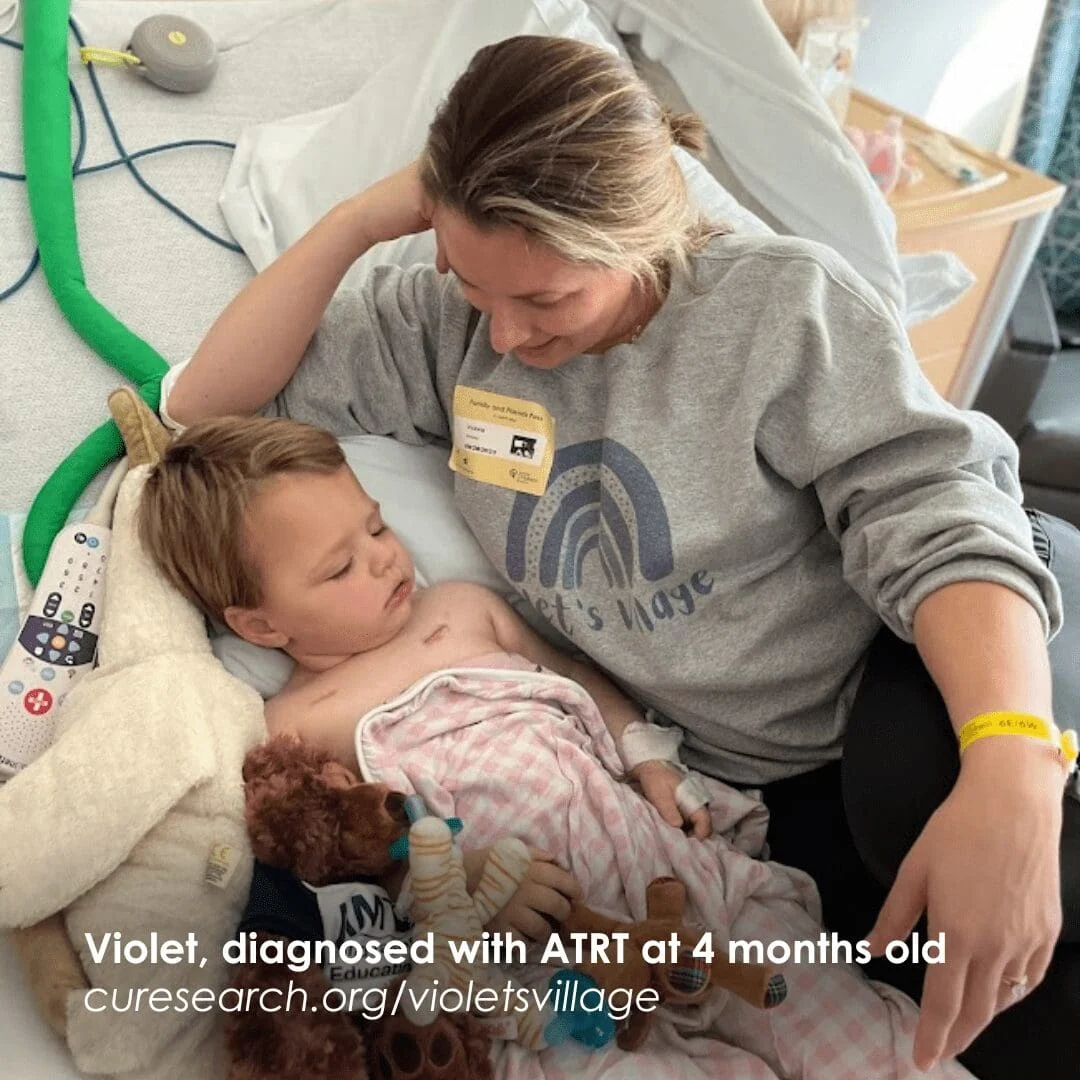
The national non-profit organization CureSearch for Children’s Cancer has officially announced that Dr. John Prensner of the University of Michigan is the recipient of the 2025 Young Investigator Award, a distinction that carries significant implications for the treatment of atypical teratoid rhabdoid tumors (ATRT). This rare and highly aggressive form of pediatric brain cancer predominantly affects infants and toddlers, often leaving families with few options beyond traditional, highly toxic therapies. Dr. Prensner’s selection marks a pivotal shift in the research landscape, as his work moves away from traditional genetic mutation studies to explore the "dark matter" of the human genome.
The funding for this project is a collaborative effort, reflecting a growing trend in venture philanthropy within the medical sector. The award is supported in part by the Jeff Gordon Children’s Foundation (JGCF) and Violet’s Village: The Violet Kenney Legacy Fund. By focusing on the early careers of promising scientists, CureSearch aims to address the critical shortage of specialized pediatric oncologists who often leave the field due to a lack of sustainable research funding.
The Critical Challenge of Atypical Teratoid Rhabdoid Tumors
Atypical teratoid rhabdoid tumors represent one of the most formidable challenges in modern pediatric oncology. While they account for only about 3% of all pediatric brain tumors, they represent nearly 20% of brain tumors in children under the age of three. These malignancies are characterized by their rapid growth and their tendency to manifest in the cerebellum or the brainstem—areas of the central nervous system that govern motor control, balance, and autonomic functions like breathing and heart rate.
Historically, the prognosis for ATRT has been poor. Unlike many adult cancers, which are driven by a multitude of genetic mutations that can be targeted with specific drugs, ATRT is biologically "quiet" in terms of traditional mutations. Most cases are linked to the loss or mutation of a single gene, SMARCB1 (or more rarely, SMARCA4). However, simply knowing this gene is missing has not yet translated into a reliable "silver bullet" treatment.
The current standard of care involves a combination of radical surgical resection, high-dose chemotherapy, and, in older children, radiation. For infants, radiation is often avoided due to the catastrophic impact it has on the developing brain, leading to long-term cognitive and developmental impairments. This leaves a therapeutic void that Dr. Prensner’s research aims to fill.
A Paradigm Shift: Exploring Small Open Reading Frames
Dr. Prensner’s research at the University of Michigan represents a departure from the conventional focus on large, well-known genes. His work centers on small open reading frames (sORFs), which are tiny segments of DNA that were previously dismissed by the scientific community as "junk DNA" or non-functional sequences.
Recent advancements in genomic sequencing have revealed that these sORFs are not idle. Instead, they serve as blueprints for microproteins—small, elusive molecules that may hold the key to how cancer cells survive and proliferate. In the context of ATRT, Dr. Prensner believes that these microproteins are the hidden drivers behind the tumor’s aggression. By identifying which sORFs are active in ATRT cells, his team hopes to uncover new biological vulnerabilities that can be exploited by the next generation of targeted therapies.
"Children with ATRT don’t have the same opportunities to benefit from cutting-edge, targeted treatments that are available for other cancers," noted Dr. Paisley Myers, Director of Research and Programs at CureSearch. "We urgently need to change that narrative."
Dr. Prensner’s project aims to map these sORFs comprehensively, essentially creating a new "atlas" of the ATRT genome. This foundational work is expected to provide the pharmaceutical industry with new targets for drug development, potentially moving treatment away from the "sledgehammer" approach of chemotherapy toward more precise, molecular interventions.
The Role of the Young Investigator Award and Collaborative Funding
The 2025 Young Investigator Award is part of a strategic initiative by CureSearch to protect the future of pediatric cancer research. The transition from a post-doctoral fellow to an independent investigator is often referred to as the "valley of death" in academia, where many talented scientists are forced to abandon their research due to a lack of federal grants, which are increasingly competitive and often favor established, late-career researchers.
By providing financial stability to Dr. Prensner at this critical juncture, CureSearch and its partners are ensuring that his specialized expertise remains focused on pediatric oncology. This year’s award is bolstered by a co-funding model that includes the Jeff Gordon Children’s Foundation. Founded by the four-time NASCAR Cup Series champion, the foundation has become a heavyweight in the fight against childhood cancer, contributing millions of dollars to clinical trials and research infrastructure.

Susan Robinson, Executive Director of the Jeff Gordon Children’s Foundation, emphasized the urgency of the mission. "Brain tumors are the deadliest form of childhood cancer, so we’re eager to advance scientific knowledge and develop better therapeutics to improve outcomes for kids facing such a devastating diagnosis," Robinson stated.
The partnership also includes Violet’s Village: The Violet Kenney Legacy Fund. Named in memory of Violet Kenney, a young girl who battled cancer, the fund represents the personal and emotional stakes involved in this research. Legacy funds like Violet’s Village allow families to channel their grief into tangible scientific progress, ensuring that future children have the options their own loved ones did not.
Historical Context and the Evolution of Pediatric Cancer Research
To understand the importance of Dr. Prensner’s work, one must look at the broader timeline of pediatric brain tumor treatment. In the 1970s and 1980s, the primary focus was on survival at any cost. While survival rates for some cancers, like certain types of leukemia, skyrocketed, brain tumors remained stubbornly resistant.
The 1990s and early 2000s saw the rise of genomic medicine, where scientists began to sequence the DNA of tumors. This led to the discovery of the SMARCB1 mutation in ATRT. However, the subsequent two decades revealed a frustrating truth: identifying a mutation is not the same as curing it. Many pediatric tumors, including ATRT, are "epigenetic" diseases, meaning they are driven by how genes are turned on or off rather than just the sequence of the DNA itself.
Dr. Prensner’s focus on microproteins is the next logical step in this evolution. It moves the conversation from "what is missing in the DNA" to "what subtle molecules are the cells producing to bypass normal growth controls." This level of granularity was technologically impossible even a decade ago, making this a truly modern frontier in oncology.
Analysis of Implications for the Future of Oncology
The implications of Dr. Prensner’s research extend beyond ATRT. If his team can successfully demonstrate that microproteins derived from sORFs are viable drug targets, it could revolutionize the approach to other "genetically simple" but "biologically complex" pediatric cancers, such as Ewing sarcoma or certain types of neuroblastoma.
Furthermore, this research supports the movement toward precision medicine in pediatrics. Currently, pediatric oncology often relies on "hand-me-down" drugs originally developed for adult cancers. Because ATRT is almost exclusively a pediatric disease, there is little incentive for large pharmaceutical companies to invest in the early-stage discovery phase. The CureSearch Young Investigator Award fills this gap, de-risking the initial research so that it eventually becomes attractive for larger-scale clinical development.
The data generated from the University of Michigan project will likely be shared with the broader scientific community, contributing to global databases that track the pediatric cancer genome. This collaborative spirit is essential in the rare disease space, where the number of patients is small, and every data point is precious.
Conclusion and Outlook
As Dr. Prensner begins his work under the 2025 award, the pediatric oncology community remains cautiously optimistic. The path from laboratory discovery to a bedside treatment is long, often taking a decade or more. However, by identifying previously invisible genetic drivers, Dr. Prensner is providing the roadmap necessary for that journey.
The support from CureSearch, the Jeff Gordon Children’s Foundation, and Violet’s Village underscores a collective commitment to the most vulnerable patients. For the families of children diagnosed with ATRT, this research represents more than just scientific inquiry; it represents the hope that "junk DNA" might actually contain the secret to a cure.
"My hope is that this work will lead to the discovery of new genes that inform the next phase of drug development for ATRT," Dr. Prensner said. "This CureSearch award will be important for us to continue to develop a new understanding of the childhood cancer genome."
As the project progresses, the focus will remain on translating these complex biological findings into safe, effective, and less toxic therapies, ensuring that the toddlers of the future can return to their milestones of running, jumping, and exploring, free from the shadow of ATRT.
