
 By Hendra Lukman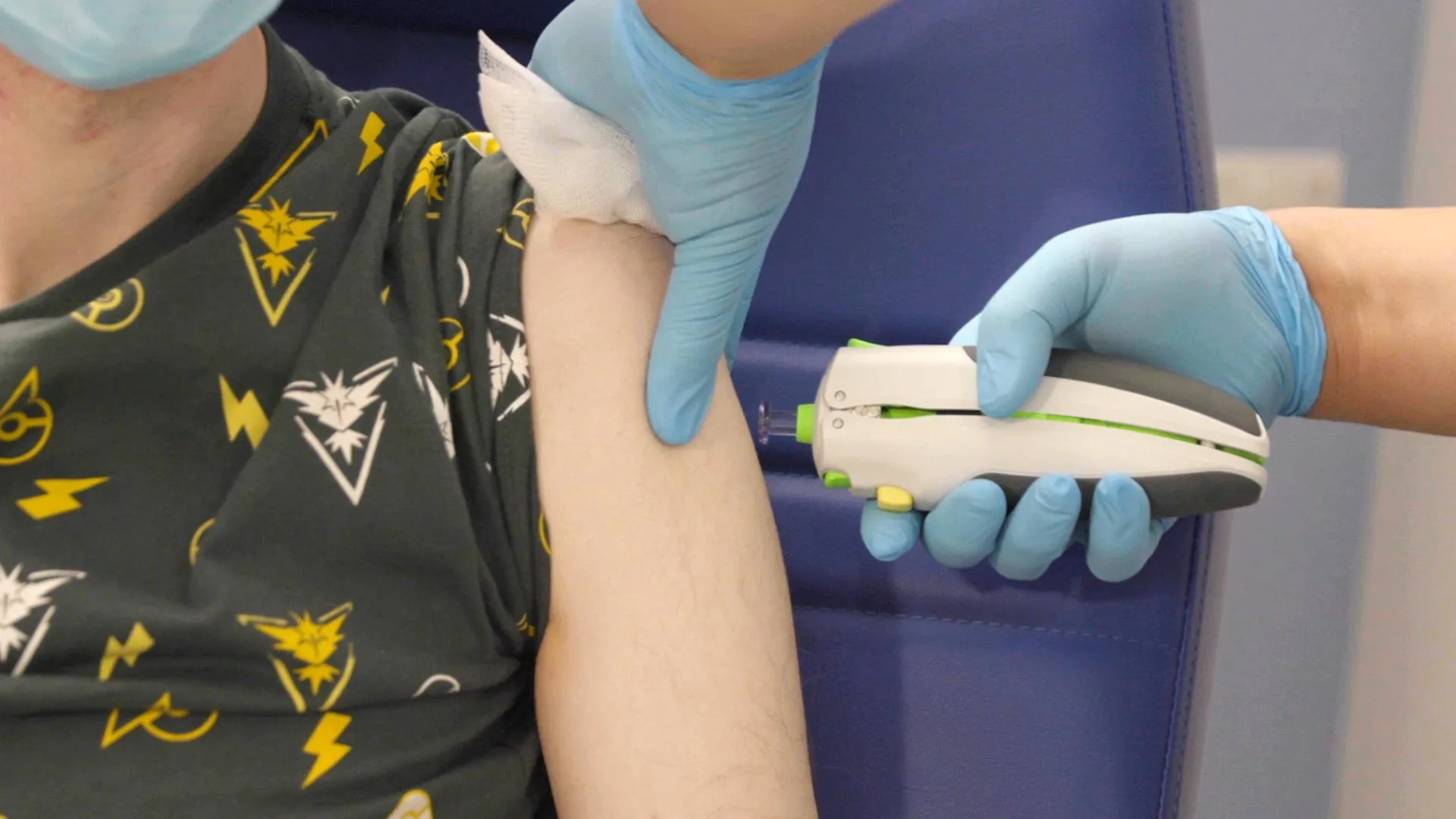
A groundbreaking advancement in vaccine technology has emerged from the University of Cambridge and its spinout company, DIOSynVax (DVX) Ltd. The first-in-human clinical trial for a novel, universal coronavirus vaccine has successfully demonstrated safety and tolerability in 39 healthy volunteers. This milestone signifies a critical step towards developing broad-spectrum immunity against not only current viral threats like SARS-CoV-2 but also against future, yet-to-emerge coronaviruses, potentially reshaping global pandemic preparedness strategies.
Revolutionizing Vaccine Design with Artificial Intelligence
The experimental vaccine, developed by researchers leveraging cutting-edge artificial intelligence and machine learning, represents a paradigm shift in vaccine development. Unlike conventional vaccines that target specific viral strains, this innovative approach employs an AI-designed "super-antigen." This single antigen is engineered to elicit an immune response against multiple members of the Sarbeco coronavirus family, a group that includes the viruses responsible for COVID-19 and SARS, as well as numerous related bat coronaviruses with zoonotic potential.
The core of this revolutionary technology lies in its ability to analyze vast amounts of genetic data from diverse coronaviruses. The AI system identifies conserved features—those elements that remain consistent across different strains—and synthesizes them into a singular vaccine antigen. This strategy aims to create a protective shield that remains effective even as viruses mutate and evolve. The findings from this initial human trial were recently published in the prestigious Journal of Infection, underscoring the scientific rigor and significance of this research.
Professor Jonathan Heeney, a leading figure in viral zoonotics research at the University of Cambridge and the scientific lead for this project, articulated the transformative potential of this technology. "This trial proves the safety of an entirely new way of designing vaccines," Professor Heeney stated. "The technology uses an AI-designed ‘super-antigen’ to provide lasting protection against a broad range of viruses — for example the Ebola group, or Sarbeco coronavirus group — even as they mutate." This proactive approach, as opposed to the traditional reactive model, promises to outpace viral evolution, offering a much-needed solution to the constant cycle of vaccine updates.
A Timeline of Innovation: From Concept to Clinical Trial
The journey of this AI-designed vaccine from concept to human trial has been a testament to scientific innovation and strategic collaboration. While the precise inception date of the AI design process for this specific vaccine is not publicly detailed, the foundation for such work was laid by DIOSynVax Ltd., which was established in 2017 as a University of Cambridge spinout. Founded with support from Cambridge Enterprise, the university’s commercialization arm, DIOSynVax has been dedicated to developing digitally immune-optimized synthetic vaccines.
The development pipeline at DIOSynVax has been actively pursuing candidates for a range of viral threats, including seasonal and pandemic influenza, hemorrhagic fever viruses, and coronaviruses like SARS-CoV-2. This has involved extensive research into novel antigen design and vaccine delivery platforms.
The transition from preclinical studies to human trials is a critical juncture in any vaccine development process. Animal studies for this universal coronavirus vaccine had previously demonstrated its capacity to generate robust immune responses against a spectrum of coronaviruses. This preclinical success paved the way for the Phase 1 clinical trial, which commenced with the enrollment of 39 healthy volunteers. These participants, aged between 18 and 50, received the experimental vaccine at National Institute for Health and Care Research (NIHR) Clinical Research Facilities located in Southampton and Cambridge. The trial was meticulously managed and sponsored by University Hospital Southampton NHS Foundation Trust (UHSFT), with the crucial support of NIHR infrastructure.
Data from the Frontlines: Safety and Immunological Insights
The primary objective of this Phase 1 trial was to assess the safety and tolerability of the AI-designed vaccine. The results were overwhelmingly positive: the vaccine was found to be safe, and no significant adverse side effects were reported among the participants. This is a crucial first step, as any novel vaccine must first prove its safety profile before further efficacy studies can be undertaken.
Beyond safety, the trial also provided early indications of the vaccine’s immunological potential. It demonstrated that the vaccine stimulated immune responses not only against SARS-CoV-2 (the virus causing COVID-19) and SARS (Severe Acute Respiratory Syndrome), but also against related bat viruses that have not yet crossed over into the human population. This broad-spectrum immune stimulation is precisely what researchers aim for in a universal vaccine, offering protection against a wider array of potential threats.
The vaccine’s active ingredient, the AI-designed super-antigen, was delivered using a DNA vaccine platform administered via a microfluidic jet system. This needle-free delivery method is a notable aspect of the trial, offering a potential advantage for individuals who experience anxiety or discomfort with traditional injections. Furthermore, this technology could streamline large-scale vaccination campaigns, particularly in resource-limited settings or during public health emergencies where rapid and efficient administration is paramount.
Beyond Reactive Measures: A Proactive Pandemic Defense
The significance of this AI-driven universal vaccine lies in its ability to move beyond the limitations of current vaccine strategies, which are often reactive. Seasonal flu vaccines and even updated COVID-19 vaccines are typically designed to combat strains that are already circulating. However, viruses are in constant motion, evolving and mutating, which necessitates frequent reformulation and annual updates to maintain vaccine efficacy. This "chasing the virus" approach, as described by Professor Heeney, is an ongoing challenge for public health.
The universal vaccine, by targeting conserved features across an entire virus family, aims to break this cycle. By focusing on what remains constant, the vaccine is designed to remain effective even as new variants emerge and circulate. This "future-proofing" of vaccines could significantly enhance our ability to respond to emerging infectious diseases.
Professor Saul Faust, the chief investigator for the trial from the University of Southampton, emphasized this critical point. "Viruses like Influenza, Coronaviruses and the Ebola group are evolving continuously and by the time vaccines are rolled out, they may be poorly matched — the current ‘reactive’ vaccine system struggles to keep pace," he explained. "This new class of universal vaccines are future-proofed. They not only protect against many variants simultaneously, but potentially against related viruses that haven’t yet emerged and spilt over to humans."
Broader Implications and Future Directions
The successful completion of this Phase 1 trial opens doors to a future where pandemic preparedness is more robust and proactive. The implications extend beyond coronaviruses, with researchers believing that the same AI-driven super-antigen strategy could be applied to other viral families, including influenza and Ebola. This could lead to a suite of universal vaccines capable of addressing a wide range of global health threats.
The next crucial step in the development process is a larger Phase 2 study. This study will aim to evaluate the vaccine’s immunogenicity in a more diverse and representative population, further confirming its ability to generate strong and broad-ranging protection. Subsequent larger-scale trials (Phase 3) would be required to demonstrate clinical efficacy in preventing disease.
The funding for this pioneering project was primarily provided by Innovate UK, a testament to the government’s commitment to fostering innovation in critical areas like public health. The collaborative efforts between academic institutions like the University of Cambridge, commercial entities like DIOSynVax, and national health infrastructure like the NIHR Clinical Research Facilities in Southampton and Cambridge have been instrumental in fast-tracking this innovation from the laboratory to clinical application.
Professor Marian Knight, Scientific Director for NIHR Infrastructure, lauded the results as a significant leap forward. "The remarkable success of this AI-designed ‘super-antigen’ trial marks a pivotal leap forward in our ability to deliver broad, lasting viral protection," she stated. "This milestone was only made possible through partnerships between the life sciences sector and our world-class NIHR infrastructure in Cambridge and Southampton, whose Clinical Research Facilities provided the vital expertise and environment needed to safely fast-track this innovation, and bring it one big step closer to patients."
The potential impact of such a universal vaccine technology is profound. The ability to anticipate and defend against future viral outbreaks could prevent widespread illness, mitigate the economic devastation of lockdowns, and ultimately save millions of lives. As scientists continue to monitor the constant circulation of potentially dangerous viruses in animal populations worldwide, the development of future-proof vaccines represents a critical investment in global health security. The successful completion of this initial human trial marks not an end, but a significant and hopeful beginning in the ongoing fight against infectious diseases.
