
 By Gabriel Paijo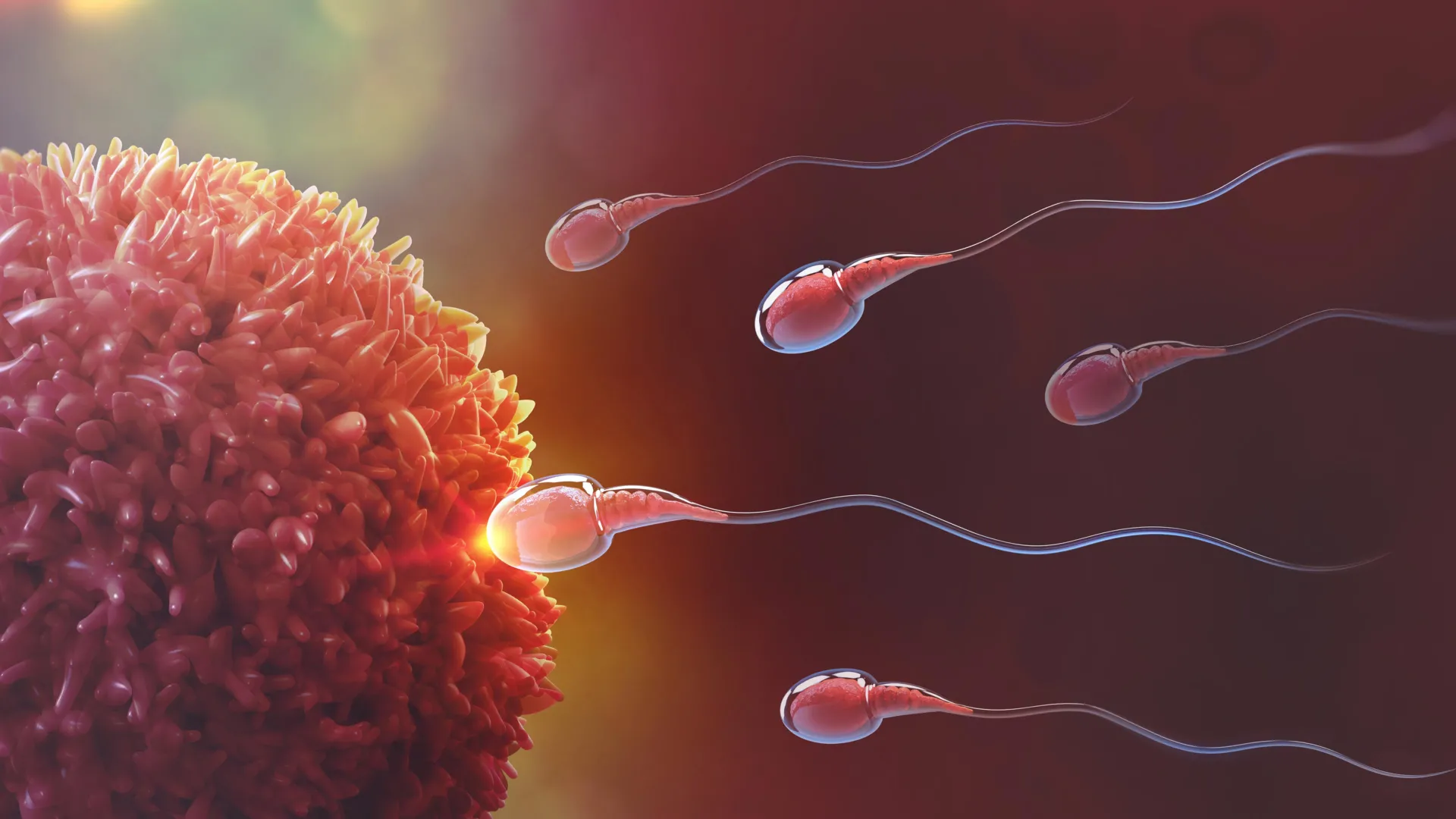
In a landmark study that could redefine the landscape of reproductive medicine, researchers at Michigan State University (MSU) have successfully identified a critical molecular "switch" that governs the energy levels of sperm cells during the final, high-stakes sprint toward fertilization. This metabolic discovery, centered on the enzyme aldolase, provides the most detailed map to date of how sperm transition from a dormant state to a high-energy "hyperactivated" state. The findings, recently published in the Proceedings of the National Academy of Sciences (PNAS), offer a dual-purpose breakthrough: providing a new roadmap for treating male infertility and paving the way for the development of safe, nonhormonal male birth control.
The research was led by Melanie Balbach, an assistant professor in the Department of Biochemistry and Molecular Biology at MSU, who joined the university in 2023 to expand her pioneering work in reproductive biology. According to the study, the metabolic reprogramming of sperm is a unique biological event. Unlike other cells in the human body that balance energy production with long-term maintenance and growth, sperm cells are specialized "delivery vehicles" with a singular, terminal objective. Once they leave the male body, their internal machinery shifts exclusively toward generating the massive bursts of energy required to navigate the female reproductive tract and penetrate the protective layers of an egg.
The Biological Mechanism of Sperm Activation
To understand the significance of this discovery, one must look at the life cycle of a mammalian sperm cell. Before ejaculation, sperm are maintained in a quiescent, low-energy state within the male reproductive system. This preservation state ensures they do not exhaust their limited resources prematurely. However, once introduced into the female reproductive tract, they undergo a dramatic transformation known as capacitation. During this phase, sperm must increase their swimming speed, adopt a more forceful, whip-like tail movement, and alter their outer membranes to prepare for fusion with the egg.
These physiological changes are incredibly energy-intensive. For decades, scientists have known that a sudden surge in energy production accompanies this transition, but the precise metabolic pathways and "traffic control" mechanisms remained elusive. Dr. Balbach’s team focused on how sperm process glucose, the primary sugar they absorb from their environment to fuel their journey.
By utilizing advanced imaging and chemical tracking, the researchers were able to visualize the metabolic flux—the rate at which molecules move through a cellular pathway. Dr. Balbach described the methodology using a vivid analogy: "You can think of this approach like painting the roof of a car bright pink and then following that car through traffic using a drone. In activated sperm, we saw this painted car moving much faster through traffic while preferring a distinct route and could even see what intersections the car tended to get stuck at."
The Role of Aldolase and Metabolic Regulators
The study’s primary revelation was the identification of the enzyme aldolase as a central regulator of this metabolic surge. Aldolase plays a pivotal role in glycolysis, the process by which cells break down glucose to produce adenosine triphosphate (ATP), the universal "energy currency" of life. The researchers discovered that in activated sperm, aldolase acts as a high-throughput valve, allowing glucose to be processed at significantly higher speeds than in inactive sperm.
Furthermore, the team found that sperm do not rely solely on external glucose. They also draw upon internal energy reserves—pre-stored metabolic intermediates—to jumpstart their movement. This "hybrid" fueling strategy allows sperm to maintain high performance even as they move through varying environments within the reproductive tract where glucose levels may fluctuate.
The research also highlighted that certain enzymes act as metabolic "gatekeepers." These enzymes dictate which chemical pathways the glucose takes, ensuring that energy is produced as efficiently as possible. By mapping these specific "intersections" in the metabolic grid, the researchers have identified potential targets for pharmacological intervention.
A Chronology of Scientific Progress
This discovery is the culmination of years of focused research. Earlier in her career at Weill Cornell Medicine, Dr. Balbach was part of a team that demonstrated that blocking a specific enzyme in sperm could lead to temporary, reversible infertility in mice. That earlier work served as a proof of concept for the idea of a "male pill" that does not rely on hormones.
Upon moving to Michigan State University in 2023, Balbach collaborated with specialists at the Memorial Sloan Kettering Cancer Center and the Van Andel Institute to refine the tracking of these metabolic processes. The integration of MSU’s Mass Spectrometry and Metabolomics Core was essential to the project, providing the high-resolution data needed to distinguish between the metabolic signatures of inactive and activated sperm.
The timeline of this research reflects a broader shift in reproductive science. For the past fifty years, the burden of contraception has fallen largely on women, with hormonal options such as the birth control pill being the gold standard despite a litany of side effects. The transition from studying sperm production (spermatogenesis) to studying sperm function (metabolism) represents a new frontier in the quest for male-centered reproductive options.
Addressing the Global Crisis of Infertility
While much of the public interest in this study focuses on contraception, the implications for infertility are equally profound. According to the World Health Organization (WHO), infertility affects approximately one in six people globally, with male-factor issues contributing to nearly half of all cases.
Current diagnostic tools for male infertility often focus on sperm count and morphology (shape). However, many men with "normal" sperm counts still struggle with conception. Dr. Balbach’s research suggests that a significant portion of these cases may be rooted in metabolic failures—sperm that look healthy but lack the "fuel" or the "engine" to reach the egg.
By understanding the role of aldolase and other metabolic regulators, clinicians may soon be able to develop more sophisticated diagnostic tests. These tests could identify specific metabolic deficiencies in a patient’s sperm, allowing for more targeted treatments. Furthermore, the findings could improve the success rates of assisted reproductive technologies, such as In Vitro Fertilization (IVF) and Intracytoplasmic Sperm Injection (ICSI), by optimizing the media used to "activate" sperm in the lab.
The Path Toward Nonhormonal Male Contraception
The most socially transformative application of this research lies in the development of a nonhormonal male contraceptive. Most previous attempts to create a "male pill" have focused on suppressing the production of sperm by manipulating testosterone or other hormones. These methods often take months to become effective, months to reverse, and carry side effects such as weight gain, mood changes, and decreased libido.
The metabolic approach offers a radical alternative. By targeting an enzyme like aldolase or its associated "traffic-control" regulators, scientists could develop a medication that temporarily "turns off" the sperm’s ability to generate energy. Because this would target the sperm directly after they are formed, rather than the process of making them, the effect could be nearly instantaneous and highly reversible.
"One option is to explore if one of our ‘traffic-control’ enzymes could be safely targeted as a nonhormonal male or female contraceptive," Dr. Balbach noted. Such a drug would essentially leave the sperm unable to complete their "sprint," rendering them incapable of fertilization without affecting the man’s hormonal balance or long-term fertility.
Societal Impact and Future Research
The societal implications of a nonhormonal male contraceptive are vast. Currently, approximately 50% of all pregnancies worldwide are unplanned. Providing men with a reliable, on-demand, and side-effect-free contraceptive option would increase reproductive agency and distribute the responsibility of family planning more equitably between partners.
"Right now, about 50% of all pregnancies are unplanned, and this would give men additional options and agency in their fertility," Balbach explained. "Likewise, it creates freedom for those using female birth control, which is hormone-based and highly prone to side effects."
The research team at MSU is now looking toward the future. The next phase of the study involves translating these findings from mouse models to human sperm. While mammalian sperm share many metabolic similarities, there are key differences in how different species utilize fuel sources like glucose and fructose. Dr. Balbach plans to investigate these nuances to ensure that any potential drug is both effective and safe for human use.
Supported by the National Institute of Child Health and Human Development, this research represents a critical step forward in our understanding of the smallest human cell. By unlocking the secrets of the sperm’s internal power plant, the MSU team is not only solving a biological mystery but also opening doors to a new era of reproductive health and autonomy. As the scientific community moves closer to clinical applications, the "pink car" tracked through the metabolic traffic of the cell may eventually lead to a destination that changes the lives of millions.
