
 By admin
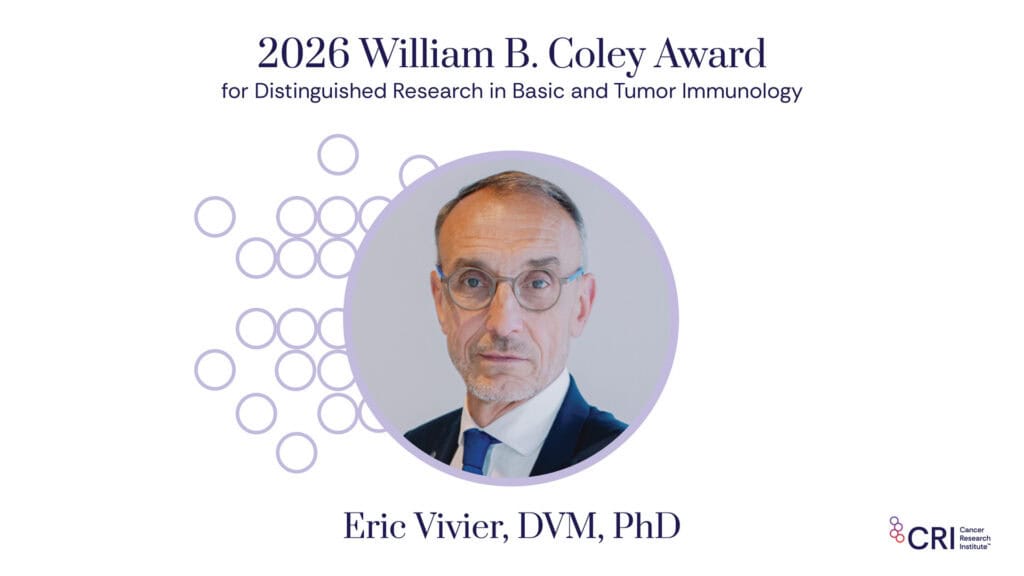
The Cancer Research Institute (CRI) proudly announced today the esteemed recipients of its 2026 Scientific Achievement Awards, recognizing two visionary leaders whose groundbreaking work has profoundly reshaped our understanding of immunology and its application to cancer treatment. Eric Vivier, DVM, PhD, a towering figure in the field of innate immunity, has been awarded the prestigious William B. Coley Award for Distinguished Research in Basic and Tumor Immunology. Concurrently, Joseph Sun, PhD, whose transformative discoveries have redefined immunological memory, is the recipient of the Frederick W. Alt Award for New Discoveries in Immunology. These accolades underscore CRI’s unwavering commitment to fostering innovative research that paves the way for advanced cancer immunotherapies.
The scientific community, along with philanthropists and industry leaders, will gather to celebrate these monumental achievements at CRI’s Annual Awards Gala. The distinguished event is scheduled for Tuesday, October 20, 2026, at the historic Guastavino’s in New York City. Further details regarding the gala, including keynote speakers and special presentations, are anticipated to be released in the coming weeks, promising an evening of recognition for scientific excellence and a renewed commitment to the fight against cancer.
A Legacy of Innovation: The Cancer Research Institute and its Awards
Founded in 1953, the Cancer Research Institute stands as the world’s leading nonprofit organization dedicated exclusively to advancing immunotherapy as a definitive cure for all cancers. For over seven decades, CRI has been at the forefront of supporting fundamental research that unravels the intricate mechanisms of the immune system, funding audacious scientific endeavors that often lie beyond the scope of traditional grants. Their mission is rooted in the belief that the human immune system holds the ultimate key to conquering cancer, a belief that has been progressively validated by the accelerating pace of immunotherapy breakthroughs over the last two decades.
The William B. Coley Award for Distinguished Research in Basic and Tumor Immunology, established in 1975, honors the legacy of Dr. William B. Coley, often hailed as the "Father of Immunotherapy." In the late 19th century, Dr. Coley pioneered the use of bacterial toxins to stimulate the immune system against cancer, achieving remarkable, albeit then-unexplained, remissions in patients. His pioneering, though controversial, work laid the conceptual groundwork for modern immunotherapy, demonstrating the inherent capacity of the immune system to combat malignancy. The Coley Award celebrates contemporary scientists whose foundational discoveries continue to illuminate and harness this potential.
Similarly, the Frederick W. Alt Award for New Discoveries in Immunology, initiated more recently in 2021, recognizes early- to mid-career scientists who have made exceptional and impactful discoveries that have shifted paradigms in immunology. Named in honor of Dr. Frederick W. Alt, a renowned geneticist and immunologist whose work on genetic recombination mechanisms transformed our understanding of immune system diversity, this award champions the next generation of scientific pioneers whose fresh insights promise to unlock new therapeutic avenues. These awards are not merely commendations; they are critical signposts in the ongoing scientific journey, highlighting research poised to profoundly impact human health.
Dr. Eric Vivier: A Pioneer in Innate Immunity and Therapeutic Translation
Dr. Eric Vivier, DVM, PhD, is celebrated as the recipient of the 2026 William B. Coley Award, a testament to his indelible mark on the field of immunology, particularly his pioneering contributions to the understanding of natural killer (NK) cells and innate immunity. Dr. Vivier, a distinguished Professor of Immunology at Marseille Medical School and head of the Innate Lymphoid Cells laboratory at the Centre d’Immunologie de Marseille-Luminy (CIML), France, has dedicated his career to dissecting the intricate mechanisms by which the innate immune system identifies and eradicates cancerous cells. His groundbreaking research has fundamentally advanced the scientific community’s comprehension of how the body’s first line of defense contributes to tumor surveillance and elimination.
Prior to Dr. Vivier’s seminal work, innate immunity was often viewed as a less sophisticated, non-specific branch of the immune system, distinct from the highly specific and adaptive responses mediated by T and B cells. His extensive research, however, has unveiled the remarkable plasticity and critical role of NK cells, demonstrating their profound capacity to directly kill infected or cancerous cells without prior sensitization. He elucidated key receptors and signaling pathways that govern NK cell activation and inhibition, revealing how these cells discriminate between healthy and diseased tissues. These discoveries were pivotal in establishing innate immunity, and specifically NK cells, as a cornerstone of modern cancer immunotherapy.
Beyond his profound academic contributions, Dr. Vivier has been a leading force in translating basic scientific insights into tangible clinical developments. He co-founded Innate Pharma, a leading biotechnology company focused on developing first-in-class immunotherapy drugs, predominantly targeting NK cells and the innate immune system. This direct involvement in biotechnology underscores his commitment to ensuring that his laboratory discoveries ultimately benefit patients, bridging the often-challenging gap between bench research and bedside application. Innate Pharma’s pipeline, leveraging NK cell biology, represents a direct legacy of his visionary research.
Dr. Vivier’s prolific scientific output and influence are further evidenced by his consistent recognition as a Highly Cited Researcher since 2015, a distinction awarded to scientists whose publications rank in the top 1% by citations for their field. His extensive list of honors includes election to the prestigious French National Academy of Medicine and the European Molecular Biology Organization (EMBO), as well as receiving some of France’s highest civilian distinctions, reflecting the national and international impact of his work. His forthcoming 2026 Coley Lecture, scheduled for Sunday, November 8, at the Society for Immunotherapy of Cancer (SITC) Annual Meeting in Phoenix, Arizona (November 4–8), is anticipated to be a highlight of the conference. This lecture provides a critical platform for Dr. Vivier to share his latest insights and future perspectives with thousands of leading immunologists, oncologists, and industry professionals, further shaping the trajectory of cancer immunotherapy.
Dr. Joseph Sun: Redefining Immunological Memory
Dr. Joseph Sun, PhD, has been honored with the 2026 Frederick W. Alt Award for New Discoveries in Immunology, recognizing his transformative contributions that have fundamentally reshaped our understanding of immunological memory. Dr. Sun, a distinguished Member of the Immunology Program at Memorial Sloan Kettering Cancer Center and Professor and Director of the Immunology and Microbial Pathogenesis Program at Weill Cornell Medical College, has unveiled crucial mechanisms governing T cell and, notably, NK cell memory. His research challenges long-held immunological dogma, blurring the traditional distinctions between the innate and adaptive arms of the immune system.
Historically, immunological memory—the ability of the immune system to "remember" previous encounters with pathogens and mount a faster, more robust response upon re-exposure—was primarily attributed to adaptive immune cells like T lymphocytes and B lymphocytes. Innate immune cells, including NK cells, were thought to lack this sophisticated memory function, performing immediate, non-specific responses. Dr. Sun’s pioneering work, initiated during his tenure as a CRI Irvington Postdoctoral Fellow from 2007–2009 in the laboratory of Dr. Lewis Lanier, PhD, at the University of California, San Francisco (UCSF), decisively overturned this paradigm.
During his fellowship, Dr. Sun demonstrated that NK cells can exhibit adaptive immune features, including clonal expansion—a process where specific immune cells proliferate rapidly in response to an antigen—and, critically, long-lived memory following viral infection. This discovery was revolutionary, as it provided compelling evidence that NK cells, traditionally classified as innate immune cells, could develop characteristics previously thought to be exclusive to the adaptive immune system. This finding opened an entirely new avenue of research into the plasticity and sophisticated capabilities of innate immune cells.
Dr. Lewis Lanier, a revered member of CRI’s Scientific Advisory Council and Dr. Sun’s former postdoctoral mentor, eloquently articulated the significance of this recognition: “Dr. Sun has been an absolute leader in his field, and I’m so happy that we’re going to acknowledge him as being one of the superstars that launched their careers with his CRI Irvington Fellowship.” This statement not only highlights Dr. Sun’s exceptional talent but also underscores the vital role of CRI’s fellowship programs in identifying and nurturing future scientific leaders. Such early-career support is often crucial for scientists to pursue high-risk, high-reward research that ultimately yields paradigm-shifting discoveries.
By illuminating the molecular pathways that drive immune memory in the context of both infection and cancer, Dr. Sun’s research continues to profoundly inform the development of next-generation immunotherapies. His findings suggest new strategies for enhancing anti-tumor immunity by leveraging the memory potential of NK cells, potentially leading to more durable and effective cancer treatments. The ability to "train" NK cells to remember and target cancer cells could revolutionize approaches to prevention and therapy, moving beyond current T cell-centric immunotherapies.
The Convergence of Immune Paradigms: A New Era in Cancer Immunotherapy
The collective work of Dr. Vivier and Dr. Sun epitomizes a profound paradigm shift in immunology: the increasingly recognized interdependence and integration of the innate and adaptive immune systems. For decades, immunology largely operated under a dualistic model, separating immune responses into innate (rapid, non-specific) and adaptive (slow, specific, memory-generating) branches. The groundbreaking discoveries by these two scientists, however, have demonstrated the remarkable overlap and synergy between these systems.
Dr. Vivier’s research on NK cells established the innate immune system’s sophisticated capacity for direct tumor recognition and destruction, elevating its status as a critical player in cancer surveillance. Concurrently, Dr. Sun’s revelation of NK cell memory fundamentally blurred the lines, showing that innate cells possess adaptive-like qualities, challenging the very definition of immunological memory. This convergence has profound implications for cancer immunotherapy, suggesting that future treatments must harness the full spectrum of immune responses, integrating both innate and adaptive components for optimal efficacy.
This integrated understanding is paving the way for innovative therapeutic strategies. For instance, therapies could be designed to prime NK cells to develop memory against specific tumor antigens, offering a novel approach to long-term cancer protection. Similarly, strategies that enhance the cross-talk between NK cells and T cells could lead to more robust and sustained anti-tumor responses. The historical separation of innate and adaptive immunity is dissolving, replaced by a holistic view that promises to unlock the immune system’s full potential against cancer and other diseases.
Broader Impact and Future Directions
The implications of the work of Dr. Vivier and Dr. Sun extend far beyond the immediate horizon of cancer treatment. Their discoveries contribute to a more comprehensive understanding of immune cell biology, which is critical for addressing a wide array of human diseases, including chronic infections, autoimmune disorders, and vaccine development. By unraveling the fundamental mechanisms of immune recognition and memory, they are providing essential blueprints for designing more effective vaccines and therapies across the medical spectrum.
In the realm of cancer, these insights are driving the development of novel immunotherapies that target or enhance NK cell activity, either as monotherapies or in combination with existing T cell-based treatments. Clinical trials are increasingly exploring the therapeutic potential of adoptive NK cell transfer, genetically engineered NK cells, and drugs that modulate NK cell function. The goal is to develop "off-the-shelf" immunotherapies that can be more broadly applied, offering hope to patients who may not respond to current treatments or those whose cancers are particularly aggressive.
The awards ceremony in October and Dr. Vivier’s lecture in November will serve not only as celebrations of past achievements but also as catalysts for future research. They will galvanize the scientific community to further explore the intricate interplay of immune cells, to continue challenging established dogma, and to accelerate the translation of fundamental discoveries into life-saving treatments. The Cancer Research Institute, through its sustained funding of groundbreaking science and its recognition of visionary scientists, remains a pivotal force in driving this ongoing revolution in immunology. The collective efforts of researchers like Dr. Vivier and Dr. Sun offer a powerful testament to the potential of human ingenuity to ultimately conquer cancer and improve global health outcomes.
