
 By admin
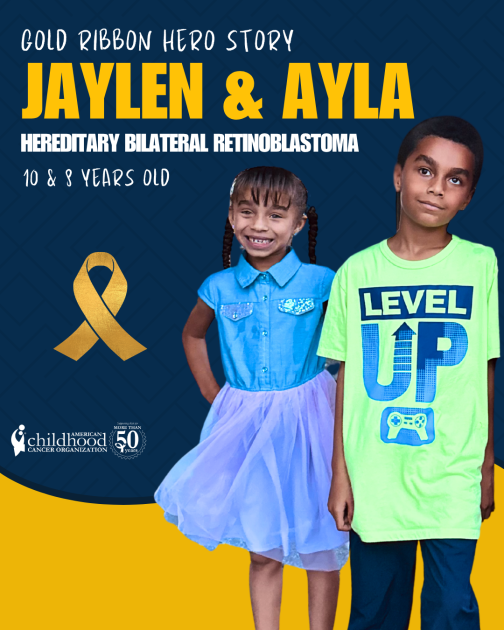
The narrative of Jaylen and Ayla, two young siblings from a resilient family, serves as a poignant illustration of the complexities surrounding hereditary bilateral retinoblastoma and the systemic barriers that can impede access to critical pediatric oncology care. Jaylen, now 10, and his sister Ayla, 8, are both survivors of this rare form of childhood eye cancer, yet their path to recovery was complicated not only by the biological aggression of the disease but also by a healthcare system that initially failed to accommodate their mother’s disability. Their story highlights the intersection of genetic predisposition, the necessity of early diagnostic vigilance, and the vital importance of the Americans with Disabilities Act (ADA) in medical settings.
The Onset of Symptoms and the Initial Diagnostic Barrier
The family’s encounter with retinoblastoma began when Jaylen was only two months old. His mother, Denice, observed that his left eye was veering outward, a condition known medically as strabismus, which can often be an early indicator of intraocular tumors. While early family photographs captured a distinct "glow" or white reflection in Jaylen’s eye—a clinical phenomenon called leukocoria—the family initially attributed the visual anomaly to the reflection of the camera’s flash. Leukocoria occurs when light reflects off the white surface of a tumor at the back of the eye, rather than the red blood vessels of the retina.
The diagnostic process hit a critical and preventable wall when Jaylen was four months old. During a scheduled check-up, the attending physician refused to see the family, citing the lack of an American Sign Language (ASL) interpreter for Denice, who is deaf. This refusal represented a significant breach of healthcare equity and legal mandates. Under the ADA, healthcare providers are required to provide effective communication aids, such as qualified interpreters, to ensure that patients and their guardians with disabilities have equal access to services.
Faced with a medical establishment that turned her away at a moment of potential crisis, Denice was forced to navigate the complex healthcare landscape independently. Her persistence eventually led to a provider who facilitated the necessary examinations, leading to the confirmation of bilateral retinoblastoma—cancer in both eyes.
Genetic Implications and the Proactive Diagnosis of Ayla
Retinoblastoma is a rare cancer of the retina, the thin nerve tissue at the back of the eye that senses light and sends images to the brain. While it is the most common primary intraocular tumor in children, it affects only about 200 to 300 children in the United States each year. Roughly 40% of cases are hereditary, caused by a germline mutation in the RB1 gene. In these hereditary cases, the cancer is frequently bilateral, affecting both eyes, and often manifests much earlier than sporadic, non-hereditary forms.
Because Jaylen’s condition was identified as hereditary, the risk to future siblings was significantly elevated. When Ayla was born, the family and medical teams were on high alert. This proactive monitoring proved lifesaving; Ayla was diagnosed with the same bilateral condition at just four weeks old. The disparity in their ages at diagnosis—four months for Jaylen versus four weeks for Ayla—illustrates the critical role that genetic history and clinical surveillance play in the early detection of pediatric cancers.
A Comprehensive Multi-Year Treatment Chronology
The clinical management of bilateral retinoblastoma is a multi-faceted endeavor aimed at three primary goals: saving the patient’s life, preserving the eye, and maintaining as much vision as possible. For Jaylen and Ayla, the journey involved a grueling regimen of modern oncological interventions.
Over several years, both children underwent systemic chemotherapy to shrink the tumors. This was supplemented by focal therapies designed to destroy remaining cancerous cells. These included cryotherapy, which uses extreme cold to freeze and eliminate small tumors, and laser therapy (photocoagulation or thermotherapy), which uses heat to destroy the blood vessels supplying the tumors.
Despite these efforts, the progression of the disease necessitated more invasive measures. Jaylen underwent strabismus surgery to correct the alignment of his eyes, a common secondary requirement in retinoblastoma cases where tumor growth or treatment has impacted eye muscle function. For Ayla, the severity of the condition in one eye eventually required enucleation—the surgical removal of the eye. Enucleation is typically reserved for cases where the tumor is too large to be treated by other means or where there is a high risk of the cancer spreading via the optic nerve to the brain.
Today, both children live with prosthetic eyes. The transition to ocular prosthetics is a significant milestone in the recovery of retinoblastoma patients, requiring both physical adaptation and psychological resilience.
Navigating the Healthcare System as a Deaf Parent
The challenges faced by Denice extend beyond the clinical demands of pediatric cancer. Her experience highlights a broader issue within the medical community: the frequent marginalization of disabled parents. The initial refusal of care for Jaylen due to a lack of an ASL interpreter added a layer of trauma to an already devastating diagnosis.
"It was incredibly heartbreaking and overwhelming to hear the word ‘cancer’ for both of my babies, but it was compounded by anger and frustration at the medical system that tried turning a deaf mother away," Denice stated. She noted that the experience forced her to transform from a parent into a "fearless advocate and manager" for her children’s health.
This advocacy is a necessity for many families dealing with rare diseases, but for those in the deaf community, it often involves a constant battle for basic communication rights. The legal obligation for hospitals to provide interpreters is not merely a courtesy; it is a fundamental requirement for informed consent and patient safety. Denice’s success in securing care for her children, despite these systemic hurdles, underscores the vital role of parental persistence in the face of institutional failure.
Analysis of Social Perception and the Choice of Joy
As the family shared their journey online to raise awareness, they encountered the complexities of public scrutiny. Denice noted that their story has occasionally been met with criticism regarding her parenting choices, specifically her decision to "beautifully spoil" her children and focus on living in the present.
From a sociological perspective, families surviving childhood cancer often adopt a "carpe diem" philosophy. The trauma of a life-threatening diagnosis often shifts a family’s priorities toward immediate happiness and the celebration of survival milestones. For Ayla, this celebration of life manifests in her collection of custom-colored prosthetic irises. By treating her prosthetic eyes as a medium for personal style and expression, she reclaims agency over a physical loss.
"Our triumphs have been absolutely legendary: both kids completely beating cancer, staying endlessly joyful," Denice remarked. This emphasis on joy and presence serves as a psychological coping mechanism and a defiant stance against the shadow of a chronic health history.
The Global Importance of "The Glow" Awareness
The case of Jaylen and Ayla serves as a vital data point for the importance of "The Glow" awareness campaigns. Organizations like the American Childhood Cancer Organization (ACCO) and "Know the Glow" emphasize that parents are often the first to detect retinoblastoma through simple observation.
Statistical data suggests that early detection significantly improves the prognosis for retinoblastoma. In developed nations with high access to specialized care, the survival rate for retinoblastoma is over 95%. However, the rate of eye preservation is lower, particularly in cases where diagnosis is delayed. By educating the public on the significance of leukocoria, advocacy groups aim to reduce the time between the first appearance of symptoms and the commencement of treatment.
Broader Implications for Pediatric Oncology and Disability Rights
The journey of the Jaylen and Ayla family reflects several broader trends and needs in the contemporary healthcare landscape:
- Genetic Counseling: The case underscores the necessity of genetic testing for all retinoblastoma patients. Identifying a germline mutation allows for the life-saving monitoring of siblings and future generations.
- Health Equity: There is a pressing need for increased training for medical staff regarding the ADA. Communication barriers should never be a reason for delayed pediatric cancer diagnosis.
- Prosthetic Innovation: The psychological integration of ocular prosthetics is aided by advancements in ocularistry, allowing children like Ayla to view their prosthetics with pride rather than shame.
- Survivorship Support: As Jaylen and Ayla grow, they will require lifelong monitoring, as survivors of hereditary retinoblastoma have an increased risk of developing secondary cancers later in life.
Jaylen and Ayla are currently thriving, with Ayla even learning ASL to better communicate with her mother and asserting her independence through various activities. Their story is a testament to the fact that while a cancer diagnosis is a life-altering event, it does not preclude a life defined by triumph and joy. Through the combination of maternal advocacy, medical intervention, and a refusal to be silenced by systemic barriers, the family has transitioned from a state of medical crisis to one of advocacy and public inspiration.
