
 By admin
Adrienne Skinner’s journey is a powerful testament to the rapidly evolving landscape of cancer treatment, where cutting-edge immunotherapy transformed a grim, stage 4 diagnosis into a story of profound survival and advocacy. Her battle against a rare ampullary cancer, exacerbated by a hereditary condition known as Lynch syndrome, underscores the critical importance of genetic vigilance, patient empowerment, and the groundbreaking potential of novel therapeutic approaches. Despite her proactive approach to health due to a known genetic predisposition, Skinner faced a formidable challenge, ultimately finding life-saving intervention through a clinical trial that tested an immunotherapy, providing hope and a blueprint for others navigating similar complex diagnoses.
A Startling Diagnosis Amidst Vigilance: Adrienne Skinner’s Battle
For Adrienne Skinner, routine cancer screenings were not merely a recommendation but a critical component of her life, dictated by her diagnosis with Lynch syndrome. This inherited genetic condition significantly elevates the risk of developing various cancers, often striking at an unusually young age. Despite her diligent adherence to screening protocols, a devastating diagnosis arrived: a rare, stage 4 ampullary cancer, accompanied by a grim prognosis that left little room for optimism. Ampullary cancer, originating in the ampulla of Vater – a small opening connecting the pancreatic and bile ducts to the small intestine – is exceptionally uncommon, representing less than 1% of all gastrointestinal cancers and approximately 7% of periampullary cancers.
The shock of the diagnosis was compounded by the advanced stage of the disease; doctors estimated the cancer had been developing for nearly two years and had metastasized to her liver. This widespread disease severely limited conventional treatment options. Adrienne endured multiple rounds of chemotherapy, a standard but often grueling treatment aimed at destroying rapidly dividing cancer cells. However, her cancer proved stubbornly resistant, and the various regimens failed to halt its progression, leaving her increasingly debilitated and exhausted. Facing diminishing hope, she was offered what seemed a final, experimental option: enrollment in a clinical trial investigating an immunotherapy. Although initially deemed not an ideal candidate, Adrienne’s unwavering self-advocacy secured her a place in the trial. The treatment she received, Keytruda® (pembrolizumab), would ultimately save her life, allowing her to reclaim a vibrant existence filled with tennis, yoga, and cherished moments with her four daughters and grandsons. Today, she channels her experience into giving back, sharing her remarkable story to offer hope to others confronting rare cancer diagnoses.
Lynch Syndrome: Unmasking a Genetic Predisposition to Cancer
Lynch syndrome, also known as hereditary non-polyposis colorectal cancer (HNPCC), is one of the most common inherited causes of cancer, affecting approximately 1 in 279 people globally. It is a hereditary genetic condition caused by mutations in specific DNA mismatch repair (MMR) genes, including MLH1, MSH2, MSH6, PMS2, and sometimes the EPCAM gene. These crucial genes are responsible for correcting errors that occur during DNA replication. When mutated, they prevent the body from effectively repairing DNA damage, leading to an accumulation of genetic errors that significantly increase the risk of uncontrolled cell growth and, consequently, cancer.
Individuals inheriting a Lynch syndrome gene mutation face a substantially higher lifetime risk of developing several cancers, often at a younger age than the general population. If a parent carries such a mutation, each biological child has a 50% chance of inheriting the condition. The cancers most commonly associated with Lynch syndrome include colorectal, endometrial (uterine), ovarian, stomach, small intestine, liver, gallbladder, bile duct, urinary tract, brain, and sebaceous gland cancers. Adrienne’s ampullary cancer falls within the category of bile duct cancers, highlighting the broad spectrum of malignancies linked to this syndrome. Given that Lynch syndrome can remain undetected until a cancer diagnosis, understanding one’s genetic risk is paramount. Genetic testing for MMR gene mutations, coupled with aggressive and regular cancer screenings, forms the cornerstone of early detection and successful management for individuals and families at risk. Cascade testing, where family members of an identified carrier are also tested, is crucial for comprehensive risk management within affected families.
The Silent Threat: Understanding Gallbladder and Bile Duct Cancers
February is dedicated as Gallbladder and Bile Duct Cancer Awareness Month, a crucial period aimed at shedding light on these often-overlooked and rare malignancies. Awareness efforts concentrate on enhancing early detection strategies, propelling research initiatives forward, and sharing compelling patient narratives—such as Adrienne’s—that underscore the urgent demand for more effective treatment options, sustained progress, and continued momentum in the fight against these diseases.
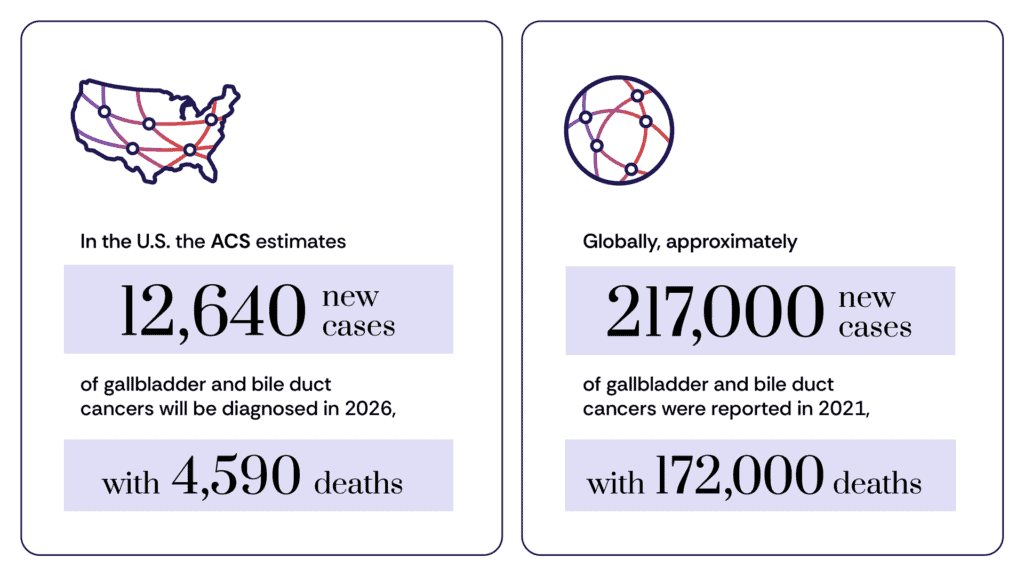
Gallbladder and bile duct cancers, collectively known as cholangiocarcinoma when referring to bile duct cancer, develop when abnormal cells begin to grow uncontrollably within the gallbladder or the intricate network of bile ducts. The bile ducts are thin tubes that form a critical transport system, carrying bile from the liver and gallbladder to the small intestine. Bile itself is a thick fluid essential for digestion, aiding in the breakdown of fats and facilitating the body’s elimination of waste products filtered from the bloodstream. In the United States, approximately 12,000 new cases of cholangiocarcinoma are diagnosed annually, along with a similar number of gallbladder cancer cases. These cancers are particularly insidious because of their anatomical location; the gallbladder and bile ducts are situated deep within the body, making early detection through routine physical examinations or standard screening tools exceptionally challenging.
Symptoms, when they eventually appear, are often vague and can mimic less serious conditions, including jaundice (yellowing of the skin and eyes), abdominal pain, unexplained weight loss, and dark urine. By the time these symptoms become noticeable enough to prompt a diagnosis, the cancer has frequently advanced to later stages, with metastasis already present. This delay in diagnosis severely impacts prognosis; sadly, only about one in five cases of gallbladder and bile duct cancers are detected at an early, localized stage. The five-year survival rate for localized bile duct cancer is around 30%, but this drops significantly to only 2% for distant, metastatic disease. These grim statistics underscore the critical need for continued research into early diagnostic markers and more effective therapeutic interventions.

A Turning Point: The Promise of Immunotherapy
Adrienne Skinner’s journey took a dramatic turn when conventional treatments for her advanced ampullary cancer, a type of bile duct cancer, proved ineffective. The failure of multiple chemotherapy regimens left her with limited options and a rapidly deteriorating condition. It was at this critical juncture that she was presented with an opportunity to participate in a clinical trial—a beacon of hope for patients with resistant cancers. The trial was testing an innovative immunotherapy specifically designed for cancers exhibiting a particular genetic marker. Fortuitously, this exact marker was identified within Adrienne’s tumor.
Despite initial hesitations from medical professionals about her suitability, Adrienne’s fierce determination and self-advocacy were instrumental in her enrollment. She was subsequently treated with Keytruda® (pembrolizumab), an immune checkpoint inhibitor. The decision to pursue a clinical trial, especially for a rare cancer where standard treatments have failed, often represents a leap of faith for patients and their families. However, it is precisely these trials that drive medical progress, transforming scientific discoveries into life-saving treatments. Adrienne’s experience highlights the vital role of patient engagement and the courage to explore cutting-edge, experimental therapies when conventional pathways are exhausted.
How Immunotherapy Works: Harnessing the Body’s Own Defenses
Immunotherapy represents a paradigm shift in cancer treatment, fundamentally differing from traditional approaches like chemotherapy and radiation. Instead of directly attacking cancer cells with toxic drugs or radiation, immunotherapy empowers the body’s own immune system to recognize, target, and destroy malignant cells. The human immune system is a sophisticated defense network, constantly surveying the body for threats such as pathogens and abnormal cells. However, cancer cells are often adept at evading this surveillance. They can develop mechanisms to hide from immune detection or suppress the immune response, effectively putting the "brakes" on the immune system.
Immunotherapy works by "unmasking" cancer cells and removing these inhibitory barriers. One of the most successful forms, exemplified by Keytruda, is the use of immune checkpoint inhibitors (ICIs). These drugs target specific proteins on immune cells (like PD-1 or CTLA-4) or cancer cells (like PD-L1) that act as "checkpoints" to regulate immune responses. By blocking these checkpoints, ICIs essentially release the "brakes" on the immune system, allowing T-cells—the immune system’s primary killer cells—to become activated and launch a potent, sustained attack against the cancer. This targeted activation can not only eliminate existing cancer cells but also establish a "memory" within the immune system, potentially reducing the risk of cancer recurrence. Within months of starting Keytruda, Adrienne Skinner’s cancer remarkably disappeared. A surgeon, astonished by the outcome, famously told her, "If someone hadn’t told me you had ampullary cancer, I wouldn’t have believed it. There’s just nothing there." This profound response, achieved in 2014, has ensured Adrienne has remained without evidence of disease ever since, a testament to the transformative power of immunotherapy.
Immunotherapy’s Ascendance in Gallbladder and Bile Duct Cancer Treatment
The landscape of treatment for advanced gallbladder and bile duct cancers has been significantly transformed by the advent of immunotherapy, particularly through the use of immune checkpoint inhibitors (ICIs). Historically, these cancers have been challenging to treat due to their aggressive nature, late diagnosis, and limited responsiveness to conventional chemotherapy. However, the understanding that a subset of these tumors exhibits specific genetic characteristics, such as microsatellite instability-high (MSI-H) or deficient mismatch repair (dMMR), which are often found in Lynch syndrome-associated cancers, has opened the door for highly effective immunotherapy.
ICIs work by blocking inhibitory signals like PD-L1 (Programmed Death-Ligand 1) on cancer cells and PD-1 (Programmed Death-1) or CTLA-4 (Cytotoxic T-Lymphocyte-Associated protein 4) on immune cells. By disabling these "brakes," these treatments allow the immune system to mount a robust attack against the cancer. Key ICIs that have gained approval and are utilized in the treatment of gallbladder and bile duct cancers include:
- Pembrolizumab (Keytruda®): Developed by Merck, it was among the first ICIs to receive broad approval for MSI-H/dMMR tumors across various cancer types, including those affecting the bile ducts, as seen in Adrienne’s case.
- Nivolumab (Opdivo®): From Bristol Myers Squibb, this anti-PD-1 antibody has shown efficacy in certain settings for advanced gastrointestinal cancers.
- Durvalumab (Imfinzi®): Developed by AstraZeneca, this anti-PD-L1 antibody is used in combination with gemcitabine and cisplatin as a first-line treatment for locally advanced or metastatic biliary tract cancer.
- Tremelimumab (Imjudo®): Also from AstraZeneca, an anti-CTLA-4 antibody, often used in combination with durvalumab for certain advanced liver cancers, including those that might arise in the biliary system.
Treatment decisions for gallbladder and bile duct cancers are increasingly personalized, heavily reliant on the specific cancer type, its stage, and the unique genetic and molecular features of the tumor, such as MSI-H/dMMR status or PD-L1 expression. While immunotherapy has brought unprecedented hope, it is not universally effective for all patients. Therefore, a comprehensive discussion with a specialized healthcare team is essential to determine whether immunotherapy is an appropriate and beneficial option for an individual patient, weighing the potential benefits against possible side effects.
The Road Ahead: Ongoing Research and Future Innovations
While immunotherapy has undeniably revolutionized the treatment landscape for advanced gallbladder and bile duct cancers, it is crucial to acknowledge that not all patients respond to current immunotherapies. This reality fuels an intensive and dynamic field of ongoing research, driven by the imperative to expand the reach and efficacy of these life-saving treatments. Scientists and clinicians are actively exploring a multitude of new therapeutic strategies, pushing the boundaries of what is possible in cancer care.
One major focus is combination therapies. Researchers are investigating the synergistic effects of combining immunotherapies with traditional treatments like chemotherapy, radiation therapy, or targeted therapies. For instance, combining ICIs with chemotherapy can sometimes prime the tumor microenvironment, making cancer cells more visible and vulnerable to immune attack. Similarly, combining different types of immunotherapies, such as anti-PD-1 with anti-CTLA-4 agents, aims to unleash a more comprehensive and potent immune response.

Beyond combinations, the development of emerging approaches holds significant promise. CAR T-cell therapy, a revolutionary treatment primarily used for blood cancers, involves genetically engineering a patient’s own T-cells to recognize and attack cancer cells. While its application in solid tumors like bile duct cancer is still largely experimental, ongoing clinical trials are exploring ways to overcome the unique challenges posed by the solid tumor microenvironment. Cancer vaccines are another area of intense research, designed to train the immune system to recognize specific cancer antigens and mount a targeted attack. These vaccines can be therapeutic, aiming to treat existing cancer, or prophylactic, seeking to prevent recurrence. Furthermore, novel agents such as oncolytic viruses, which selectively infect and destroy cancer cells while stimulating an immune response, and bispecific antibodies, engineered to simultaneously bind to cancer cells and immune cells, are under active investigation.
Crucially, research is also heavily invested in biomarker identification. The ability to predict which patients will respond to immunotherapy is paramount. Scientists are working to identify molecular signatures within tumors or blood that can serve as reliable predictors of response, allowing for more precise patient selection and avoiding ineffective treatments. The ultimate goal of this multifaceted research is to develop more effective immunotherapies that can benefit a broader range of patients, offering them the same hope and extended lifespan that Adrienne Skinner found.
Empowering Patients: Advocacy, Information, and Support
Receiving a cancer diagnosis, whether for oneself or a loved one, is an overwhelmingly challenging experience. In this daunting journey, the role of patient advocacy, informed decision-making, and a robust support system cannot be overstated. Adrienne Skinner’s story is a powerful illustration of how proactive engagement and self-advocacy can fundamentally alter the course of a disease.
For any patient, becoming their own best advocate is paramount. This involves a commitment to thoroughly understanding one’s specific cancer type, its stage, and all available treatment modalities. Asking questions—many questions—is not just encouraged but essential. Patients should inquire about the pros and cons of various treatments, potential side effects, the availability of clinical trials, and the rationale behind recommended therapies. Exploring clinical trials, as Adrienne did, can open doors to cutting-edge treatments that might not yet be widely available, offering hope when standard options are exhausted. It is also highly advisable to seek second opinions from other specialists. Different experts may offer alternative perspectives, treatment plans, or insights into niche clinical trials, ensuring that all possible avenues are thoroughly explored.
Beyond medical decisions, leaning on a strong support system is vital. Cancer is not a battle meant to be fought alone. Family, friends, support groups, and patient advocacy organizations provide invaluable emotional, practical, and informational assistance. Organizations like the Cancer Research Institute (CRI) offer comprehensive resources such as their "Patient’s Guide to Cancer Immunotherapy," designed to empower patients with knowledge. Furthermore, services like CRI’s Clinical Trial Navigator, accessible via phone at 855-216-0127 or through their website, provide personalized guidance in finding suitable clinical trials, connecting patients with potentially life-saving research. The collective wisdom and support from these networks can significantly alleviate the burden of a cancer diagnosis, fostering resilience and informed decision-making throughout the treatment journey.
Frequently Asked Questions: Demystifying Immunotherapy and Cancer Care
How does immunotherapy differ from chemotherapy?
The fundamental difference between immunotherapy and chemotherapy lies in their mechanisms of action. Chemotherapy involves introducing powerful drugs into the body designed to directly attack and kill rapidly dividing cells, including cancer cells. While effective, chemotherapy often has significant side effects because it can also harm healthy, fast-dividing cells. Immunotherapy, in contrast, works with the body’s own immune system. It doesn’t directly kill cancer cells but rather activates or enhances the immune system’s natural ability to recognize and destroy them. This activation can not only eliminate existing tumors but also create a long-lasting immune memory, potentially preventing recurrence. Due to these differing mechanisms, the side effect profiles of immunotherapy are distinct from those of chemotherapy and can vary greatly among individuals. It is crucial to have an in-depth discussion with your healthcare team to understand the specific benefits, risks, and potential side effects of any treatment route.
Is immunotherapy right for everyone with gallbladder and bile duct cancers?
No, immunotherapy is not universally suitable for all patients with gallbladder and bile duct cancers. While it has proven to be a transformative treatment for many, its effectiveness often depends on specific characteristics of the cancer, such as its genetic profile (e.g., MSI-H/dMMR status) and the expression of certain biomarkers like PD-L1. For example, patients with MSI-H/dMMR tumors, which are more common in Lynch syndrome-associated cancers like Adrienne’s, tend to respond exceptionally well to immune checkpoint inhibitors. However, other tumor subtypes may not show the same level of response. Therefore, it is essential for patients and their loved ones to engage in a detailed discussion with their healthcare team to determine if immunotherapy is a viable and appropriate option based on their individual diagnosis and tumor biology. Ongoing research continues to expand the understanding of who benefits most, aiming to bring more immunotherapy options to a broader patient population.
How do doctors decide when immunotherapy might be right?
Doctors employ a comprehensive approach to determine if immunotherapy is the appropriate treatment for a patient with gallbladder or bile duct cancer. This decision-making process involves a thorough evaluation of several key factors: the specific type and stage of the cancer, previous therapies the patient may have undergone, the patient’s overall health and performance status, and critically, the molecular and genetic characteristics of the tumor. Advanced genomic profiling and biomarker testing are increasingly vital tools, as they can identify specific mutations or expressions (like MSI-H/dMMR status or PD-L1 expression) that predict a higher likelihood of response to immunotherapy. Not every patient will benefit from immunotherapy for their cancer, and a personalized approach is paramount to ensure that the most effective and least toxic treatment path is chosen. Your doctor will weigh all these elements to present the best available options.
What other questions should I ask my healthcare team about immunotherapy?
Engaging proactively with your healthcare team is essential for feeling empowered and informed about your treatment decisions. Beyond asking if immunotherapy is an option, consider these questions:
- What specific type of immunotherapy are you recommending, and why?
- What are the potential side effects of this immunotherapy, and how will they be managed?
- How will we monitor my response to the treatment, and how often?
- What are the expected duration and frequency of treatments?
- What are the alternatives if immunotherapy is not effective or if side effects are unmanageable?
- Are there any dietary or lifestyle changes I should make while on immunotherapy?
- What is the success rate for patients with my specific cancer profile on this treatment?
- Are there any ongoing clinical trials for which I might be eligible?
- How will this immunotherapy interact with my other medications or existing health conditions?
- What resources are available for patient support, both for me and my family?
What gives doctors and researchers hope about the future of gallbladder and bile duct cancer treatment?
The future of gallbladder and bile duct cancer treatment is viewed with increasing hope by doctors and researchers, largely due to the rapid advancements in immunotherapy and precision medicine. This optimism stems from several key areas:
- Expanding Efficacy: Ongoing research is not only identifying more effective immunotherapies but also understanding how to make these treatments work for a greater number of patients, especially those with different cancer characteristics that currently do not respond well.
- Combination Strategies: The potential of combining immunotherapies with other treatment modalities (chemotherapy, radiation, targeted drugs) is yielding promising results, suggesting synergistic effects that can overcome resistance and enhance anti-tumor responses.
- Biomarker Discovery: The continuous discovery of new biomarkers is crucial for personalized medicine, enabling clinicians to predict treatment response more accurately and select the optimal therapy for each patient, minimizing ineffective treatments.
- Patient Voices Shaping Research: A significant source of hope comes from the growing involvement of patient advocates. Stories like Adrienne’s, alongside organized patient advocacy groups, are directly influencing research priorities, ensuring that scientific endeavors are grounded in the real-world needs and experiences of those facing these diseases. This patient-centric approach ensures that the future of gallbladder and bile duct cancer treatment aims not just to prolong life, but to enhance its quality, ultimately striving to give every patient more hope and more precious time.
