
 By Gabriel Paijo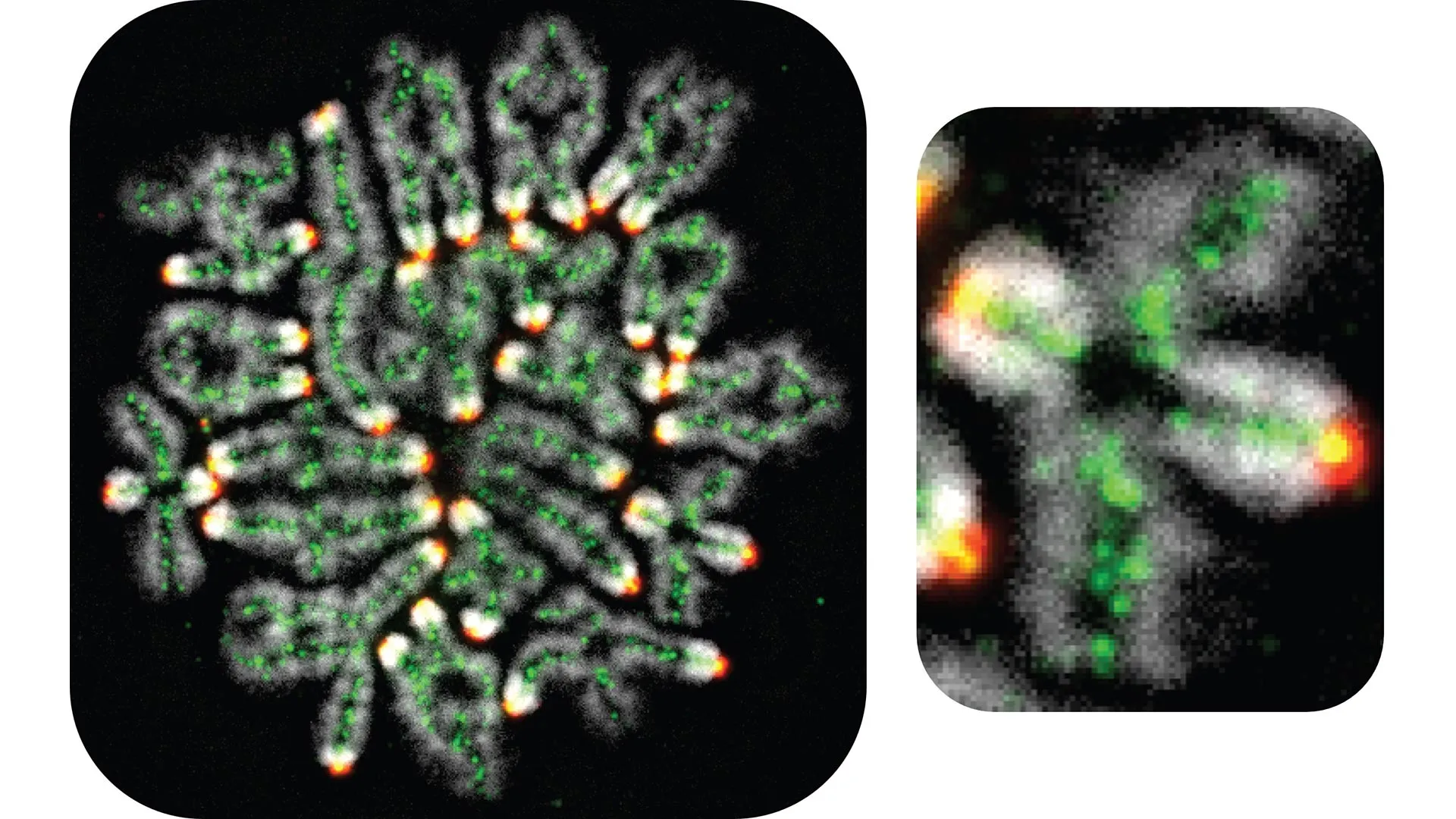
The blueprint for a healthy human life is drafted long before a child is born, often beginning while a mother is herself still a fetus developing within the womb. In a groundbreaking study published on September 24 in the journal Nature, a research team led by Neil Hunter, a professor in the Department of Microbiology and Molecular Genetics at the University of California, Davis, has unveiled the intricate molecular choreography required to ensure the faithful transmission of genetic material from one generation to the next. The findings provide a transformative look at how cells manage the complex process of chromosome "crossover," a mechanism essential for preventing infertility, miscarriages, and congenital genetic disorders.
The research identifies a specific network of proteins that act as guardians for the structures that hold chromosome pairs together. By protecting these connections, the proteins ensure that when cells divide to create eggs and sperm, the resulting gametes contain the correct number of chromosomes. This discovery not only sheds light on the fundamental mechanics of biology but also offers potential new pathways for diagnosing and treating reproductive health issues in humans.
The Biological Stakes of Chromosome Segregation
Every human cell typically contains 46 chromosomes, organized into 23 homologous pairs. One set is inherited from the mother and the other from the father. To produce the next generation, these cells must undergo a specialized type of division called meiosis, which reduces the chromosome count by half, resulting in eggs or sperm with 23 individual chromosomes.
The success of meiosis hinges on a process known as recombination. Early in the development of gametes, homologous chromosomes must find their matching partners, align perfectly, and physically swap segments of DNA. These points of exchange, known as crossovers, serve a dual purpose. First, they shuffle the genetic deck, ensuring that every offspring possesses a unique combination of traits from their ancestors. Second, and perhaps more critically for the immediate viability of a pregnancy, crossovers act as the physical "glue" that keeps chromosome pairs locked together until the moment they need to be separated.
If this process falters—a phenomenon known as nondisjunction—the resulting egg or sperm may end up with an extra chromosome or a missing one. This state, called aneuploidy, is a leading cause of reproductive failure. In humans, it is estimated that at least 10% to 25% of all pregnancies end in miscarriage, with chromosomal abnormalities being the primary driver. When such pregnancies do go to term, they can result in conditions such as Down syndrome (Trisomy 21), Edwards syndrome (Trisomy 18), or Patau syndrome (Trisomy 13), which are characterized by significant developmental and physiological challenges.
A Tale of Two Timelines: Male vs. Female Gametogenesis
One of the most striking aspects of the research is its emphasis on the differing timelines of male and female reproductive development. In males, the production of sperm begins at puberty and continues throughout life. The process of meiosis is relatively rapid and continuous, with new sperm cells being generated in a matter of weeks.
In contrast, the timeline for human females is both ancient and precarious. A woman’s entire lifetime supply of egg cells is created while she is still a fetus in her mother’s womb. During this prenatal period, the immature eggs (oocytes) initiate meiosis and form the critical crossovers that link chromosome pairs. However, the process then enters a state of "suspended animation." These oocytes remain arrested in this state for decades—from birth through puberty and until the specific moment of ovulation.
"Maintaining the crossover connections over many years is a major challenge for immature egg cells," Professor Hunter noted. As the years pass, the molecular glue holding these chromosomes together can weaken. This "maternal age effect" is a well-documented phenomenon in clinical medicine; as a woman ages, the risk of chromosomal errors increases significantly because the crossovers formed decades earlier may finally fail, leading to improper segregation during the final stages of egg maturation.
The Discovery of the Double Holliday Junction Protectors
To understand how cells protect these vital connections, the Hunter lab focused on a transient but essential DNA structure called the "double Holliday junction" (dHj). During recombination, matching DNA strands from homologous chromosomes are unzipped, exchanged, and twined together, creating a four-way intersection. To form a stable crossover, these junctions must be cut and rejoined in a very specific manner.
The challenge for the cell is that other cellular machineries often mistake these junctions for DNA damage that needs to be "repaired" or dismantled. Using budding yeast (Saccharomyces cerevisiae) as a model organism, Hunter’s team employed a sophisticated technique known as "real-time genetics." This allowed them to monitor molecular events with unprecedented resolution. By genetically engineering yeast cells to degrade specific proteins at precise moments, the researchers could observe exactly what happened to the DNA junctions when certain "guardians" were missing.
The team identified that a protein complex called cohesin—already known for holding sister chromatids together—plays a vital role in protecting the double Holliday junction. Cohesin, along with a network of associated proteins, prevents an enzyme known as the STR complex (referred to as the Bloom complex in humans) from prematurely dissolving the junction.
In a normal, healthy cell, the STR complex acts as a "DNA helicase" that unwinds DNA to prevent inappropriate recombination. However, during meiosis, if the STR complex is allowed to act too early on a double Holliday junction, it will dismantle the structure before a crossover can be finalized. The Hunter lab’s discovery proves that cohesin effectively "shields" the junction, ensuring it remains intact until the cell is ready to resolve it into a permanent crossover.
From Yeast Models to Human Medicine
While the study was conducted in yeast, its implications for human health are direct and profound. "The chromosome structures that we studied have changed very little across evolution," Hunter explained. "Every protein that we looked at in yeast has a direct counterpart in humans."
This evolutionary conservation suggests that the same molecular battles are occurring within human fetal ovaries and adult testes. The human version of the STR complex, the Bloom complex, is named after Bloom syndrome—a rare genetic disorder characterized by genomic instability, stunted growth, and a high risk of cancer. By understanding how the Bloom complex is regulated during meiosis, researchers can better understand why some individuals may be more prone to producing aneuploid gametes.
The research also highlights the role of the UC Davis institutional infrastructure in facilitating high-level genomic science. The project utilized the university’s Proteomics Core Facility, the MCB Light Microscopy Imaging Facility, and the Genome Center. Furthermore, the study was a collaborative effort involving seven undergraduate students from the UC Davis College of Biological Sciences, highlighting the university’s commitment to integrating teaching with world-class research.
Data and Statistical Context of Chromosomal Disorders
The importance of Hunter’s work is underscored by the prevalence of chromosomal disorders in the general population. According to the Centers for Disease Control and Prevention (CDC), Down syndrome remains the most common chromosomal condition diagnosed in the United States, occurring in approximately 1 in every 700 babies.
Data from reproductive clinics shows a sharp increase in the rate of aneuploidy as maternal age increases:
- At age 25, the probability of a pregnancy being affected by a chromosomal abnormality is roughly 1 in 1,200.
- By age 35, the risk increases to 1 in 290.
- By age 45, the risk rises dramatically to 1 in 21.
The Hunter lab’s findings provide a mechanistic explanation for these statistics. If the protein "choreography" that protects crossovers fails—either due to genetic mutations in the cohesin/STR pathway or due to the natural degradation of these proteins over decades of oocyte arrest—the result is the same: a failure to maintain the physical connection between chromosomes, leading to errors during ovulation.
Broader Implications and Future Research
The discovery published in Nature opens several new doors for reproductive science. First, it provides potential biomarkers for fertility. In the future, clinicians might be able to screen for the integrity of these protein complexes to predict a woman’s "reproductive reserve" or the likelihood of successful IVF outcomes.
Second, the research has implications for cancer biology. Because the proteins involved in meiotic recombination are also used by somatic cells to repair DNA damage, understanding how they are regulated can inform our understanding of how tumors develop and how they might be treated. The STR/Bloom complex is a major target for cancer research because its dysfunction leads to the kind of genomic instability that fuels tumor growth.
Finally, the study reinforces the value of basic science research. By looking at the humble yeast cell, Hunter and his team have solved a puzzle that has direct relevance to the most intimate and complex moments of human life.
"This strategy allowed us to answer a question that previously wasn’t possible," Hunter said. As science moves forward, the "real-time genetics" approach developed by the team will likely be applied to other mysterious aspects of the genome, continuing to peel back the layers of how life ensures its own continuity against the odds of molecular error.
The work was supported by the National Institutes of Health and the Howard Hughes Medical Institute, along with several cancer research foundations, reflecting the broad impact of chromosomal study on multiple fields of medicine. As the scientific community digests these findings, the focus will likely shift toward human clinical trials and the development of interventions that can bolster the natural protections of our genetic heritage.
