
 By Gabriel Paijo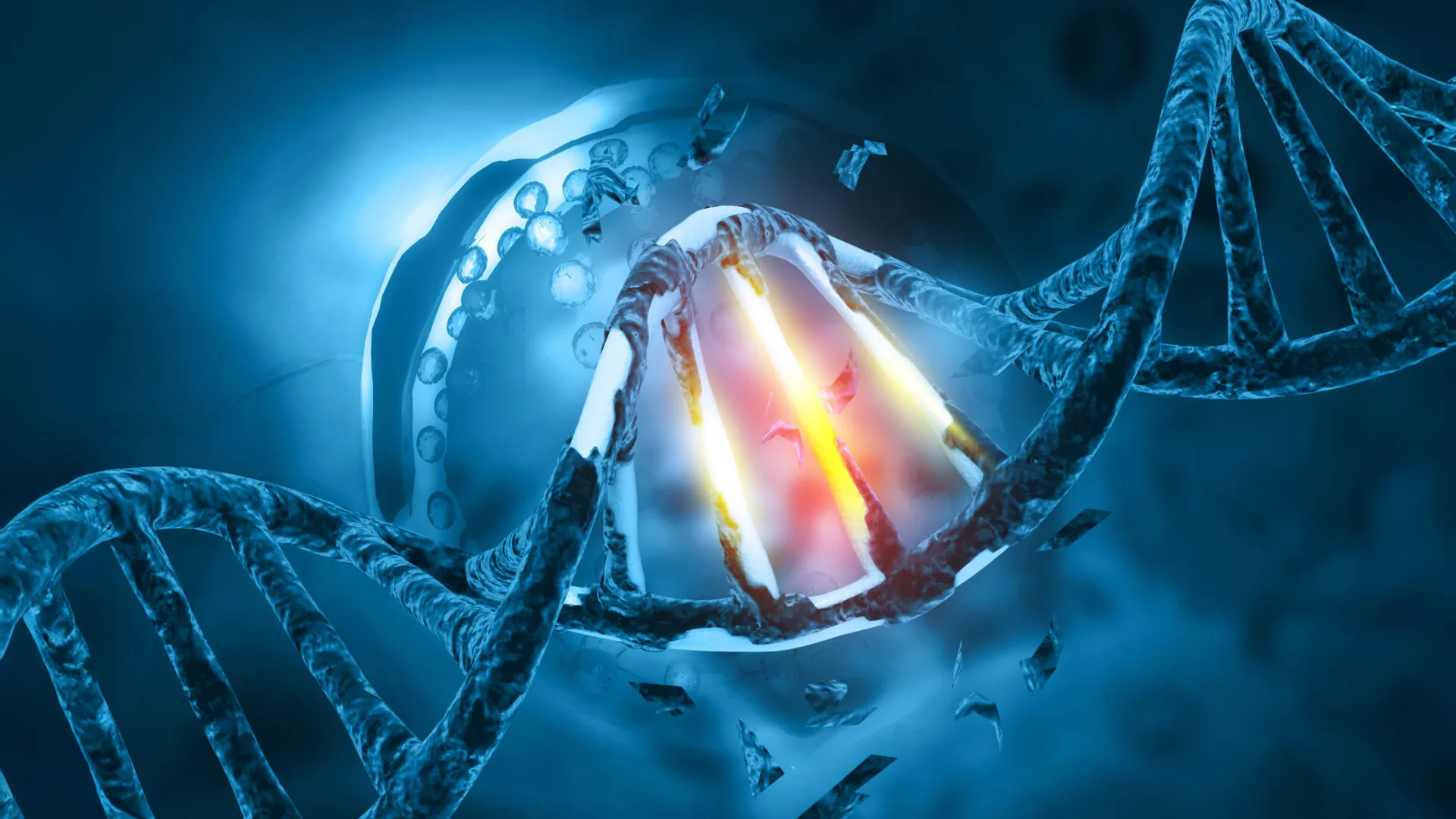
A groundbreaking series of studies published in the journal Nature has fundamentally altered the scientific understanding of how paternal age influences the genetic health of offspring. Researchers from the Wellcome Sanger Institute, King’s College London, and Harvard Medical School have demonstrated that the accumulation of disease-causing mutations in the sperm of older men is not merely a result of random cellular "wear and tear." Instead, a subtle and previously misunderstood form of natural selection occurs within the male reproductive system, where certain harmful genetic changes actually provide a competitive advantage to the cells that produce sperm. This process, known as clonal expansion, allows cells carrying these mutations to proliferate more rapidly than healthy cells, leading to a significantly higher proportion of mutated sperm as a man ages.
The findings provide a molecular explanation for the long-observed "paternal age effect," a phenomenon where older fathers are more likely to have children with rare developmental disorders and certain types of cancer. By mapping the entire sperm genome across a diverse age range, the research team has identified dozens of genes that benefit from this internal selection process, many of which are linked to serious conditions such as Noonan syndrome, achondroplasia, and various neurodevelopmental delays.
The Mechanism of Internal Selection: Survival of the Harmful
For decades, the prevailing theory regarding paternal age and genetic risk was centered on the sheer number of cell divisions. Unlike eggs, which are mostly formed before a female is born, sperm are produced continuously throughout a man’s life. Every time a precursor cell (a spermatogonial stem cell) divides, there is a small chance of a copying error in the DNA. It was assumed that as a man ages, the total number of divisions increases, and thus the "mutational load" grows linearly through simple stochastic error.
However, the new research reveals a more complex and "selfish" biological reality. In the tissues of the testes, mutations can occur that change how a cell behaves. If a mutation happens to activate a pathway related to cell growth—specifically the RAS-MAPK signaling pathway—that particular stem cell may begin to divide faster than its neighbors. Over years and decades, these mutated cells form "clones" or clusters within the testes. Consequently, a larger percentage of the sperm being produced originates from these mutated clusters.
This creates a biological paradox: the very mutations that make a sperm cell more likely to "win" the race for production within the father’s body are the same mutations that cause severe developmental harm to the child if that sperm achieves fertilization. This internal natural selection favors the fitness of the cell at the expense of the fitness of the potential offspring.
Mapping the Sperm Genome: Methodology and Data
To achieve these insights, the research team utilized a cutting-edge DNA sequencing technology known as NanoSeq. Traditional sequencing methods often struggle to detect "needle-in-a-haystack" mutations that exist in only a small fraction of cells. NanoSeq, however, offers unprecedented accuracy, with an error rate of less than one in a billion base pairs. This allowed the team to identify ultra-rare mutations in the sperm of 81 healthy men from the TwinsUK cohort, ranging in age from 24 to 75.
The data provided a clear and startling trajectory of genetic risk:
- Early 30s: Approximately 2 percent of sperm in men in this age group were found to carry mutations in the specific genes studied that are linked to disease.
- Age 43 to 74: The proportion of mutated sperm rose to between 3 and 5 percent.
- Age 70: Among the oldest participants, the rate reached 4.5 percent, representing a more than doubling of the risk compared to men in their 20s.
The study pinpointed 40 specific genes that appear to be "positively selected" within the testes. While 13 of these genes had been identified in previous, smaller studies, the researchers discovered 27 additional genes that also exhibit this selfish behavior. Many of these genes are critical for regulating cell growth and differentiation, explaining why their mutation can lead to both over-proliferation in the testes and developmental abnormalities in an embryo.
The Paternal-Child Link: Validating Results through Trios
In a complementary study published simultaneously, researchers from Harvard Medical School and the Sanger Institute approached the problem from the opposite direction. Rather than looking at sperm directly, they analyzed the DNA of over 54,000 "trios"—consisting of a mother, father, and child—alongside data from 800,000 healthy individuals.
By looking at de novo mutations (mutations present in the child but not in the parents’ blood DNA), the team confirmed that the same genes identified in the sperm study were indeed being passed on to children at elevated rates. This study found that certain "selfish" mutations can increase the local mutation rate in sperm by as much as 500-fold.
Furthermore, the trio study highlighted a critical diagnostic challenge: because these mutations become so common in the sperm of older men, they can sometimes lead to "false-positive" disease associations in large-scale genetic studies. If a gene appears mutated in many children simply because it is favored in sperm, researchers might incorrectly assume that gene is the cause of a common disease, when in fact it is just a high-frequency "hitchhiker" mutation.
Chronology of Scientific Understanding
The link between paternal age and genetic conditions is not a new observation, but the understanding of its cause has evolved through several distinct phases:
- Early 20th Century: Physicians noted that certain conditions, like achondroplasia (a form of dwarfism), were more common in the children of older fathers.
- 1950s-1990s: The "copy-error" hypothesis dominated, suggesting that more cell divisions simply meant more random mistakes.
- Early 2000s: The concept of "selfish spermatogonial selection" was proposed to explain why certain specific conditions occurred much more frequently than random mutation rates would predict.
- 2024 (Present): With the advent of NanoSeq and massive trio-based genomic datasets, scientists have moved from theoretical models to a comprehensive map of the entire genome, proving that this selection is widespread and involves dozens of different genes.
Official Responses and Expert Analysis
The researchers involved in the study emphasize that while the risk increases with age, it remains relatively low for any individual pregnancy. However, the findings have significant implications for public health and reproductive counseling.
Dr. Matthew Neville, the first author from the Wellcome Sanger Institute, expressed surprise at the scale of the findings. "We expected to find some evidence of selection shaping mutations in sperm," he noted. "What surprised us was just how much it drives up the number of sperm carrying mutations linked to serious diseases."
Professor Matt Hurles, Director of the Wellcome Sanger Institute, highlighted the "hidden" nature of this risk. "Our findings reveal a genetic risk that increases with paternal age that is not easily detected. Some changes in DNA not only survive but thrive within the testes, meaning that fathers who conceive later in life may unknowingly have a higher risk of passing on a harmful mutation."
From a clinical perspective, Professor Kerrin Small of King’s College London pointed to the importance of the TwinsUK cohort in making this research possible. The use of longitudinal samples from healthy individuals allowed the team to see how these mutations evolve over a human lifetime, rather than just taking a static snapshot.
Dr. Raheleh Rahbari, the senior author of the study, challenged the long-held belief that the "germline" (the cells that produce sperm and eggs) is a pristine, protected environment. "There’s a common assumption that because the germline has a low mutation rate, it is well protected," she explained. "But in reality, the male germline is a dynamic environment where natural selection can favor harmful mutations."
Broader Implications for Society and Medicine
The implications of this research are far-reaching, particularly in an era where the average age of fatherhood is steadily increasing in many parts of the world. In the United Kingdom and the United States, the average age of first-time fathers has risen significantly over the last four decades due to economic, educational, and social factors.
1. Reproductive Risk Assessment:
Currently, prenatal screening often focuses heavily on maternal age and the risk of chromosomal abnormalities like Down syndrome. This research suggests a need for more nuanced screening that considers paternal age and the specific "selfish" mutations identified in these studies.
2. IVF and Sperm Banking:
As men choose to delay fatherhood, the demand for sperm banking at a younger age may increase. Furthermore, in-vitro fertilization (IVF) clinics may eventually use technologies like NanoSeq to screen sperm samples for these specific high-risk mutations before fertilization occurs.
3. Understanding Rare Diseases:
The study provides a roadmap for understanding why certain rare genetic disorders persist in the population even when they are not inherited from the parents. By identifying the 40 "favored" genes, scientists can better predict which disorders are likely to arise de novo as a result of paternal age.
4. Environmental and Lifestyle Factors:
The researchers noted that the next step is to investigate how lifestyle factors—such as diet, smoking, or exposure to environmental toxins—might accelerate the selection process. If certain chemicals or habits give an even greater advantage to mutated cells in the testes, the genetic risk to offspring could be further amplified.
Conclusion
The revelation that the testes serve as a competitive "proving ground" where harmful mutations can flourish represents a paradigm shift in genetics. It moves the conversation from one of "bad luck" and random errors to one of complex cellular dynamics and internal selection. While the majority of sperm remain healthy, the age-related increase in mutated sperm is a biological reality that warrants further study and public awareness. As genomic technology continues to advance, the ability to monitor and perhaps mitigate these risks offers hope for improving the genetic health of future generations.
