
 By Suherman Candra Maholtra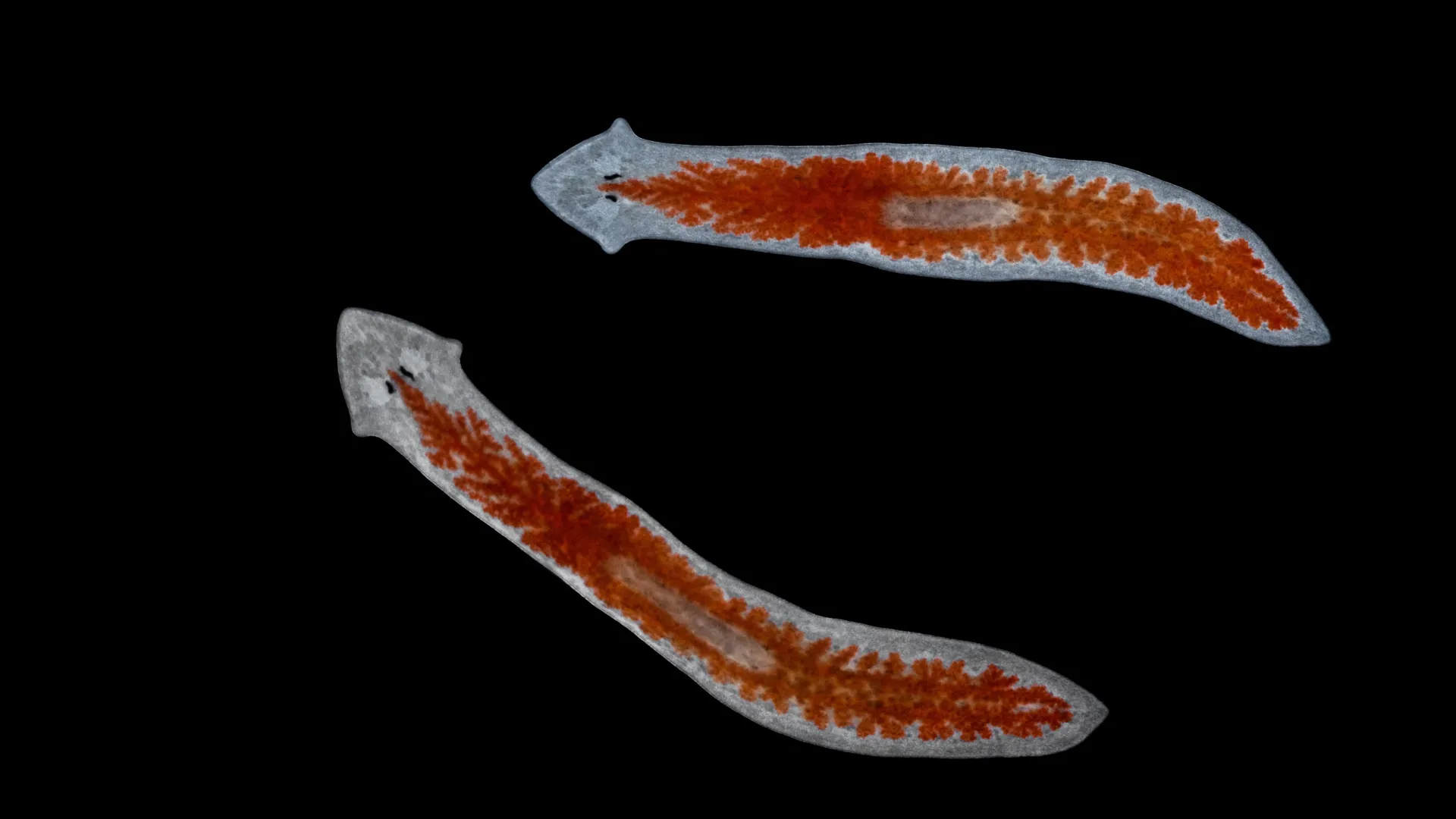
The traditional understanding of how stem cells function within a living organism has been fundamentally challenged by new research from the Stowers Institute for Medical Research. For decades, the prevailing biological principle suggested that stem cells are strictly regulated by their immediate physical environment, known as a "niche." However, a study published in the journal Cell Reports on October 15, 2025, reveals that the stem cells of the planarian flatworm—a creature famous for its near-mythical regenerative abilities—do not rely on these localized "micromanagers." Instead, these cells operate with a high degree of independence, receiving critical instructions from distant organs and creating their own supportive environments as they migrate through the body.
This discovery, led by Postdoctoral Research Associate Frederick "Biff" Mann, Ph.D., and Stowers President and Chief Scientific Officer Alejandro Sánchez Alvarado, Ph.D., could redefine the field of regenerative medicine. By uncovering how planarian stem cells maintain their potency without the constraints of a fixed niche, scientists may find new pathways to enhance the regenerative capacity of human tissues or develop more effective strategies to combat cancers, which often arise when human stem cells "go rogue" and ignore environmental signals.
The Paradigm of the Stem Cell Niche
To appreciate the significance of this discovery, it is necessary to understand the "niche" model that has dominated stem cell biology. In most complex organisms, including humans, stem cells are localized in specific anatomical pockets. For example, hematopoietic stem cells, which produce all blood cells, reside in the bone marrow. Within this niche, neighboring cells provide a constant stream of chemical and physical signals that tell the stem cell when to remain dormant, when to divide, and when to specialize into a specific cell type, such as a red blood cell or a white blood cell.
"The role of a traditional niche may be more in line with a micromanager—instructing cells, ‘You can be a stem cell, but only one particular type,’" explained Dr. Mann. This "micromanagement" is a critical safety feature in long-lived, complex animals. By restricting the movement and potential of stem cells, the body prevents the kind of uncontrolled proliferation that leads to tumor formation. However, this same restriction limits the body’s ability to repair major damage. Humans can heal minor wounds, but we cannot regrow a lost limb or an organ because our stem cells lack the autonomy and versatility found in simpler organisms.
Planarians: The Masters of Biological Renewal
Planarian flatworms occupy the opposite end of the regenerative spectrum. These small aquatic worms are essentially immortal under laboratory conditions. If a planarian is cut into dozens of fragments, each piece can grow into a complete, perfectly proportioned new worm within a matter of days. This feat is powered by a population of adult stem cells called neoblasts, which make up about 20% to 30% of the animal’s total cell count.
Unlike human stem cells, which are mostly "multipotent" (able to become only a few types of cells), planarian neoblasts are "pluripotent," meaning they can transform into any cell type in the body, including neurons, muscle, and skin. The Stowers Institute team sought to understand how the planarian body coordinates these powerful cells during the chaotic process of total body regeneration. They expected to find a sophisticated niche system that would guide the neoblasts to where they were needed. What they found instead was a decentralized network that grants stem cells an unprecedented level of freedom.
The Discovery of the Hecatonoblast
The research utilized a cutting-edge technology known as spatial transcriptomics. This method allows scientists to map the activity of thousands of genes simultaneously while preserving the information about where those genes are being expressed in the physical structure of the tissue. By applying this to planarians, the team could see not just what the stem cells were doing, but exactly which cells were standing next to them.
During this mapping process, the researchers identified a previously unknown cell type. This cell was remarkably large and featured numerous fingerlike projections extending from its surface, reaching out toward the surrounding environment. The team named these cells "hecatonoblasts," a reference to the Hecatoncheires, the hundred-armed giants of Greek mythology.
Given their proximity to the neoblasts, the researchers initially assumed the hecatonoblasts were the elusive "niche" cells responsible for controlling stem cell fate. However, the data told a different story. "Because they were located so close to stem cells, we were surprised to find that hecatonoblasts were not controlling their fate nor function, which is counterintuitive to a typical stem cell-niche connection," said Dr. Mann. The hecatonoblasts appeared to be companions rather than commanders, moving alongside the stem cells as they transitioned from generalists to specialists.
Remote Control: Global Versus Local Signaling
If the immediate neighbors (the hecatonoblasts) were not directing the stem cells, the question remained: who was in charge? The spatial transcriptomics data pointed toward a surprising source: the planarian intestine.
While the intestine was physically separated from many of the stem cells, it appeared to exert the strongest influence on their behavior and positioning. This suggests that planarians utilize a "global" communication network rather than a "local" one. In this model, the overall physiological state of the organism—communicated through distant organs like the gut—determines how stem cells behave across the entire body.
Dr. Blair Benham-Pyle, an Assistant Professor at the Baylor College of Medicine and co-corresponding author of the study, likened this to different types of communication networks. "While interactions between stem cells and their neighboring cells influence how a stem cell reacts immediately, distant interactions may control how that same stem cell responds to big changes in an organism," she noted.
In the context of regeneration, this global signaling is highly efficient. When a planarian is injured, the entire body needs to reorganize. A localized niche would be destroyed by the very act of amputation. By relying on a decentralized, global signal, the planarian ensures that its stem cells can receive instructions regardless of where the injury occurs or how much of the body is missing.
Chronology and Methodology of the Research
The study represents the culmination of years of technical refinement at the Stowers Institute. The process began with the cultivation of large populations of Schmidtea mediterranea, the primary species of planarian used in genetic research.
- Initial Mapping: The team first used single-cell RNA sequencing to identify the different cell "identities" within the worm.
- Spatial Integration: Using spatial transcriptomics, they overlaid this identity data onto physical sections of the worm, creating a high-resolution "atlas" of the planarian body.
- Discovery of Independence: By analyzing the proximity of different cell types, the researchers realized that stem cells were not clustered in specific "zones" but were distributed throughout the body without a dedicated neighbor-support system.
- Functional Analysis: The researchers then looked at gene expression patterns during different stages of regeneration, confirming that the "instructions" for differentiation were coming from the intestinal cells and other distant markers rather than the immediate cellular environment.
This timeline highlights a shift in modern biology from looking at cells in isolation to looking at them as part of a dynamic, three-dimensional community.
Implications for Cancer and Human Health
The findings have profound implications for understanding human disease, particularly cancer. In humans, cancer is often viewed as a failure of the niche. When stem cells stop listening to their neighbors or when the niche itself becomes degraded by age or inflammation, cells can begin to divide uncontrollably.
"Our hope is to uncover the basic rules that guide stem cells to become specific tissues as opposed to going rogue," said Dr. Sánchez Alvarado. By studying how planarians allow their stem cells to be "independent" without becoming cancerous, scientists might discover new regulatory checkpoints. Planarians have evolved a way to maintain pluripotency and mobility—the very traits that make cancer so deadly—while keeping them strictly under the control of global body signals.
If researchers can unlock the mechanism that planarians use to "tame" their independent stem cells, it could lead to therapies that prevent human stem cells from becoming oncogenic. Furthermore, it could allow for the development of "niche-independent" therapies, where stem cells are engineered to function even in damaged environments where the natural niche has been destroyed, such as in the case of severe burns, spinal cord injuries, or neurodegenerative diseases.
A New Definition of the Stem Cell Environment
The Stowers Institute study concludes that the environment of a stem cell is not a static place, but a dynamic relationship. In the planarian, the stem cell’s "friends"—the cells it interacts with—are made along the journey of differentiation rather than being a permanent fixture of its birth.
"The big discovery is a property of the whole planarian permitting both subtle local interactions and global signaling events that allow stem cells to achieve these remarkable feats of regeneration," said Dr. Benham-Pyle. This "whole-body" approach to regulation suggests that the future of regenerative medicine may lie not just in fixing local tissues, but in managing the systemic signals that govern cell behavior.
The research was supported by the National Institute of General Medical Sciences of the National Institutes of Health (NIH) and institutional support from the Stowers Institute. As scientists continue to map the "global networks" of the planarian, they move closer to a day when the rules of regeneration can be rewritten for human benefit, potentially allowing us to heal with the same efficiency as the humble flatworm.
Contributors to the Study:
Frederick Mann, Ph.D., Alejandro Sánchez Alvarado, Ph.D., Blair Benham-Pyle, Ph.D., Carolyn Brewster, Ph.D., Dung Vuu, Riley Galton, Ph.D., Enya Dewars, Mol Mir, Carlos Guerrero-Hernández, Jason Morrison, Mary McKinney, Ph.D., Lucinda Maddera, Kate Hall, Seth Malloy, Shiyuan Chen, Brian Slaughter, Ph.D., Sean McKinney, Ph.D., Stephanie Nowotarski, Ph.D., and Anoja Perera.
