
 By admin
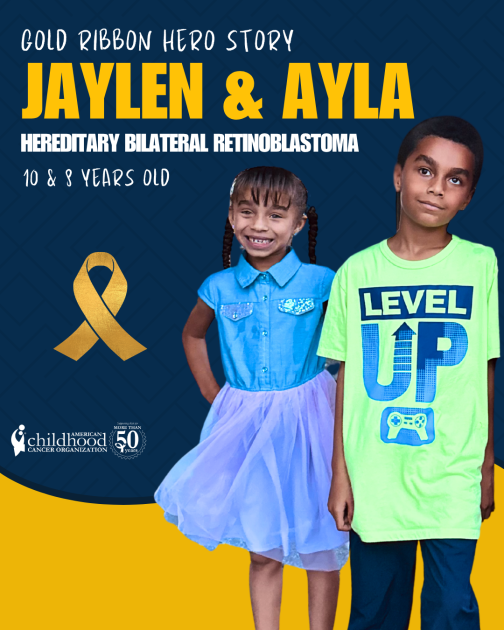
The intersection of rare genetic conditions and systemic healthcare barriers presents a formidable challenge for families navigating pediatric oncology. For the family of Jaylen and Ayla, now aged 10 and 8 respectively, the battle against hereditary bilateral retinoblastoma was not merely a medical struggle but a profound test of parental advocacy and the right to equitable healthcare. Their story, characterized by early diagnosis, aggressive clinical intervention, and the overcoming of communication barriers, serves as a critical case study in the resilience required to manage life-threatening childhood illnesses. Retinoblastoma, a rare form of eye cancer that begins in the retina, primarily affects young children. When the condition is hereditary and bilateral—meaning it affects both eyes—the complexity of the treatment and the necessity for lifelong monitoring increase exponentially.
Clinical Overview and Initial Diagnosis
The diagnostic journey for the family began a decade ago when Jaylen was just two months old. His mother, Denice, observed a subtle but concerning physical symptom: his left eye appeared to veer outward, a condition known as strabismus. While strabismus can be a benign developmental issue, it is also a primary clinical indicator of intraocular tumors. Concurrent with this observation was the appearance of a "glow" or a white reflection in Jaylen’s eye in family photographs. This phenomenon, medically termed leukocoria, occurs when light reflects off the white surface of a tumor rather than the red vascular tissue of the retina. At the time, the family initially attributed the visual anomaly to camera flash reflections, a common occurrence before public awareness campaigns regarding the "retinoblastoma glow" became widespread.
The urgency of the situation escalated when Jaylen reached four months of age. During a routine check-up, Denice sought a professional evaluation of the ocular symptoms. However, the family encountered a significant systemic obstacle. Denice, who is Deaf, required an American Sign Language (ASL) interpreter to facilitate effective communication with medical staff. Under the Americans with Disabilities Act (ADA) and Section 504 of the Rehabilitation Act, healthcare providers are legally mandated to provide effective communication aids, including qualified interpreters. Despite these legal protections, the medical office refused to proceed with the appointment due to the lack of an interpreter. This refusal delayed Jaylen’s clinical assessment and forced Denice to navigate a complex healthcare system independently to secure the necessary care for her son.
The Genetic Component and Secondary Diagnosis
Following Denice’s persistent efforts to find an inclusive and competent medical provider, Jaylen was officially diagnosed with bilateral retinoblastoma. The bilateral nature of the diagnosis confirmed that the condition was hereditary, involving a germline mutation in the RB1 tumor suppressor gene. This genetic reality meant that any future siblings would be at an extremely high risk—approximately 50%—of developing the same malignancy.
When Ayla was born two years later, the medical team implemented a proactive monitoring protocol. Because of the known family history, Ayla underwent rigorous ocular screenings immediately following her birth. This vigilance proved life-saving; at just four weeks old, Ayla was diagnosed with the same bilateral retinoblastoma as her brother. While the news was devastating for the family, the early detection allowed for the immediate commencement of treatment, potentially sparing her from the more advanced stages of the disease that Jaylen had faced due to his delayed diagnosis.
A Chronology of Treatment and Intervention
The therapeutic journey for both Jaylen and Ayla was intensive and multi-modal, spanning several years of clinical intervention. Retinoblastoma treatment aims to achieve three primary goals: preserving life, preserving the eye, and preserving as much vision as possible.
For Jaylen and Ayla, the treatment plans included:
- Chemotherapy: Systemic or intra-arterial chemotherapy was utilized to shrink the tumors (chemoreduction), making them more manageable for local therapies.
- Cryotherapy: This involves the use of extreme cold to freeze and destroy cancer cells in the retina.
- Laser Therapy (Photocoagulation): High-energy lasers were used to cut off the blood supply to the tumors or to destroy the malignant tissue directly.
- Strabismus Surgery: Jaylen underwent surgical intervention to correct the misalignment of his eyes caused by the presence and treatment of the tumors.
- Enucleation: In cases where the tumor is too large to be treated by other means or where the risk of the cancer spreading to the optic nerve is too high, surgical removal of the eye (enucleation) is necessary. Ayla underwent this procedure, leading to the use of a prosthetic eye.
Both children eventually transitioned to the use of prosthetic eyes, a common outcome for bilateral retinoblastoma survivors. These prosthetics are custom-made to match the remaining eye, though Ayla has notably embraced her situation by curating a collection of custom-colored irises, allowing her to express her personal style through her prostheses.
Data and Statistical Context of Retinoblastoma
Retinoblastoma is the most common primary intraocular malignancy of childhood, yet it remains a rare disease, affecting approximately one in every 15,000 to 20,000 live births worldwide. In the United States, roughly 250 to 300 children are diagnosed annually.
Data from the National Cancer Institute and the American Cancer Society highlight several key facts regarding the condition:
- Survival Rates: In developed nations, the five-year survival rate for retinoblastoma is over 95%. However, this rate drops significantly in developing countries where early diagnosis is less common.
- Heredity: Approximately 40% of cases are hereditary (germline), while 60% are sporadic (non-hereditary). Hereditary cases are almost always bilateral and present at an earlier age than sporadic cases.
- Secondary Cancers: Survivors of the hereditary form of retinoblastoma carry an increased lifetime risk of developing secondary cancers, such as osteosarcoma or melanoma, due to the RB1 mutation present in all cells of their bodies. This necessitates lifelong oncological surveillance.
The Intersection of Disability Rights and Medical Advocacy
The experience of Denice, Jaylen, and Ayla underscores a critical issue in the American healthcare system: the barrier to care for d/Deaf and hard-of-hearing parents. The refusal of service Jaylen faced at four months old highlights a failure in medical accessibility that could have had fatal consequences. Denice’s reaction—transitioning from a state of heartbreak to one of "fearless advocacy"—is a common trajectory for parents of children with rare diseases, but it was compounded by the need to fight for her own right to be heard and understood as a primary caregiver.
Denice’s role as the "ultimate advocate and manager" for her children’s health became a full-time endeavor. This advocacy extended beyond the clinic and into the digital sphere, where she began sharing the family’s story to raise awareness. While this transparency invited public scrutiny and criticism regarding her parenting choices—specifically her decision to "beautifully spoil" her children—Denice maintains that her focus is on the present moment and the joy of survival.
Broader Implications for Pediatric Oncology and Awareness
The success of Jaylen and Ayla’s treatment is a testament to the advancements in pediatric ophthalmology and oncology. Their ability to thrive, with Ayla even learning ASL during her post-operative recovery to better communicate with her mother, demonstrates the holistic nature of modern recovery.
The family’s emphasis on the "glow" is part of a larger global movement to educate parents on leukocoria. Organizations like the American Childhood Cancer Organization (ACCO) and "Know the Glow" advocate for the use of simple photography as a screening tool. Because the "glow" is often the first and only visible sign of a life-threatening intraocular tumor, public education on this symptom is vital for early intervention.
Furthermore, the case emphasizes the importance of genetic counseling for families with a history of retinoblastoma. The proactive diagnosis of Ayla at four weeks old was only possible because of the clinical data gathered during Jaylen’s treatment. This underscores the necessity of a multidisciplinary approach to pediatric cancer, involving geneticists, oncologists, and ophthalmologists.
Conclusion: A Legacy of Joy and Survival
Today, Jaylen and Ayla are celebrated as survivors who have "beaten cancer" while maintaining an "endlessly joyful" outlook on life. Their journey from a fraught diagnosis to a triumphant, active childhood serves as an inspiration for other families facing similar diagnoses. By choosing "joy, presence, and celebrating life," the family has reframed the narrative of childhood cancer from one of purely clinical struggle to one of empowerment and style.
The story of the siblings also serves as a call to action for the medical community to ensure that no parent is turned away due to a lack of communication resources. Equitable access to care is a fundamental component of successful medical outcomes, particularly in the time-sensitive field of pediatric oncology. As Jaylen and Ayla continue to grow and navigate life as survivors, their presence remains a powerful reminder of the importance of early detection, the strength of parental advocacy, and the possibility of a vibrant life following a cancer diagnosis. Together with organizations like the ACCO, their story continues to fuel the mission to ensure that no child—and no parent—has to fight the battle against cancer alone.
