
 By admin
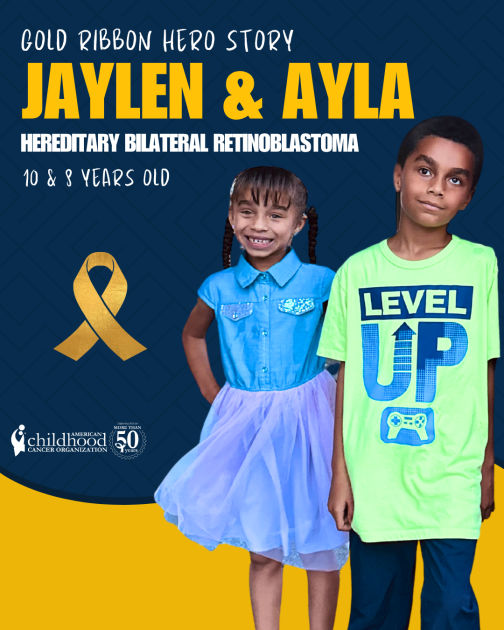
Jaylen, age 10, and his younger sister Ayla, age 8, represent a significant demographic of pediatric cancer survivors who have navigated the complexities of hereditary bilateral retinoblastoma. Their journey, marked by early diagnosis, intensive medical intervention, and the navigation of systemic barriers within the healthcare industry, highlights both the advancements in ocular oncology and the persistent challenges faced by families with disabilities. Retinoblastoma, a rare form of eye cancer that develops in the retina, primarily affects young children. In the case of the Jaylen and Ayla, the hereditary nature of the disease necessitated a proactive and vigilant approach to medical management, led by their mother, Denice, who had to overcome significant communication barriers as a deaf parent to secure life-saving care for her children.
Early Detection and the Diagnostic Journey of Jaylen
The clinical history of the family began when Jaylen was just two months old. His mother, Denice, observed a physical anomaly in his left eye, noting that it appeared to veer outward, a condition known medically as strabismus. Simultaneously, the family noticed a distinct "glow" or white reflection in Jaylen’s eye in photographs. At the time, this was dismissed as a common photographic artifact caused by camera flash. However, this phenomenon, known as leukocoria, is a hallmark clinical sign of retinoblastoma.
Retinoblastoma occurs in approximately 1 in 15,000 to 20,000 live births in the United States, according to data from the American Cancer Society. While the survival rate in high-income countries exceeds 95%, early detection remains the most critical factor in preserving vision and preventing the spread of the cancer to the optic nerve or brain. For Jaylen, the path to diagnosis was obstructed not by medical ambiguity, but by institutional failure.
When Jaylen reached four months of age, Denice sought a routine check-up to address her concerns. However, the medical facility refused to provide services because an American Sign Language (ASL) interpreter was not available. This refusal represented a significant breach of the Americans with Disabilities Act (ADA), which mandates that healthcare providers provide effective communication aids to patients and their companions. Undeterred by this systemic rejection, Denice initiated an independent search for a provider capable of accommodating her needs and addressing her son’s symptoms. This persistence led to the eventual diagnosis of bilateral retinoblastoma, meaning the cancer was present in both of Jaylen’s eyes.
The Hereditary Component and Ayla’s Proactive Diagnosis
Retinoblastoma is categorized into two forms: sporadic and hereditary. Approximately 40% of cases are hereditary, involving a germline mutation in the RB1 gene. In these instances, the disease is typically bilateral and carries a higher risk of secondary cancers later in life. Because Jaylen’s condition was identified as hereditary, the family was alerted to the high probability that future siblings would also be affected.
When Ayla was born two years later, the medical team was prepared for immediate screening. Unlike Jaylen, who was diagnosed at four months after symptoms became visible, Ayla was monitored from birth. This clinical vigilance allowed doctors to identify retinoblastoma in her eyes when she was only four weeks old. This early intervention is a textbook example of how genetic counseling and family history can drastically alter the timeline of pediatric cancer treatment, often leading to less aggressive interventions or better long-term outcomes.
Denice described the dual diagnosis as "heartbreaking and overwhelming," particularly as she was still processing the frustration of her initial experiences with the medical system. "Hearing that the retinoblastoma was bilateral in both children was terrifying," she stated, noting that the experience transformed her into a "fearless advocate" for her children’s health.
Clinical Interventions and Treatment Modalities
The treatment trajectory for Jaylen and Ayla has been extensive and multifaceted. Pediatric ocular oncology requires a delicate balance between eradicating the tumor and preserving as much vision and facial structure as possible. Over the past decade, both children have undergone a variety of procedures common to bilateral retinoblastoma management.
- Chemotherapy: Used to shrink tumors (chemoreduction), chemotherapy can be administered systemically or via more targeted methods like intra-arterial chemotherapy, where the medication is delivered directly to the ophthalmic artery.
- Cryotherapy: This involves the use of extreme cold to freeze and destroy small tumors on the periphery of the retina.
- Laser Therapy (Photocoagulation): High-energy lasers are used to cut off the blood supply to tumors or destroy the cancerous cells directly.
- Strabismus Surgery: For Jaylen, surgery was required to correct the misalignment of the eyes caused by the presence of the tumors and subsequent treatments.
- Enucleation: In cases where a tumor is too large to be treated by other means or where there is a high risk of extraocular spread, the eye must be surgically removed. Ayla underwent an enucleation of one of her eyes.
Following enucleation or significant vision loss, both children were fitted with prosthetic eyes. The adaptation to ocular prosthetics is both a physical and psychological process. Modern prosthetics, or "glass eyes," are actually made of medical-grade acrylic and are custom-painted to match the patient’s remaining eye.
Psychological Adaptation and Social Advocacy
Beyond the clinical aspects of their recovery, the family has been vocal about the social and emotional dimensions of surviving childhood cancer. Denice has utilized online platforms to share their story, a move that has occasionally met with public scrutiny regarding her parenting style. In response to criticisms of "spoiling" her children, Denice emphasizes a philosophy of "presence and joy."
"Our triumphs have been absolutely legendary," Denice noted, highlighting the children’s resilience. Ayla, in particular, has embraced her prosthetic eye as a form of self-expression. She has curated a collection of custom-colored irises, allowing her to change her appearance based on her personal style. This approach shifts the narrative from one of "loss" to one of "agency" and "style," which is a significant trend in the community of individuals with ocular prosthetics.
Furthermore, the family’s commitment to the Deaf community remains a central pillar of their story. Ayla began learning ASL during her immediate post-operative recovery, ensuring that she can communicate fluently with her mother and navigate the world as a bilingual individual. This integration of disability culture and cancer advocacy provides a unique perspective on the intersectionality of healthcare challenges.
Statistical Context and Broader Implications
The story of Jaylen and Ayla serves as a critical case study for several broader issues in public health and pediatric medicine.
1. The Importance of the "Glow" Awareness:
Public health campaigns, such as those supported by the American Childhood Cancer Organization (ACCO), emphasize the importance of identifying leukocoria. Because retinoblastoma is often asymptomatic in its early stages, the white reflection in photos remains one of the most effective ways for parents to catch the disease early. Increased public awareness of this "glow" can significantly reduce the time between symptom onset and professional diagnosis.
2. Legal Compliance in Medical Settings:
The difficulties Denice faced highlight a persistent gap in healthcare accessibility. Despite the ADA being federal law for over 30 years, many deaf and hard-of-hearing patients still report being denied interpreters in clinical settings. This case underscores the necessity for medical providers to maintain rigorous protocols for accessibility to ensure that parental advocacy is not hindered by communication barriers.
3. Long-term Survivorship:
As Jaylen and Ayla move into adolescence and adulthood, they will require lifelong monitoring. Survivors of hereditary retinoblastoma have a higher predisposition to developing secondary cancers, such as osteosarcoma or soft tissue sarcomas, due to the germline RB1 mutation. This necessitates a transition from pediatric oncology to long-term survivorship programs that focus on surveillance and preventive care.
Conclusion: A Triumphant Path Forward
Today, Jaylen and Ayla are thriving, having moved past the most intensive phases of their treatment. Their ability to maintain independence and joy despite the rigors of chemotherapy and surgery serves as a testament to the efficacy of modern pediatric oncology and the power of dedicated parental advocacy. By sharing their story, the family continues to raise awareness for retinoblastoma and the necessity of inclusive healthcare.
The American Childhood Cancer Organization continues to provide resources for families facing similar diagnoses, emphasizing that "kids can’t fight cancer alone." Through a combination of medical science, legal advocacy for disability rights, and a community-focused approach to recovery, survivors like Jaylen and Ayla are proving that a diagnosis of childhood cancer does not preclude a future defined by triumph and joy. Their journey remains a vital reminder of the work still needed to ensure that every child, regardless of their parent’s disability or the rarity of their condition, has an equal path to survival and support.
