
 By Budi Oetomo Narendra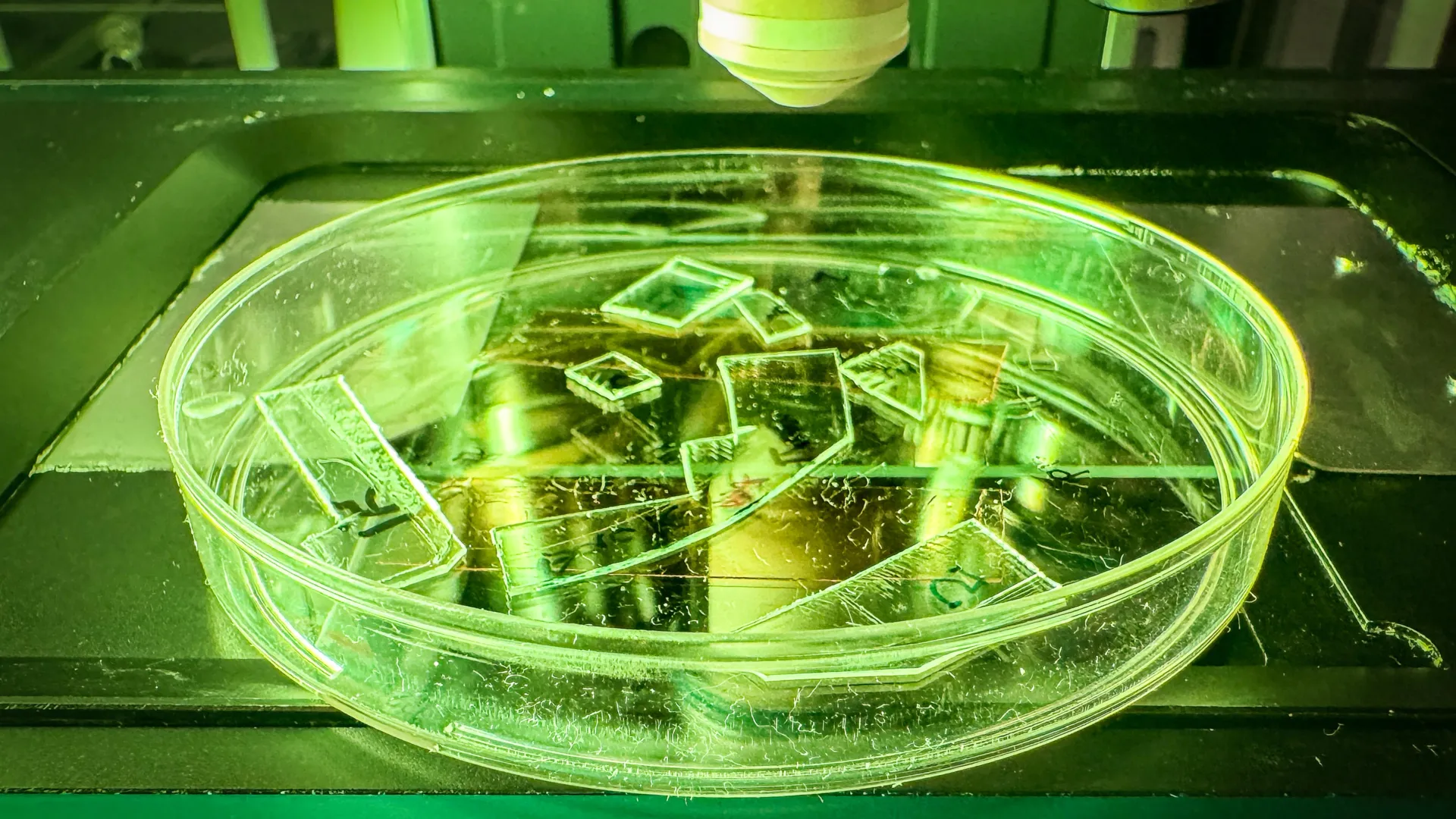
This pioneering development marks a significant leap in the fight against surface-mediated pathogen spread, moving beyond traditional chemical disinfectants or rigid antiviral materials. The new film, composed of acrylic and covered with precisely engineered nanopillars, offers a durable, scalable, and practical approach to creating self-sterilizing surfaces for a myriad of applications, from personal electronics like smartphones and keyboards to critical public health infrastructure such as hospital equipment and public transport interfaces.
A Novel Mechanical Approach to Viral Inactivation
The core innovation lies in the film’s microscopic architecture. Instead of relying on chemical agents that can degrade over time, pose environmental concerns, or contribute to pathogen resistance, this material employs a purely mechanical method. The film’s surface is studded with infinitesimally small structures, dubbed "nanopillars," which physically grip and stretch the outer membrane of a virus until it ruptures, rendering the pathogen inert. This mechanism is fundamentally different from earlier attempts at antiviral surfaces, which often focused on puncturing viral envelopes—a less effective strategy as confirmed by the research published in Advanced Science.
The research team, led by PhD candidate Samson Mah and Distinguished Professor Elena Ivanova, both from RMIT, intentionally utilized low-cost and readily available materials, specifically acrylic, to ensure the technology’s viability for mass production. This focus on practical, real-world application from the outset positions the film as a strong contender for widespread adoption, overcoming the scalability challenges often associated with advanced materials like metals or silicon.
Addressing the Challenges of Surface Transmission
The need for such an innovative solution is underscored by the persistent threat of surface-mediated disease transmission. Viruses and bacteria can survive on surfaces for hours, days, or even weeks, acting as fomites that facilitate indirect transmission. The COVID-19 pandemic vividly highlighted the critical role of surface hygiene, but numerous other pathogens, including influenza viruses, norovirus, and various bacteria, routinely spread via contaminated surfaces, contributing to healthcare-associated infections (HAIs) and community outbreaks.
Traditional disinfection methods, while effective, come with inherent limitations. Chemical disinfectants require frequent reapplication, can be corrosive to certain materials, and their residues may pose health risks or environmental concerns. Furthermore, the reliance on active chemical ingredients can lead to the development of antimicrobial resistance over time, diminishing their long-term efficacy.
Existing advanced antiviral surfaces, such as those incorporating copper or silver, offer some continuous protection but face hurdles related to cost, flexibility, and potential for leaching of metallic ions. Copper, for instance, is known for its antimicrobial properties but is expensive, can tarnish, and is not easily integrated into flexible forms. Silicon nanostructures, while demonstrating physical viral disruption, are rigid and difficult to manufacture over large, flexible areas suitable for consumer products or medical devices. The RMIT breakthrough elegantly circumvents these challenges by offering a flexible, durable, chemical-free, and scalable alternative.
The Science of Nanopillar Efficacy: Spacing Over Height
In detailed laboratory experiments, the RMIT team rigorously tested the film’s effectiveness against the human parainfluenza virus 3 (hPIV-3). This enveloped virus, responsible for respiratory illnesses such as bronchiolitis and pneumonia, served as an ideal model due to its fragile fatty outer membrane, which is characteristic of many common human pathogens, including influenza and coronaviruses. The results were compelling: within just one hour of contact, approximately 94% of hPIV-3 particles were either mechanically torn apart or sufficiently damaged to prevent reproduction and subsequent infection.
A key discovery emerging from the research was the critical importance of nanopillar spacing over their height in determining antiviral efficacy. Samson Mah explained, "By tweaking the spacing and height of the nanopillars, we discovered how tightly they are packed together is far more important than how tall they are for breaking viruses apart." The optimal performance was observed when nanopillars were spaced around 60 nanometers apart. Increasing this distance to 100 nanometers significantly reduced the antiviral effect, while a spacing of 200 nanometers almost entirely eliminated it. This indicates that a denser arrangement allows more nanopillars to simultaneously engage and stretch the viral envelope, pushing it past its breaking point. This finding establishes a crucial design principle for future biomimetic antiviral surfaces, suggesting that proximity of nanoscale features is paramount.
This elegant design principle simplifies the manufacturing process, as controlling horizontal spacing can sometimes be more straightforward than precisely controlling vertical height in large-scale fabrication. The team’s intentional design choices, combined with their scientific findings, pave the way for a more streamlined and cost-effective production of these advanced materials.
A Timeline of Research and Development
The concept of using nanostructured surfaces to combat pathogens is not entirely new. Researchers have long been inspired by natural antimicrobial surfaces, such as the wings of cicadas, which possess nanopillars capable of physically destroying bacteria. Early research in this field often focused on rigid materials, such as nanospike silicon, demonstrating that physical disruption of viruses was achievable.
The RMIT study builds upon this foundational work, pushing the boundaries by demonstrating that this mechanical disruption can be achieved with flexible plastic films and that both sharp and blunt nanoscale features can be effective when correctly arranged. The journey from initial biomimetic inspiration to the current flexible film involved meticulous material selection, precise nanofabrication techniques, and rigorous biological testing. The team’s dedication to using "low-cost materials that could be manufactured easily" represents a strategic pivot towards practical implementation, distinguishing their work from many earlier proof-of-concept studies.
The publication in Advanced Science marks a significant milestone, validating the scientific principles and demonstrating robust antiviral activity. This stage of research signals the technology’s readiness for further translational development, moving closer to commercialization.
Broader Implications and Future Directions
The potential implications of this flexible antiviral film are vast and transformative, touching upon multiple sectors:
Public Health: Widespread adoption could dramatically reduce the incidence of community-acquired and healthcare-associated infections. Imagine public touchscreens, door handles, and escalator railings becoming self-disinfecting. This would alleviate pressure on healthcare systems and contribute to healthier communities, potentially reducing the economic burden of disease, which for HAIs alone can run into billions of dollars annually in many developed nations.
Healthcare: In hospitals and clinics, where infection control is paramount, this film could be integrated into high-touch surfaces on medical devices, patient beds, IV poles, and examination equipment. It offers a continuous, passive defense mechanism that complements traditional cleaning protocols, enhancing patient and staff safety without relying on harsh chemicals that can degrade sensitive equipment or irritate skin.
Consumer Electronics: The prospect of self-disinfecting phone screens and keyboards resonates strongly in an era of heightened hygiene awareness. These devices are among the most frequently touched items, often harboring more bacteria than a toilet seat. Integrating the film could provide users with continuous protection, improving personal hygiene without conscious effort.
Manufacturing and Economy: The ability to adapt the manufacturing process to existing "roll-to-roll" equipment is a game-changer for industrial scalability. This suggests that the film could be produced efficiently and cost-effectively in large quantities, opening up new markets and potentially creating new industries around advanced antimicrobial materials. This aligns with a growing global market for antimicrobial coatings and surfaces, projected to reach significant valuations in the coming years.
Environmental Impact: Reducing the reliance on chemical disinfectants translates to less chemical waste, fewer harsh substances entering waterways, and a smaller carbon footprint associated with their production and transportation. This aligns with global efforts towards more sustainable and environmentally friendly solutions.
Despite the promising results, the RMIT team is already looking ahead to the next phases of research and development. Their immediate priorities include testing the film against a broader spectrum of viruses. The current study focused on hPIV-3, an enveloped virus with a relatively fragile fatty outer membrane. Future work will investigate the film’s efficacy against smaller and non-enveloped viruses, which lack this outer layer and are generally harder to inactivate mechanically. Understanding its performance across different viral structures is crucial for determining the technology’s universal applicability.
Furthermore, the scientists plan to examine how well the textured film performs on curved surfaces. Curvature can alter the effective spacing and orientation of the nanopillars, potentially affecting their ability to engage and destroy viruses. Optimizing the film’s design for various geometries will be essential for its integration into diverse real-world products.
Distinguished Professor Elena Ivanova expressed the team’s enthusiasm for transitioning the research from the lab to practical applications. "We think this texturing is a strong candidate for everyday use, and we’re ready to partner with companies to refine it for large-scale manufacturing," she stated. This call for industry collaboration highlights the team’s commitment to seeing their innovation translate into tangible public health benefits. The scientific community and industry stakeholders will be keenly watching as this flexible, virus-destroying film moves closer to becoming an integral part of our daily lives, offering a robust and sustainable defense against infectious diseases.
