
 By Budi Oetomo Narendra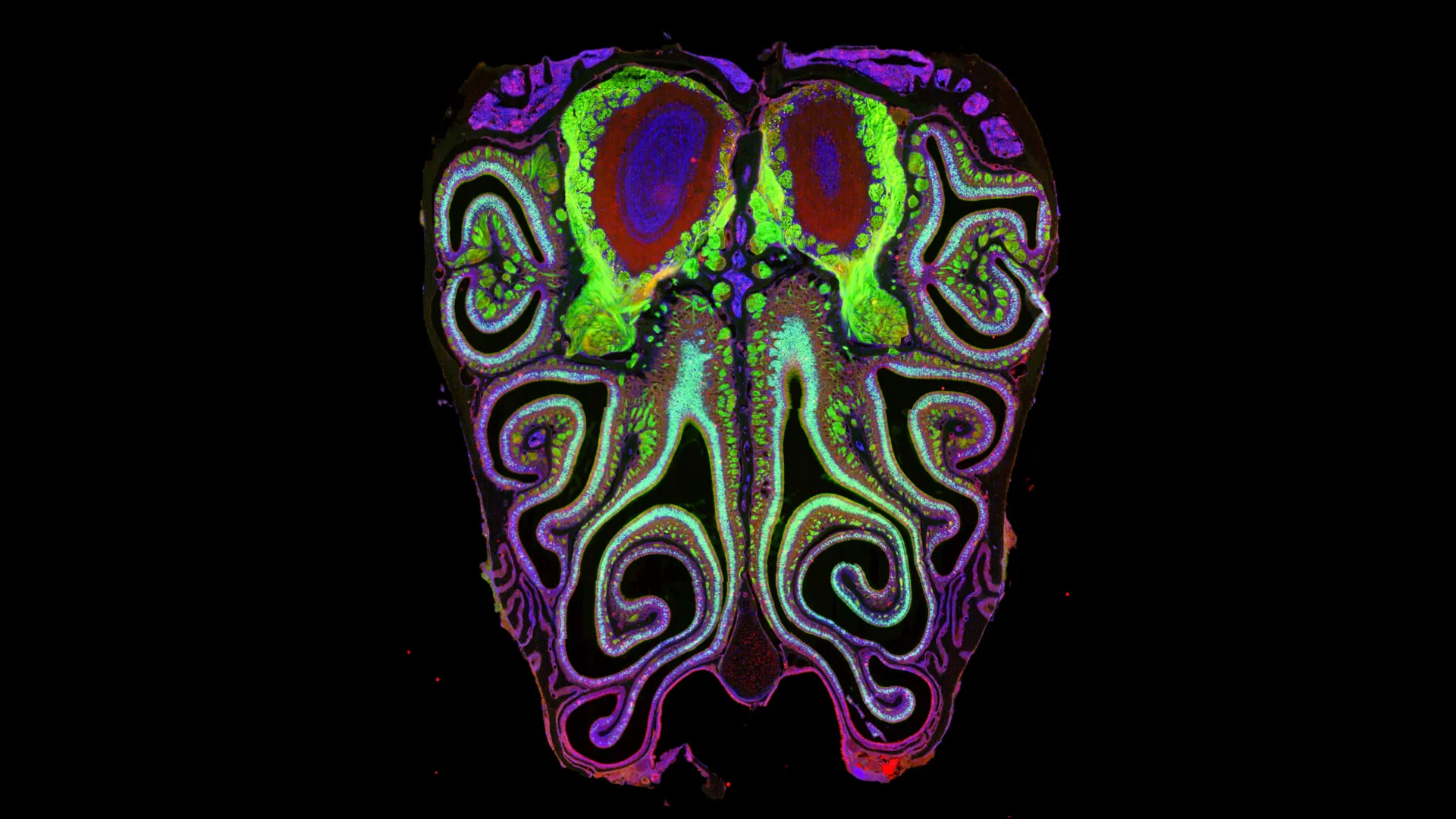
Smell shapes how we experience the world every day. It helps us detect hazards, adds depth to flavor, and connects strongly to memory and emotion. Despite its profound importance, scientists have long struggled to fully understand how this fundamental sense works at a biological level. For decades, olfaction, the sense of smell, has presented a formidable enigma to neurobiologists, standing apart from other sensory systems like vision and hearing, whose underlying mechanisms have been mapped with considerable precision. This lack of detailed understanding has earned it the moniker of "super-mysterious" among researchers.
"Olfaction is super-mysterious," affirmed Sandeep (Robert) Datta, a distinguished professor of neurobiology in the Blavatnik Institute at Harvard Medical School. He highlights a crucial disparity: compared with the relatively well-charted territories of vision, hearing, and touch, the foundational biology governing the sense of smell has remained notably less understood, shrouded in a complexity that has defied conventional mapping techniques. This gap in knowledge has not only limited our academic understanding of one of our most ancient senses but also hampered efforts to address conditions like anosmia, the loss of smell, which carries significant implications for human health and well-being.
A Groundbreaking Discovery: The First Detailed Map of Smell Receptors
In a landmark study, Professor Datta and his collaborative team have achieved a significant breakthrough, constructing the first highly detailed, comprehensive map illustrating the precise arrangement of over a thousand distinct types of smell receptors within the nasal cavity of mice. Published on April 28 in the esteemed scientific journal Cell, these findings are poised to revolutionize the field of neurobiology and our understanding of sensory processing.
The revelation from this meticulous research fundamentally challenges long-standing assumptions that had guided olfaction research for decades. Contrary to the previously accepted hypothesis of a largely random or broadly zonal distribution, the study unequivocally demonstrates that the neurons housing these diverse receptors are, in fact, exquisitely organized. They do not scatter haphazardly but instead form distinct, horizontal bands or "stripes" that extend from the dorsal to the ventral regions of the nose, with each stripe comprising neurons grouped by the specific receptor type they express.
"Our results bring order to a system that was previously thought to lack order, which changes conceptually how we think this works," stated Datta, who served as the senior author of this pivotal study. This conceptual shift marks a critical turning point, replacing an image of biological chaos with one of intricate, almost architectural precision. Furthermore, the researchers established a compelling link between this newly discovered map in the olfactory epithelium of the nose and corresponding, highly organized maps within the olfactory bulb of the brain. This direct alignment offers unprecedented insight into the intricate neural pathways through which scent information is systematically relayed from the peripheral sensory organ into the central nervous system, paving the way for a deeper understanding of how the brain interprets and processes odors.
The Long Search for Olfactory Order: A Historical Perspective
The scientific community has long been successful in elucidating the spatial organization of sensory receptors in other domains. For instance, the arrangement of photoreceptors in the eyes, hair cells in the ears, and mechanoreceptors in the skin has been well-documented, along with their precise neural connections to corresponding brain regions. This established understanding forms the bedrock of our knowledge about vision, hearing, and touch. However, olfaction has stubbornly remained the glaring exception.
"Olfaction has been the one exception; it’s the sense that has been missing a map for the longest time," Datta reiterated, underscoring the enduring challenge it presented to sensory neurobiologists. The reasons behind this protracted mystery are rooted in the sheer, unparalleled complexity of the olfactory system. To illustrate, while human color vision, a remarkably sophisticated system, relies on just three primary cone cell receptor types to perceive a vast spectrum of hues, the murine olfactory system, a common model in research due to its biological similarities to humans, boasts approximately 20 million olfactory neurons. Each of these neurons typically expresses one of over a thousand distinct receptor types. This multitude of receptors, each finely tuned to detect a specific set of odor molecules, creates an intricate molecular recognition system that dwarfs the complexity of most other sensory modalities.
The initial breakthrough in understanding olfactory receptors came in 1991, with the pioneering work of Linda Buck and Richard Axel, who famously identified the genes encoding these receptors. Their monumental discovery, which earned them the Nobel Prize in Physiology or Medicine in 2004, provided the molecular keys to unlock the mystery of smell. In the decades that followed, researchers embarked on an arduous quest to discern patterns in how these newly identified receptors were spatially arranged within the nose. Early studies, constrained by the technological limitations of the time, suggested that receptors were broadly distributed across a few large zones, leading to the prevailing, albeit tentative, conclusion that their placement was largely random or lacked fine-grained organization. This perception of randomness became a widely accepted paradigm, shaping subsequent research for years.
Harnessing Modern Tools: A Hidden Pattern Revealed
The landscape of biological research has been dramatically transformed by the advent of advanced genetic and genomic tools. Recognizing the limitations of previous methodologies, Datta’s team strategically revisited the question of olfactory receptor organization, armed with these powerful new technologies. Their approach involved an unprecedented scale of data collection and analysis.
The team meticulously analyzed an astonishing approximately 5.5 million individual neurons, sourced from over 300 mice. This monumental undertaking was made possible by combining two cutting-edge techniques: single-cell sequencing and spatial transcriptomics. Single-cell sequencing allowed the researchers to precisely identify which specific olfactory receptor gene was expressed by each individual neuron. Concurrently, spatial transcriptomics provided the crucial information regarding the exact anatomical location of these identified neurons within the olfactory epithelium.
"This is now arguably the most sequenced neural tissue ever, but we needed that scale of data in order to understand the system," Datta emphasized, highlighting the sheer volume of data required to pierce through the system’s inherent complexity and reveal its hidden order. The integration of these two powerful methods allowed for a resolution and breadth of analysis previously unattainable, moving beyond broad zonal approximations to pinpoint the precise location and identity of millions of individual sensory cells.
The meticulous analysis of this vast dataset yielded a clear, consistent, and undeniably profound pattern. The olfactory neurons, far from being randomly distributed, form tightly organized, overlapping horizontal stripes. Crucially, these stripes are defined by the specific receptor type that the neurons within them carry. This remarkable arrangement was found to be nearly identical across all the animals studied, underscoring its fundamental biological significance and consistency. Furthermore, this newly revealed architectural map within the nasal epithelium correlated strikingly well with how smell information is systematically mapped within the olfactory bulb of the brain, providing compelling evidence of a direct, organized relay of sensory data.
The Blueprint of Development: How the Smell Map Forms
Beyond simply identifying this intricate map, the research team delved into the fundamental question of its genesis: how does such a precise and consistent structure develop during embryogenesis? Their investigations pinpointed a critical molecular player in this developmental choreography: retinoic acid.
Retinoic acid, a powerful derivative of vitamin A, is a well-known morphogen, a molecule that regulates gene activity and guides cellular differentiation and patterning during embryonic development. The researchers discovered that a precise gradient of retinoic acid exists within the developing nose. This gradient appears to act as a positional cue, guiding neurons to activate the correct smell receptor gene depending on their specific location along the nasal axis. To validate this hypothesis, the team experimentally altered the levels of retinoic acid. When they manipulated this crucial molecule, the entire receptor map within the olfactory epithelium exhibited a systematic shift, moving either upward or downward in response to the altered gradient. This demonstrated a direct causal link between retinoic acid signaling and the precise spatial organization of olfactory receptor neurons.
"We show that development can achieve this feat of organizing a thousand different smell receptors into an incredibly precise map that’s consistent across animals," Datta remarked, emphasizing the elegance and robustness of this developmental process. This finding not only clarifies a fundamental aspect of olfactory system development but also provides a powerful model for understanding how complex spatial patterns are established in other developing neural tissues.
In a remarkable convergence of scientific discovery, a separate, independent study led by the lab of Catherine Dulac, the Xander University Professor in the Department of Molecular and Cellular Biology at Harvard University, published concurrently in the same issue of Cell, reported entirely consistent findings. This independent corroboration significantly strengthens the validity and impact of Datta’s team’s groundbreaking work, highlighting a unified view emerging in the field.
Broader Impact and Clinical Implications: Towards Treating Loss of Smell
The implications of this discovery extend far beyond the realm of basic scientific understanding, holding significant promise for practical applications, particularly in the challenging area of treating anosmia, the loss of smell. While often underestimated, the inability to smell can have profound and pervasive effects on an individual’s life, impacting safety (e.g., inability to detect smoke, gas leaks, spoiled food), nutrition (loss of flavor dulls appetite and enjoyment of food, potentially leading to malnutrition or unhealthy eating habits), and critically, mental health. Individuals suffering from anosmia often report feelings of isolation, depression, and anxiety, stemming from their diminished ability to connect with their environment and memories in a fundamental way. Despite its widespread impact, effective treatments for smell loss currently remain scarce.
"We cannot fix smell without understanding how it works on a basic level," Datta asserted, underscoring the critical foundational role of this research. The lack of a detailed organizational map has historically been a significant barrier to developing targeted therapies. Now, with a precise understanding of how receptors are arranged and how this arrangement develops, new avenues for intervention become conceivable.
The research team is actively pursuing several crucial next steps. One immediate focus is to unravel the underlying reasons why the receptor stripes appear in their specific, observed order. Understanding the logic behind this precise arrangement could unlock further secrets of olfactory coding. Another critical line of inquiry is to determine whether this same highly organized, striped arrangement of olfactory receptors exists in humans. While the murine model provides invaluable insights, confirming this organization in human olfaction would be a pivotal step towards clinical translation.
This newfound knowledge is expected to guide the development of innovative therapeutic approaches. Potential avenues include advanced stem cell therapies, which could aim to regenerate precisely patterned olfactory neurons in individuals with damaged or degenerated nasal epithelium. Furthermore, the detailed mapping of neural circuits could inform the design of sophisticated brain-computer interfaces, which might one day bypass damaged sensory pathways to restore a sense of smell by directly stimulating the brain in a spatially and temporally accurate manner. The ultimate goal is to move beyond symptomatic relief to address the root causes of smell loss, offering a path to restoring this vital sense.
"Smell has a really profound and pervasive effect on human health, so restoring it is not just for pleasure and safety but also for psychological well-being," Datta concluded. He stressed the profound societal impact of this work, stating, "Without understanding this map, we’re doomed to fail in developing new treatments." This sentiment encapsulates the transformative potential of this discovery, offering hope for millions worldwide who suffer from the often-overlooked but deeply impactful condition of smell loss.
Authorship, Funding, and Disclosures
The comprehensive research detailed in the Cell publication was the result of a collaborative effort involving a distinguished team of scientists. Additional authors on the paper included David Brann, Tatsuya Tsukahara, Cyrus Tau, Dennis Kalloor, Rylin Lubash, Lakshanyaa Kannan, Nell Klimpert, Mihaly Kollo, Martin Escamilla-Del-Arenal, Bogdan Bintu, Andreas Schaefer, Alexander Fleischmann, and Thomas Bozza. Their combined expertise across various disciplines was instrumental in the success of this monumental undertaking.
The ambitious scope of this research necessitated substantial financial backing. Funding for the study was generously provided by multiple esteemed institutions, including the National Institutes of Health (NIH) through grants R01DC021669, R01DC021422, R01DC021965, and F31DC019017. Further support was contributed by the Yang Tan Collective at Harvard and a National Science Foundation Graduate Research Fellowship, underscoring the broad scientific recognition of the project’s importance and potential impact. These financial commitments were crucial in enabling the team to leverage cutting-edge technologies and conduct research at an unprecedented scale, ultimately leading to this transformative discovery in the field of neurobiology.
