
 By Nana O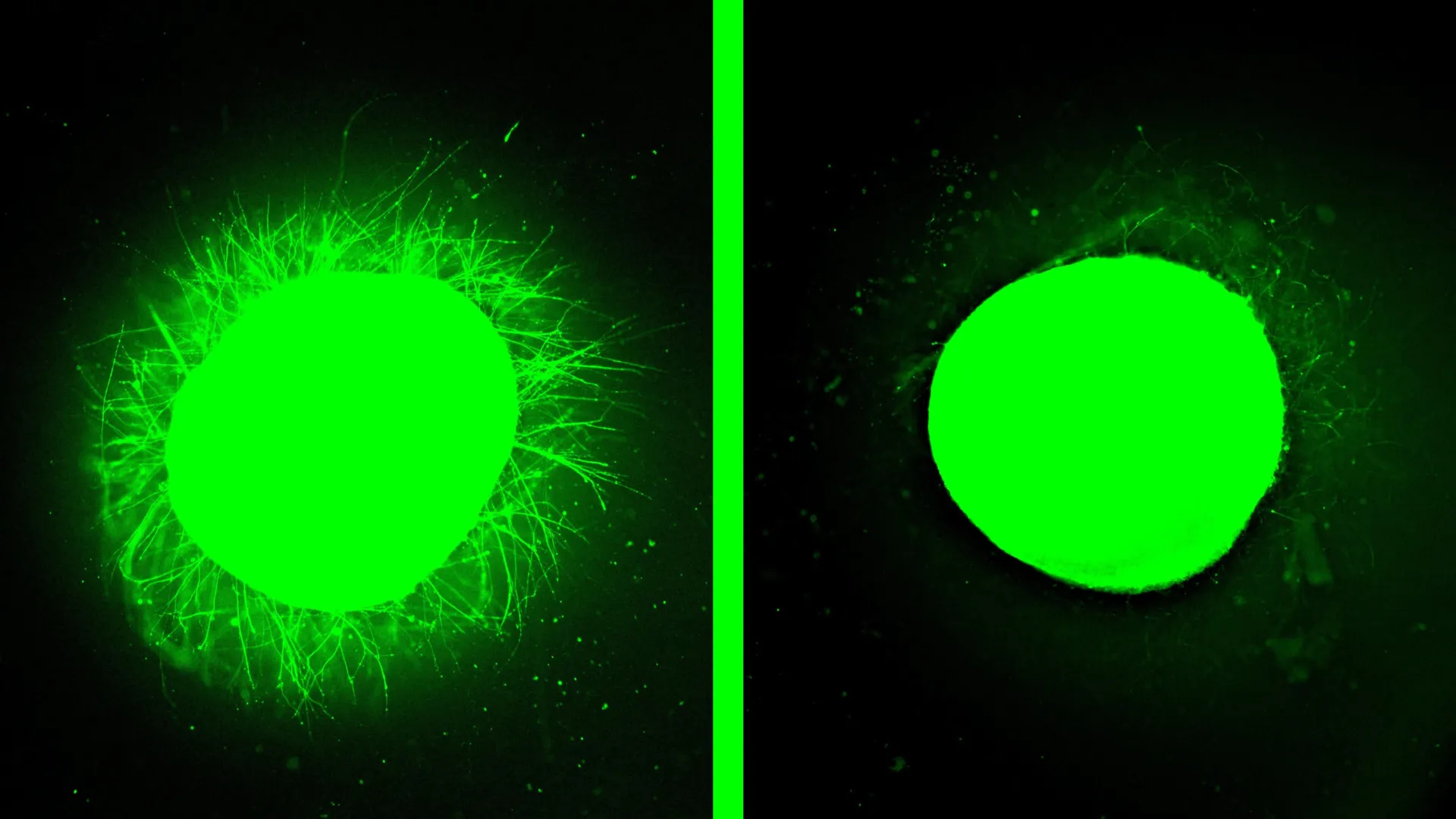
Scientists at Northwestern University have unveiled the most sophisticated laboratory-grown model to date for studying human spinal cord injury (SCI), a development that holds significant promise for accelerating the evaluation of novel regenerative treatments and potentially transforming patient recovery outcomes. This pioneering research, published on February 11th in the prestigious journal Nature Biomedical Engineering, marks a critical leap forward in understanding the complex biological cascade following SCI and in testing therapeutic interventions in a human-relevant context.
A Sophisticated Human Spinal Cord Model Emerges
The core of this breakthrough lies in the development of advanced human spinal cord organoids. These miniature, three-dimensional structures, meticulously derived from human stem cells, are designed to replicate the intricate architecture and cellular composition of the human spinal cord. Unlike previous iterations, these organoids have been engineered to mature sufficiently to accurately model the devastating biological consequences of traumatic SCI.
For the first time, researchers have demonstrated that these human spinal cord organoids can faithfully recapitulate the key pathological hallmarks of SCI. When subjected to simulated injuries, the organoids exhibited significant cell death, a robust inflammatory response, and the formation of glial scars. Glial scarring, a dense accumulation of reactive astrocytes and other glial cells, is a major impediment to natural nerve regeneration, forming both a physical and chemical barrier that prevents damaged neurons from regrowing and reconnecting.
The Northwestern team successfully induced two distinct types of injury within these organoids: a precise scalpel cut, mimicking surgical trauma, and a compressive contusion, analogous to the force experienced in severe accidents like car crashes or falls. Both injury models reliably triggered the characteristic cellular degeneration and the formation of the inhibitory glial scar tissue, closely mirroring the pathological processes observed in human patients.
"One of the most exciting aspects of organoids is that we can use them to test new therapies in human tissue," stated Samuel I. Stupp, the study’s senior author and a distinguished professor at Northwestern University, who is also the inventor of the "dancing molecules" therapy. "Short of a clinical trial, it’s the only way you can achieve this objective. We decided to develop two different injury models in a human spinal cord organoid and test our therapy to see if the results resembled what we previously saw in the animal model. After applying our therapy, the glial scar faded significantly to become barely detectable, and we saw neurites growing, resembling the axon regeneration we saw in animals. This is validation that our therapy has a good chance of working in humans."
The Power of "Dancing Molecules" Therapy
Crucially, the study also evaluated a promising regenerative treatment known as "dancing molecules." This innovative therapy, which has previously shown remarkable success in restoring movement and repairing tissue in animal models of SCI, delivered dramatic results when applied to the injured human spinal cord organoids.
Following treatment with the dancing molecules, the injured organoids displayed substantial neurite outgrowth. Neurites are the long, slender projections of nerve cells, including axons and dendrites, that are essential for neuronal communication. The renewed growth of these extensions signifies a potential pathway for re-establishing neural circuits severed by injury. Furthermore, the therapy led to a significant reduction in the formation of glial scar tissue, making it barely detectable in the treated organoids.
The dancing molecules therapy belongs to a broader class of supramolecular therapeutic peptides (STPs). Introduced in 2021, this approach leverages controlled molecular motion to facilitate tissue repair and potentially reverse paralysis. STPs function by forming large molecular assemblies, numbering in the hundreds of thousands, which interact with cellular receptors to activate the body’s inherent repair mechanisms. The concept of supramolecular therapies, it’s worth noting, shares foundational principles with current GLP-1 drugs used for weight loss and diabetes, an area where Stupp’s lab conducted early investigations nearly 15 years ago.
Delivered as a liquid injection, the therapy rapidly self-assembles into a nanofiber network that mimics the natural extracellular matrix of the spinal cord. By fine-tuning the dynamic movement of these molecules within this scaffold, researchers have enhanced their ability to engage with constantly shifting cellular receptors, a key factor in their therapeutic efficacy. As Stupp explained in 2021, "Given that cells themselves and their receptors are in constant motion, you can imagine that molecules moving more rapidly would encounter these receptors more often. If the molecules are sluggish and not as ‘social,’ they may never come into contact with the cells."
Previous preclinical studies involving mice demonstrated that a single injection of this therapy, administered 24 hours post-injury, enabled significant recovery of motor function, with treated animals regaining the ability to walk within four weeks. Notably, formulations exhibiting faster molecular motion outperformed those with slower movement, underscoring the critical role of dynamic molecular activity in enhancing bioactivity and cellular signaling.
Advancements in Organoid Technology
The development of these advanced spinal cord organoids represents a significant methodological leap. Organoids are cultivated from induced pluripotent stem cells (iPSCs) in a laboratory setting. While simplified representations of their full organ counterparts, they closely mirror native tissue in terms of structural organization, cellular diversity, and functional capabilities. This makes them invaluable tools for disease modeling, therapeutic testing, and developmental biology research, offering a more rapid and cost-effective alternative to animal experiments or human clinical trials.
While other research groups have previously generated spinal cord organoids for fundamental biological studies, the Northwestern model stands out for its maturity and suitability for injury research. These organoids measure several millimeters in diameter, a size sufficient to support and accurately model traumatic damage.
Over a period of several months, the Northwestern team meticulously guided the differentiation of stem cells into complex spinal cord tissue. This process involved the development of neurons and astrocytes, crucial components of the central nervous system. A groundbreaking aspect of this research was the successful incorporation of microglia, the resident immune cells of the central nervous system, into the organoid structure. This inclusion was critical for accurately replicating the inflammatory response that is a hallmark of SCI.
"It’s kind of a pseudo-organ," Dr. Stupp elaborated. "We were the first to introduce microglia into a human spinal cord organoid, so that was a huge accomplishment. It means that our organoid has all the chemicals that the resident immune system produces in response to an injury. That makes it a more realistic, accurate model of spinal cord injury." The presence of microglia allows the organoids to simulate the complex interplay between neural tissue and the immune system following trauma, a factor often overlooked in simpler models.
The Biological Impact of Injury and Treatment
In the injured organoids, researchers observed the production of chondroitin sulfate proteoglycans (CSPGs). CSPGs are molecules found in the nervous system that are known to play a significant role in inhibiting axonal regeneration after injury, further solidifying the model’s fidelity to human SCI pathology. The team was able to distinguish between astrocytes forming normal tissue and those that became part of the dense, reactive glial scar.
Upon treatment with the dancing molecules, the gelled nanofiber scaffold not only reduced inflammation but also demonstrably shrank the glial scarring. Crucially, it stimulated neurite extension and promoted the organized growth of neurons. This directed regrowth is essential for reconnecting severed neural pathways, which is the primary goal for restoring function in individuals with SCI.
The Critical Role of Molecular Motion
Dr. Stupp attributes the therapy’s efficacy to its supramolecular motion, which refers to the molecules’ ability to move dynamically and even temporarily detach from the nanofiber network. To further investigate this mechanism, the researchers conducted experiments on healthy organoids. "Before we even developed the injury model, we tested the therapy on a healthy organoid," he explained. "The dancing molecules spun out all these long neurites on the surface of the organoid but, when we used molecules that had less or no motion, we saw nothing. This difference was very vivid." This finding strongly supports the hypothesis that enhanced molecular mobility is key to activating cellular repair pathways.
Future Directions and Broader Implications
Looking ahead, the Northwestern team plans to engineer even more sophisticated organoid models. These future iterations will aim to replicate chronic SCI, characterized by thicker and more persistent scar tissue, which presents a significant challenge for current therapeutic approaches. The development of these advanced models is expected to accelerate the discovery and refinement of treatments for long-standing injuries.
Furthermore, Dr. Stupp envisions these miniature spinal cords playing a pivotal role in the future of personalized medicine. By generating implantable tissue from a patient’s own stem cells, the risk of immune rejection could be significantly mitigated, paving the way for individualized therapeutic strategies.
The study, titled "Injury and therapy in a human spinal cord organoid," received support from the Center for Regenerative Nanomedicine at Northwestern University and a generous gift from the John Potocsnak Family for spinal cord injury research. This collaborative effort underscores the growing recognition of the urgent need for innovative solutions to address the devastating impact of spinal cord injuries.
The implications of this research are far-reaching. By providing a highly accurate and accessible platform for studying human SCI and testing therapies, these organoids can significantly shorten the timeline from discovery to clinical application. The success of the dancing molecules therapy in this advanced human model offers tangible hope for developing treatments that could restore function and improve the quality of life for millions worldwide affected by spinal cord injuries. The ability to precisely mimic the complex cellular and molecular events following SCI in a laboratory setting represents a monumental step towards translating laboratory breakthroughs into effective clinical interventions.
