
 By admin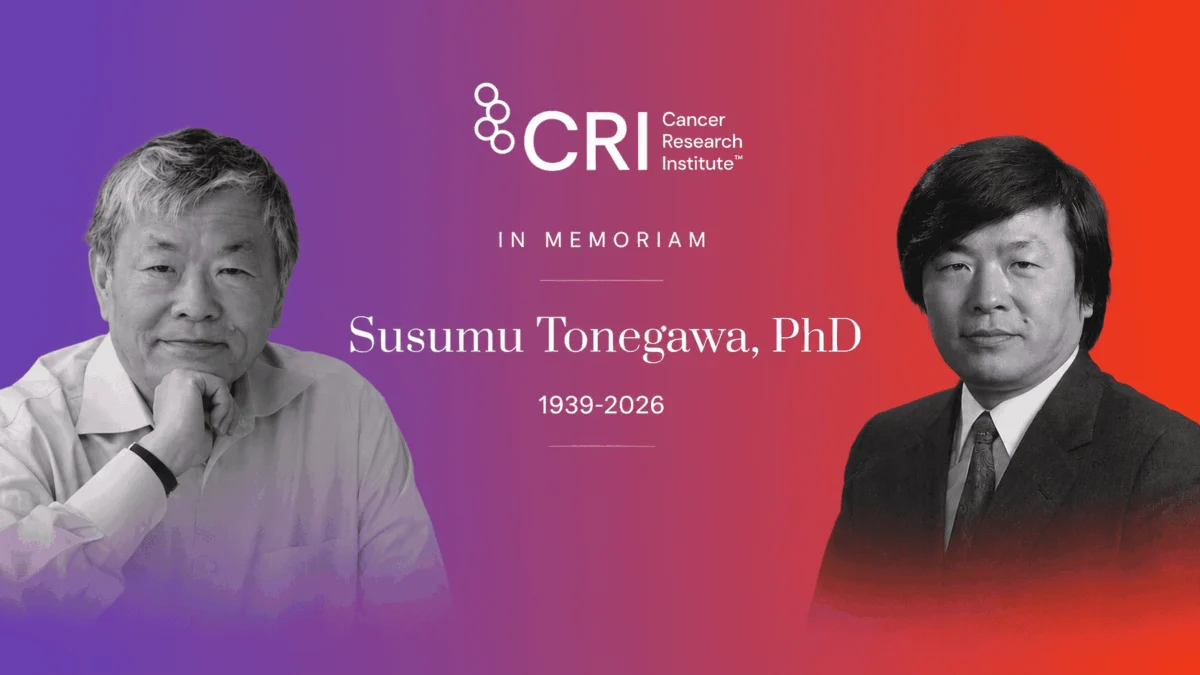
The scientific community is in mourning following the passing of Susumu Tonegawa, PhD, a towering figure in molecular biology whose groundbreaking discoveries fundamentally reshaped our understanding of the immune system and the molecular basis of learning and memory. Dr. Tonegawa, a Nobel laureate and a cherished longtime member of the Cancer Research Institute’s (CRI) Scientific Advisory Council, died on July 11, 2026, at the age of 86. His death marks the end of an era for a scientist whose relentless curiosity and intellectual rigor propelled two distinct fields of biomedical research into new frontiers, leaving an enduring legacy that continues to inspire and inform cutting-edge therapies for cancer and neurological disorders.
A Pioneer’s Enduring Legacy in Immunology
Dr. Tonegawa’s most celebrated achievement, for which he was awarded the 1987 Nobel Prize in Physiology or Medicine, was his revolutionary discovery in the 1970s of the genetic mechanism that enables the immune system to generate an astonishingly vast repertoire of antibodies. Prior to his work, the prevailing scientific conundrum was how the human body, with a finite number of genes, could produce an almost infinite array of antibodies capable of recognizing and neutralizing countless foreign invaders, from bacteria and viruses to toxins and cancer cells. The sheer scale of this diversity—estimated to be between 10^11 and 10^13 unique antibodies—presented a profound biological mystery.
The Mystery of Antibody Diversity: Before Tonegawa
For decades, immunologists were divided between two main hypotheses: the "germline theory" and the "somatic mutation theory." The germline theory proposed that every antibody specificity was encoded by a separate gene present in the inherited DNA (germline), which would necessitate an impossibly large number of genes. The somatic mutation theory, conversely, suggested that a limited number of genes could somehow diversify through mutations or other changes during an individual’s lifetime. Neither theory fully explained the observed complexity and efficiency of immune recognition. It was a fundamental biological puzzle that demanded an innovative approach.
The Breakthrough: V(D)J Recombination
Working at the Basel Institute for Immunology in Switzerland, Dr. Tonegawa meticulously designed and executed a series of elegant experiments using advanced molecular biology techniques, including restriction enzyme analysis and gene cloning. In a landmark paper published in 1976, he demonstrated conclusively that antibody genes are not inherited as complete units. Instead, he showed that the genes encoding the variable regions of antibodies are assembled from separate gene segments—variable (V), diversity (D), and joining (J) segments for the heavy chains, and V and J segments for the light chains—that rearrange and combine in somatic cells (specifically B lymphocytes) during their development. This process, known as V(D)J recombination, involves the excision of intervening DNA sequences and the precise joining of these segments, creating a unique gene sequence for each antibody-producing B cell.
Furthermore, Dr. Tonegawa’s work elucidated the crucial role of "junctional diversity," where imprecise joining of these segments, along with the insertion of additional nucleotides, further amplified the combinatorial possibilities. This intricate genetic rearrangement mechanism provided the elegant solution to the long-standing paradox of antibody diversity, explaining how a relatively small number of inherited gene segments could give rise to an immense and diverse antibody repertoire. His discovery provided the genetic bedrock for understanding adaptive immunity, explaining how the immune system learns to recognize new threats throughout an individual’s life.
The Nobel Recognition and Beyond
The profound implications of Dr. Tonegawa’s discovery were immediately recognized by the scientific community, culminating in his sole receipt of the Nobel Prize in Physiology or Medicine in 1987. The Nobel Committee lauded his work for solving "one of the fundamental riddles in biology." His findings not only demystified how the immune system mounts targeted defenses but also laid the conceptual and mechanistic groundwork for an explosion of research into immunology, autoimmunity, and ultimately, cancer immunology. The principles he uncovered continue to inform the development of modern immunotherapies, including monoclonal antibody drugs, bispecific antibodies, and even the design of CAR T-cell therapies, all of which rely on the immune system’s exquisite ability to recognize specific targets.
From Immune Cells to Memory Engrams: A Second Scientific Revolution
Remarkably, after his foundational work in immunology, Dr. Tonegawa embarked on a second, equally impactful scientific journey, shifting his focus to neuroscience. In 1981, he joined the Massachusetts Institute of Technology (MIT), where he became a Professor of Biology and Neuroscience, and later the Picower Professor of Learning and Memory. Here, he pioneered research into the molecular and cellular basis of learning and memory, seeking to unravel the elusive mechanisms by which the brain stores and retrieves information.
Shifting Frontiers: The Molecular Basis of Learning and Memory
His neuroscience research delved into the genetic and molecular underpinnings of synaptic plasticity, the process by which synapses—the connections between neurons—strengthen or weaken over time, a mechanism critical for learning. He made seminal contributions to understanding the role of specific genes, such as the NMDA receptor subunit genes and calcium/calmodulin-dependent protein kinase II (CaMKII), in long-term potentiation (LTP), a cellular model for learning and memory.
Contributions to Neuroscience
Later in his career, Dr. Tonegawa’s lab at MIT, and subsequently at the RIKEN Brain Science Institute in Japan where he served as Director, became renowned for its innovative work on "engrams"—the physical manifestations of memories in the brain. Using cutting-edge techniques such as optogenetics and pharmacogenetics, his team was able to identify, activate, and even suppress specific neuronal ensembles associated with particular memories in mice. This groundbreaking research provided compelling evidence for the existence of memory engrams and offered unprecedented insights into how memories are formed, stored, and retrieved, opening new avenues for understanding and potentially treating neurological disorders like Alzheimer’s disease and PTSD. His ability to pivot so dramatically and successfully between two highly complex and distinct fields underscored his extraordinary scientific versatility and intellectual courage.
Guiding the Fight Against Cancer: Dr. Tonegawa’s Role at CRI
Beyond his direct research, Dr. Tonegawa was a dedicated advocate for scientific progress and collaboration. For many years, he served with distinction on the Cancer Research Institute’s Scientific Advisory Council. In this crucial role, he generously lent his unparalleled expertise, critical perspective, and profound scientific vision to guide CRI’s mission. His insights were instrumental in identifying and supporting innovative research projects with the highest potential to transform cancer treatment, particularly in the burgeoning field of cancer immunotherapy.
A Steady Hand on the Scientific Advisory Council
As a council member, Dr. Tonegawa embodied the spirit of inquiry and rigor that has defined CRI for over seven decades. His deep understanding of the immune system, honed through his Nobel-winning work, was invaluable in evaluating novel approaches to harness the body’s natural defenses against cancer. He consistently challenged conventional thinking, encouraged bold ideas, and championed translational research aimed at moving discoveries from the lab to patient care. His guidance helped ensure that CRI remained at the forefront of immunological research, supporting groundbreaking studies that have paved the way for many of today’s most effective immunotherapies.
Impact on Cancer Immunotherapy
The foundational principles elucidated by Dr. Tonegawa, particularly regarding immune recognition and diversity, are directly applicable to cancer immunotherapy. Understanding how T cells and B cells recognize specific antigens—whether from pathogens or tumor cells—is paramount to designing therapies that can effectively target and eliminate cancer. His work indirectly supports the development of therapies like checkpoint inhibitors, which unleash the immune system to attack tumors, and CAR T-cell therapies, which engineer a patient’s own T cells to recognize and destroy cancer cells. The very concept of "immunological memory," which allows the immune system to provide long-lasting protection, stems from the understanding of how immune cells are generated and diversified, a process Dr. Tonegawa so brilliantly uncovered.
Tributes and Reflections: A Global Scientific Community Mourns
The news of Dr. Tonegawa’s passing elicited a wave of tributes from institutions and individuals across the globe, underscoring the immense impact he had on multiple scientific disciplines.
The Cancer Research Institute’s Homage
Alicia Zhou, PhD, CEO of the Cancer Research Institute, eloquently captured the profound significance of his contributions: "The history of cancer immunotherapy rests on a handful of discoveries that fundamentally changed how we think about the immune system. Dr. Tonegawa’s discovery of the genetic mechanism that creates antibody diversity is one of them. His work revealed the remarkable adaptability of the immune system and forever changed how scientists study immunity, disease, and cancer." Dr. Zhou added, "We were honored to benefit from his wisdom as a member of our Scientific Advisory Council, and his legacy will continue to inspire generations of scientists working to improve the lives of patients." Her words highlight not only the scientific weight of his findings but also his invaluable role as a mentor and guide within the CRI community.
Voices from the Scientific Community
Representatives from MIT, where Dr. Tonegawa spent decades forging his neuroscience legacy, acknowledged his transformative impact. A statement from the Picower Institute for Learning and Memory, where he held a distinguished professorship, emphasized his "courage to pivot between fields and his relentless pursuit of fundamental truths about the brain." Colleagues and former trainees from the RIKEN Brain Science Institute in Japan, a prominent neuroscience research center he helped lead, also expressed their deep sorrow, recalling his visionary leadership and unwavering commitment to scientific excellence. The Nobel Foundation, in a retrospective statement, reaffirmed the enduring relevance of his immunology work as a cornerstone of modern medicine. The broader immunology and neuroscience communities recognize his passing as the loss of a truly interdisciplinary giant, whose work continues to underpin countless research endeavors worldwide.
The Philosophy of Discovery: Cultivating Creativity in Science
Beyond his scientific achievements, Dr. Tonegawa was also a profound thinker about the nature of scientific inquiry itself. Later in life, when asked how he defined creativity, a trait he exemplified throughout his career, he articulated three fundamental principles. While the original article did not list them, his subsequent reflections, often shared in interviews and lectures, invariably centered on:
- Challenging Dogma: The courage to question established paradigms and conventional wisdom, even if it means venturing into uncharted territory.
- Interdisciplinary Thinking: The ability to draw insights and methods from disparate fields, fostering cross-pollination of ideas.
- Persistence and Rigor: The unwavering commitment to experimental validation and meticulous detail, coupled with the resilience to overcome setbacks.
An Enduring Inspiration
His humble yet inspiring response reflects the grounding principles of open-mindedness, intellectual bravery, and rigorous collaboration that are essential for making truly great scientific discoveries. These principles not only guided his own unparalleled career but also served as a blueprint for the generations of researchers he mentored across various disciplines. He believed that true creativity stemmed from a blend of intellectual curiosity, a willingness to embrace uncertainty, and an uncompromising dedication to empirical evidence.
A Chronology of a Remarkable Life
- 1939: Born in Nagoya, Japan.
- 1963: Graduated from Kyoto University, Japan.
- 1968: Earned PhD in molecular biology from the University of California, San Diego.
- 1971-1981: Conducted groundbreaking immunology research at the Basel Institute for Immunology, Switzerland, leading to the discovery of V(D)J recombination.
- 1976: Published seminal paper detailing the genetic mechanism of antibody diversity.
- 1981: Joined the Massachusetts Institute of Technology (MIT) as a faculty member, shifting his research focus to neuroscience.
- 1987: Awarded the Nobel Prize in Physiology or Medicine for his discovery of the genetic principle for generation of antibody diversity.
- Late 1980s – 2020s: Pioneered research into the molecular basis of learning and memory at MIT and the RIKEN Brain Science Institute.
- Date Unknown: Joined the Cancer Research Institute’s Scientific Advisory Council.
- July 11, 2026: Passed away at the age of 86.
The Far-Reaching Implications of a Scientific Giant
Dr. Susumu Tonegawa’s career was a testament to the power of fundamental research to transform human health and understanding. His initial work on antibody diversity not only solved a profound biological mystery but also unlocked the secrets of adaptive immunity, laying the groundwork for a vast array of immunological advancements, including vaccines, diagnostics, and, critically, modern immunotherapies for cancer. His later transition to neuroscience and his pioneering work on memory engrams further cemented his status as a polymath whose contributions transcended disciplinary boundaries.
His legacy is not merely a collection of seminal papers and prestigious awards, but a vibrant and ongoing influence on scientific thought and practice. His discoveries continue to inspire researchers worldwide who are striving to unravel the complexities of the immune system and the brain, seeking new ways to combat diseases ranging from cancer and autoimmune disorders to Alzheimer’s and psychiatric conditions. The principles he lived by—intellectual courage, rigorous inquiry, and a deep-seated curiosity—serve as a timeless guide for aspiring scientists.
The Cancer Research Institute extends its heartfelt condolences to Dr. Tonegawa’s family, friends, colleagues, and the countless students and trainees whose lives and careers he touched. His discoveries changed the course of immunology, profoundly shaped modern biomedical research, and will continue to illuminate the path forward for scientists dedicated to improving the lives of patients with cancer and countless other diseases. He will be remembered not only as a Nobel laureate but as a true visionary who forever expanded the horizons of biological science.
