
 By admin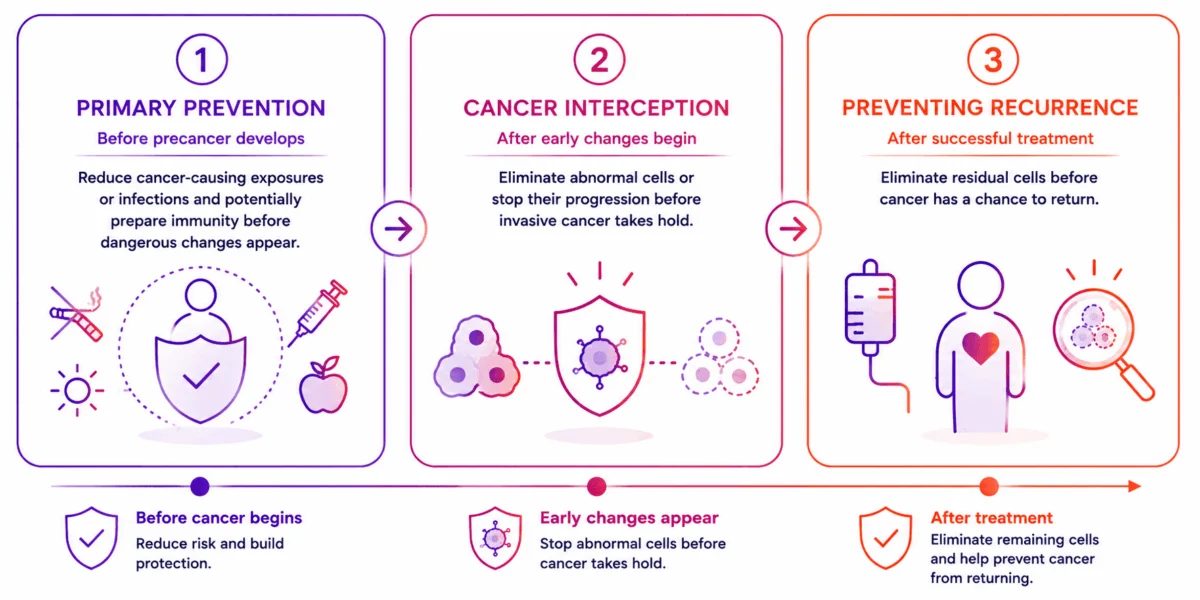
Cancer, a disease often perceived as a sudden onset, in reality, embarks on a clandestine journey long before its clinical diagnosis. It is a slow, insidious process where cells accumulate genetic mutations and subtly alter their surrounding microenvironment, sometimes over a decade or more, as exemplified by pancreatic cancer’s protracted development from its earliest genetic aberrations. For much of oncology’s history, this critical pre-diagnostic interval remained largely obscured, offering little opportunity for intervention. However, a confluence of groundbreaking advancements in genetics, sophisticated early detection methods, enhanced immune monitoring, and detailed precancer mapping is now illuminating this previously unseen window, heralding a transformative era in cancer care.
This paradigm shift mirrors the established approach to chronic conditions like heart disease, where managing risk factors such as high blood pressure and cholesterol years before a cardiac event is standard practice. Cancer, too, presents a comparable, if not more complex, window of opportunity. The integration of novel technologies, a deeper biological understanding of carcinogenesis, and emerging clinical evidence collectively point towards a future where individuals can gain a clearer understanding of their personal cancer risk, collaborate with healthcare providers to monitor significant cellular changes, and intervene proactively, potentially averting the disease altogether or stopping its progression at its earliest stages.
The Strategic Windows for Intervention
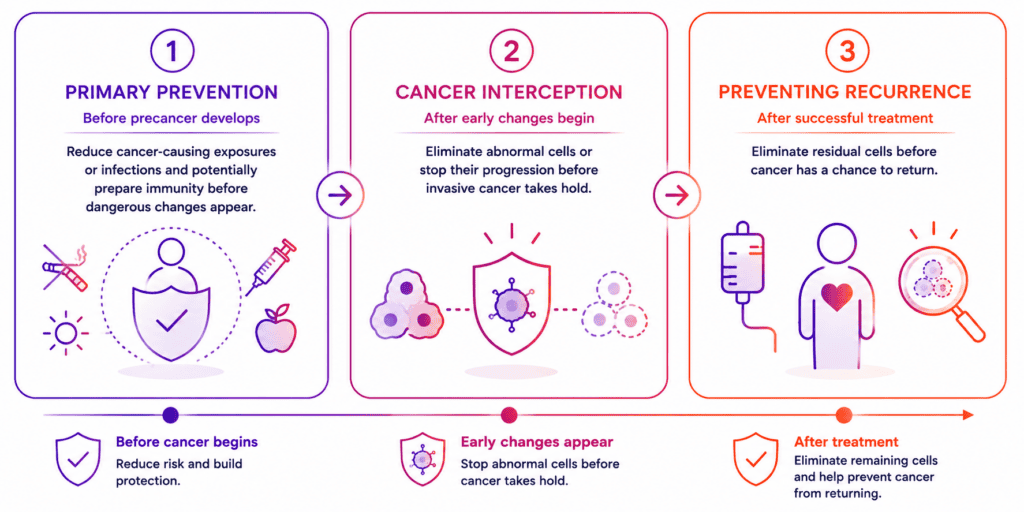
Efforts aimed at preventing cancer from developing or recurring can be strategically categorized into three distinct, yet interconnected, windows of opportunity. Each offers a unique approach to disrupting the disease’s natural history.
-
Primary Prevention: This initial window focuses on acting before any precancerous changes manifest. Its core objective is to reduce exposure to known cancer-causing agents or infections. Beyond traditional lifestyle modifications, primary prevention increasingly encompasses strategies to prime the immune system to anticipate and neutralize dangerous cellular alterations before they even emerge. This proactive stance seeks to build an inherent resistance to oncogenic threats.
-
Cancer Interception: This represents the cutting edge of preventive oncology. It targets interventions after the earliest dangerous cellular changes have appeared but critically, before invasive cancer has firmly established itself. The goal of cancer interception is precisely to eliminate these abnormal cells or to halt their progression, thereby preventing their transformation into full-blown malignancy. This window requires highly sensitive detection and precise therapeutic strategies.
-
Preventing Recurrence: This final window addresses patients who have successfully undergone treatment for established cancer. The aim here is to eliminate any residual microscopic cancer cells that might evade initial therapies and could lead to a relapse. This post-treatment intervention is crucial for long-term survival and quality of life, leveraging insights into how dormant cancer cells might re-emerge.
Across these three windows, the presence of abnormal cells can range from entirely absent in primary prevention, to limited or microscopic in interception and recurrence prevention. Crucially, the immune system often retains an advantage in these earlier stages, offering a powerful tool for intervention. Acting earlier typically means confronting fewer aberrant cells and fewer biological barriers, though the inherent challenge lies in accurately recognizing these subtle early changes and navigating the potential for early immune suppression by nascent malignant cells.

Historical Precedent: The Power of Immune Prevention
The efficacy of immune-based prevention is not merely theoretical; it is a proven reality, particularly for cancers with viral etiologies. The success stories of vaccines against the Hepatitis B virus (HBV) and Human Papillomavirus (HPV) stand as monumental achievements in primary cancer prevention. These vaccines directly prevent infections that are well-established causes of liver cancer, cervical cancer, and several other anogenital and oropharyngeal cancers.
The global impact of these vaccination programs is profound. For instance, initiatives supported by Gavi, the Vaccine Alliance, have safeguarded an estimated 86 million girls in lower-income countries. This concerted effort is projected to avert approximately 1.4 million cervical cancer deaths, underscoring the immense public health benefit of widespread vaccination. Furthermore, modeling suggests that achieving 80 percent global coverage with a single-dose HPV vaccination could prevent more than 50 million cervical cancer cases over the next century, a testament to the transformative potential of such interventions.
The Cancer Research Institute (CRI) played a pivotal role in advancing this vital science. Beginning in 1999, CRI provided crucial support to Dr. Ian H. Frazer, whose pioneering work on virus-like particles was instrumental in the development of the technology underpinning Gardasil®, a widely used HPV vaccine. Dr. Frazer’s contributions, recognized globally, highlight how fundamental research can translate into life-saving public health solutions. Similarly, HBV vaccination has drastically reduced the incidence of hepatocellular carcinoma in regions where the virus was endemic, demonstrating a clear link between preventing infection and preventing cancer.
Beyond viral cancers, the principle of intervening before invasive cancer emerges has also been established through non-immunological means. Regular colonoscopies leading to the removal of precancerous polyps have demonstrably lowered the incidence and mortality rates of colorectal cancer. Chemopreventive agents like daily aspirin have shown efficacy in reducing colorectal cancer risk in individuals with Lynch syndrome, a hereditary condition predisposing to various cancers. Furthermore, prophylactic surgical interventions, such as the removal of ovaries and fallopian tubes in women carrying BRCA mutations, significantly reduce the risk of ovarian cancer, illustrating that targeted interventions based on genetic risk can indeed save lives. These examples solidify the overarching principle: proactive intervention is a powerful weapon against cancer. The current frontier involves extending this principle to non-viral cancers, primarily by training the body’s own immune system to recognize and eliminate precancerous cells or microscopic residual cancer cells.
Navigating the Frontier: Promising Signals and Hard-Earned Lessons
The nascent field of cancer interception is marked by both exhilarating promise and the inherent difficulties of pioneering new therapeutic strategies. Early clinical trials offer valuable insights, highlighting the complexities involved.
One such trial involved a vaccine targeting MUC1, a protein known to be altered on precancerous colon growths. While the vaccine successfully elicited an immune response, it did so in only about one in four recipients. Crucially, the trial did not show a significant reduction in overall recurrence rates. However, a deeper analysis revealed a critical nuance: among those individuals who did mount a lasting immune response, the recurrence rate was 38 percentage points lower compared to the placebo group. Further investigation into the non-responders indicated that they already possessed a higher prevalence of immune-suppressing cells and inflammatory signals prior to vaccination. This suggests that the success of immune-based interception may hinge not only on selecting the correct molecular target but also on the immune system’s readiness to respond. Understanding an individual’s baseline immune state could therefore become a crucial determinant in identifying suitable candidates for treatment and potentially necessitate strategies to address existing immune suppression before vaccination.
Another significant trial explored the use of nivolumab, an approved immunotherapy, in patients with high-risk mouth lesions. The study showed that nivolumab successfully shrank these lesions in approximately one-third of participants. Yet, a challenging lesson emerged: some responders still progressed to invasive cancer, and a notable one in five experienced severe immune-related side effects. This trial underscored a vital distinction: shrinking a lesion, while encouraging, is not synonymous with preventing cancer. For individuals who do not yet have cancer, any successful intervention must not only reduce future cancer risk but also meticulously safeguard their present health and quality of life, balancing potential benefits against adverse effects.
The quest for clear, early targets offers another promising avenue. Over 90 percent of the most common form of pancreatic cancer, along with many of its precancerous lesions, harbor a specific mutation in a gene called KRAS. This makes KRAS an attractive, widely shared target for therapeutic intervention. A vaccine designed to target six common KRAS mutations was tested in 20 high-risk participants. Remarkably, it produced a robust immune response in 90 percent of them, with vaccine-induced immune cells detectable for up to two years. While this study did not directly assess cancer prevention, it answered two foundational questions: the vaccine was safe and capable of generating a durable immune response. The next phase of research, involving a second cohort of patients scheduled for surgery, aims to determine if these elicited immune cells effectively reach the precancerous lesions, where their action is required.
Lynch syndrome, which places individuals at a substantially elevated risk for colorectal and several other cancers due to inherited defects in DNA mismatch repair, presents a similar strategic opportunity. This genetic condition repeatedly generates some of the same mutations, creating a set of shared vaccine targets. A vaccine designed to target 209 of these specific mutations generated an immune response in every participant in a preliminary study. The crucial next step will be to ascertain whether these immune responses translate into actual cancer prevention.
Collectively, these pioneering studies demonstrate that achieving durable, targeted immune responses in individuals at elevated cancer risk is feasible. The arduous, yet vital, work ahead lies in translating these immune responses into tangible cancer prevention strategies that can be broadly applied.
The Path Forward: Addressing Interconnected Challenges
Realizing the transformative potential of cancer interception necessitates confronting several interconnected challenges that define this burgeoning field. These challenges are not isolated but form a complex web where progress in one area often depends on advancements in others.
-
Identifying Actionable Precancerous Targets: The fundamental challenge lies in pinpointing the specific molecular changes, cellular alterations, or neoantigens that reliably indicate precancerous states and are amenable to therapeutic intervention. These targets must appear early enough in the disease process to allow for effective interception. This requires sophisticated molecular profiling and a deep understanding of the earliest genetic and epigenetic events in carcinogenesis.
-
Developing Reliable Biomarkers: Crucial for success is the development of highly sensitive and specific biomarkers. These tools are essential for identifying individuals at elevated risk, detecting precancerous lesions before they become clinically apparent, monitoring the effectiveness of interventions, and predicting which patients will respond best to specific therapies. Liquid biopsies, which detect circulating tumor DNA (ctDNA) or other cellular components, hold immense promise in this regard.
-
Creating Accurate Laboratory and Animal Models: To effectively test novel interception strategies before human trials, robust and predictive laboratory and animal models are indispensable. These models must accurately recapitulate human precancerous conditions and immune responses, allowing researchers to refine therapeutic approaches and understand potential toxicities in a controlled environment.
-
Designing Appropriate Clinical Trials: Prevention trials pose unique methodological and ethical challenges. They often require large cohorts of asymptomatic individuals and long follow-up periods to demonstrate a reduction in cancer incidence, making them costly and time-consuming. Ethical considerations around intervening in healthy individuals, potential side effects, and the psychological impact of being labeled "at risk" must also be carefully managed.

-
Navigating Regulatory Pathways and Public Acceptance: Establishing clear regulatory frameworks for prevention and interception therapies is paramount. Current drug approval processes are largely designed for treating established diseases. New guidelines may be needed for therapies aimed at preventing disease. Concurrently, fostering public understanding and acceptance of these novel preventive strategies is crucial for widespread adoption.
These challenges are intrinsically linked. A promising target is only valuable if it emerges sufficiently early in the disease process. A laboratory model is only useful if it accurately reflects human precancer. A biomarker is only impactful if it can effectively guide intervention or unequivocally demonstrate its success. Sustained progress, therefore, hinges on seamlessly linking mechanistic discoveries in fundamental immunology and cancer biology with rigorous clinical application and innovative trial designs.
Encouragingly, significant progress is already visible, particularly in the "preventing recurrence" window. In August 2026 (a future date in the original text, assuming it’s a placeholder for recent news), Merck and Moderna announced groundbreaking results from a large Phase III trial. This study demonstrated that a personalized mRNA vaccine, meticulously tailored to each patient’s unique tumor mutations (neoantigens), when administered in combination with the checkpoint inhibitor pembrolizumab, significantly reduced the risk of melanoma recurrence after surgery. While full results are yet to be published, this finding powerfully validates the concept of immune-based prevention when any remaining disease is microscopic, offering a compelling blueprint for similar strategies in other cancer types.
The Opportunity Ahead: Reshaping Cancer Care
The Cancer Research Institute firmly believes that cancer interception has the profound potential to fundamentally reshape cancer care. This vision entails a significant shift, moving more of oncology’s focus from the traditional reactive treatment of established disease towards a proactive stance of preventing cancer from ever taking hold or, for those who have faced it, preventing its return.
Realizing this transformative vision demands a concerted, team-based scientific effort. This involves robust collaborations that bridge fundamental immunology and cancer biology with cutting-edge early detection technologies and meticulously designed, rigorous clinical trials. CRI is steadfastly committed to investing in the visionary scientists, fostering critical collaborations, and supporting the translational research necessary to convert early promise into tangible interventions that will save countless lives.
The window before cancer becomes clinically apparent is not a theoretical construct; it is a demonstrable reality. With sustained scientific rigor, unwavering commitment from researchers, funding bodies, and policymakers, and a collaborative spirit across the global scientific community, we can learn to effectively utilize this critical interval. By doing so, we can stop more cancers before individuals ever have to confront the devastating diagnosis, or face the daunting prospect of recurrence, ushering in an era of true preventive oncology.
