
 By admin
In May 2025, a seven-year-old boy named Lincoln sat down with his father, Jay, for a conversation that would redefine the boundaries of his childhood. In an effort to convey the gravity of the moment and empower his son with a sense of agency over his own narrative, Jay treated the discussion as a "man-to-man" summit, even allowing the young boy to hold a beer as a symbolic gesture of maturity and inclusion in the family’s decision-making process. The news was devastating: the bruises Lincoln had been sporting were not the typical badges of honor from baseball or playground activities. Instead, they were the first outward signs that his leukemia had returned, though in a far more complex and aggressive form than the family had previously faced. This second diagnosis marked the beginning of a grueling medical journey that highlights the precarious balance between life-saving cancer treatments and the long-term risks they carry for pediatric patients.
A Chronology of Two Diagnoses: From ALL to AML
Lincoln’s history with oncological disease began in 2021. At just three and a half years old, he began exhibiting signs of extreme lethargy, a significant departure from his usually active demeanor. His parents, Jay and Megan, grew increasingly concerned when their toddler began requesting to eat his meals while lying down, an indication of profound physical exhaustion. Subsequent medical evaluations confirmed a diagnosis of Acute Lymphoblastic Leukemia (ALL). ALL is the most prevalent form of childhood cancer, but it is also one of the most treatable, boasting a five-year survival rate of approximately 95% due to decades of standardized research and refined protocols.
Lincoln’s initial response to treatment was remarkably positive. He spent less than a week in the hospital, and his body responded well to the standard chemotherapy regimen. By the summer of 2023, the family celebrated the completion of his treatment, believing the ordeal was behind them. For nearly two years, Lincoln lived the life of a healthy child, punctuated only by routine three-month bloodwork checkups to monitor for recurrence.
However, during a scheduled follow-up in early 2025, the results were catastrophic. The tests did not show a return of his original ALL; instead, they revealed Acute Myeloid Leukemia (AML). AML is a rarer, more aggressive form of blood cancer that involves the rapid growth of abnormal myeloid cells. Most distressing to the family was the medical consensus regarding the cause: doctors attributed this second malignancy to the very chemotherapy drugs used to cure his ALL four years prior. This phenomenon, known as therapy-related AML (t-AML), represents one of the most challenging complications in pediatric oncology.
The Paradox of Informed Consent and Treatment-Related Malignancies
The revelation that the cure for Lincoln’s first cancer likely triggered his second left his mother, Megan, grappling with a complex mixture of anger and self-doubt. Megan recalled the moment of the initial diagnosis in 2021, a time characterized by desperation and the singular goal of saving her son’s life. While the risks of secondary cancers are detailed in the informed consent documents provided to parents, the immediate threat of the primary diagnosis often overshadows long-term statistical risks.

"I remember signing those papers that told us about the risks, but in that moment, you’re just desperate to save your child," Megan stated. The second diagnosis has replaced the family’s hard-won peace with a state of hyper-vigilance and "paranoia." They find themselves second-guessing every medical intervention, haunted by the question of what today’s life-saving measures might do to Lincoln’s body a decade from now. This psychological burden is a common experience for families dealing with treatment-related myeloid neoplasms, where the success of past medicine becomes the catalyst for a new crisis.
Clinical Challenges: Refractory Cancer and the Search for Options
The treatment for AML has proven significantly more arduous for Lincoln than his previous experience with ALL. The medications are harsher, leading to a marked decrease in appetite and chronic leg pain. Unlike his first bout with cancer, which responded quickly to standard care, Lincoln’s AML has been classified as refractory. After three rounds of intensive chemotherapy, the cancer failed to show significant regression, indicating that the standard "roadmap" for treatment was no longer applicable.
In response to the lack of progress, Lincoln’s medical team and his parents have had to look toward experimental and off-label solutions. One such intervention involves the drug Azacitidine (marketed as Aza). While Azacitidine is used to treat certain blood disorders and cancers in adults, it is not currently FDA-approved for pediatric patients with AML. However, in Lincoln’s case, the drug served as a critical "bridge" therapy. It succeeded in slowing the proliferation of cancer cells enough to stabilize his condition, making him a candidate for a bone marrow transplant—a high-stakes procedure that offers the best hope for a long-term cure in refractory cases.
Jay has taken the lead on researching clinical trials and alternative therapies, diving into medical literature to find any potential advantage for his son. Meanwhile, the medical staff at Lincoln’s hospital have acknowledged that they are, in many ways, learning alongside the family. Because pediatric AML—especially treatment-related and refractory cases—is less common than ALL, the volume of available research is smaller, leaving clinicians and families to navigate a landscape of uncertainty.
Supporting Data: The Landscape of Pediatric Leukemia
The disparity between Lincoln’s two diagnoses is reflected in national oncology statistics. According to data from the American Cancer Society and the National Cancer Institute:
- Incidence and Survival of ALL: ALL accounts for about 75% of all leukemia cases in children. The survival rate has climbed from less than 10% in the 1960s to over 90% today, making it a "success story" of modern medicine.
- The Challenge of AML: AML accounts for only about 20% of childhood leukemias. It is more difficult to treat, with a five-year survival rate hovering between 65% and 70%.
- Therapy-Related AML (t-AML): This is a well-recognized but rare complication of chemotherapy, particularly following treatment with topoisomerase II inhibitors or alkylating agents. While the risk is low (estimated at less than 2-3% for most ALL survivors), the prognosis for t-AML is generally poorer than for de novo AML.
- Refractory Cases: Patients whose cancer does not respond to two or more induction cycles of chemotherapy face significantly lower survival odds, often necessitating bone marrow transplants or participation in Phase I/II clinical trials.
The Emotional Toll and the "Old Soul" of a Seven-Year-Old
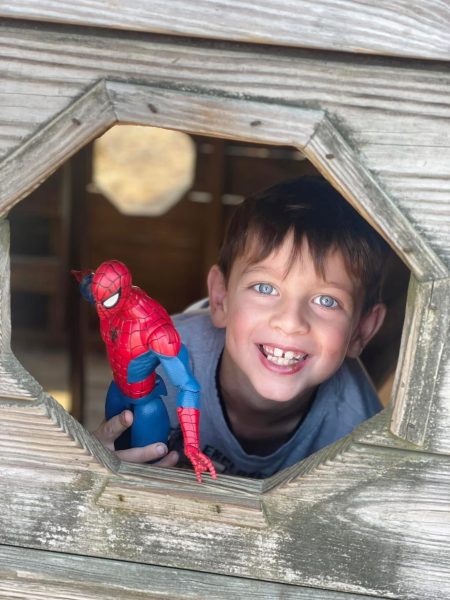
Despite the physical and psychological toll of his illness, Lincoln has developed a reputation among hospital staff for his empathy and manners. Megan describes him as an "old soul," a child who has been matured by circumstances but has retained a profound kindness. Lincoln frequently interacts with other children in the hospital playroom, offering them encouragement and complimenting their bravery.
The emotional impact of the diagnosis extends to Megan’s professional life as a special education teacher. She reports a heightened sensitivity to the health of the children she works with, often spotting signs of illness—paleness, lethargy, or mood changes—that might go unnoticed by others. This hyper-awareness was triggered shortly after her return to work, when she encountered a student whose physical appearance reminded her of Lincoln’s early symptoms. This "triggering" effect is a recognized symptom of the secondary trauma experienced by parents of children with chronic or life-threatening illnesses.
To combat the darkness of the hospital environment, Megan has focused on creating "sunlight" through positive memories. This includes dressing up in costumes, constructing complex LEGO sets, and racing scooters through the hallways. Her goal is to prevent Lincoln from developing post-traumatic stress disorder (PTSD) or a lifelong fear of medical environments, using her background as an educator to turn clinical stays into opportunities for play and connection.
Broader Implications and Future Outlook
Lincoln’s case highlights a critical gap in pediatric medical research. While major strides have been made in curing primary childhood cancers, the long-term consequences of these cures—and the lack of established protocols for treatment-related secondary cancers—remain a frontier in oncology. The shift in the field is slowly moving toward "de-escalation" of treatment: finding ways to cure the initial cancer using the least toxic methods possible to minimize the risk of secondary malignancies.
For Lincoln and his family, the immediate future is centered on the success of his bone marrow transplant and the hope that his AML will finally remain in remission. Megan finds solace in imagining a future where cancer is merely a footnote in Lincoln’s life—a story he can use to gain perspective on minor heartbreaks or as a compelling subject for a college entrance essay.
The story of Lincoln serves as a reminder of the resilience of the human spirit in the face of medical uncertainty. It also underscores the urgent need for continued investment in pediatric-specific cancer research, particularly for rare and refractory cases where the traditional "roadmap" to recovery has yet to be written. For now, the family remains focused on the present, navigating the halls of the hospital with costumes, LEGOs, and the hope that Lincoln’s "old soul" will see many more years of health.
