
 By Gabriel Paijo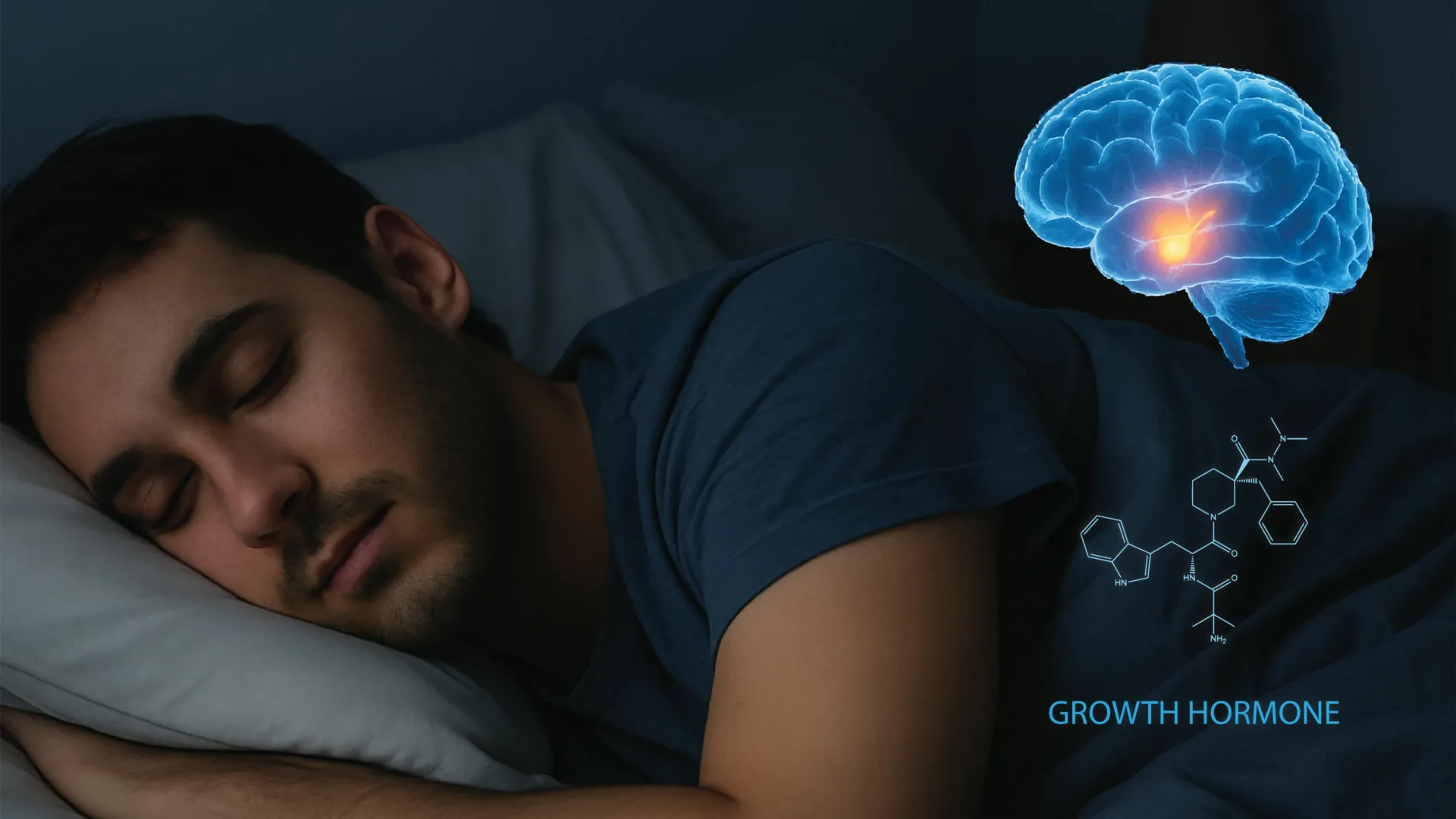
A definitive link between the brain’s sleep-wake architecture and the regulation of growth hormone has been identified by a team of neuroscientists at the University of California, Berkeley. In a landmark study published in the journal Cell, researchers have mapped the specific neural circuitry that coordinates the release of growth hormone (GH) during different stages of sleep. This discovery not only clarifies a long-standing biological mystery regarding how the brain governs endocrine functions during rest but also reveals a sophisticated feedback loop that involves the locus coeruleus—a brainstem region critical for alertness and cognitive focus. The findings suggest that the relationship between sleep and growth hormone is far more reciprocal than previously understood, with potential implications for treating metabolic disorders, growth deficiencies, and neurodegenerative diseases such as Alzheimer’s and Parkinson’s.
For decades, the scientific community has recognized that growth hormone levels surge during the night, particularly during the deeper stages of sleep. This hormone is essential for more than just childhood development; it plays a vital role in adult health by facilitating muscle repair, bone strengthening, fat metabolism, and general tissue regeneration. However, the precise "master switch" in the brain that toggles this release in sync with sleep cycles remained elusive until now. By utilizing advanced optogenetic techniques and high-resolution neural recording in animal models, the UC Berkeley team has provided a blueprint of the hypothalamic pathways that manage this vital process.
The Somatotropic Axis and the Architecture of Sleep
Growth hormone is produced and secreted by the pituitary gland, but its release is dictated by the hypothalamus, a region at the base of the brain that acts as the control center for many autonomic functions. The UC Berkeley study focused on two primary types of neurons within the hypothalamus: those that produce growth hormone-releasing hormone (GHRH) and those that produce somatostatin. Under normal physiological conditions, GHRH stimulates the pituitary to release GH, while somatostatin acts as an inhibitor, shutting the process down.
The researchers discovered that these two sets of neurons do not operate in a simple on-off fashion. Instead, their activity is intricately timed with the stages of sleep. In the mouse models studied, the researchers observed that during non-rapid eye movement (non-REM) sleep—the stage often associated with physical restoration—somatostatin levels remain low, allowing GHRH to drive a moderate, steady release of growth hormone.
Crucially, the study highlighted a surprising surge of activity during REM (rapid eye movement) sleep. During this stage, which is typically associated with dreaming and brain plasticity, both GHRH and somatostatin neurons increased their firing rates. This paradoxical synchronization leads to a significant pulse of growth hormone. Because humans and mice share these fundamental hypothalamic structures, the researchers believe this circuit represents a conserved evolutionary mechanism across mammals.
Methodology: Observing the Brain in Real-Time
To uncover these circuits, the research team, led by Yang Dan, a professor of neuroscience and molecular and cell biology, and first author Xinlu Ding, a postdoctoral fellow, employed a variety of cutting-edge neurological tools. The team used electrodes to monitor the electrical activity of specific neurons in the hypothalamus while simultaneously tracking growth hormone levels in the bloodstream.
Because mice are polyphasic sleepers—meaning they sleep in short bursts throughout a 24-hour period rather than in one long block—the researchers were able to observe hundreds of transitions between wakefulness, non-REM sleep, and REM sleep. This provided a massive dataset that allowed them to correlate neural firing patterns with hormonal fluctuations with unprecedented precision.
"People know that growth hormone release is tightly related to sleep, but only through drawing blood and checking growth hormone levels during sleep," explained Xinlu Ding. "We’re actually directly recording neural activity in mice to see what’s going on. We are providing a basic circuit to work on in the future to develop different treatments."
The use of optogenetics—a technique where light is used to control neurons that have been genetically sensitized to light—allowed the team to prove causality. By "turning on" specific GHRH neurons with light, they could trigger growth hormone release and observe the subsequent effects on the rest of the brain, leading to the discovery of the feedback loop.
The Locus Coeruleus and the Wakefulness Feedback Loop
One of the most significant findings of the study is the identification of a feedback mechanism involving the locus coeruleus (LC). The LC is a small nucleus in the brainstem that serves as the primary source of norepinephrine, a neurotransmitter that promotes wakefulness, attention, and the "fight or flight" response.
The study revealed that once growth hormone is released into the system, it travels back to the brain and activates neurons in the locus coeruleus. Initially, this activation encourages a state of alertness. This explains why a healthy secretion of growth hormone during the night can lead to a feeling of "arousal" or mental clarity upon waking. Growth hormone is not just building muscle; it appears to be priming the brain for cognitive engagement.
However, the circuit contains a built-in "pressure valve." According to co-author Daniel Silverman, a UC Berkeley postdoctoral fellow, if the activity in the locus coeruleus becomes too intense, it triggers a compensatory response that actually promotes sleepiness. This finding builds on Silverman’s previous research published earlier this year.
"This suggests that sleep and growth hormone form a tightly balanced system," Silverman noted. "Too little sleep reduces growth hormone release, and too much growth hormone can in turn push the brain toward wakefulness. This balance is essential for growth, repair, and metabolic health."
Clinical Implications: Metabolism and Neurodegeneration
The discovery of this circuit has profound implications for public health, particularly regarding the modern epidemic of sleep deprivation. Because growth hormone is a major regulator of glucose and fat metabolism, any disruption to the sleep-GH circuit can have cascading effects on metabolic health.
- Metabolic Disease: Chronic sleep loss is a known risk factor for Type 2 diabetes and obesity. By demonstrating how sleep disruption prevents the proper release of GH, the UC Berkeley study provides a mechanistic explanation for these links. Without the metabolic "cleanup" and fat-burning signals provided by nocturnal GH, the body may become more prone to insulin resistance and lipid accumulation.
- Growth and Development: For pediatric medicine, the study reinforces the absolute necessity of sleep for physical development. Adolescents who suffer from sleep disorders may face hindered growth potential because their hypothalamic circuits are not being allowed to trigger the necessary GHRH pulses.
- Neurodegenerative Conditions: The locus coeruleus is one of the first brain regions to show signs of pathology in diseases like Alzheimer’s and Parkinson’s. By identifying GH as a regulator of LC activity, researchers may have found a new "handle" for therapeutic intervention. Restoring the GH-LC balance could potentially help manage the sleep disturbances and cognitive decline associated with these diseases.
Chronology of Growth Hormone Research
The UC Berkeley study marks a major milestone in a scientific journey that began over a century ago:
- 1920s: Researchers first identify the existence of a "growth-promoting factor" in the pituitary gland.
- 1956: Human growth hormone is successfully isolated.
- 1960s-70s: Studies establish a correlation between deep sleep (Slow Wave Sleep) and GH pulses, but the neural "wiring" remains unknown.
- 1985: The FDA approves synthetic growth hormone, revolutionizing treatment for growth disorders.
- 2024: The UC Berkeley team identifies the GHRH/Somatostatin/Locus Coeruleus circuit, providing the first comprehensive map of the sleep-GH feedback loop.
Analysis of Broader Impacts
The social and economic impacts of this research are significant. As global societies become increasingly "24/7," sleep is often viewed as a luxury rather than a biological necessity. This study provides hard data to the contrary, showing that sleep is an active period of endocrine management that cannot be bypassed without affecting both physical and mental health.
Furthermore, the identification of the LC feedback loop opens the door for "hormonal chronotherapy." Future treatments for insomnia or metabolic syndrome might involve timed administration of GH-related compounds or the use of gene therapies to modulate the excitability of the locus coeruleus. As Daniel Silverman suggested, targeting specific cell types within this circuit could allow doctors to "dial back" the hyper-arousal seen in many sleep and anxiety disorders.
The research was a collaborative effort involving multiple institutions, supported by the Howard Hughes Medical Institute (HHMI) and the Pivotal Life Sciences Chancellor’s Chair fund. The interdisciplinary nature of the team—spanning neuroscience, molecular biology, and bioengineering—was crucial in navigating the complex interplay between the brain and the endocrine system.
As the scientific community continues to digest these findings, the focus will likely shift to human clinical trials. While the mouse model is a robust starting point, confirming these specific feedback loops in the human brain will be the next step toward developing new classes of drugs that can optimize the restorative power of sleep. For now, the message from the lab is clear: a good night’s sleep is a complex, active, and essential neurological process that does far more than just rest the weary; it rebuilds the body and prepares the mind.
