
 By Lina carolina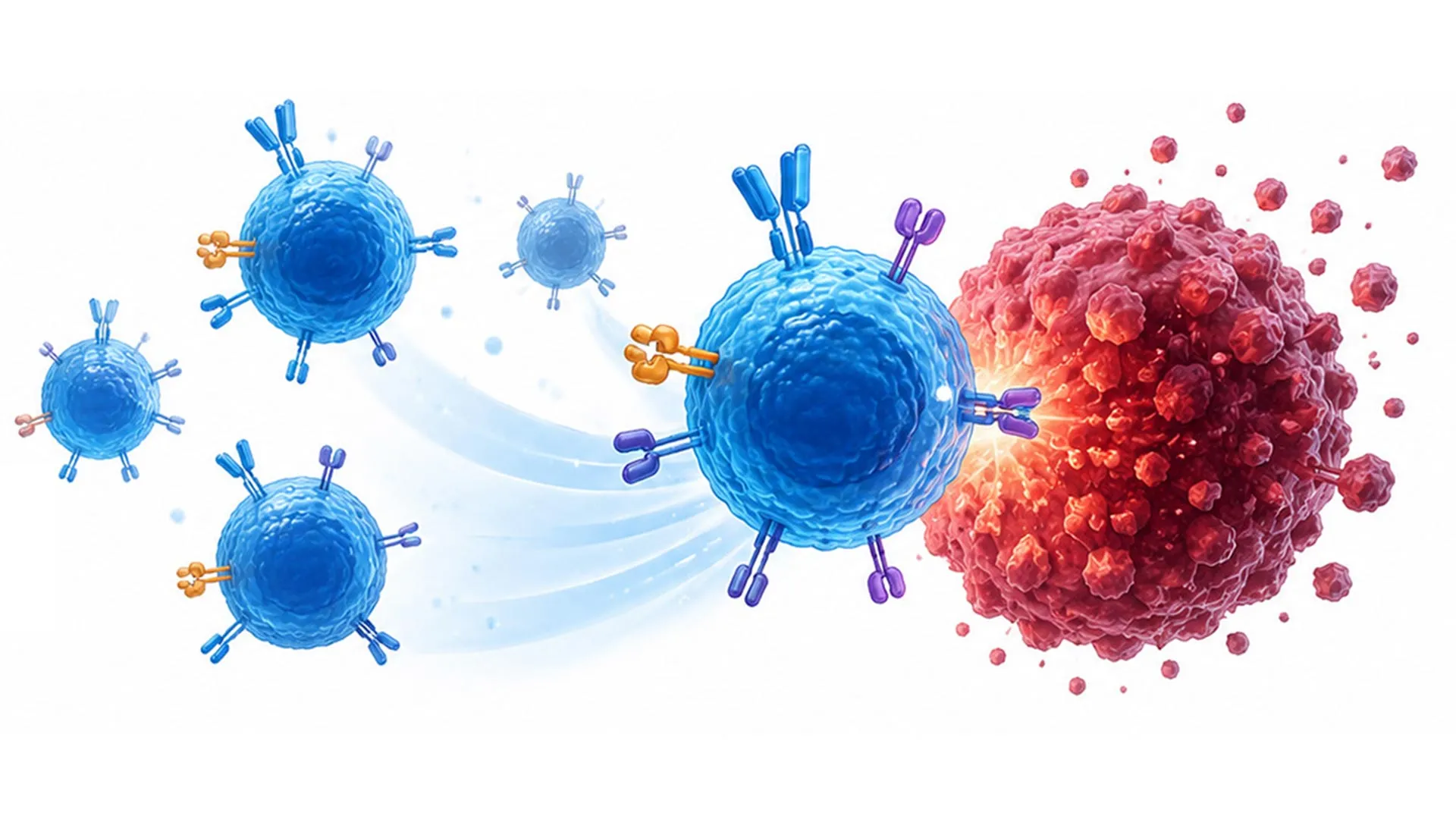
A significant leap forward in the fight against solid tumors may be on the horizon, thanks to a novel T cell receptor (TCR) therapy developed by researchers at the University of California, Los Angeles (UCLA). This innovative approach, detailed in a study published in Cell Reports Medicine, promises to overcome critical limitations of current cancer treatments by offering a scalable, potentially more affordable, and safer alternative. The breakthrough centers on genetically engineering immune cells, specifically T cells, to precisely target and destroy cancerous growths.
The Precision of TCR Therapy: A Deeper Strike Against Cancer
TCR therapy represents a sophisticated evolution of cell-based cancer treatments. Unlike CAR T-cell therapy, which primarily targets proteins residing on the exterior of cancer cells, TCR therapy possesses the ability to penetrate deeper. It achieves this by recognizing and binding to minute fragments of proteins that originate within the cancer cell and are then transported to the cell surface. These fragments act as unique identifying tags, signaling the presence of malignancy.
This expanded recognition capability is particularly crucial for tackling solid tumors. Many of the molecular alterations that drive a cell to become cancerous occur internally, rendering them inaccessible to therapies that rely solely on surface markers. TCR therapy’s capacity to detect these intracellular protein fragments opens up new avenues for treating cancers that have historically proven resistant to immunotherapy.
Addressing the Bottlenecks: Overcoming the Challenges of Current TCR Therapies
Despite its immense potential, TCR therapy has been hampered by significant practical challenges. The prevailing methods often necessitate a highly personalized approach, where a patient’s own T cells are extracted, genetically modified, and then reinfused. This intricate process is time-consuming, typically taking several weeks from cell collection to treatment readiness, and the associated costs can escalate into the hundreds of thousands of dollars, placing it beyond the reach of many patients.
An alternative explored by scientists involves utilizing T cells from healthy donors. This "off-the-shelf" model would allow for the production of treatments in advance, enabling them to be stored and readily administered to multiple patients. However, this donor-based approach introduces a substantial risk: graft-versus-host disease (GvHD). In GvHD, the transplanted donor immune cells mistakenly identify the recipient’s healthy tissues as foreign and launch an attack, a potentially life-threatening complication.
The UCLA research team believes they have engineered a solution that addresses both the scalability and safety concerns simultaneously, paving the way for a more accessible and effective cancer therapy.
A Novel Platform: Engineering T Cells from Stem Cells
The cornerstone of the UCLA team’s innovation lies in their decision to initiate the engineering process at an earlier stage of immune cell development. Instead of working with mature T cells, they utilized blood stem cells, specifically those derived from donated cord blood. These immature stem cells possess the remarkable ability to differentiate into all types of blood and immune cells, offering a versatile starting point.
Researchers then introduced a gene encoding a specific receptor designed to recognize NY-ESO-1, a protein commonly found in a wide array of solid tumors. By engineering these stem cells, the team guided their maturation into T cells in a laboratory setting.
This strategic choice to modify stem cells before they mature into T cells carries a profound advantage. As these engineered stem cells develop, they do not acquire the diverse array of natural T cell receptors that are typically present on mature donor T cells. This absence of a random collection of natural receptors significantly reduces the likelihood of the engineered cells mistakenly attacking the patient’s healthy tissues, a common concern with donor-derived T cell therapies. Conventional therapies using mature donor T cells often require additional gene editing steps to deactivate their native receptors, a complex procedure aimed at mitigating GvHD.
"Stem cells are undifferentiated — they’re not yet mature T cells with a fixed receptor already in place," explained co-first author Yichen (John) Zhu, a graduate student at the UCLA Broad Stem Cell Research Center Training Program. "When we differentiate our engineered stem cells into T cells, essentially all of the resulting cells carry the same receptor and go after the same tumor target." This uniformity ensures a more targeted and controlled immune response.
A Dual-Action Approach: Enhancing Cancer Detection
One of the most persistent challenges in treating solid tumors is their inherent heterogeneity. Cancer cells within a single tumor can exhibit significant variations, and some may cease to display the specific molecular markers that a targeted therapy is designed to recognize. This phenomenon, known as antigen escape, can allow surviving cancer cells to evade treatment and lead to relapse.
To counter this vulnerability, the UCLA team incorporated a secondary detection mechanism into their engineered AlloESO-T cells. In addition to the engineered receptor targeting NY-ESO-1, these cells are equipped with natural killer (NK) cell receptors. These receptors are capable of identifying stress signals that are frequently displayed by many tumor cells, regardless of the presence or absence of NY-ESO-1.
This built-in backup system significantly enhances the cells’ ability to recognize and eliminate tumor cells, even if they stop expressing the primary target antigen. "Solid tumors are very diverse," Zhu elaborated. "Some tumor cells lose or hide the antigen a therapy is designed to find — what we call antigen escape. When that happens, a therapy built around a single target loses its grip. Our stem cell-derived cells still have a second mechanism to kill those tumor cells."
Laboratory experiments involving human melanoma, ovarian, and prostate cancer cells provided compelling evidence for this dual-action strategy. The NK cell receptors enabled the engineered T cells to effectively destroy cancer cells that would have otherwise been missed by the NY-ESO-1 targeting pathway alone. This added layer of detection could prove instrumental in preventing cancer cells from exploiting escape routes and resisting treatment.
Preclinical Success: Promising Results in Animal Models
The efficacy of the AlloESO-T cells was further validated through rigorous testing in mouse models. In experiments involving ovarian cancer, a single dose of the engineered cells demonstrated sustained tumor control and significantly improved survival rates in the treated animals. In stark contrast, mice receiving conventionally engineered T cells derived from mature donor cells exhibited only partial tumor control and developed GvHD, underscoring the safety advantages of the new approach.
Similar positive outcomes were observed in a melanoma model. The AlloESO-T cells effectively slowed tumor growth and delayed cancer recurrence, while the comparison group treated with standard engineered donor T cells experienced only temporary disease control.
Beyond tumor regression, the researchers noted critical differences in the behavior of the two cell types post-treatment. Following a single infusion, the AlloESO-T cells exhibited a remarkable 100-fold increase in number. They efficiently infiltrated tumor sites, expanded where needed, and maintained their activity for weeks, largely sparing healthy organs. The conventionally engineered donor T cells, however, accumulated in vital organs like the liver and lungs, leading to the type of toxicity the new strategy aims to prevent.
Scalability and Affordability: A Paradigm Shift in Manufacturing
Perhaps one of the most transformative aspects of this new platform is its potential for large-scale and cost-effective manufacturing. Current personalized T cell therapies require the meticulous collection and processing of cells for each individual patient, a process that contributes significantly to their high cost and limited accessibility.
By starting with stem cells, the UCLA team envisions a paradigm shift towards mass production. Cord blood stem cells have the capacity to generate immense quantities of immune cells. Consequently, a relatively small initial supply of stem cells could be cultivated to produce thousands of therapeutic doses.
"From a small number of cord blood stem cells, we can generate trillions of therapeutic cells — enough for thousands of doses — within about six weeks," stated co-senior author Yanruide (Charlie) Li, a postdoctoral scholar in the Yang lab. "At an estimated $5,000 per dose, this approach would be far more accessible than today’s therapies." This estimated cost represents a dramatic reduction compared to the hundreds of thousands of dollars often associated with current personalized T cell treatments, potentially democratizing access to advanced cancer immunotherapies.
A Versatile Platform for Diverse Solid Tumors
The AlloESO-T system is not envisioned as a one-size-fits-all therapy for a single cancer protein. The researchers highlight that many solid tumors present a challenge for conventional immunotherapies due to a lack of suitable surface proteins. TCR-based treatments, by their ability to detect intracellular protein fragments, offer a powerful alternative for these hard-to-reach cancers.
"We’re not just presenting one therapy for one target. We want to share the platform itself," Li emphasized. "As long as a receptor for a given cancer antigen has been validated, we can build it into this system and generate T cells specific to that target." This modular design allows for the rapid development of tailored therapies for a broad spectrum of solid tumors.
Furthermore, the AlloESO-T system builds upon existing manufacturing expertise developed by Dr. Yang’s laboratory for its CAR-NKT platform, another off-the-shelf immunotherapy strategy. The researchers have already established a partnership with the UCLA Health Center for Advanced Biotherapies to produce clinical-grade cells for that program. They anticipate leveraging this same established manufacturing infrastructure to expedite the scale-up of AlloESO-T, potentially accelerating its transition to clinical testing.
The Path Forward: Human Trials and Future Implications
While the preclinical results are highly encouraging, it is crucial to note that the therapeutic cells described in this research have so far only been evaluated in laboratory settings and animal models. They have not yet undergone human clinical trials, nor have they received approval from the Food and Drug Administration (FDA) for safety or efficacy in human use.
The journey from laboratory discovery to clinical application is rigorous and requires extensive validation. The next critical phase will involve carefully designed human trials to assess the safety, tolerability, and effectiveness of AlloESO-T cells in patients with solid tumors.
This research represents a significant advancement in the field of cancer immunotherapy. By developing an off-the-shelf TCR therapy derived from stem cells, UCLA researchers have laid the groundwork for a more accessible, scalable, and potentially safer treatment option for a wide range of solid tumors. The implications for future cancer care are profound, offering renewed hope for patients facing difficult-to-treat malignancies. The collaborative efforts of researchers, institutions, and regulatory bodies will be vital in translating this promising innovation from the laboratory bench to the patient bedside.
Additional authors on the study include Jiaji Yu, Yu Jeong Kim, Yanxin Tian, Zhe Li, Yuning Chen, Zibai Lyu, Enbo Zhu, Annabel S. Zhao, Nathan Ma, Catherine Zhang, Adam Kramer, Matthew Wilson, Ryan Hon, Yu-Chen Wang, Siyu Lin, Xinyuan Shen, Zoe Hahn, Yuchong Zhang, and Aijun Wang.
The research was supported by grants from the California Institute for Regenerative Medicine, the UCLA Molecular Biology Institute, the UCLA Office of the Chancellor, and the UCLA Goodman-Luskin Microbiome Center.
