
 By admin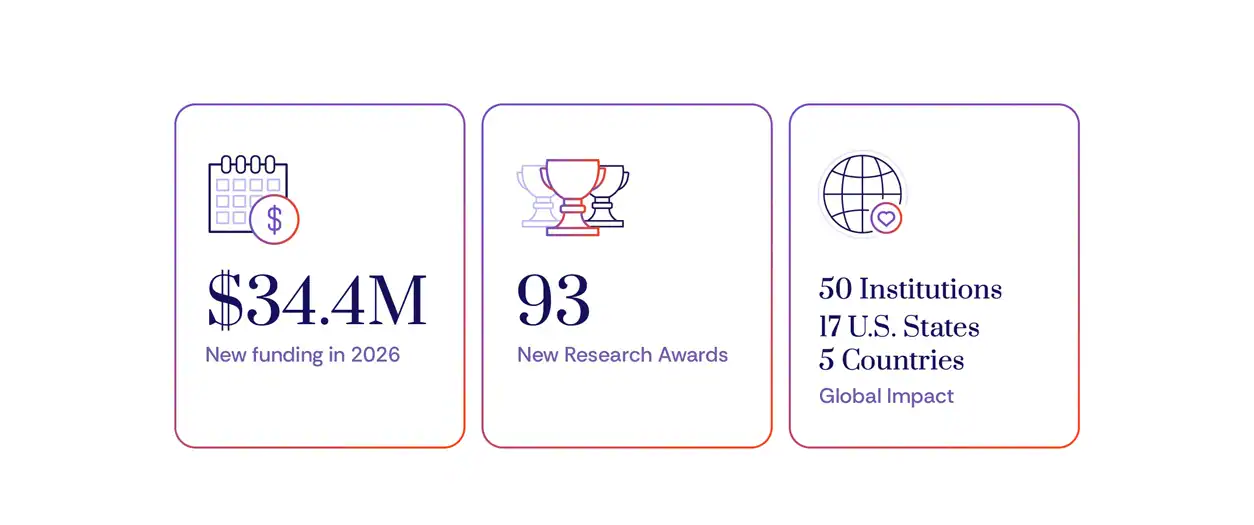
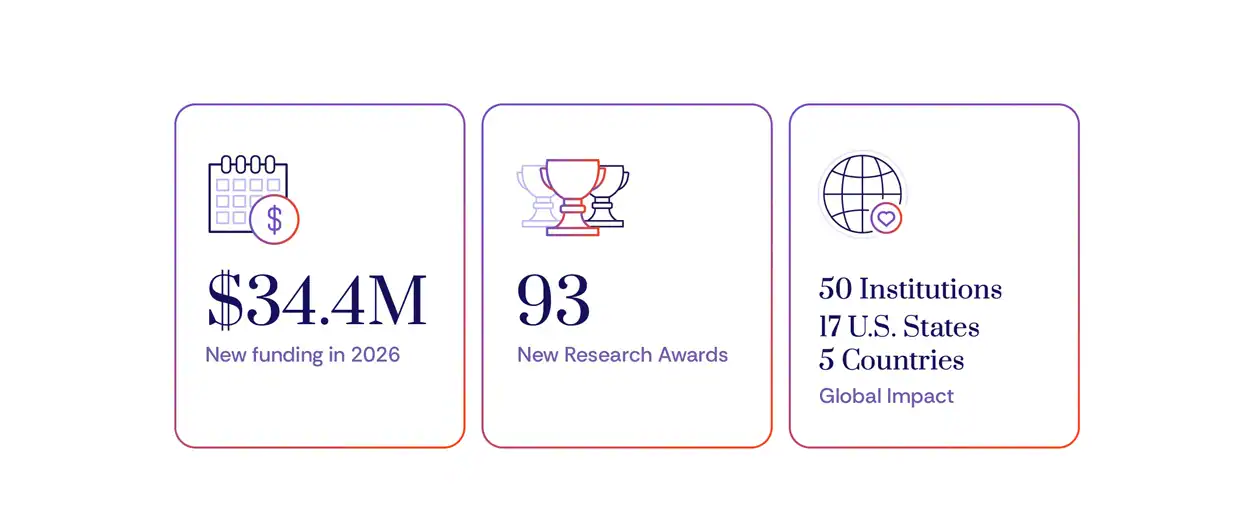
There are moments when an organization’s mission is tested not by opportunity, but by uncertainty. This past year was one of those moments, yet the Cancer Research Institute (CRI) made a deliberate and impactful choice to keep the vital engine of scientific discovery moving forward, culminating in its largest grantmaking year to date. In a landscape increasingly fraught with funding cuts and precarious environments for researchers nationwide, CRI committed an unprecedented $34.4 million in new funding across 93 awards during fiscal year 2025-26. These significant investments reached a diverse cohort of scientists at 50 institutions spanning five countries and 17 states, underpinning a global effort to unravel the complexities of cancer and forge new pathways to cures.
The Challenging Landscape of Biomedical Research Funding
The biomedical research ecosystem, while vibrant with innovation, is also inherently susceptible to broader economic fluctuations and shifts in governmental priorities. The period leading up to and including fiscal year 2025-26 presented a confluence of challenges that created a climate of uncertainty for many researchers. Economic slowdowns, intensified global competition for dwindling public grants, and the lingering effects of previous large-scale crises often translate into tighter budgets for national funding agencies. This often means fewer grants awarded, smaller grant sizes, and a heightened pressure on researchers to demonstrate immediate, tangible results, sometimes at the expense of bold, high-risk, high-reward investigations. For individual scientists, this environment can be particularly daunting, leading to delays in crucial experiments, difficulties in retaining talented staff, and even the premature abandonment of promising research avenues. The attrition rate for early-career scientists attempting to establish independent laboratories can be alarmingly high under such conditions, threatening the pipeline of future scientific leaders. It is against this backdrop of widespread apprehension that CRI’s decisive action stands out, demonstrating a steadfast commitment to its core mission.
CRI’s Unwavering Commitment to Scientific Progress
For over 70 years, the Cancer Research Institute has been a stalwart champion of groundbreaking immunology research, particularly its application to cancer. Founded in 1953, CRI pioneered the field of cancer immunotherapy, long before it gained widespread recognition as the revolutionary treatment modality it is today. Its historical trajectory has been marked by a consistent strategy: identify and support exceptional scientists at critical junctures in their careers, providing them with the resources, flexibility, and confidence needed to pursue ambitious questions. This long-term vision ensures that even in times of financial constraint, critical research does not stall. The $34.4 million deployed in fiscal year 2025-26 represents not merely a monetary sum but a strategic lifeline for scientific endeavors that might otherwise have been curtailed. These 93 awards are meticulously distributed to foster innovation across a broad spectrum of research stages and geographical locations. From foundational discoveries in immunology to translational studies aimed at bringing new therapies to patients, CRI’s investment portfolio reflects a comprehensive approach. The international reach, encompassing scientists in five countries, underscores the global nature of scientific collaboration and the universal urgency of finding solutions for cancer. Domestically, funding across 17 states ensures that talent and promising ideas are nurtured regardless of institutional prestige, promoting a more equitable and robust research landscape.
Nurturing Future Leaders: The Critical Role of the IGNITE Award
Behind every grant award is a dedicated scientist driven by an important question, striving to push the boundaries of human knowledge. The journey from a postdoctoral researcher to an independent investigator is arguably one of the most critical and vulnerable phases in a scientist’s professional life. During this transition, researchers are tasked with the immense responsibility of establishing their own laboratories, recruiting and mentoring a team, defining original areas of investigation, and, crucially, generating the preliminary data required to compete for long-term, often government-backed, funding. The chasm between completing a fellowship and securing stable independent funding is notoriously wide, often referred to as the "valley of death" in research. Promising ideas, brilliant minds, and potentially life-saving discoveries can languish or even be lost during this period, not due to a lack of potential, but because the foundational support needed to launch an independent program is incredibly difficult to secure.
Recognizing this critical gap, CRI developed the new IGNITE Award – an acronym for "Inspiring Growth and Nurturing Independence Through Excellence." This program is specifically designed to bridge that perilous gap, providing vital support precisely when talented researchers are poised to build their independent programs and tackle bold, original scientific questions. The IGNITE Award offers these early-career scientists the crucial seed funding and validation necessary to gather preliminary data, refine their hypotheses, and demonstrate the feasibility of their novel approaches. This strategic investment allows them to establish a strong foundation, making them more competitive for subsequent, larger grants from national funding bodies, thereby securing their long-term viability as independent investigators.
A Beacon of Progress: Dr. Simone Park’s Illustrative Journey
The impact of such sustained investment and targeted support is vividly exemplified by Dr. Simone Park, an inaugural IGNITE Award recipient at the University of Pennsylvania. Dr. Park’s career trajectory underscores the profound value of CRI’s continuous support model. CRI first recognized Dr. Park’s exceptional promise during her postdoctoral fellowship, providing initial funding that allowed her to delve into critical immunological research. Now, as she embarks on the next pivotal step in her career, the IGNITE Award is instrumental in helping her establish and grow her independent research program.
Dr. Park’s groundbreaking research focuses on tissue-resident memory T cells (TRM cells). These specialized immune cells are distinct from circulating T cells; they reside permanently within specific tissues, such as the skin, lungs, or, critically, tumor microenvironments, where they can provide immediate and potent protection against pathogens or, in the context of cancer, against tumor recurrence. Her work aims to uncover the fundamental biological mechanisms that enable these TRM cells to persist in tissues and maintain their potent anti-tumor activity over extended periods. By dissecting the intricate biology behind their durability and efficacy, Dr. Park hopes to identify novel strategies for enhancing the body’s natural immune defenses against cancer. Her findings could lead to the development of innovative immunotherapies that not only eliminate existing tumors but also establish robust, long-lasting immune surveillance to prevent relapse, representing a significant leap forward in cancer treatment and prevention. Dr. Park’s journey from a CRI-supported postdoctoral fellow to an independent IGNITE Award recipient is a powerful testament to the institute’s philosophy: investing in promising scientists at every stage helps them develop expertise, build independence, and ultimately grow into the scientific leaders who will define the future of cancer immunotherapy.
A Continuum of Support: CRI’s Holistic Approach to Talent Development
The long-term, integrated approach to supporting scientific talent is central to CRI’s profound impact on cancer research. Its programs are meticulously designed to form a continuum of support, addressing the unique needs of researchers at various career stages. This holistic framework ensures that exceptional individuals receive critical assistance at pivotal moments, maximizing their potential for breakthrough discoveries.
The journey often begins with postdoctoral fellowships, which provide foundational support for emerging scientists to launch their research careers under the mentorship of established investigators. These fellowships are crucial for developing specialized skills and exploring initial research questions. Following this, the newly introduced IGNITE Awards specifically target the challenging transition to independence, offering the essential resources for young investigators to establish their own laboratories and pursue their bold, original ideas. Finally, for established investigators who have already demonstrated significant impact, CRI offers the prestigious Lloyd J. Old STAR Awards. Named after CRI’s scientific director for over 40 years, Dr. Lloyd J. Old, a pioneer in tumor immunology, these awards provide senior scientists with substantial, unrestricted funding. This freedom allows them to pursue high-risk, high-impact ideas that might be too unconventional or long-term for traditional funding mechanisms, fostering truly transformative research. Together, these interconnected programs create a robust pipeline of talent, ensuring that the brightest minds have the sustained support necessary to advance their work and make lasting contributions to cancer immunotherapy.
Beyond Grants: A Comprehensive Ecosystem for Discovery and Patient Care
CRI’s commitment extends far beyond direct research awards, encompassing a broader, multifaceted ecosystem designed to accelerate discovery and translate complex biology into tangible benefits for patients. The institute actively advances clinical studies, collaborating with academic centers and industry partners to bring promising immunotherapies from the lab to patient trials. This involves meticulous oversight, patient recruitment support, and data analysis to ensure the rigorous evaluation of new treatments.
Furthermore, CRI is deeply invested in developing advanced data programs and shared resources, recognizing that modern biomedical research is increasingly data-driven. This includes creating platforms for sharing complex genomic, proteomic, and clinical data, which allows researchers worldwide to access, analyze, and leverage vast datasets to identify new biomarkers, understand disease mechanisms, and predict treatment responses. Equipping scientists with new computational skills is another crucial area of focus. As artificial intelligence and machine learning become indispensable tools in biological research, CRI offers training and resources to help researchers harness these powerful technologies for data analysis, drug discovery, and personalized medicine approaches.

Crucially, CRI also extends its mission to directly support patients and caregivers. Navigating the complexities of a cancer diagnosis and treatment options, especially innovative immunotherapies, can be overwhelming. CRI provides trusted, evidence-based information, educational resources, and support networks to empower patients and their families to make informed decisions and cope with their journey. This holistic approach ensures that every investment, from foundational science to patient education, contributes to a cohesive strategy aimed at moving discovery forward and translating increasingly complex biological insights into better, more effective treatments for patients worldwide.
The Broader Impact of Sustained Investment
The record-setting fiscal year 2025-26, detailed in CRI’s 2026 Annual Impact Report, serves as a powerful testament to the profound impact of sustained investment in scientific research, particularly during periods of economic and systemic uncertainty. This report is not merely a compilation of statistics; it is a chronicle of promises kept—to the brilliant scientists whose innovative ideas deserve the opportunity to flourish, to the millions of patients and their families who are desperately awaiting new possibilities and more effective treatments, and to the unwavering supporters who believe implicitly in the transformative power of research to change and save lives.
The implications of CRI’s strategic decision to increase funding during a challenging period are far-reaching. By providing stability and resources, CRI helps to:
- Accelerate Discovery: Maintain the momentum of critical research projects, preventing delays that could set back the entire field.
- Retain Talent: Prevent promising scientists from leaving academia due to lack of funding, thereby preserving the intellectual capital essential for future breakthroughs.
- Foster Innovation: Encourage high-risk, high-reward research that might not fit conventional funding criteria but holds the potential for paradigm-shifting discoveries.
- Strengthen the Research Ecosystem: Complement government funding, providing a crucial safety net and fostering a more diverse and resilient biomedical research landscape.
- Inspire Hope: Demonstrate to patients and the public that even in uncertain times, the fight against cancer remains a top priority, and progress is continuously being made.
Uncertainty may indeed alter the landscape in which science advances, posing new logistical, financial, and even psychological challenges. However, it does not, and must not, change the fundamental requirements for progress: exceptional people, bold ideas, and the sustained support necessary to bring these elements together in pursuit of a common, life-saving goal. The Cancer Research Institute’s actions in fiscal year 2025-26 underscore this timeless truth. There is extraordinary work still ahead, countless lives to impact, and new frontiers in cancer immunotherapy to explore. And, as CRI’s unwavering commitment demonstrates, we’re just getting started.
