
 By Gabriel Paijo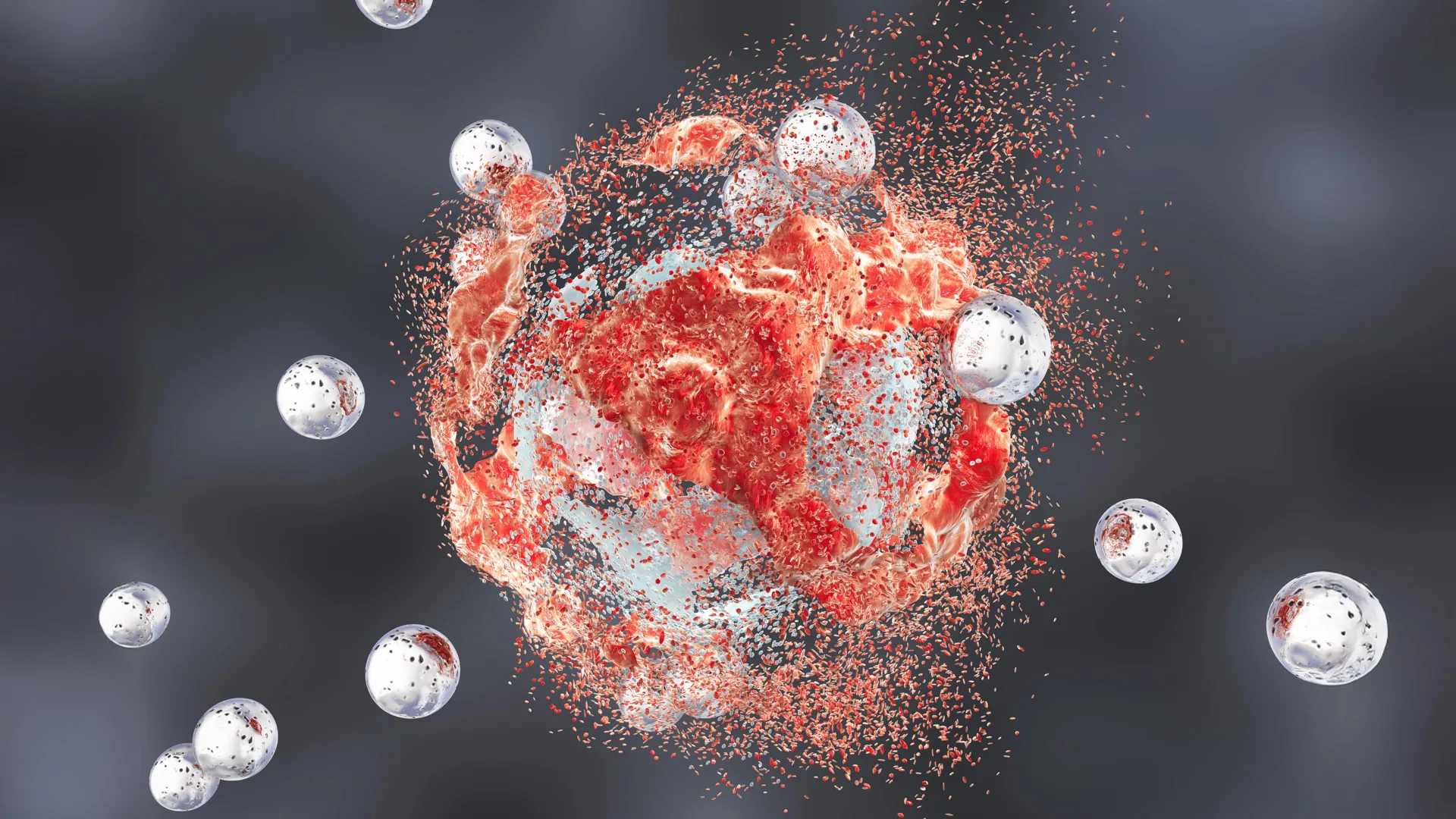
Researchers at Weill Cornell Medicine and the Cornell Duffield College of Engineering have announced a significant breakthrough in the field of nanomedicine, developing a class of engineered silica nanoparticles capable of both directly destroying prostate tumor cells and stimulating a robust immune response. This dual-action approach, detailed in a study published on June 15 in the journal Cancer Research, has demonstrated the ability to produce complete tumor remissions in mouse models of aggressive, treatment-resistant prostate cancer. The findings suggest a potential paradigm shift in how oncologists approach "cold" tumors—cancers that traditionally do not respond well to immunotherapy because they effectively hide from the body’s immune system.
The engineered particles, formally known as ultrasmall fluorescent core-shell silica nanoparticles or "Cornell Prime dots" (C’ dots), represent the culmination of over a decade of interdisciplinary collaboration. While these particles were originally designed as high-resolution imaging agents to help surgeons identify the margins of a tumor, this latest research confirms they possess intrinsic therapeutic properties that can be harnessed to treat one of the most common and deadly forms of cancer in men.
The Dual-Strategy Mechanism: Ferroptosis and Immune Awakening
The primary innovation of the C’ dots lies in their ability to attack cancer through two distinct yet complementary pathways. The first is a direct cytotoxic effect known as ferroptosis. Unlike apoptosis, which is the standard programmed cell death that many cancers learn to evade, ferroptosis is a specialized form of cell death driven by intense iron-dependent oxidation.
During the study, researchers observed that the silica nanoparticles, which are engineered to carry specific molecular markers, appear to collect positively charged iron ions from the bloodstream. Once the particles are internalized by the tumor cells, they release these ions, triggering a "firestorm" of lipid peroxidation. This process damages the fatty molecules in the cell membranes, leading to the structural collapse of the cancer cell. Because many aggressive prostate cancers are resistant to traditional chemotherapy-induced apoptosis, the induction of ferroptosis offers a vital alternative route for tumor destruction.
The second pathway involves the radical transformation of the tumor microenvironment. Prostate cancer is notoriously "immunologically cold," meaning the environment surrounding the tumor is filled with suppressive signals that prevent T cells and other immune "soldiers" from attacking the growth. The C’ dots appear to disrupt these signals, effectively turning the tumor "hot." By changing the metabolic landscape of the tumor, the particles encourage the infiltration of active T cells and the reprogramming of macrophages—immune cells that often inadvertently protect tumors—into cancer-fighting agents.
A Decadal Chronology of C’ Dot Development
The journey of the Cornell Prime dot began not as a cure, but as a flashlight. In the early 2010s, Dr. Ulrich Wiesner, the Spencer T. Olin Professor of Materials Science and Engineering at Cornell, developed these silica-based particles to serve as ultrasmall, highly stable fluorescent probes. Measuring less than 10 nanometers in diameter—roughly 1/1000th the width of a human hair—the particles were small enough to circulate freely in the blood and be cleared safely by the kidneys, avoiding the liver toxicity often associated with larger nanoparticles.
By 2014, the C’ dots had entered first-in-human clinical trials, primarily focused on their use in PET imaging and image-guided surgery for melanoma and nodal metastases. However, as the collaboration between Dr. Wiesner’s laboratory and Dr. Michelle Bradbury’s laboratory at Weill Cornell Medicine deepened, the team began to notice unusual biological interactions. The particles were not just sitting in the cells; they were influencing them.
In 2016 and 2018, preliminary studies suggested that high concentrations of these particles could induce cell death in certain nutrient-deprived environments. This led the team to investigate whether the particles could be specifically "tuned" to target prostate cancer, a disease where late-stage metastatic growth remains largely incurable despite advances in hormone therapy and radiation. The current study represents the most advanced iteration of this technology, moving from simple imaging to a sophisticated "theranostic" (therapeutic and diagnostic) platform.
Quantitative Results from Preclinical Trials
The efficacy of the C’ dots was tested using mouse models designed to mimic the most aggressive forms of human prostate cancer. The researchers compared several treatment cohorts: a control group with no treatment, a group receiving only immunotherapy (immune checkpoint blockades), a group receiving only the C’ dots, and a group receiving a combination of both.
The results provided clear evidence of synergy. While both the nanoparticles and the immunotherapy drugs showed modest effects on their own—slowing tumor growth but rarely eliminating it—the combination therapy yielded dramatic outcomes. In a cohort of ten mice with aggressive tumors, the combination of C’ dots and immune checkpoint blockade resulted in complete or nearly complete remissions in 40% of the subjects, who then survived indefinitely.
To further enhance the response, the team added a third component: a CSF-1R blockade, which specifically targets and neutralizes immunosuppressive macrophages within the tumor. This triple-combination therapy increased the complete remission rate to 50%. Notably, the researchers reported that the surviving mice showed no signs of cancer recurrence, suggesting the treatment had successfully "educated" the immune system to recognize and suppress any remaining malignant cells.
Precision Targeting and Safety Profiles
A critical component of the study’s success was the use of a targeting ligand that recognizes Prostate-Specific Membrane Antigen (PSMA). PSMA is a protein that is overexpressed on the surface of nearly all prostate cancer cells but is present in very low levels in healthy tissue. By coating the C’ dots with PSMA-targeting molecules, the researchers ensured that the "payload" of iron-inducing silica was delivered directly to the site of the disease.
Safety is a paramount concern in nanomedicine, as many previous nanoparticle candidates failed in clinical trials due to accumulation in the liver or spleen, leading to long-term toxicity. The C’ dots, however, leverage the unique properties of amorphous silica. Because they are ultrasmall, they are primarily excreted through the renal system (the kidneys).
"It seems unreal," noted Dr. Wiesner during the analysis of the results. He remarked on the fact that these effects—ferroptosis, immune remodeling, and metabolic disruption—occurred simultaneously within the tumor while leaving healthy tissues unharmed. He hypothesized that the biological compatibility of silica might stem from its ubiquitous presence in the natural environment and human diet, which may allow the body to process the engineered particles more effectively than synthetic metallic or carbon-based alternatives.
Expert Analysis and Clinical Implications
The implications of this research extend beyond prostate cancer. Dr. Jedd Wolchok, a world-renowned oncologist and the Meyer Director of the Sandra and Edward Meyer Cancer Center at Weill Cornell Medicine, emphasized the significance of the "cold-to-hot" transition. "By creating conditions that support a more effective antitumor immune response, these particles may help unlock the full potential of immunotherapy in prostate cancer, where durable responses have historically been difficult to achieve," Dr. Wolchok stated.
For decades, the primary challenge in treating metastatic prostate cancer has been the tumor’s ability to create an "immune desert." Standard immunotherapies like Pembrolizumab or Nivolumab often fail in prostate cancer because there are no T cells present for the drugs to "unleash." The C’ dots solve this problem by essentially building the infrastructure for an immune attack where none existed before.
Furthermore, the discovery of ferroptosis as a primary killing mechanism provides a new tool for overcoming "multidrug resistance." When cancer cells evolve to ignore the signals that tell them to die (apoptosis), they remain vulnerable to the oxidative stress of ferroptosis. This suggests that C’ dots could eventually be used as a second-line or third-line therapy for patients who have exhausted all other options.
Future Directions and the Path to Human Trials
The research team, which included co-first authors Drs. Nabil Siddiqui, Li Zhang, and Gabriel DeLeon, is now preparing for the next phase of development. The transition from mouse models to human clinical trials requires rigorous standardization of the manufacturing process and additional toxicity studies to satisfy regulatory requirements.
The study was supported by a diverse array of funding bodies, including the Department of Defense and the National Cancer Institute. This level of institutional support underscores the perceived importance of the technology. The long-term goal is to integrate C’ dots into a standard clinical workflow where they could first be used to map the extent of a patient’s cancer via PET scans, and then immediately be used in higher doses to treat the identified tumors.
As the medical community moves toward "personalized medicine," the ability to engineer a particle that adapts to the specific metabolic and immunological weaknesses of a patient’s tumor represents a frontier of oncology. If the results seen in the lab can be replicated in humans, the Cornell Prime dot may transition from a sophisticated imaging tool to a cornerstone of 21st-century cancer therapy, offering hope to thousands of patients facing aggressive prostate disease.
