
 By Budi Oetomo Narendra
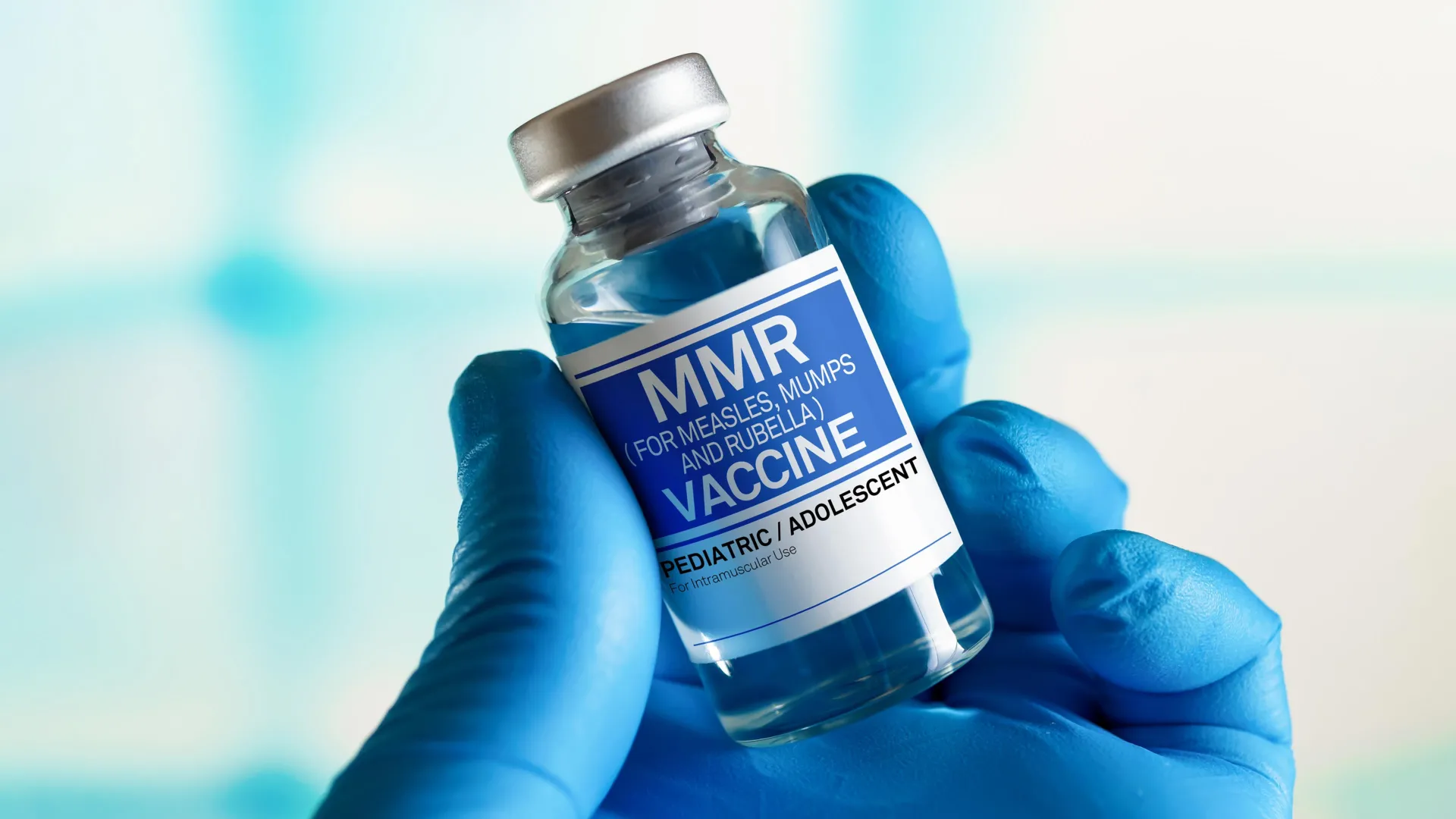
The United States has officially lost its measles elimination status, a designation held for over a quarter-century, marking a profound setback in the nation’s fight against one of the most contagious diseases known to humankind. This alarming development coincides with new findings from the Annenberg Public Policy Center (APPC) revealing persistent and widespread public confusion regarding the serious dangers posed by measles and the efficacy of the vaccines designed to prevent it. This confluence of declining immunity and pervasive misinformation presents a formidable challenge to public health.
The End of an Era: Re-Emergence of a Preventable Disease
On November 17, 2026, the Pan American Health Organization (PAHO) formally confirmed that the United States no longer met the criteria for measles elimination. This status, first achieved in 2000, signified that no strain of the measles virus had continuously circulated within the country for a period of 12 months or longer. The loss of this hard-won achievement underscores a concerning decline in population immunity, leaving communities vulnerable to outbreaks of a disease that was once considered largely vanquished.
The PAHO announcement arrives amidst the country’s most severe measles resurgence in decades. Data from the Centers for Disease Control and Prevention (CDC) paints a stark picture: as of November 12, 2026, the United States had already recorded 5,412 confirmed measles cases. This figure more than doubles the 2,290 cases reported throughout the entirety of 2025, signaling an exponential increase in transmission and a rapidly escalating public health crisis. The rapid acceleration of cases in 2026 highlights the critical importance of maintaining high vaccination coverage to prevent the re-establishment of endemic measles transmission.
Understanding Measles: A Highly Contagious Threat
Measles, caused by a virus, is an acute, highly contagious infectious disease characterized by fever, cough, runny nose, red eyes (conjunctivitis), and a distinctive rash. Before the introduction of the measles vaccine in 1963, measles was a common childhood illness, with millions of cases reported annually in the U.S., leading to tens of thousands of hospitalizations and hundreds of deaths. It is so contagious that if one person has it, up to 9 out of 10 close contacts who are not immune will also get it. The virus can live in the air and on surfaces for up to two hours after an infected person coughs or sneezes.
While often perceived as a benign childhood ailment by those unfamiliar with its pre-vaccine era impact, measles can lead to severe complications, including pneumonia, encephalitis (brain swelling), deafness, and lifelong intellectual disabilities. For children, particularly infants and those with compromised immune systems, the risk of severe outcomes, including death, is significantly higher. The CDC estimates that 1 to 3 of every 1,000 children infected with measles will die from respiratory or neurological complications. Globally, measles remains a leading cause of death among young children, despite the availability of a safe and effective vaccine.
The elimination of measles in the U.S. in 2000 was a monumental public health achievement, largely attributed to widespread adoption of the measles, mumps, and rubella (MMR) vaccine. This two-dose vaccine regimen provides highly effective, long-lasting immunity, with a single dose offering 93% protection and two doses increasing effectiveness to 97%. The success of the MMR vaccine in eradicating endemic transmission transformed the landscape of childhood health, making severe measles complications a rarity in the U.S. until recent years.
The Persistence of Misinformation: Annenberg Survey Reveals Knowledge Gaps
Despite decades of robust scientific evidence confirming vaccine safety and efficacy, public understanding of measles and the MMR vaccine remains alarmingly flawed. A November 2026 survey conducted by the Annenberg Science and Public Health (ASAPH) initiative, a program of the Annenberg Public Policy Center, sheds light on the widespread misinformation that continues to fuel vaccine hesitancy.
The survey, which polled a nationally representative sample of U.S. adults, found that while a majority (64%) correctly rejected the debunked claim that "vaccines given to children for diseases like measles, mumps, and rubella cause autism," a significant minority held onto this falsehood. Seventeen percent of respondents incorrectly believed the claim was true, and another 19% expressed uncertainty, stating they did not know whether it was true or false. These figures closely mirror findings from earlier APPC research conducted between September 2024 and August 2026, which consistently showed 12% to 14% of U.S. adults believing the autism link and 19% to 22% remaining uncertain.
Further probing into these misconceptions, the latest ASAPH survey asked respondents to compare autism rates between fully vaccinated and unvaccinated children. Nearly half (49%) believed both groups were "about as likely" to show signs of autism. An additional 11% incorrectly thought fully vaccinated children were "more likely" to exhibit signs of autism, while 14% believed they were "less likely," and a substantial 26% could not offer an opinion. This data underscores a critical failure in public understanding of basic scientific and epidemiological principles regarding vaccine safety.
Debunking the Autism Myth: A Consensus of Science
The persistent belief in a vaccine-autism link stems primarily from a fraudulent 1998 study published by Andrew Wakefield, which was subsequently retracted and its author stripped of his medical license. Since then, extensive scientific research across numerous countries and involving millions of children has definitively found no causal relationship between vaccines, including the MMR vaccine, and autism.
In 2004, the National Academy of Medicine (then the Institute of Medicine) unequivocally concluded that "the body of epidemiological evidence favors rejection of a causal relationship between the MMR vaccine and autism evidence." This conclusion has been repeatedly reaffirmed by leading global health authorities. Most recently, in 2025, the World Health Organization’s Global Advisory Committee on Vaccine Safety reiterated that high-quality scientific evidence does not establish a causal relationship between vaccination and autism. FactCheck.org, a project of the Annenberg Public Policy Center, has also consistently challenged and debunked claims linking vaccines to autism, emphasizing the lack of scientific support.
These deeply entrenched misconceptions are not without consequence. Previous Annenberg research has demonstrated a direct link between the acceptance of false vaccine claims, such as the belief that the MMR vaccine causes autism, and a reduced likelihood of recommending MMR vaccination to eligible individuals. This translates directly into lower vaccination rates and, ultimately, increased vulnerability to preventable diseases like measles.
Underestimating the Danger: A Deadly Knowledge Gap
Beyond the autism myth, the APPC survey revealed another striking knowledge deficit: most Americans appear profoundly uncertain about the risk of death associated with measles in children. When asked how many children infected with measles are likely to die from the disease, a staggering 59% of respondents admitted they did not know. Only 9% selected the correct response of "about 1 in 1,000," which aligns with the CDC’s estimate of 1 to 3 deaths per 1,000 infected children due to respiratory or neurological complications. Nearly one-quarter of respondents (23%) underestimated the death rate, while another 9% selected a higher rate. This widespread underestimation of measles’ lethality likely contributes to a diminished sense of urgency regarding vaccination.
Knowledge about the recommended measles vaccination schedule was also limited. Almost half of Americans (49%) were unsure how many doses children need for full protection. Only about one-third (34%) correctly identified the recommended two-dose schedule. The CDC advises that children receive their first MMR vaccine dose between 12 and 15 months of age, followed by a second dose between ages 4 and 6. This two-dose regimen is crucial for maximizing protection against the disease.
Erosion of Trust: Public Confidence in Health Leadership
The survey also delved into public confidence in key health figures, specifically examining trust in U.S. Health and Human Services Secretary Robert F. Kennedy Jr. The findings indicate a consistent lack of public confidence in his health-related communications. In November 2026, approximately six in 10 respondents (61%) reported not being confident that Kennedy was providing trustworthy information about public health. Conversely, four in 10 (39%) expressed confidence.
These results are consistent with seven earlier national probability surveys conducted over a two-year period, from February 2025 to August 2026. Throughout this period, the proportion of respondents lacking confidence in Kennedy’s public health information consistently ranged from 60% to 63%, while those expressing confidence remained stable between 37% and 39%. This sustained pattern of low public trust in a prominent health official during a public health crisis poses significant challenges for effective risk communication and efforts to bolster vaccination rates.
Expert Voices and Urgent Calls to Action
Kathleen Hall Jamieson, director of the Annenberg Public Policy Center’s Science of Science Communication Institute and its ASAPH surveys, emphasized the direct link between declining vaccination coverage and the recent loss of measles elimination status. "The announcement that the U.S. has lost its measles elimination status confirms what we already knew," Jamieson stated. "Those who refused the MMR vaccine for themselves or their children and those who misled them into doing so have produced the tragic effects that science predicted would occur when community immunity dropped below the threshold needed to protect those who are not able to be vaccinated or refused to be."
This concept of "community immunity," often referred to as herd immunity, is critical. It describes the protection afforded to vulnerable individuals (such as infants too young to be vaccinated, pregnant women, and immunocompromised individuals) when a sufficiently high percentage of the population is vaccinated, making disease spread unlikely. When vaccination rates fall below this threshold—estimated to be around 95% for measles—the protective shield of herd immunity weakens, allowing the virus to find susceptible hosts and spread, leading to outbreaks. The current resurgence underscores that the U.S. has fallen below this critical immunity threshold in many communities.
Public health officials, though not explicitly quoted in the provided text, would likely echo these concerns, calling for a renewed national commitment to vaccination. The CDC, PAHO, and other medical organizations consistently advocate for evidence-based public health policies, comprehensive vaccination programs, and robust public education campaigns to counter misinformation and ensure high vaccination coverage. The loss of elimination status serves as a stark reminder of the fragile nature of public health achievements when faced with vaccine hesitancy and the spread of anti-science rhetoric.
Broader Implications: A Setback for Global Health and Economic Stability
The loss of measles elimination status in the United States carries far-reaching implications beyond national borders. The U.S., once a beacon of disease control, could now potentially become a source of measles transmission to other countries, complicating global efforts to eradicate the disease. This is a significant blow to the international public health community, which relies on strong disease control within developed nations to prevent cross-border spread.
Domestically, the implications are severe. The resurgence of measles strains healthcare systems, requiring significant resources for case identification, contact tracing, and treatment of complications. Outbreaks can lead to school closures, economic disruptions, and increased anxiety within communities. The economic burden associated with managing outbreaks, including direct healthcare costs and indirect costs from lost productivity, is substantial.
Moreover, this situation highlights a broader crisis of trust in scientific institutions and public health authorities. When foundational scientific consensus is undermined by persistent misinformation, it erodes the public’s ability to make informed health decisions, not just for measles but for other critical public health issues. Addressing this erosion of trust through transparent, consistent, and science-based communication is paramount for future public health endeavors.
Methodology of the Annenberg Surveys
The findings presented draw upon two types of Annenberg Science and Public Health (ASAPH) surveys. The November 2026 results originate from a nationally representative survey of 1,028 U.S. adults, conducted for APPC by SSRS, an independent market research organization. Participants were selected from SSRS’s probability-based online opinion panel, with responses collected between November 6-8, 2026. This survey has a margin of sampling error (MOE) of ± 3.5 percentage points at the 95% confidence level.
Additional findings cited in the article come from APPC’s ongoing ASAPH panel surveys, also administered by SSRS. Participants for these panel surveys were initially recruited through probability sampling from the SSRS Opinion Panel, and their responses are weighted to accurately reflect the U.S. adult population. This research panel operates independently from the SSRS Omnibus survey and has completed over 30 survey waves since April 2021, providing a robust longitudinal dataset on public health attitudes. Since April 2021, the Annenberg Public Policy Center has utilized its ASAPH research program and separate national samples to continuously monitor Americans’ knowledge, attitudes, and behaviors concerning vaccines, Covid-19, influenza, RSV, and other critical health issues.
A Critical Juncture for Public Health
The United States stands at a critical juncture. The loss of measles elimination status is not merely a statistical anomaly but a tangible indicator of the real-world consequences of declining vaccination rates fueled by persistent misinformation. Reversing this trend will require a concerted, multi-faceted effort from public health agencies, healthcare providers, educators, and the media to effectively communicate scientific facts, rebuild public trust, and champion the proven benefits of vaccination. Without such a renewed commitment, the nation risks not only further measles outbreaks but also the potential re-emergence of other vaccine-preventable diseases, jeopardizing decades of public health progress.
