
 By admin
As the global community observes World Cancer Support Month, attention is critically drawn not only to the millions of individuals directly battling cancer but also to the vast, often unseen, network of support that underpins their arduous journeys. This annual observance serves as a poignant reminder that while cancer may be a deeply personal fight, it is rarely, if ever, faced alone. Behind every patient stands a "village"—a collective of family, friends, medical professionals, caregivers, community members, and even compassionate strangers—each contributing in myriad ways, both monumental and subtle, to alleviate the burden and foster hope.
The Genesis and Purpose of World Cancer Support Month
World Cancer Support Month, though its specific timing can vary by organizational initiative, consistently dedicates a period to acknowledging the multifaceted support systems that are integral to cancer care. Unlike broader awareness campaigns focused on specific cancer types or research funding, this observance specifically champions the human element of the cancer journey. Its genesis lies in the recognition that beyond clinical treatments, psychosocial support, practical assistance, and emotional fortitude are paramount for patient well-being and recovery. The month aims to shift the spotlight, however briefly, from the solitary image of the patient to the vibrant tapestry of individuals who offer their strength, time, and empathy. The overarching goals include raising awareness about the critical need for comprehensive support, encouraging people to actively participate in "villages," and advocating for resources that empower these crucial support networks.
Defining the "Village": A Comprehensive Support Ecosystem
The concept of a "village" in the context of cancer care is expansive, encompassing a diverse array of roles and contributions. At its core are immediate family members—spouses, partners, children, and parents—who often become primary caregivers, navigating complex medical information, managing household duties, and providing unwavering emotional solace. Friends step in to offer practical aid, from organizing meal trains and providing transportation to appointments, to simply offering a listening ear or a much-needed distraction.
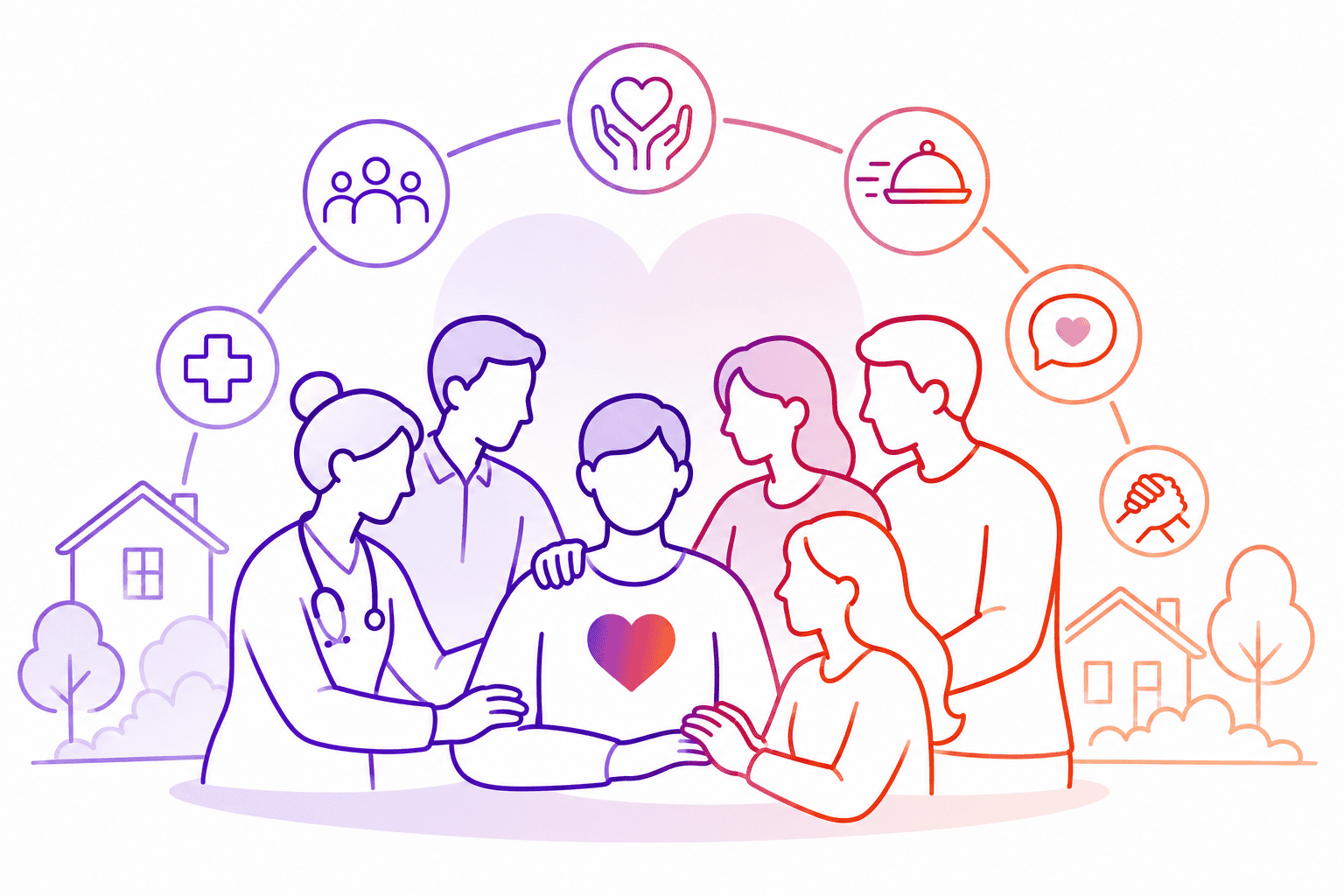
Beyond personal networks, medical professionals form a critical pillar of this village. Doctors, nurses, oncologists, surgeons, therapists, and nurse coordinators not only deliver life-saving treatments but also provide crucial guidance, emotional support, and relentless advocacy. As one survivor eloquently put it, "Everybody thinks about the actual cancer patient. They don’t always think about the number of people who are behind the scenes." This underscores the often-underestimated contributions of those in healthcare, particularly individuals like dedicated nurse coordinators who can "move mountains" in navigating insurance hurdles and treatment protocols.
Furthermore, the village extends to broader community members—neighbors, church groups, support organizations, and even strangers moved to help. These individuals often provide invaluable practical assistance, reducing the logistical and financial strain on families. Finally, researchers, though physically distant from the patient’s immediate experience, are an indispensable part of this village, tirelessly working to unlock new treatments and cures, fundamentally altering the landscape of what is possible. Their breakthroughs, particularly in areas like immunotherapy, directly translate into the hope and survival stories that define the cancer journey today.
The Human Cost of Cancer: Beyond Medical Treatment
The global burden of cancer is staggering. According to the World Health Organization (WHO), cancer is a leading cause of death worldwide, accounting for nearly 10 million deaths in 2020. The emotional, physical, and financial toll on patients is immense, but the impact reverberates far beyond the individual diagnosis. Caregivers, for instance, often face significant mental health challenges, including increased rates of depression and anxiety, as they juggle their own lives with the demanding responsibilities of caring for a loved one. A 2020 report by the National Alliance for Caregiving and AARP found that approximately 53 million Americans are unpaid caregivers, with a significant portion dedicated to individuals with chronic illnesses like cancer. These caregivers often spend dozens of hours per week assisting with medical tasks, personal care, and household management, frequently at the expense of their own employment or well-being.
The financial strain is also considerable. Beyond direct medical costs, families incur expenses for travel to appointments, specialized diets, home modifications, and lost wages due to time taken off work. Social support networks play a crucial role in mitigating these burdens, offering a buffer against isolation and despair. Studies published in journals like Cancer and Psycho-Oncology consistently demonstrate that strong social support is correlated with improved psychological adjustment, better adherence to treatment regimens, and enhanced quality of life for cancer patients. This holistic view emphasizes that healing is not solely a biological process but a deeply human one, nurtured by connection and collective effort.
Stories of Resilience and Support: Voices from the Village
The transformative power of this "village" is best illustrated through the personal narratives of those who have navigated cancer’s treacherous terrain and emerged as survivors, often with the profound assistance of their support systems.
Dana Deighton: Navigating the Medical Maze with Advocates
When Dana Deighton received a devastating diagnosis of stage 4 esophageal cancer, she faced a grim prognosis. Yet, her determination to explore every option was matched by the unwavering support of her burgeoning village. Her journey highlights the critical role of medical navigation and persistence. Early on, an unexpected ally emerged: a nurse coordinator. This individual, whom Dana still acknowledges with an annual Christmas card, became a relentless advocate, skillfully maneuvering through the labyrinthine complexities of insurance and healthcare bureaucracy. "She really moved mountains and made things happen," Dana recounts, emphasizing the invaluable impact of a dedicated professional in a system often overwhelming for patients.
Furthermore, a friend’s connection led Dana to a specialist who instilled much-needed hope, guiding her towards an aggressive treatment plan, including a monumental 15-hour surgery that initially rendered her disease-free. When cancer recurred, her medical team, another vital part of her village, quickly pivoted to immunotherapy. Dana’s specific tumor characteristics made her an excellent candidate, and through a compassionate use program, the remaining cancer vanished. Today, Dana, a long-term survivor, embodies the full circle of support by mentoring other patients, transforming her personal ordeal into a beacon of guidance for those who follow. Her story underscores how medical expertise, coupled with tenacious advocacy and human connection, can defy expectations in the face of advanced disease.
Oswald Peterson: The Power of Chosen Family and Community
Oswald Peterson’s battle with stage 4 lung cancer began during an already profound period of grief, having recently lost both his mother and longtime partner. The initial isolation he felt was gradually overcome by an extraordinary outpouring of support from his friends, demonstrating the profound strength of a "chosen family." His oncologist, Dr. Catherine Shu, introduced him to immunotherapy, a treatment that proved life-saving, allowing him to return to cherished activities like dancing in Trinidad’s Carnival.
However, it was the social and practical support from his friends that fundamentally transformed his experience. As an only child, Oswald had cultivated deep friendships over decades. During his hospitalization, friends meticulously organized shifts, ensuring he was never alone, providing constant encouragement. Their care extended into his home recovery, with friends cleaning, preparing his living space, arranging healthy meals, and assisting with daily life. "It was really, really special to know that there are people in your life who appreciate you that way, that they step up when you truly need them," Oswald reflects. His experience powerfully illustrates that while medical advancements like immunotherapy save lives, the sustained presence and practical assistance of a loving community are equally vital for emotional healing, strength, and hope, turning profound isolation into a powerful reminder of deep affection.
Jeff Atkinson: Immunotherapy’s Promise and the Team Behind It
In October 2016, Jeff Atkinson faced a diagnosis of stage 4 mucosal melanoma, a rare and aggressive form of cancer, for which conventional wisdom offered no cure. Yet, in the same breath as this devastating news, his oncologist, Dr. Justin Favero, presented a glimmer of hope: promising new treatments, particularly immunotherapy. Jeff, initially unfamiliar with immunotherapy, embarked on a regimen of checkpoint inhibitors, nivolumab and ipilimumab, with the steadfast support of his wife and medical team. These groundbreaking drugs harness the body’s own immune system to recognize and attack cancer cells.
The journey was not without its trials; Jeff experienced a significant rash requiring a temporary halt in treatment. However, his care team’s adept management of side effects allowed him to resume immunotherapy. A year after his diagnosis, in November 2017, the news arrived: Jeff was cancer-free. His conviction is unequivocal: "Without a shadow of a doubt, immunotherapy saved my life." As he approaches his 10-year survivorship milestone this October, Jeff has embraced a new role, advocating for cancer immunotherapy and sharing his story to educate and inspire others, becoming a vital voice in the community of patients and survivors. His narrative exemplifies the potential of cutting-edge research and dedicated medical care to transform seemingly hopeless diagnoses.
Jenney Bitner: A Community Rallies Through Crisis
Jenney Bitner’s cancer journey began under uniquely challenging circumstances: at 22 weeks pregnant, severe symptoms initially dismissed as pregnancy-related led to the discovery of a large brain tumor. This rapidly escalated into two brain surgeries, the premature birth of her son, and a diagnosis of stage 4 metastatic melanoma that had spread throughout her body. Placed on immunotherapy with ipilimumab and nivolumab, Jenney achieved a remarkable outcome: after just four infusions, scans showed no evidence of disease, and she was declared in remission in January 2021, a state she maintains today.
Throughout this harrowing period, Jenney was enveloped by an extraordinary support system. Her husband became an indispensable partner, attending every appointment, helping her process and remember crucial medical information, a task made difficult by the effects of brain surgery. Nurses extended their care beyond Jenney to her family, providing reassurance and education. But it was the wider community—neighbors, church members, friends, and even strangers—who truly rallied. They provided nearly a year’s worth of meals, helped care for her children, and gathered essential supplies for her newborn son. Jenney’s powerful advice, born from experience, resonates deeply: "If someone needs help, just do something. Don’t even ask what they need, because they need everything. Just find something and do it. You’ll make a world of difference." Her story is a testament to the profound impact of unsolicited, practical kindness and the collective power of a community responding to a crisis.
Gordon Levine: Second Chances, Advocacy, and Paying It Forward
Gordon Levine’s protracted battle with cancer began in 2014 with stage 3 colon cancer, which recurred despite surgery and chemotherapy, eventually progressing to stage 4 with metastases to his abdomen, liver, lungs, and bones. After an initial immunotherapy clinical trial concluded due to severe side effects and continued progression, Gordon found himself running out of options. A critical turning point came with a second opinion from Dr. Aaron Miller at UC San Diego. Dr. Miller, rather than viewing Gordon’s adverse reaction as a failure, interpreted it as evidence of an immune response, suggesting immunotherapy warranted another attempt.
Gordon then began treatment with ipilimumab and nivolumab. The results were dramatic: tumor markers plummeted, and subsequent scans revealed his tumors were "melting away." In 2021, surgery removed the last trace of disease, and in 2026, Gordon celebrated five years of being cancer-free. As his focus shifted from survival to living as a long-term survivor, community engagement and advocacy became central to his journey. Through a Cancer Research Institute (CRI) patient conference, he connected with other survivors, patients, families, and physicians, finding his voice to share his powerful story. "I sat on the patient panel, and it was an amazing day just to meet the other survivors and patients and their families and the doctors, and to start to tell my story," he recounts. Today, Gordon views giving back as an inherent part of survivorship, advocating for greater attention to caregivers and the unique challenges faced by the growing community of long-term survivors, thereby ensuring his village continues to expand its reach.
Immunotherapy: A Beacon of Hope Illuminated by Collective Support
The narratives of Dana, Oswald, Jeff, Jenney, and Gordon converge on a common thread: the life-altering impact of immunotherapy. This revolutionary treatment approach, which harnesses and enhances the body’s own immune system to fight cancer, has transformed the prognosis for many advanced cancers that were once considered untreatable. Checkpoint inhibitors like nivolumab and ipilimumab, mentioned in several stories, have been particularly instrumental. By blocking proteins that prevent the immune system from attacking cancer cells, these drugs unleash the body’s natural defenses.
The development and increasing accessibility of immunotherapy represent a significant paradigm shift in oncology. Where traditional treatments like chemotherapy and radiation often cause widespread collateral damage, immunotherapy offers a more targeted approach, leading to durable responses and long-term survival for a growing number of patients. While not a cure for all, its success in diverse and aggressive cancers, as seen in these survivor stories, underscores the critical importance of continued investment in cancer research. This research, funded by organizations and supported by public awareness, forms the bedrock of hope for future patients, truly making researchers an integral part of the global cancer support village.
Expert Perspectives and The Path Forward
Experts in oncology and patient advocacy consistently highlight the synergistic relationship between cutting-edge medical treatment and robust support systems. Dr. Elizabeth Jaffee, an oncologist and past president of the American Association for Cancer Research, has often spoken about the "team science" approach, which extends beyond the lab to include patients and their families as vital partners in care. "The progress we’ve made in cancer treatment, particularly with immunotherapy, is phenomenal," she might state, "but these treatments are most effective when patients are supported holistically. The emotional and practical village around a patient allows them to adhere to complex regimens, manage side effects, and maintain a quality of life that fosters healing."
Caregiver advocates, such as those from the National Cancer Institute, emphasize the urgent need for greater resources for caregivers. "We must acknowledge that caregivers are often the silent sufferers," a representative might articulate. "Their physical and mental well-being directly impacts the patient’s journey. Policies and community programs that offer respite, mental health support, and financial aid are not just beneficial; they are essential components of a truly comprehensive cancer care strategy."
The implications of these intertwined realities are profound. For individuals, the message is clear: every act of support, no matter how small, can make a significant difference. For healthcare systems, it calls for integrating psychosocial support more formally into treatment plans. For policymakers, it underscores the necessity of funding research, ensuring equitable access to advanced treatments, and establishing robust support programs for both patients and caregivers.
Conclusion: Weaving Together the Threads of Hope
Cancer may indeed be deeply personal, but the collective experience of World Cancer Support Month vividly reminds us that no one should ever face it alone. The narratives of Dana, Oswald, Jeff, Jenney, and Gordon are powerful testaments to the many forms a patient’s village can take: the dedicated nurse, the steadfast friend, the innovative doctor, the tireless researcher, the compassionate neighbor, and the survivor who reaches back to guide others.
This World Cancer Support Month, as the global community reflects on these powerful stories, it is a celebration of everyone who steps up and every act, big or small, that helps carry someone through. Because when we extend our support to those battling cancer, we do more than just help them; we become an indelible part of their story, weaving threads of hope, resilience, and human connection into the fabric of their lives. The enduring power of these villages is not just in surviving, but in reminding us all of our shared humanity and the profound capacity for care.
