
 By admin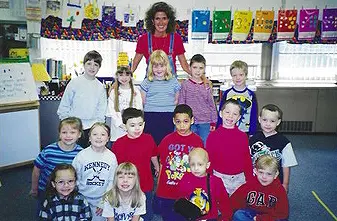
In August, on the rugged and scenic expanse of Minnesota’s Superior Hiking Trail, two women will embark on a 25.5-mile trek that represents more than just a physical challenge. Michele Benyo and Alicia, a former classmate of Michele’s late son, David, are participating in the CureSearch Ultimate Hike. Their journey is a culmination of a story that began nearly three decades ago, weaving together the clinical realities of pediatric oncology, the enduring nature of childhood friendship, and the critical need for specialized cancer research. This event serves as a focal point for raising both funds and awareness for CureSearch for Children’s Cancer, an organization dedicated to ending the standard-of-care gap that often leaves pediatric patients with limited options.
The Clinical Chronology of David Benyo’s Battle
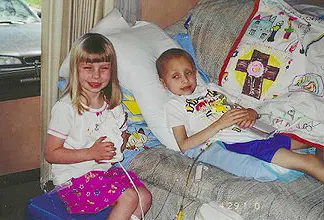
The narrative began in December 1997 when David Benyo’s parents discovered a physical abnormality that led to a devastating diagnosis: rhabdomyosarcoma. David was only four years old at the time. Rhabdomyosarcoma is a rare type of cancer that forms in soft tissue—specifically skeletal muscle tissue or sometimes hollow organs such as the bladder or uterus. In David’s case, the tumor was described as being the size of a grapefruit, a staggering burden for a preschool-aged child.
For the next year, David underwent an aggressive regimen typical of pediatric oncology in the late 1990s, including intensive chemotherapy, surgical intervention, and numerous blood transfusions. According to medical records and family accounts, David’s initial response to treatment was positive. The tumor retreated, and the family was able to experience a brief period of normalcy, punctuated by a trip to Disney World facilitated by the Make-A-Wish Foundation.
However, the nature of high-risk rhabdomyosarcoma often involves a high rate of recurrence. Shortly after returning from their trip, the cancer was found to have returned, this time manifesting in David’s bone marrow. The medical team at Minneapolis Children’s Hospital employed every available tool, including high-dose chemotherapy and radiation. David became one of the first pediatric patients at the facility to undergo a stem cell transplant—a procedure that was then at the vanguard of pediatric hematology.
Despite a second period of remission, the cancer returned for a third time. By the spring of 2000, medical options had been exhausted. David, not yet seven years old, expressed a desire to cease further interventions. He passed away in May 2000, leaving a profound void in his family and his community.
The Longitudinal Impact of Childhood Bereavement
Among those affected by David’s passing was his kindergarten classmate, Alicia. Their friendship was rooted in their shared environment at school and church, where Alicia’s mother served as David’s Sunday school teacher. The loss of a peer at such a developmental milestone can have lasting psychological effects. For years, Alicia’s grief manifested as a total avoidance of the subject of cancer—a common coping mechanism in children who experience early-life trauma.
Despite her personal struggle with the reality of David’s death, Alicia maintained a consistent connection with Michele Benyo. This relationship evolved over decades, transitioning from a childhood bond to a shared adult commitment to David’s memory. A significant moment in this timeline occurred at Alicia’s high school graduation, where she presented Michele with a locket containing David’s photograph. This gesture symbolized a "symbolic presence," acknowledging that David’s life, though short, continued to influence the milestones of his peers.
The motivation for Alicia’s participation in the upcoming Ultimate Hike was further intensified by the recent loss of her mother—the same woman who had taught David in Sunday school—to cancer. This dual loss has transformed Alicia’s previous avoidance into active advocacy. Now a special needs teacher at the very elementary school she and David once attended, Alicia’s participation in the hike represents a convergence of her past and her professional dedication to supporting children with unique challenges.
Understanding the Landscape of Pediatric Cancer Research
The story of David Benyo highlights a systemic issue in oncology: the disparity between adult and pediatric cancer research. While significant strides have been made in the 24 years since David’s death, pediatric cancer remains the leading cause of death by disease for children in the United States.
According to data from the National Cancer Institute (NCI), pediatric cancer research receives approximately 4% of the total federal funding allocated for cancer research. This "4% gap" is a primary driver for non-profit organizations like CureSearch. Because childhood cancers are biologically distinct from adult cancers, they require specialized clinical trials and drug development. Many treatments used for children today were originally designed for adults and can cause severe, lifelong side effects, including secondary cancers, heart damage, and cognitive impairments.
CureSearch for Children’s Cancer focuses on funding targeted research that moves out of the laboratory and into clinical trials as quickly as possible. Their mission is to identify and accelerate the development of less toxic, more effective treatments. The Ultimate Hike is their signature fundraising event, challenging participants to complete high-mileage treks in a single day to symbolize the grueling journey children face during treatment.
The Superior Hiking Trail: A Physical and Symbolic Challenge
The venue for the August hike, the Superior Hiking Trail (SHT), is one of the most demanding hiking corridors in the Midwest. Spanning more than 300 miles along the rocky ridgeline overlooking Lake Superior, the trail is characterized by steep elevation changes, exposed roots, and rugged terrain.
The 25.5-mile section chosen for the CureSearch event requires significant physical preparation and mental fortitude. For Michele and Alicia, the physical toll of the hike is an intentional act of "meaning-making." In bereavement theory, meaning-making is the process by which survivors find a way to integrate loss into their lives through purposeful action. By covering nearly a marathon’s distance on foot, they are raising capital that will directly fund the next generation of pediatric oncological breakthroughs.
Data and Statistics on Rhabdomyosarcoma and Pediatric Survival Rates
To understand the stakes of the research Michele and Alicia are supporting, it is necessary to examine the current data regarding David’s specific diagnosis:
- Incidence: Rhabdomyosarcoma (RMS) accounts for approximately 3% to 4% of all childhood cancers. There are about 350 new cases diagnosed each year in the United States in children and adolescents under the age of 20.
- Survival Rates: For children with localized RMS, the five-year survival rate has improved to approximately 70% to 90%. However, for children like David, whose cancer spreads (metastatic) or returns after treatment (recurrent), the prognosis remains significantly more guarded, with survival rates often falling below 20% to 30%.
- Treatment Evolution: Since the late 1990s, the introduction of molecular profiling has allowed doctors to better categorize RMS subtypes, leading to more personalized treatment plans. However, the "standard of care" for many pediatric sarcomas still relies heavily on decades-old chemotherapy agents.
Implications for the Future of Pediatric Oncology
The participation of "legacy" hikers like Michele and Alicia underscores the long-term impact of pediatric cancer on families and communities. Their efforts contribute to a larger movement toward "precision medicine" in pediatrics.
The funds raised through the Ultimate Hike support the CureSearch Acceleration Initiative, which targets specific barriers in the drug development pipeline. By funding researchers who are working on novel therapies—such as immunotherapy and gene editing—CureSearch aims to ensure that future children diagnosed with rhabdomyosarcoma have access to treatments that were unavailable during David’s era.
Furthermore, the event highlights the importance of community-based philanthropy. In an era where federal research budgets are often stagnant, private donations and grassroots fundraising events provide the "seed money" necessary for innovative pilot studies that can later qualify for larger federal grants.
Conclusion: A Walk Toward a Different Ending
As Michele Benyo and Alicia prepare for their August trek, their story serves as a bridge between the past and the future. The 25.5 miles of the Superior Hiking Trail represent a journey from the helplessness of a 1997 diagnosis to the proactive hope of 2024.
For Michele, the hike is a way to ensure her son’s "cheetah" spirit continues to fight for others. For Alicia, it is a way to honor both a childhood friend and a lost mother while reclaiming a narrative that was once too painful to speak aloud. For the medical community and the families currently navigating a pediatric cancer diagnosis, these steps represent the continued pursuit of a world where every child can expect a different ending—one that involves a full life beyond the hospital walls.
The CureSearch Ultimate Hike remains open for registration and donations, inviting the public to support the mission of changing the odds for the 15,000 children diagnosed with cancer each year in the United States. Through the intersection of personal loss and collective action, advocates like Michele and Alicia ensure that the stories of children like David Benyo do not end in the past, but continue to move toward a cure.
