
 By Budi Oetomo Narendra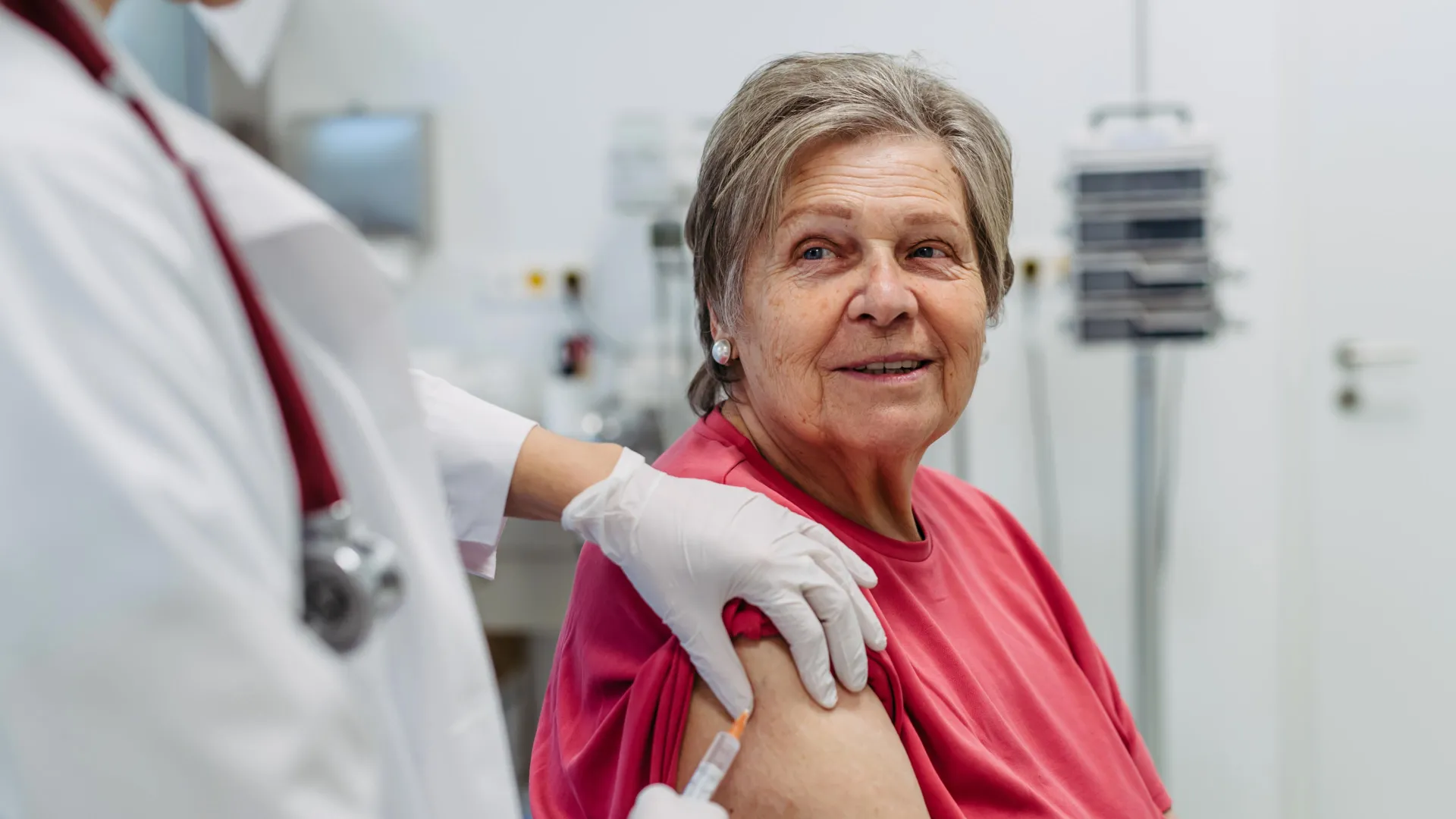
A groundbreaking study has revealed that older adults residing in skilled nursing facilities (SNFs) who received a shingles vaccine demonstrated a substantially lower risk of developing dementia over the subsequent four years. The research, published in the esteemed Annals of Internal Medicine, indicates that vaccinated individuals experienced a 24% reduction in dementia diagnoses compared to their unvaccinated counterparts. This finding offers a compelling new dimension to the known benefits of shingles vaccination, suggesting potential neuroprotective effects beyond preventing the painful viral infection.
The extensive analysis drew upon a vast repository of Medicare data and comprehensive health records, encompassing more than half a million adults aged 66 and older. These participants were all admitted to skilled nursing facilities for either short-term rehabilitation or long-term residential care, representing a particularly vulnerable and often medically complex population. Researchers meticulously compared patients who received at least one dose of the recombinant shingles vaccine, known commercially as RZV or Shingrix, with those who remained unvaccinated during the study period. Shingrix, which first became available in 2017, is currently the sole shingles vaccine on the market in many regions, having largely replaced its predecessor due to superior efficacy.
A New Focus on the Latest Vaccine in a Vulnerable Population
The study’s significance is underscored by its specific focus on Shingrix, the newer and more efficacious vaccine. Previous research exploring a potential link between shingles vaccination and reduced dementia risk often centered on the older, live-attenuated zoster vaccine (Zostavax). "A lot of previous studies with similar results focused on an older vaccine," explained study author Kaley Hayes, an assistant professor at Brown University’s School of Public Health. "This study looks at the newest vaccine only in an older, vulnerable adult population who were not up to date with shingles vaccination and are at a very clear clinical point in care: entering a skilled nursing facility." This precise targeting of a high-risk group at a defined healthcare juncture enhances the study’s relevance and potential impact on clinical guidelines.
The results align remarkably with several earlier investigations involving the previous shingles vaccine, which similarly identified an association between vaccination against herpes zoster and a decreased incidence of dementia. Hayes, who also serves as the associate director of pharmacoepidemiology for Brown’s Center for Gerontology and Healthcare Research, remarked, "It fits into this large puzzle that’s just starting to come together that the vaccines are effective at preventing shingles and also appear to have neuroprotective benefits as well." This emerging consensus suggests a broader protective role for shingles vaccination that extends beyond its primary function.
The research team responsible for this pivotal study comprised experts from several prestigious institutions, including Brown University, the University of Delaware, the Providence Veterans Affairs Medical Center, and other collaborating entities. Their combined expertise facilitated a rigorous and comprehensive analysis of the complex dataset.
Rigorous Methodology: Analyzing Over 500,000 Older Adults
To navigate the complexities of observational data and approximate the robustness of a randomized controlled trial, the researchers employed a sophisticated analytical technique known as target trial emulation. This innovative approach is designed to mimic the conditions and principles of a randomized clinical trial within real-world observational data, particularly useful in situations where conducting a traditional randomized trial would be impractical, unethical, or prohibitively expensive. By carefully defining eligibility criteria, treatment initiation, and follow-up periods, target trial emulation helps to minimize biases inherent in observational studies, allowing for more reliable inferences about treatment effects.
The study’s dataset was monumental, incorporating Medicare claims and electronic health records from patients admitted to over 5,500 skilled nursing facilities across the United States between 2017 and 2022. Out of the staggering 509,926 individuals included in the final analysis, a relatively small but significant cohort of 8,843 received the shingles vaccine during their stay. Crucially, all participants had to be medically eligible for shingles vaccination and had no prior diagnosis of dementia at the time of their SNF admission, ensuring that the study examined new-onset dementia cases.
After a comprehensive four-year follow-up period, the differences in dementia incidence between the two groups became strikingly clear. Among the vaccinated participants who had received at least one of the two recommended Shingrix doses, 18.8% developed a dementia diagnosis. In stark contrast, 24.6% of those who remained unvaccinated were diagnosed with dementia during the same timeframe. This translates to a considerable public health impact, as Hayes highlighted: "This translates to about one in 17 dementia cases potentially being prevented." Such a statistic underscores the potential for widespread benefits if these findings are confirmed in further research.
Understanding Shingles and its Connection to Cognitive Health
To fully appreciate the implications of these findings, it’s essential to understand shingles itself. Shingles, or herpes zoster, is a viral infection caused by the reactivation of the varicella-zoster virus (VZV), the same virus that causes chickenpox. After a person recovers from chickenpox, VZV remains dormant in nerve cells. Years or even decades later, often due to weakened immunity (common in older adults), the virus can reactivate, traveling along nerve pathways to the skin and causing a painful rash, typically on one side of the body. The pain can be severe and debilitating, sometimes leading to postherpetic neuralgia (PHN), a long-lasting nerve pain that can persist for months or even years after the rash clears.
The prevalence of shingles is substantial; approximately one in three people in the United States will develop shingles in their lifetime, with the risk dramatically increasing with age. Adults over 50 are particularly susceptible, and the immune system naturally weakens with age, making this demographic a prime target for VZV reactivation.
The potential link between shingles and dementia has been a subject of growing scientific interest. One leading hypothesis centers on inflammation. Shingles infection triggers a significant inflammatory response, not just locally at the rash site but systemically throughout the body. Chronic or recurrent inflammation is increasingly recognized as a contributing factor to neurodegenerative diseases, including Alzheimer’s disease and other forms of dementia. Preventing shingles through vaccination could therefore reduce this inflammatory burden, potentially safeguarding brain health.
Another theory posits that the varicella-zoster virus itself might have direct or indirect effects on brain tissue or cerebrovascular health. Viral infections can sometimes contribute to vascular damage or trigger immune responses that inadvertently harm neurons. While the exact neurobiological mechanisms linking shingles vaccination to dementia risk reduction are still under investigation, these hypotheses provide plausible pathways for the observed association.
A Chronology of Shingles Vaccine Development and Dementia Research
The journey to understanding the potential neuroprotective effects of shingles vaccination began decades ago.
- 1995: The chickenpox vaccine (Varivax) is approved in the U.S., significantly reducing primary VZV infections.
- 2006: The first shingles vaccine, Zostavax, a live-attenuated vaccine, is approved by the FDA. It was shown to reduce the risk of shingles by about 51% and PHN by 67% in adults aged 60 and older.
- Early 2010s: Initial epidemiological studies begin to explore the association between Zostavax vaccination and the risk of dementia, with some suggesting a protective effect, though often with caveats due to study design limitations.
- 2017: Shingrix (RZV), a recombinant zoster vaccine, receives FDA approval. It demonstrates significantly higher efficacy (over 90%) in preventing shingles and PHN across all age groups 50 and older compared to Zostavax. This marked a major advancement in shingles prevention.
- Late 2010s – Early 2020s: Further observational studies, including the current one, start investigating Shingrix and its potential impact on dementia risk, building upon the earlier findings with Zostavax. The consistent observation of a protective effect across different vaccines strengthens the hypothesis.
This chronological progression highlights a sustained scientific effort to understand not only the direct benefits of shingles vaccines but also their broader, potentially systemic, health advantages.
Limitations and the Path Forward: Proving Cause and Effect
Despite the compelling nature of the findings, the researchers prudently acknowledge an important limitation: the study cannot definitively establish a cause-and-effect relationship between Shingrix vaccination and a lower rate of dementia diagnoses. While the statistical association is robust, observational studies, by their nature, cannot entirely rule out confounding factors.
One such factor identified was that individuals who received the vaccine tended to be slightly younger and generally healthier than those who remained unvaccinated. These baseline differences in health status could independently contribute to a lower risk of dementia. The research team meticulously adjusted their analysis to account for these demographic and health disparities, employing statistical methods to control for known confounders. However, even after these adjustments, the significant association between vaccination and reduced dementia risk persisted, indicating that these differences did not fully explain the observed benefit. This suggests that the vaccine’s effect is likely independent of these baseline health variances.
To unequivocally establish whether shingles vaccination directly reduces the risk of developing dementia, additional research, most notably large-scale randomized clinical trials, will be indispensable. Such trials would involve randomly assigning participants to receive either the vaccine or a placebo, thereby eliminating selection biases and allowing for the most robust assessment of causality. While conducting such a trial for dementia prevention linked to a vaccine could be logistically challenging and lengthy, it represents the gold standard for scientific proof.
Broader Implications and Public Health Impact
The findings of this study carry profound implications for public health, particularly concerning the care of older adults. Dementia is a global health crisis, affecting millions worldwide and imposing immense burdens on individuals, families, and healthcare systems. The number of people living with dementia is projected to rise dramatically in the coming decades, making effective prevention strategies critically important.
If shingles vaccination indeed confers neuroprotective benefits, it could represent an already widely accessible and relatively simple preventive measure that impacts both physical and cognitive health. "Our cognition is so tied to our overall health and what happens to us physically," Hayes reflected. "It’s really amazing to see that something that’s supposed to prevent a physical ailment can also help keep our brain healthy, too." This holistic view of health underscores the potential dual benefit of the shingles vaccine.
The study’s focus on SNF residents is particularly relevant. This population often has multiple comorbidities, is at higher risk for severe shingles, and has an elevated baseline risk for cognitive decline. Enhancing vaccination rates in these settings could have a disproportionately positive impact on a highly vulnerable group. Public health agencies and geriatric care providers may leverage these findings to further advocate for and implement robust shingles vaccination programs, potentially integrating them more seamlessly into admission protocols or routine care plans within skilled nursing facilities.
From an economic perspective, preventing dementia cases, even a fraction, could lead to substantial healthcare cost savings. The financial burden of dementia care, including long-term care, medications, and support services, is astronomical. Any intervention that can mitigate this burden, even partially, would be incredibly valuable.
Official Responses and Transparency
While the study presents compelling data, it is important to note the transparency regarding its funding. The authors reported receiving funding from GlaxoSmithKline (GSK), the manufacturer of Shingrix. However, they explicitly stated that the company had no control over the study design, the analytical methods employed, or the ultimate decision to publish the findings. This declaration is standard practice in scientific research to maintain academic integrity and minimize perceived conflicts of interest.
Public health organizations, while not issuing direct statements on this specific study immediately, consistently advocate for shingles vaccination based on its proven efficacy in preventing the painful infection and its complications. Experts in gerontology and infectious diseases are likely to view these findings with keen interest, reinforcing the existing recommendations for vaccination. For example, the Centers for Disease Control and Prevention (CDC) recommends two doses of Shingrix for adults 50 years and older to prevent shingles and its complications. Studies like this one could further strengthen the impetus for these recommendations and potentially expand the perceived benefits of adherence.
In conclusion, this comprehensive study provides robust evidence for a significant association between shingles vaccination with Shingrix and a reduced risk of dementia in older adults admitted to skilled nursing facilities. While further research, particularly randomized controlled trials, is needed to confirm a direct causal link, the findings add a crucial layer to our understanding of vaccine benefits. They suggest that an established public health intervention aimed at preventing a painful viral illness may concurrently offer an unexpected but profound benefit for cognitive health, opening new avenues for dementia prevention strategies and reinforcing the critical importance of vaccination in an aging global population.
