
 By Suherman Candra Maholtra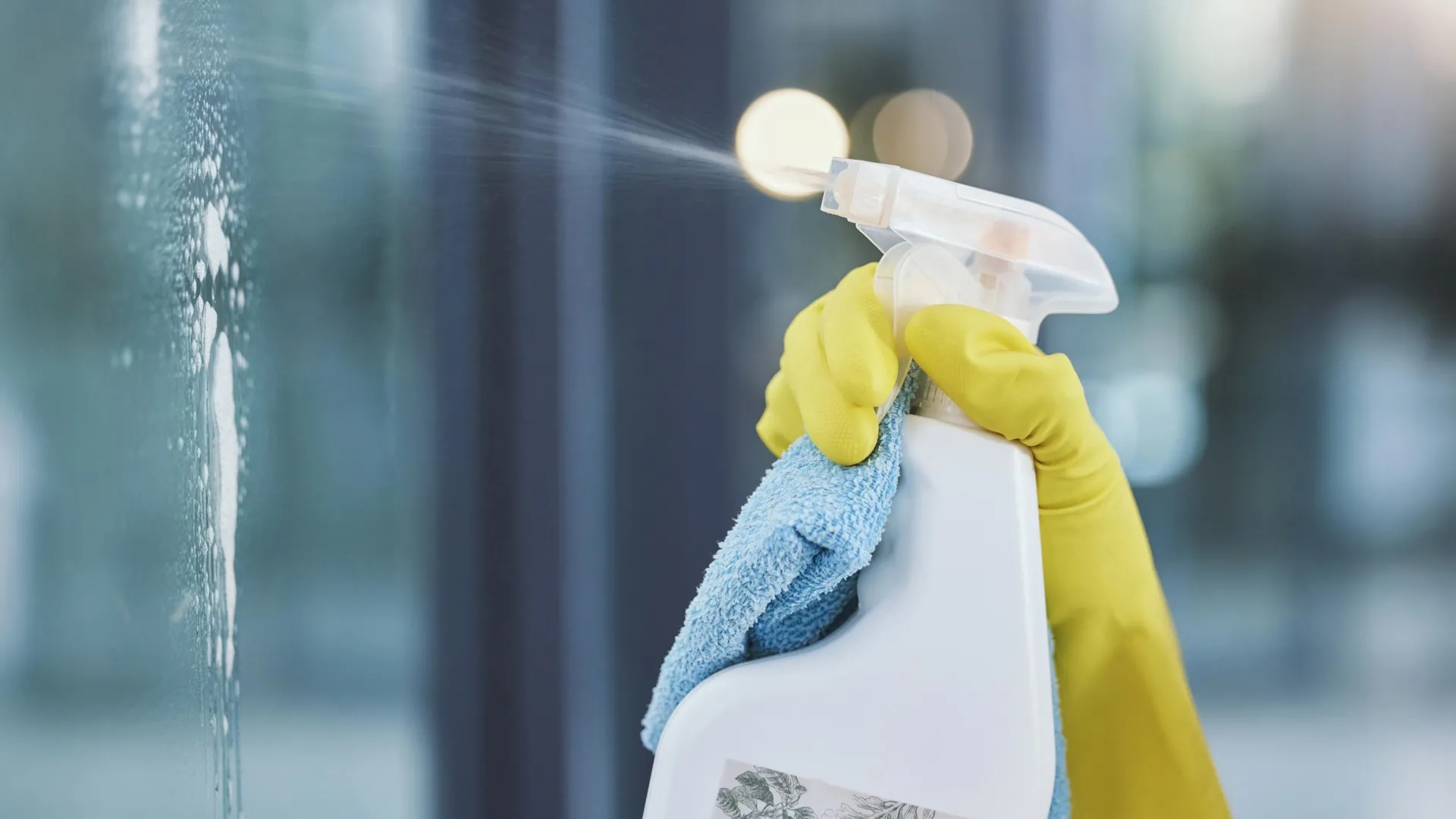
The pervasive association between the scent of citrus, pine, or lavender and a sanitized environment is being challenged by new atmospheric chemistry research revealing that these pleasant aromas are often the harbingers of invisible indoor air pollution. A comprehensive study led by Brandon Boor, an Associate Professor of Civil and Construction Engineering at Purdue University, has demonstrated that the very act of cleaning can trigger rapid chemical reactions that generate massive quantities of nanoparticles. These ultrafine particles, often measuring between 1 and 30 nanometers, are small enough to bypass the body’s primary respiratory defenses and settle deep within the lung tissue, potentially entering the bloodstream and causing systemic inflammation.
The findings, which were presented at the American Chemical Society (ACS) fall meeting during a specialized symposium titled "Healthy Indoor Spaces: Bridging the Microbiome and Chemistry," highlight a significant gap in public perception regarding indoor air quality. While the COVID-19 pandemic accelerated the use of disinfectants and scented cleaning agents to mitigate biological threats, the chemical fallout of these practices has remained largely unmonitored. Boor and his team have quantified this phenomenon, showing that the "smell of clean" is frequently a sign of secondary organic aerosol (SOA) formation, a process that mirrors the haze production found in natural forests but occurs at much higher intensities within the confined spaces of modern buildings.
The Chemistry of the "Clean" Smell: From Forests to Living Rooms
To understand how a lemon-scented floor cleaner transforms into airborne pollution, researchers point to a class of volatile organic compounds (VOCs) known as terpenes. These compounds, such as limonene (citrus), pinene (pine), and linalool (lavender), are naturally occurring in plants and are the primary ingredients in both conventional and "green" or botanical cleaning products. In outdoor environments, trees release these terpenes into the atmosphere, where they react with ozone to form particles that eventually contribute to cloud formation. This natural process is relatively slow due to the low concentration of terpenes in the open air.
Indoors, however, the dynamics change drastically. When a person sprays a surface or mops a floor, the concentration of terpenes can skyrocket to levels tens or even hundreds of times higher than those measured in a dense forest. "Clean air should not smell like highly concentrated citrus fruit," Boor noted during his presentation. "It should not really smell of anything."
The Purdue study found that when these high concentrations of terpenes meet indoor ozone—which enters buildings from the outdoors or is generated by electronic devices—the resulting chemical reaction is near-instantaneous. The researchers measured terpene mixing ratios ranging from 10 to 1,000 parts per billion (ppb) during cleaning activities. These high levels initiate a process called nucleation, where gas molecules cluster together to form solid or liquid nanoparticles.
Experimental Insights from the Purdue "Model Home"
The data underpinning these findings were gathered in a unique experimental facility: a "model home" located on the Purdue University campus. This controlled environment, which includes a functional kitchen, wood flooring, and a bathroom, allowed the research team to simulate routine household chores under realistic conditions. By using high-resolution mass spectrometry and advanced aerosol size spectrometers, the team could track the birth and growth of particles in real-time, down to the 1-nanometer scale.
The results were staggering. Routine tasks like wiping down a countertop or mopping a small room were found to generate billions, and in some cases trillions, of nanoparticles. One of the most significant discoveries was the speed at which these particles grow. Within minutes of application, the particles had already reached sizes that are highly efficient at depositing throughout the human respiratory tract.
"By the time you finish cleaning up an indoor space, you’ve already formed a lot of nanoparticles and inhaled them," Boor explained. This rapid growth means that the "respiratory dose"—the amount of particulate matter actually taken into the lungs—can be comparable to, or even exceed, the dose a person would receive while standing on a sidewalk next to a busy urban highway.
The Role of Ozone and Germicidal UV-C Technology
A critical component of the research involved investigating how modern air purification technologies interact with cleaning chemicals. In a follow-up study conducted with Professor Ernest Blatchley, the team examined the use of germicidal far-UV (UV-C) lamps in conjunction with scented cleaners. These lamps are increasingly used in schools, offices, and hospitals to deactivate airborne viruses like SARS-CoV-2.
However, UV-C light interacts with oxygen molecules in the air to produce ozone ($O_3$). During experiments in the tiny home, the researchers observed ozone concentrations rising to 20 to 40 parts per billion when the lamps were active. While these levels are often within acceptable outdoor limits, they provide the necessary "fuel" for the terpene reaction. When scented cleaners were used in the presence of these UV-C lamps, the production of nanoparticles became even more intense. This synergy creates a complex multiphase exposure scenario where occupants are simultaneously exposed to reactive gases and a dense fog of secondary organic aerosols.
Health Implications of Ultrafine Particles
The health risks associated with these findings stem primarily from the size of the particles. Most home air quality monitors are designed to detect PM2.5 (particles 2.5 microns or smaller). However, the nanoparticles generated during cleaning are significantly smaller—often categorized as ultrafine particles (UFPs). Because they are so small, they do not reflect light in a way that creates a visible haze or smoke, leading to a false sense of security.
From a physiological standpoint, these particles are particularly invasive. Once inhaled, they can settle in the alveolar region of the lungs, where gas exchange occurs. Research in toxicology suggests that UFPs can trigger localized inflammation and oxidative stress. Furthermore, because of their high surface-area-to-mass ratio, they can carry other toxic chemicals into the body. There is also emerging evidence that the smallest of these particles can cross the epithelial barrier and enter the circulatory system, potentially affecting cardiovascular health and the central nervous system.
A Timeline of Discovery: From COVID-19 to the ACS Symposium
The research trajectory began in the early stages of the COVID-19 pandemic. As global health organizations emphasized the importance of surface disinfection, Boor and his colleague Nusrat Jung, also an Assistant Professor at Purdue, noticed a surge in the use of high-fragrance cleaning agents. This shift prompted an investigation into the unintended consequences of "over-disinfecting" indoor environments.
- 2020-2021: Initial observations of increased fragrance use in public and private spaces lead to the design of the "model home" experiments.
- 2022: Data collection reveals that "botanical" or "natural" cleaners, often marketed as safer alternatives, are actually significant sources of reactive terpenes.
- 2023: The study expands to include the interaction between far-UV light and cleaning chemistry, uncovering the ozone-terpene synergy.
- Fall 2024: The team presents their comprehensive findings at the ACS meeting, calling for a reevaluation of indoor air quality standards and product formulations.
Industry and Regulatory Implications: Redefining "Green"
The study’s findings have significant implications for the cleaning product industry and regulatory bodies. Currently, many products are marketed as "green" or "natural" because they use plant-derived essential oils rather than synthetic fragrances. However, the Purdue research demonstrates that from an atmospheric chemistry perspective, these botanical products can be just as reactive—if not more so—than their conventional counterparts.
This suggests that current labeling requirements may be insufficient. While a product might be "non-toxic" in its liquid form, its transformation into airborne nanoparticles represents a "secondary" form of pollution that is not currently addressed by consumer safety regulations. Industry experts suggest that these findings may push manufacturers toward "unscented" or "fragrance-free" formulations that minimize the release of reactive terpenes.
Recommendations for Safer Indoor Environments
Despite the risks identified, the researchers emphasize that cleaning remains a vital public health activity. The goal of the study is not to discourage hygiene but to promote "informed cleaning." To reduce the inhalation of secondary pollutants, Boor and his team recommend several practical measures:
- Prioritize Unscented Products: Choosing cleaning agents that do not contain limonene, pinene, or other fragrant terpenes can fundamentally eliminate the source of the reaction.
- Enhance Ventilation: Using exhaust fans in kitchens and bathrooms or opening windows during and after cleaning can help dilute terpene concentrations and flush out newly formed particles.
- Strategic Timing: Avoiding the use of ozone-generating devices—such as certain air purifiers or UV-C lamps—while cleaning with scented products can prevent the chemical "spark" needed for nanoparticle formation.
- Air Filtration: Utilizing high-efficiency particulate air (HEPA) filters can help capture particles once they have formed, though ventilation is generally considered more effective for removing the gas-phase precursors.
Conclusion: The Future of Indoor Atmospheric Science
The Purdue University research serves as a pivotal reminder that the indoor environment is a complex chemical reactor. As humans spend upwards of 90% of their lives indoors, the quality of the air in homes, schools, and offices is a primary determinant of long-term health.
"Importantly, cleaning removes viruses and bacteria from surfaces, but it can also generate invisible air pollution," Boor concluded. The study, funded by the National Science Foundation’s CAREER program and the Alfred P. Sloan Foundation, marks a new chapter in indoor atmospheric science, one where the "scent of clean" is finally recognized for the complex chemical cocktail it truly is. As the scientific community continues to bridge the gap between microbiology and chemistry, the ultimate goal remains a built environment that is both biologically safe and chemically pristine.
