
 By Billy Candra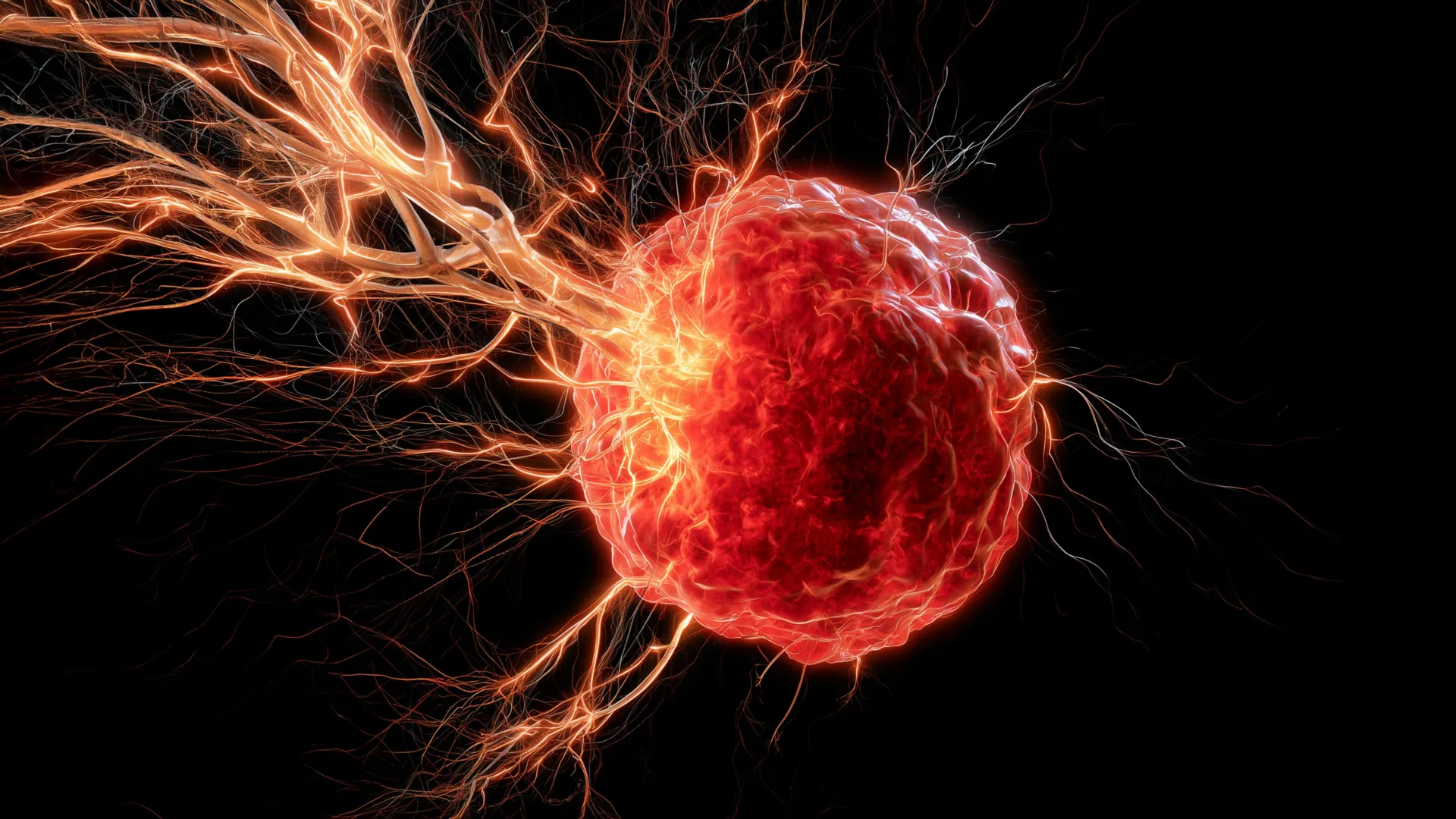
New research emanating from the University of Oklahoma has illuminated a previously unclear aspect of aggressive breast cancer progression, demonstrating how certain tumor types, specifically triple-negative breast cancer (TNBC), cunningly manipulate the body’s immune system to facilitate the infiltration of nerves into cancerous tissues. This intricate process, detailed in a study published in Cell Death & Differentiation, creates a microenvironment potentially conducive to tumor growth, resistance to treatment, and metastatic spread, offering a promising new avenue for therapeutic intervention.
The Enigma of Tumor Innervation
For many years, oncologists and cancer researchers have observed the presence of extensive nerve networks within various solid tumors. This phenomenon, known as tumor innervation, has been a subject of considerable scientific curiosity, with its precise role and the mechanisms driving it remaining largely elusive. The prevailing hypothesis suggested that these nerves might play a supportive role in tumor development, influencing aspects such as angiogenesis (the formation of new blood vessels), immune evasion, and even providing pathways for cancer cells to metastasize to distant sites. However, understanding how these nerves were initially drawn into the tumor mass has been a significant knowledge gap, particularly in aggressive forms of the disease.
The University of Oklahoma (OU) team, led by Dr. Maureen Cox, an assistant professor in the Department of Microbiology and Immunology at the OU College of Medicine and a research member of OU Health Stephenson Cancer Center, has now provided a compelling explanation for this complex process in triple-negative breast cancer. Their findings highlight an unexpected role for macrophages, a type of immune cell typically associated with healing and defense, in actively promoting nerve growth within the tumor microenvironment.
Triple-Negative Breast Cancer: A Formidable Foe
To fully appreciate the significance of this discovery, it is crucial to understand the challenges posed by triple-negative breast cancer. TNBC represents approximately 10-15% of all breast cancers and is distinguished by its lack of three common receptors found in other breast cancers: estrogen receptors (ER), progesterone receptors (PR), and human epidermal growth factor receptor 2 (HER2). The "triple-negative" designation means that these tumors do not respond to therapies that target these receptors, such as hormone therapy or HER2-targeted drugs, which are highly effective for other breast cancer subtypes.
Consequently, treatment options for TNBC are primarily limited to chemotherapy, surgery, and radiation. While recent advancements in immunotherapy have offered some hope, TNBC remains notoriously aggressive, often exhibiting higher rates of recurrence and metastasis compared to other breast cancer types. It disproportionately affects younger women and women of African descent, and its prognosis is generally poorer. The urgent need for novel and effective therapeutic strategies for TNBC underscores the importance of research that delves into its unique biological mechanisms.
Macrophages: From Defenders to Facilitators
The OU research team’s breakthrough centers on the role of macrophages within the tumor microenvironment. Macrophages are a type of white blood cell that forms an integral part of the innate immune system. Their normal functions are diverse and critical for maintaining health, including phagocytosis (engulfing pathogens and cellular debris), presenting antigens to T cells to initiate adaptive immune responses, and secreting growth factors that aid in tissue repair and wound healing. In essence, they are the body’s clean-up crew and first responders.
However, the tumor microenvironment (TME) is a highly complex and often hostile ecosystem where cancer cells can subvert normal cellular processes for their own benefit. Within this environment, macrophages can be "re-educated" or "reprogrammed" by the tumor to become tumor-associated macrophages (TAMs). Instead of attacking the cancer, TAMs often adopt pro-tumoral functions, promoting angiogenesis, suppressing anti-tumor immune responses, and facilitating cancer cell invasion and metastasis. The OU study adds a critical new dimension to this understanding: TAMs also actively draw nerves into the tumor.
The researchers found that after being recruited into the tumor by various signaling molecules, these macrophages begin to secrete brain-derived neurotrophic factor (BDNF). BDNF is a protein well-known for its crucial role in the central and peripheral nervous systems, where it supports the growth, differentiation, and survival of neurons. It is a key player in brain plasticity, learning, and memory. In the context of breast cancer, however, the OU team discovered that tumors exploit this same powerful biological signal. By releasing BDNF, the macrophages effectively create a chemical gradient that encourages nearby nerves to grow towards and penetrate the cancerous mass.
Dr. Cox emphasized this paradoxical role: "Macrophages are the critical source for drawing nerves into the tumor. Although macrophages typically play a positive role in the body, they are facilitating a negative function in this scenario of breast cancer." This manipulation of an essential immune cell highlights the sophisticated strategies employed by aggressive cancers to establish a supportive microenvironment.
A Timeline of Discovery and Validation
The journey to this discovery involved a multi-faceted approach, combining cellular and molecular biology with in vivo studies and patient data analysis.
- Initial Observation & Hypothesis (Pre-2020s): The long-standing observation that solid tumors contain nerves prompted researchers to investigate the underlying mechanisms. The question of "how" these nerves infiltrate tumors became a focal point.
- Identification of Key Players (Early Research Phase): Dr. Cox and her colleagues began by systematically investigating cellular components within the tumor microenvironment of TNBC that might be involved in nerve recruitment. Their focus soon narrowed to immune cells, particularly macrophages, given their known plasticity and influence within the TME.
- In Vitro and In Vivo Experiments (Circa 2020-2022): The team conducted rigorous experiments using both cell cultures (in vitro) and mouse models (in vivo). These studies were crucial for:
- Confirming Macrophage Recruitment: Demonstrating that TNBC tumors actively attract macrophages.
- Identifying BDNF Secretion: Pinpointing macrophages as the primary source of BDNF within the tumor, linking them to neurotrophic factor production.
- Establishing BDNF’s Role: Showing that BDNF directly stimulated nerve growth towards and into tumor cells.
- Therapeutic Intervention Studies (Circa 2022-2023): With a clear understanding of the mechanism, the researchers moved to test an intervention strategy. They utilized a drug designed to block BDNF signaling in their mouse models. The results were compelling: nerve growth into the tumors was significantly inhibited, and, crucially, tumor growth itself was substantially reduced. This preclinical success provided strong evidence for the therapeutic potential of targeting this pathway.
- Clinical Relevance Validation (Late 2023): To bridge the gap between animal models and human disease, the team analyzed data from patients with triple-negative breast cancer. Their findings mirrored the experimental observations: tumors exhibiting higher levels of both macrophages and BDNF were correlated with poorer survival outcomes. This crucial piece of evidence suggests that the mechanism identified in mice is highly relevant to human TNBC progression, strengthening the translational potential of their work.
- Future Directions (Ongoing): Building on these foundational discoveries, the team is now focused on further elucidating the precise functions of these tumor-associated nerves. They are also planning to extend their intervention strategy to other aggressive cancers, starting with high-grade ovarian cancer, which shares certain biological similarities and treatment challenges with TNBC.
Supporting Data and Broader Context
The significance of this research is amplified when viewed against the backdrop of global cancer statistics and the economic burden of the disease. Breast cancer remains the most common cancer among women worldwide, with over 2.3 million new cases diagnosed annually. In the United States alone, it is estimated that over 300,000 new cases of invasive breast cancer will be diagnosed each year, leading to tens of thousands of deaths. Triple-negative breast cancer, despite being a smaller subset, accounts for a disproportionate share of aggressive cases and mortality due to its limited treatment options. The five-year survival rate for localized TNBC is around 91%, but this drops significantly to 12% if the cancer metastasizes, highlighting the urgent need for therapies that can prevent spread and recurrence.
The cost of cancer care is also staggering, with global expenditures running into hundreds of billions of dollars annually. Discoveries that lead to more effective treatments, particularly for aggressive and refractory cancers, have the potential not only to save lives but also to reduce the immense societal and economic burden of the disease.
Implications for Future Cancer Therapies: A Paradigm Shift
The OU team’s findings hold profound implications for the future of cancer treatment, suggesting a significant paradigm shift from solely targeting cancer cells to also focusing on the supportive tumor microenvironment.
- Targeting the Tumor Microenvironment: This research reinforces the growing understanding that cancer is not just a disease of uncontrolled cell proliferation but a complex interaction between cancer cells and their surrounding stromal cells, immune cells, and extracellular matrix. By interrupting the signaling between macrophages and nerves, future therapies could effectively disarm a crucial support system for the tumor, making it more vulnerable.
- Drug Repurposing: The excitement surrounding this discovery is further amplified by the fact that the drug used in the mouse model to block BDNF signaling is "already on the market." This means it has likely undergone extensive safety testing and regulatory approval for other indications. The ability to repurpose an existing drug for a new application significantly accelerates the timeline for clinical translation, potentially bringing new hope to patients much faster than developing an entirely new compound from scratch.
- Boosting Immunotherapy: Dr. Cox articulated another crucial potential benefit: "We believe that the nerves are immunosuppressive, so if we can stop the nerves from growing in the first place, maybe we can boost the immune response to help fight the cancer." Emerging evidence suggests that nerves within tumors can release neurotransmitters and other molecules that directly suppress the activity of anti-tumor immune cells, thereby creating an "immune-cold" or "immune-desert" tumor microenvironment that is unresponsive to immunotherapy. By disrupting nerve infiltration, this strategy could potentially convert these immune-cold tumors into immune-hot ones, making them more amenable to existing or novel immunotherapies. This represents a powerful synergistic approach, combining microenvironment targeting with immune activation.
- Preventing Metastasis and Angiogenesis: While the exact mechanisms by which nerves contribute to tumor growth are still being investigated, the team’s ongoing research aims to shed light on this. Some evidence suggests that tumor nerves may stimulate the formation of new blood vessels (angiogenesis), providing the tumor with vital oxygen and nutrients necessary for rapid growth. Other research indicates that cancer cells may utilize these nerve fibers as "highways" to escape the primary tumor and spread to distant organs, a process known as perineural invasion, which is a known predictor of aggressive disease and poor prognosis in many cancers. Understanding these specific roles will refine therapeutic strategies.
- Broader Applicability: The researchers’ plan to test this intervention in high-grade ovarian cancer underscores the potential for this discovery to impact other aggressive cancers where tumor innervation and an immunosuppressive microenvironment play a role. Many solid tumors, including pancreatic, prostate, and gastric cancers, are known to be highly innervated, suggesting that targeting nerve growth could be a broadly applicable strategy.
Official Responses and Funding Impact
The foundational nature of this research highlights the critical role of sustained funding from national and state entities. The project received support from the National Institute of General Medical Sciences of the NIH (award numbers P20GM103447 and P20GM103639), underscoring the federal government’s investment in basic biomedical science. Additionally, Oklahoma’s Tobacco Settlement Endowment Trust (TSET), a primary funder of the Stephenson Cancer Center and TSET Health Promotion Research Center at the University of Oklahoma, and the Oklahoma Shared Clinical and Translational Resources (through an Institutional Development Award from the National Institute of General Medical Sciences, grant no. U54GM104938), provided crucial state-level support. These grants are vital for enabling researchers like Dr. Cox and her team to pursue high-risk, high-reward investigations that can fundamentally alter our understanding of disease and open doors to entirely new therapeutic paradigms.
The scientific community, while awaiting further clinical validation, is likely to view these findings with considerable interest and optimism. The identification of a specific, druggable pathway that contributes to the aggressive nature of TNBC represents a significant step forward. Oncologists, patient advocacy groups, and pharmaceutical companies will be closely following the progression of this research into clinical trials, anticipating its potential to offer new hope for patients with limited options.
The Ultimate Goal: Re-engaging the Immune System
Ultimately, the overarching objective of Dr. Cox and her team is to restore the body’s natural defenses against cancer. "Ultimately, we want to turn the anti-tumor immunity back on in cancer patients so their own immune systems can reject the tumors," she stated. By disrupting the tumor’s ability to create a nerve-rich, immunosuppressive microenvironment, this research aims to empower the patient’s own immune system to recognize and eliminate cancer cells more effectively. This strategic approach, targeting the complex interplay within the tumor microenvironment rather than just the cancer cells themselves, represents a frontier in oncology research with immense promise for transforming patient outcomes in aggressive and hard-to-treat cancers.
