
 By Gabriel Paijo
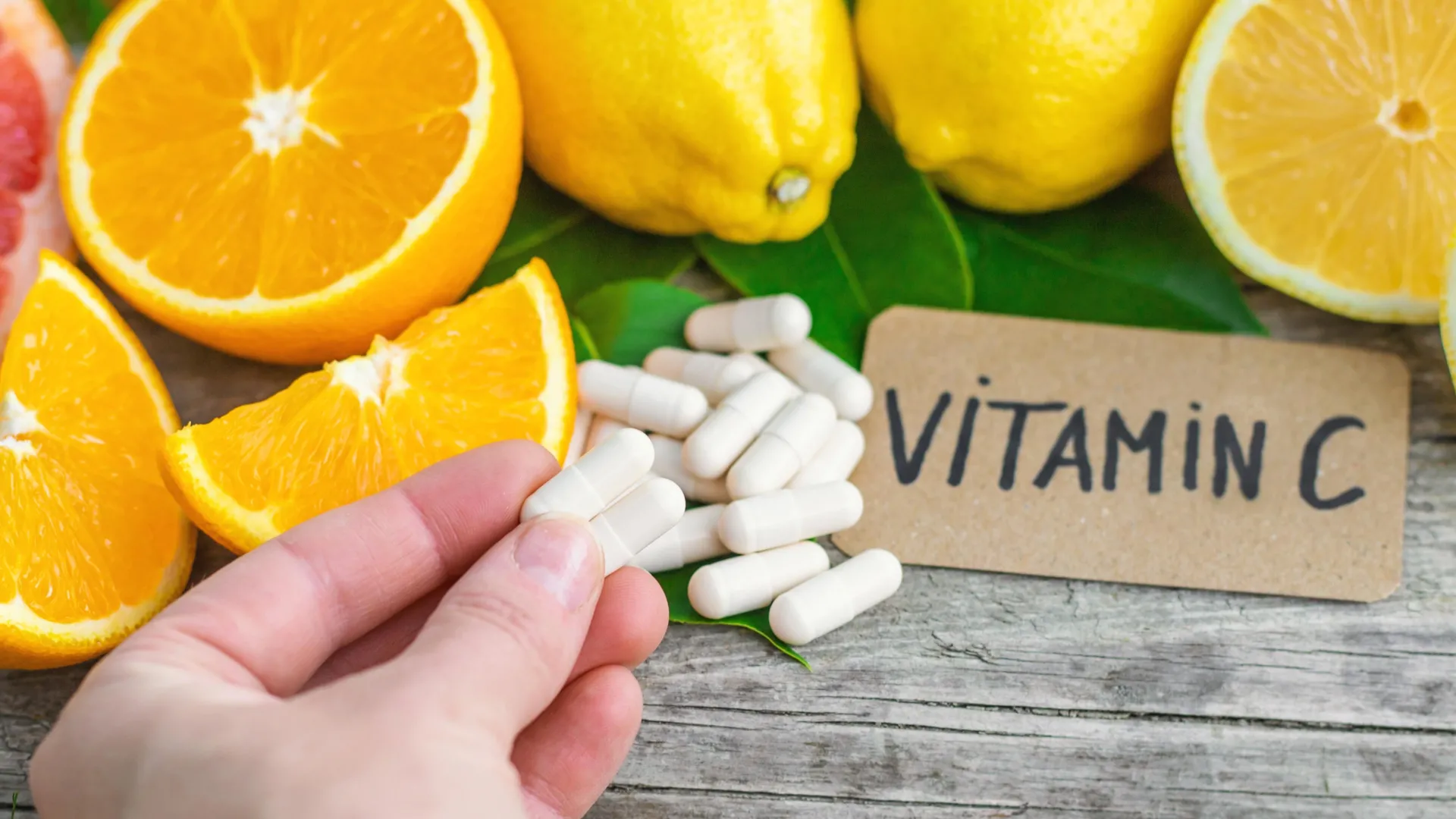
Researchers at the University of Waterloo have published a groundbreaking study utilizing advanced mathematical modeling to demonstrate how Vitamin C may serve as a critical defense mechanism against the formation of carcinogenic compounds during the digestive process. The study, titled "Vitamin C as a nitrosation inhibitor: A modelling study across dietary patterns and water quality," offers a new perspective on a decades-old nutritional debate, suggesting that the presence of antioxidants like ascorbic acid (Vitamin C) can fundamentally alter the chemical trajectory of nitrates and nitrites within the human stomach. By simulating the complex interactions between dietary intake, gastric chemistry, and the oral microbiome, the research team has provided a mechanistic explanation for why certain nitrate-rich foods appear to pose a health risk while others do not.
The Biochemical Challenge: Nitrates, Nitrites, and Nitrosation
For over half a century, the consumption of nitrates and nitrites has been a focal point of nutritional science and public health policy. These nitrogen-based compounds are ubiquitous in the modern diet, though they enter the body through vastly different sources. On one hand, they are essential additives in processed meats like bacon, ham, and salami, where they prevent the growth of Clostridium botulinum and provide the characteristic pink color and cured flavor. On the other hand, nitrates are naturally occurring in high concentrations in leafy green vegetables such as spinach, arugula, and beets, often at levels far exceeding those found in processed meats.
The health implications of these compounds are dualistic. Nitrates and nitrites play vital roles in cardiovascular health by acting as precursors to nitric oxide, a vasodilator that helps regulate blood pressure. However, when these compounds enter the acidic environment of the stomach, they can undergo a process known as nitrosation. This chemical reaction leads to the formation of N-nitroso compounds (NOCs), many of which are known to be potent carcinogens. The Waterloo study focuses on this specific "cancer risk equation," investigating how Vitamin C can act as a chemical inhibitor to prevent the conversion of relatively harmless nitrites into dangerous nitrosamines.
A Chronology of the Nitrate Controversy
The link between dietary nitrates and cancer risk has a long and often contradictory history. To understand the significance of the Waterloo research, one must look at the timeline of scientific inquiry into these compounds:
- The 1950s and 1960s: Early laboratory studies identified that N-nitroso compounds could induce tumors in various animal species, leading to initial concerns about their presence in the human food supply.
- The 1970s: Public health alarms were raised regarding the use of nitrites in cured meats, particularly bacon. This led to regulatory changes in several countries, including the United States, which mandated the reduction of nitrite levels and encouraged the addition of antioxidants (like Vitamin C) to cured products to inhibit nitrosation.
- The 1990s: Epidemiological studies began producing conflicting results. While some research suggested a strong correlation between processed meat consumption and colorectal cancer, other studies looking at high-nitrate vegetable diets showed no such link—and in some cases, showed a protective effect against cancer.
- 2015: The International Agency for Research on Cancer (IARC), an arm of the World Health Organization, officially classified processed meat as a Group 1 carcinogen, citing sufficient evidence that it causes colorectal cancer. However, the agency did not apply the same classification to nitrates in vegetables.
- 2024: The University of Waterloo study provides a mathematical "roadway" to reconcile these inconsistencies, highlighting the role of Vitamin C as the deciding factor in whether nitrates become harmful or remain beneficial.
Modeling the Human Digestive "Bioreactor"
The Waterloo researchers, led by Dr. Gordon McNicol and Dr. Anita Layton, opted for a mathematical approach rather than a traditional clinical trial to isolate the variables governing nitrosation. Clinical trials involving carcinogens are ethically complex and often hampered by the long latency periods of cancer development. In contrast, mathematical modeling allows for the simulation of thousands of dietary scenarios in a controlled, "in silico" environment.
The model developed by the team is highly sophisticated, incorporating several interconnected physiological systems. It tracks the movement of nitrates and nitrites from the moment of ingestion through the salivary glands, the esophagus, the stomach, and the small intestine. It also accounts for the "enterosalivary circulation"—a process where nitrates are absorbed into the blood, concentrated in the saliva, and then re-secreted into the mouth, where bacteria convert them into nitrites.
"Since at least the 90s, researchers have been studying the link between cancer and these compounds, with conflicting results," said Dr. Gordon McNicol, a post-doctoral researcher in applied mathematics and the first author of the study. "Our work suggests that the presence of dietary Vitamin C may help explain these inconsistencies."
By integrating data on gastric pH levels, the timing of meals, and the concentration of antioxidants, the model revealed that Vitamin C acts as a "scavenger." It competes with the chemicals that would otherwise react with nitrites to form nitrosamines. When Vitamin C is present in sufficient quantities, it reduces the nitrites to nitric oxide, a process that effectively neutralizes the carcinogenic potential of the meal.
Supporting Data: Why Spinach Differs from Salami
One of the most significant insights provided by the model is the explanation of the "vegetable paradox." Leafy greens like spinach and kale often contain significantly higher levels of nitrates than a serving of bacon. However, these vegetables are also naturally packed with Vitamin C and other polyphenols.
The simulations demonstrated that the natural co-occurrence of Vitamin C and nitrates in vegetables creates an environment where nitrosation is almost entirely inhibited. In contrast, processed meats traditionally contained high levels of nitrites but lacked the necessary antioxidants to prevent harmful reactions during digestion. While modern food processing often adds sodium ascorbate (a form of Vitamin C) to cured meats, the Waterloo model suggests that the total dietary context—including what else is consumed during the meal—is the primary determinant of risk.
The data suggests that the "protective effect" of vegetables is not just due to the absence of harmful compounds, but the active presence of inhibitors. This finding reinforces dietary guidelines that emphasize the consumption of whole foods and a diverse range of antioxidants to mitigate the risks associated with modern processed diets.
The Potential Impact of Post-Meal Supplementation
Beyond analyzing food combinations, the researchers explored a practical intervention: the timing of Vitamin C supplementation. The model investigated whether taking a Vitamin C supplement after a meal could provide similar protective benefits as consuming it during the meal.
The findings indicate that post-meal supplementation could indeed be effective. The simulations showed that taking Vitamin C shortly after consuming foods high in nitrates—such as a breakfast containing processed meats—could moderately reduce the formation of nitrosation products. This is because the chemical reactions leading to nitrosamine formation do not happen instantaneously; they occur over the period that food remains in the stomach (the gastric residence time).
"This work provides a mechanistic roadmap for future clinical and laboratory studies by identifying the key interacting drivers of these potentially harmful chemical reactions," said Dr. Anita Layton, professor of applied mathematics and Canada 150 researcher chair. "This model can help researchers design more targeted experiments and interventions, focusing on when and in whom nitrosation is most likely to occur."
Analysis of Implications for Public Health and Industry
The implications of this study are multifaceted, affecting public health messaging, the food industry, and future medical research.
From a public health perspective, the research provides a clear, evidence-based rationale for "food pairing." Rather than simply telling consumers to avoid nitrates, health authorities could emphasize the importance of pairing nitrate-heavy meals with Vitamin C-rich foods. This could lead to more nuanced dietary advice, such as recommending a glass of orange juice or a side of fruit when consuming processed meats.
For the food industry, the study validates the practice of fortifying cured meats with ascorbates but suggests that current levels might need to be optimized based on the total chemical environment of the stomach. It also highlights the importance of water quality, as nitrates from agricultural runoff in drinking water are often consumed without any accompanying antioxidants, potentially making them more hazardous than nitrates in food.
Furthermore, the study underscores the importance of the oral microbiome. Since bacteria in the mouth are responsible for converting nitrates to nitrites, the use of antibacterial mouthwashes—which kill these beneficial bacteria—could inadvertently disrupt the body’s natural nitrate processing, potentially affecting cardiovascular health.
Limitations and Future Directions
While the mathematical model is a powerful tool, the researchers are careful to note its limitations. The study is a simulation of chemical and physiological processes, not a direct observation of cancer development in humans. "Although the model predicts that Vitamin C can reduce the production of potentially harmful chemicals, further research is needed to determine whether this translates into a measurable reduction in cancer risk in humans," the authors noted.
The next step for this research involves "wet lab" validation. Scientists can use the "roadmap" provided by Dr. Layton and Dr. McNicol to design clinical trials that measure the actual levels of N-nitroso compounds in human subjects after specific meal combinations. By narrowing the focus to the most critical variables identified by the model—such as meal timing and gastric pH—researchers can conduct more efficient and cost-effective studies.
The publication of this study in the Journal of Theoretical Biology marks a significant step forward in the field of nutritional systems biology. By using the language of mathematics to decode the complexities of human digestion, the University of Waterloo team has provided a new lens through which to view the relationship between what we eat and our long-term health. As science continues to unravel the "cancer risk equation," the humble Vitamin C appears more than ever to be a vital component in the body’s internal defense system.
