
 By Suherman Candra Maholtra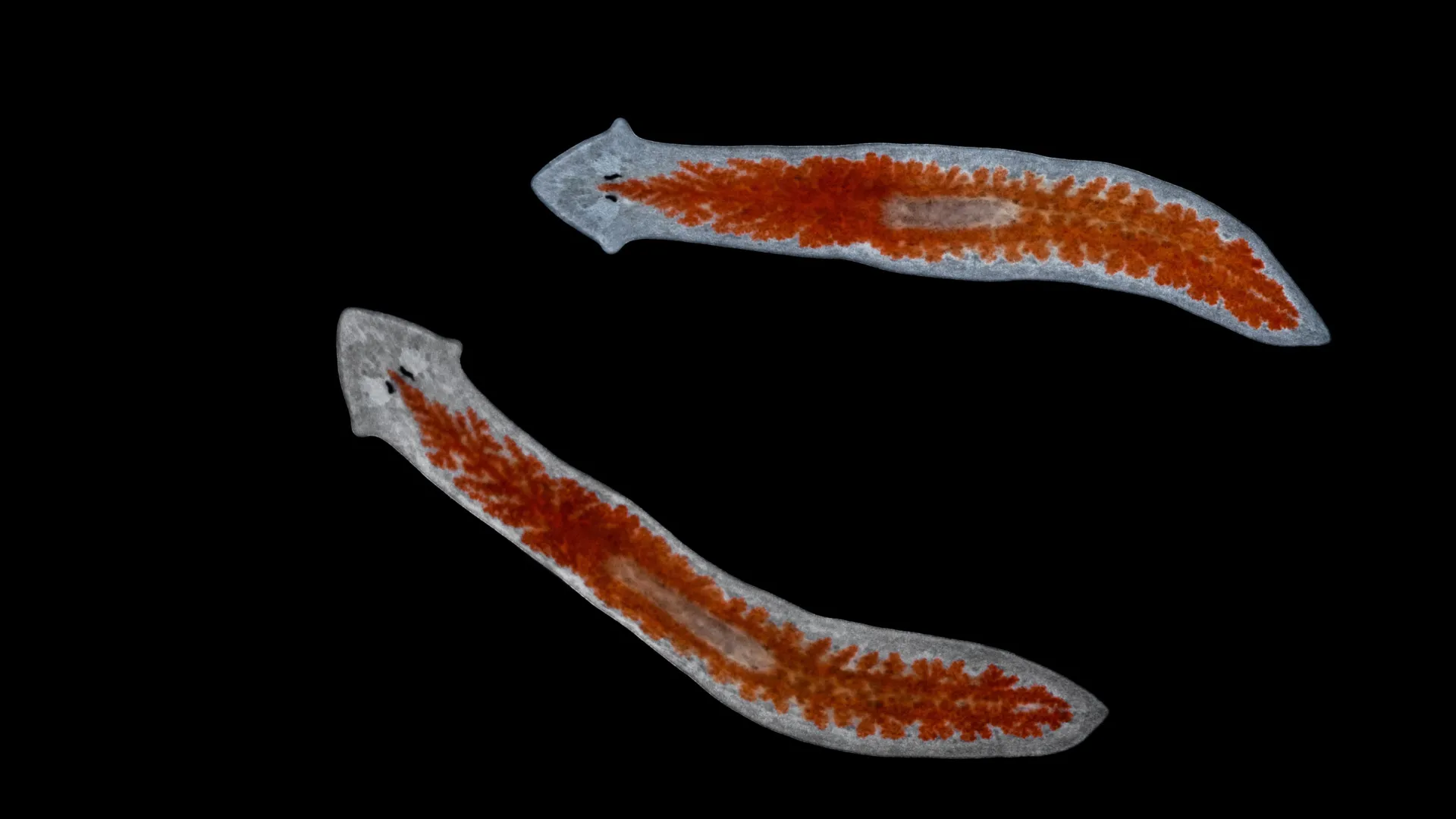
The biological community is currently re-evaluating one of its most fundamental tenets regarding tissue growth and repair following a landmark study from the Stowers Institute for Medical Research. For decades, the prevailing scientific consensus has held that stem cells are essentially reactive entities, tethered to a specific physical location known as a "niche." Within these niches, neighboring cells act as micromanagers, providing the immediate chemical and physical cues necessary to tell the stem cell when to remain dormant, when to divide, and what specific type of tissue to become. However, new research published in the journal Cell Reports on October 15, 2025, reveals that the planarian flatworm—an organism world-renowned for its near-mythical regenerative abilities—operates under an entirely different set of rules. Rather than relying on local neighbors for instructions, planarian stem cells appear to function with a high degree of independence, receiving their primary cues from distant organs and a "global" network of signals that span the entire body.
This discovery, led by Postdoctoral Research Associate Frederick "Biff" Mann, Ph.D., and Stowers President and Chief Scientific Officer Alejandro Sánchez Alvarado, Ph.D., suggests that the extraordinary capacity of flatworms to regrow an entire head or a complete body from a mere fragment is a direct result of this decentralized control system. By decoupling stem cells from the restrictive confines of a localized niche, the planarian has evolved a biological architecture that prioritizes flexibility and systemic resilience over the rigid, localized control seen in mammals and most other animal groups.
The Traditional Niche Model vs. The Planarian Exception
To appreciate the gravity of these findings, one must look at the standard model of stem cell biology. In humans and most complex animals, stem cells are highly regulated to prevent the catastrophic consequences of "going rogue." A prime example cited by Dr. Mann is the human hematopoietic (blood-forming) stem cell. These cells reside in very specific niches within the bone marrow. If these cells are removed from their niche or if the neighboring cells fail to provide the correct signals, the stem cells may stop functioning or, conversely, begin to divide uncontrollably, leading to conditions such as leukemia.
In the traditional model, the niche is a physical "cradle" that provides both protection and instruction. It ensures that stem cells only produce what is needed and only when it is needed. However, this localized dependency is also a limitation; if the niche itself is destroyed by trauma or disease, the regenerative capacity of that tissue is often lost forever.
The planarian flatworm, specifically the species Schmidtea mediterranea, has long been the "white whale" of regenerative medicine. These organisms possess a population of adult stem cells called neoblasts, which make up roughly 20% to 30% of their entire body. These neoblasts are pluripotent, meaning they can become any cell type in the body—a feat that human adult stem cells cannot replicate. The Stowers Institute team sought to understand how these neoblasts are managed. What they found was a system that defies the niche-based "micromanagement" seen in other species.
Spatial Transcriptomics and the Discovery of the Hecatonoblast
The breakthrough was made possible through the use of spatial transcriptomics, a cutting-edge technology that allows researchers to map gene activity within individual cells while simultaneously recording their exact physical location within a tissue sample. This provides a high-resolution "atlas" of how cells communicate based on their proximity to one another.
During this mapping process, the researchers identified a previously unknown cell type that initially appeared to be the elusive "niche" cell. These cells were large and featured numerous fingerlike projections extending across the tissue, physically touching many nearby stem cells. Drawing from Greek mythology, the team named these cells "hecatonoblasts," after the Hecatoncheires—the hundred-armed giants who were the children of Gaia and Uranus.
Logically, the researchers expected these hecatonoblasts to be the primary regulators of the stem cells they were touching. In a traditional biological system, such close physical contact is the hallmark of a niche interaction. However, the data told a different story. Despite their intimate physical proximity, the hecatonoblasts were not the ones dictating the stem cells’ fate or function.
Instead, the transcriptomic data revealed that the most influential signals were coming from the flatworm’s intestine. Despite being located further away in the body, the intestinal cells appeared to exert a "global" influence over the neoblasts, providing the essential instructions that guided their movement and differentiation during the regeneration process.
A Chronology of the Research and Data Analysis
The journey to this discovery began several years ago as the Sánchez Alvarado Lab sought to move beyond mere observation of regeneration and into the mechanics of cellular decision-making.
- Phase One: The Mapping. The team utilized single-cell RNA sequencing to identify every cell type in the planarian. This created a baseline for what cells existed but did not explain how they interacted in space.
- Phase Two: Spatial Integration. By applying spatial transcriptomics, the team began to see the "neighborhoods" within the flatworm. They expected to find "niche" clusters where stem cells and regulatory cells were tightly packed.
- Phase Three: The Anomaly. The team noticed that neoblasts were distributed widely and did not seem to "cluster" with any specific regulatory cell type. The discovery of the hecatonoblast provided a brief candidate for a niche cell, but functional analysis quickly ruled it out as the primary instructor.
- Phase Four: Distant Signaling Identification. By analyzing the signaling pathways (ligand-receptor pairs), the researchers found that the signals governing stem cell identity were coming from the gut. This shifted the focus from "local neighborhoods" to "body-wide networks."
The data suggested that while local interactions exist, they are secondary. The planarian system is more akin to a modern cloud-computing network where a central server (the global signal) provides the software, and individual units (the stem cells) execute the tasks locally without needing a physical supervisor standing over them.
Official Responses and Scientific Implications
The implications of this study are profound, particularly for the fields of oncology and regenerative medicine. Dr. Sánchez Alvarado noted that understanding these "basic rules" is essential for human health. Most human tumors originate when stem cells stop following the rules of their niche and begin to grow "rogue." If scientists can understand how planarian stem cells remain "independent" yet highly disciplined, they may find ways to re-program human cells to behave similarly or to prevent cancerous growth by mimicking these global control mechanisms.
Co-corresponding author Blair Benham-Pyle, Ph.D., an Assistant Professor at the Baylor College of Medicine, emphasized the difference between local and global communication. "While interactions between stem cells and their neighboring cells influence how a stem cell reacts immediately," Benham-Pyle explained, "distant interactions may control how that same stem cell responds to big changes in an organism."
This distinction is crucial for understanding why humans cannot regrow limbs. In humans, if a limb is lost, the local niche for bone and muscle is gone. Without that local "micromanager," our stem cells are lost. In a planarian, because the instructions are global (coming from the intestine and other distant tissues), the stem cells at the wound site still "know" what the body needs to become, even though their immediate neighbors have been destroyed.
Broader Impact on Future Therapies
The research from the Stowers Institute suggests that the future of regenerative medicine may not lie in trying to rebuild complex, fragile niches, but in learning how to broadcast "global" signals that can guide stem cells regardless of their immediate environment.
If medical science can unlock the secrets of the planarian’s intestinal signaling, it could lead to:
- Advanced Wound Healing: Developing therapies that provide systemic cues to local stem cells to accelerate tissue repair without the need for a graft.
- Cancer Prevention: Identifying the specific "global rules" that keep pluripotent cells from forming tumors, potentially leading to new classes of regulatory drugs.
- Organ Bioengineering: Using global signaling models to grow complex tissues in vitro where traditional niches are difficult to replicate.
The study also raises new questions about the evolution of stem cells. It suggests that the "niche" model might not be the "original" or "best" way for stem cells to operate, but rather a specific evolutionary path taken by complex vertebrates to manage the risks of cancer in long-lived organisms. The planarian, by contrast, has maintained an older, more flexible system that prioritizes immortality and repair over the strict regulation seen in humans.
As Dr. Sánchez Alvarado concluded, the more we understand how these "friends" and signals work together to boost the power of stem cells, the closer we get to enhancing the body’s natural healing. The "independent" stem cell of the flatworm may very well be the key to unlocking a new era of human longevity and regenerative capability.
The study, titled "A dynamic and distributed stem cell niche in planarians," involved a multidisciplinary team including Carolyn Brewster, Dung Vuu, Riley Galton, and others, and was supported by the National Institutes of Health. It marks a significant shift in the biological landscape, proving that in the world of stem cells, sometimes the most important voices are the ones coming from furthest away.
