
 By admin
 In the rugged terrain of Minnesota’s Superior Hiking Trail, a journey spanning more than twenty-five years is reaching a new milestone this August. Michele Benyo and Alicia, two women bound by a shared history of loss and a resilient friendship, are preparing to trek 25.5 miles as part of the CureSearch Ultimate Hike. Their mission is twofold: to honor the memory of David Benyo, who passed away from pediatric cancer in 2000, and to raise critical funds for research into the diseases that claim the lives of thousands of children annually. This endeavor highlights not only the enduring nature of grief but also the vital role of community-driven advocacy in addressing the funding gap in pediatric oncology.
The Medical Journey and Legacy of David Benyo
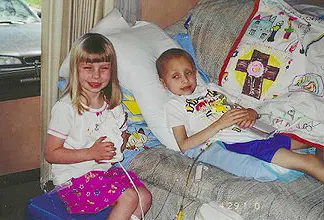
The narrative began in December 1997, when the Benyo family received a diagnosis that would irrevocably alter their lives. David Benyo, then only four years old, was diagnosed with rhabdomyosarcoma, a rare and aggressive form of soft tissue cancer. At the time of diagnosis, David presented with a tumor the size of a grapefruit, a common but terrifying characteristic of this particular malignancy.
Rhabdomyosarcoma (RMS) is the most common soft tissue sarcoma in children, accounting for approximately 3% of all pediatric cancers. It originates in mesenchymal cells that are destined to become skeletal muscles. For David, the ensuing two and a half years were defined by a rigorous and grueling medical regimen. He underwent intensive chemotherapy, multiple surgeries, and numerous blood transfusions. According to his family, David’s spirited nature earned him the nickname "the cheetah" among the nursing staff at Minneapolis Children’s Hospital—a moniker that reflected his fierce determination to fight the disease.
Initial treatments appeared successful. The tumor retreated, and the Benyo family was able to experience a brief period of normalcy, including a trip to Disney World facilitated by the Make-A-Wish Foundation. However, the reprieve was short-lived. Following their return, doctors discovered that the cancer had migrated to David’s bone marrow.
The medical team escalated their efforts, employing high-dose chemotherapy and radiation. David became one of the first pediatric patients at Minneapolis Children’s Hospital to undergo a stem cell transplant, a procedure that was then at the cutting edge of pediatric oncology. While the transplant led to a second temporary remission, the cancer eventually returned for a third time. Confronted with the limits of available medical technology in the year 2000, the family transitioned to palliative care. David passed away in May 2000, just before his seventh birthday.
A Friendship Defined by Resilience
Among those most affected by David’s passing was his kindergarten classmate, Alicia. Their friendship had been forged in the simple, profound way of childhood, reinforced by their shared attendance at the same church, where Alicia’s mother served as a Sunday school teacher. The loss of a peer at such a young age left a lasting imprint on Alicia, who initially found the topic of cancer too painful to address.
Despite the passage of time, Alicia remained a constant presence in Michele Benyo’s life. This connection was poignantly demonstrated during Alicia’s high school graduation, where she invited Michele to attend. Following the ceremony, Alicia presented Michele with a locket containing David’s photograph and the inscription "We remember," stating that David had figuratively walked across the stage with her.
Today, Alicia serves as a special needs teacher at the same elementary school she and David once attended. Her commitment to the Benyo family has recently taken on a new dimension of shared grief. Alicia’s mother, the woman who once taught David in Sunday school, recently succumbed to cancer herself. This secondary loss has served as a catalyst for Alicia to join Michele in a physical manifestation of their advocacy: the CureSearch Ultimate Hike.
Understanding the Landscape of Pediatric Cancer Research
The participation of Michele and Alicia in the Ultimate Hike comes at a time when pediatric cancer research faces significant systemic challenges. While survival rates for some childhood cancers have improved significantly over the last 50 years, others, including certain subtypes of rhabdomyosarcoma, remain difficult to treat, particularly in cases of relapse.
According to data from the National Cancer Institute (NCI), pediatric cancer research receives only about 4% of the total federal funding allocated for cancer research. This disparity places a heavy burden on private non-profit organizations like CureSearch for Children’s Cancer to bridge the gap. CureSearch focuses specifically on funding clinical trials and innovative research that can be translated into bedside treatments more rapidly than traditional academic paths.
The "Ultimate Hike" is a signature fundraising event for the organization, challenging participants to complete high-mileage treks in a single day. The Superior Hiking Trail, where Michele and Alicia will hike, is known for its rugged beauty and demanding elevation changes, mirroring the metaphorical "uphill battle" faced by families dealing with a cancer diagnosis.
Chronology of the Benyo Family Advocacy
The timeline of the Benyo family’s journey reflects the broader evolution of pediatric cancer advocacy over the last quarter-century:
- December 1997: David Benyo is diagnosed with rhabdomyosarcoma.
- 1998-1999: David undergoes primary treatment, including chemotherapy and a Make-A-Wish trip.
- Late 1999: Cancer relapses in the bone marrow; David undergoes a pioneering stem cell transplant.
- May 2000: David passes away at home.
- 2000-2012: Alicia and Michele maintain their bond through school milestones and community events.
- 2012-Present: Alicia enters the field of education, specializing in special needs, while continuing to honor David’s memory.
- Recent Years: Alicia’s mother passes away from cancer, deepening the personal stakes of the cause.
- August 2024: Michele and Alicia commit to the 25.5-mile CureSearch Ultimate Hike on the Superior Hiking Trail.
Fact-Based Analysis of Pediatric Oncology Challenges
The story of David Benyo underscores several critical issues in the field of pediatric oncology that persist today. One of the primary hurdles is the "orphan disease" status of many childhood cancers. Because pediatric cancers are relatively rare compared to adult cancers (such as lung or breast cancer), pharmaceutical companies often have less financial incentive to develop drugs specifically for children. Consequently, many treatments used for children are "off-label" applications of drugs originally designed for adults, which can lead to severe long-term side effects in developing bodies.
Furthermore, the recurrence of David’s cancer in his bone marrow highlights the difficulty of treating metastatic or relapsed disease. While initial remission rates are often high, the medical community continues to struggle with preventing and treating relapses. Organizations like CureSearch prioritize funding for "targeted therapies"—treatments that attack specific genetic mutations in cancer cells—which aim to be more effective and less toxic than traditional chemotherapy.
The Ultimate Hike serves as a critical revenue stream for these scientific endeavors. By engaging "citizen advocates" like Michele and Alicia, the organization is able to sustain research that might otherwise lose funding.
Broader Impact and Community Response
The reaction to Michele and Alicia’s upcoming hike has been one of significant community support. In academic and medical circles, such grassroots efforts are recognized as essential for maintaining public awareness. Dr. Shelly Steiner, a pediatric oncologist not affiliated with the case but familiar with the CureSearch mission, noted that "the funds raised by individual hikers often go directly to the ‘Phase I’ and ‘Phase II’ clinical trials that are the lifeblood of pediatric oncology progress."
For Michele Benyo, the hike is an extension of her lifelong commitment to ensuring her son’s life continues to have a positive impact. For Alicia, it is a way to process the dual loss of her childhood friend and her mother. The 25.5-mile trek is more than a physical challenge; it is a platform for visibility.
The Superior Hiking Trail, which stretches over 300 miles along the ridgeline overlooking Lake Superior, provides a stark and symbolic backdrop for this journey. The 25.5-mile section chosen for the Ultimate Hike is particularly grueling, requiring months of physical training and mental preparation.
Conclusion and Future Outlook
As August approaches, the story of David, Michele, and Alicia serves as a poignant reminder that the fight against pediatric cancer is a marathon, not a sprint. The legacy of a six-year-old boy, who saw himself as a cheetah and faced his diagnosis with "feisty" courage, continues to inspire action decades later.
The efforts of CureSearch and its hikers represent a vital component of the national strategy to eradicate childhood cancer. By focusing on high-impact research and leveraging the personal stories of those affected, the organization aims to ensure that future families do not have to face the same "end of the road" that the Benyos reached in 2000.
The participation of a mother and her son’s best friend in this trek symbolizes a bridge between the past and the future. As they navigate the rocky paths of Northern Minnesota, every step taken and every dollar raised contributes to a scientific infrastructure dedicated to one goal: changing the odds for children diagnosed with cancer. For those interested in supporting the cause or participating in future events, information is available through the CureSearch national portal, where the legacy of David Benyo and many others continues to fuel the search for a cure.
