
 By admin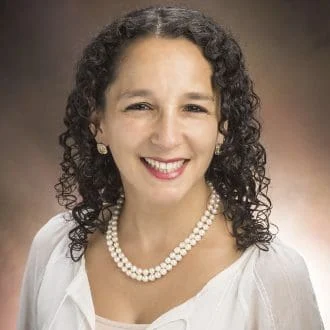
The announcement marks a significant milestone in the field of pediatric oncology as CureSearch for Children’s Cancer, a leading national nonprofit, has officially committed $1 million to support the pioneering work of Dr. Yael Mossé at the Children’s Hospital of Philadelphia (CHOP). This funding, delivered through the organization’s prestigious Acceleration Initiative Award, is specifically earmarked for the development of a novel precision medicine approach to treating high-risk neuroblastoma. This particular form of cancer remains one of the most formidable challenges in pediatric medicine, characterized by its aggressive nature and a historical lack of effective, low-toxicity treatment options.
Dr. Mossé’s research was selected following an intensive and highly competitive peer-review process designed to identify projects with the highest potential to transition rapidly from laboratory discovery to clinical application. The $1 million grant is intended to provide the necessary resources to bridge the "valley of death"—the precarious gap between early-stage scientific breakthroughs and the implementation of life-saving treatments in a hospital setting. By focusing on the molecular drivers of the disease, Dr. Mossé aims to revolutionize the standard of care for children who currently face a daunting prognosis.
The Clinical Challenge of High-Risk Neuroblastoma
Neuroblastoma is a cancer that develops from immature nerve cells found in several areas of the body, most commonly arising in and around the adrenal glands. It is the most common extracranial solid tumor in children, representing approximately 8% to 10% of all childhood cancer diagnoses. Despite its relatively low incidence compared to adult cancers, its impact is disproportionately severe; neuroblastoma is responsible for roughly 15% of all pediatric cancer-related deaths.
The "high-risk" designation is applied to cases where the cancer has either spread to other parts of the body or exhibits specific genetic mutations that make it resistant to conventional therapies. For these patients, the five-year survival rate has historically hovered around 50%, a statistic that underscores the urgent need for innovation. Current standard treatments often involve a grueling combination of high-dose chemotherapy, surgery, radiation, and stem cell transplants. While these interventions can be effective, they frequently result in long-term, debilitating side effects, including hearing loss, heart problems, and the development of secondary cancers later in life.
Dr. Yael Mossé’s Precision Medicine Framework
Dr. Mossé, a Professor of Pediatrics at the University of Pennsylvania’s Perelman School of Medicine and a physician-scientist at CHOP, has dedicated her career to understanding the genetic basis of neuroblastoma. Her work is centered on the principle of precision oncology—identifying the specific genetic "on-switches" that cause cancer cells to grow uncontrollably and developing drugs that can turn those switches off.
The primary focus of this $1 million project is the targeting of cancer-driving mutations while ensuring that healthy tissues remain unharmed. One of the most significant breakthroughs in Dr. Mossé’s laboratory involves the Anaplastic Lymphoma Kinase (ALK) gene. Mutations in the ALK gene are known to be major drivers in a significant subset of neuroblastoma cases. By utilizing advanced targeted therapies, such as next-generation ALK inhibitors, Dr. Mossé’s team is working to create a treatment regimen that is both more effective at eradicating tumor cells and significantly less toxic than traditional chemotherapy.
This approach represents a shift toward "personalized" pediatric medicine, where a child’s treatment plan is dictated by the unique genetic signature of their tumor rather than a one-size-fits-all protocol. The goal is to improve survival rates while preserving the long-term quality of life for young survivors.
The Acceleration Initiative: A Strategic Approach to Research
The CureSearch Acceleration Initiative (AI) Award is unique in the landscape of medical research funding. Recognizing that federal funding is often slow-moving and risk-averse, CureSearch designed the AI program to fund high-risk, high-reward projects that have a clear path to the clinic within a three-to-five-year timeframe.
The award is milestone-driven, meaning that funding is released as specific research goals are met. This ensures accountability and maintains a relentless focus on patient outcomes. For Dr. Mossé, this award provides the financial infrastructure to streamline the entire drug development process. In her own words, the award offers an "unprecedented opportunity" to accelerate the translation of science into therapy.
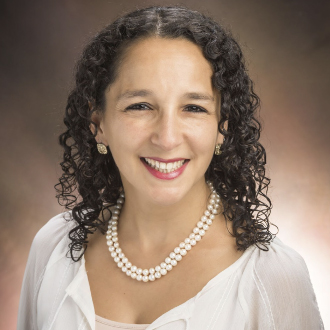
"This translation of our science could not be possible without the support of CureSearch," Dr. Mossé stated. "This award provides an unprecedented opportunity to streamline the overall development of a novel therapy for patients with neuroblastoma by accelerating the entire drug development process."
Chronology of Innovation and Institutional Support
The journey toward this $1 million award is built upon years of foundational research. Dr. Mossé’s team at CHOP has been at the forefront of neuroblastoma research for over a decade.
- 2008: Dr. Mossé and her colleagues identified mutations in the ALK gene as the primary cause of the inherited form of neuroblastoma, a discovery that opened the door for targeted inhibitors.
- 2010-2015: Clinical trials began for first-generation ALK inhibitors. While initial results were promising, researchers observed that tumors often developed resistance to these early drugs.
- 2016-2022: The focus shifted to developing "next-generation" inhibitors capable of overcoming drug resistance and crossing the blood-brain barrier—a critical requirement for treating metastatic neuroblastoma.
- 2024: The CureSearch Acceleration Initiative Award is granted to finalize the transition of these advanced therapies into late-stage clinical trials.
The project is also supported in part by the Norcross Foundation, a philanthropic organization known for its commitment to improving healthcare outcomes and supporting community-based initiatives. The partnership between CureSearch, the Norcross Foundation, and CHOP highlights a growing trend in medical research where private philanthropy fills the gaps left by fluctuating federal budgets.
The Shifting Landscape of Pediatric Cancer Funding
The timing of this award is critical. National institutes and federal research bodies have faced increasing budgetary pressures, often leading to a decrease in the percentage of grants awarded to pediatric-specific projects. Historically, only about 4% of federal funding for cancer research is directed toward childhood cancers, despite the fact that these diseases are biologically distinct from adult cancers and require specialized investigation.
Private organizations like CureSearch play a vital role in ensuring that pediatric oncology does not stagnate. By focusing on "translational" research—the process of turning laboratory findings into bedside treatments—CureSearch aims to overcome the financial and bureaucratic hurdles that often stall the development of new drugs for rare diseases.
The $1 million commitment to Dr. Mossé is part of a broader strategy to foster a robust pipeline of new treatments for various childhood cancers, including brain tumors, sarcomas, and leukemias. By investing in top-tier researchers at world-class institutions like CHOP, CureSearch is effectively de-risking the development of new therapies, making it more attractive for pharmaceutical companies to eventually bring these drugs to market.
Broader Implications and Future Outlook
The implications of Dr. Mossé’s work extend far beyond neuroblastoma. The methodologies developed in her lab for identifying and targeting genetic mutations serve as a blueprint for the treatment of other pediatric solid tumors. As precision medicine becomes more sophisticated, the lessons learned from ALK-targeted therapies in neuroblastoma could be applied to other cancers driven by similar genetic pathways.
Furthermore, the success of the Acceleration Initiative Award model provides a compelling case for how targeted philanthropy can drive medical progress. By prioritizing speed and clinical applicability, CureSearch is challenging the traditional, often slow-paced academic research model.
For the families of children diagnosed with high-risk neuroblastoma, this announcement offers more than just scientific progress; it offers tangible hope. The shift from toxic, broad-spectrum treatments to precise, molecularly-targeted therapies represents the next frontier in pediatric care.
As Dr. Mossé’s project moves forward, the medical community will be watching closely. The data generated from this $1 million investment will likely inform clinical guidelines for years to come, potentially setting a new standard for how the most aggressive childhood cancers are managed. With the support of CureSearch and the Norcross Foundation, the path toward a future where every child survives cancer—and thrives after it—becomes significantly clearer.
