
 By Gabriel Paijo
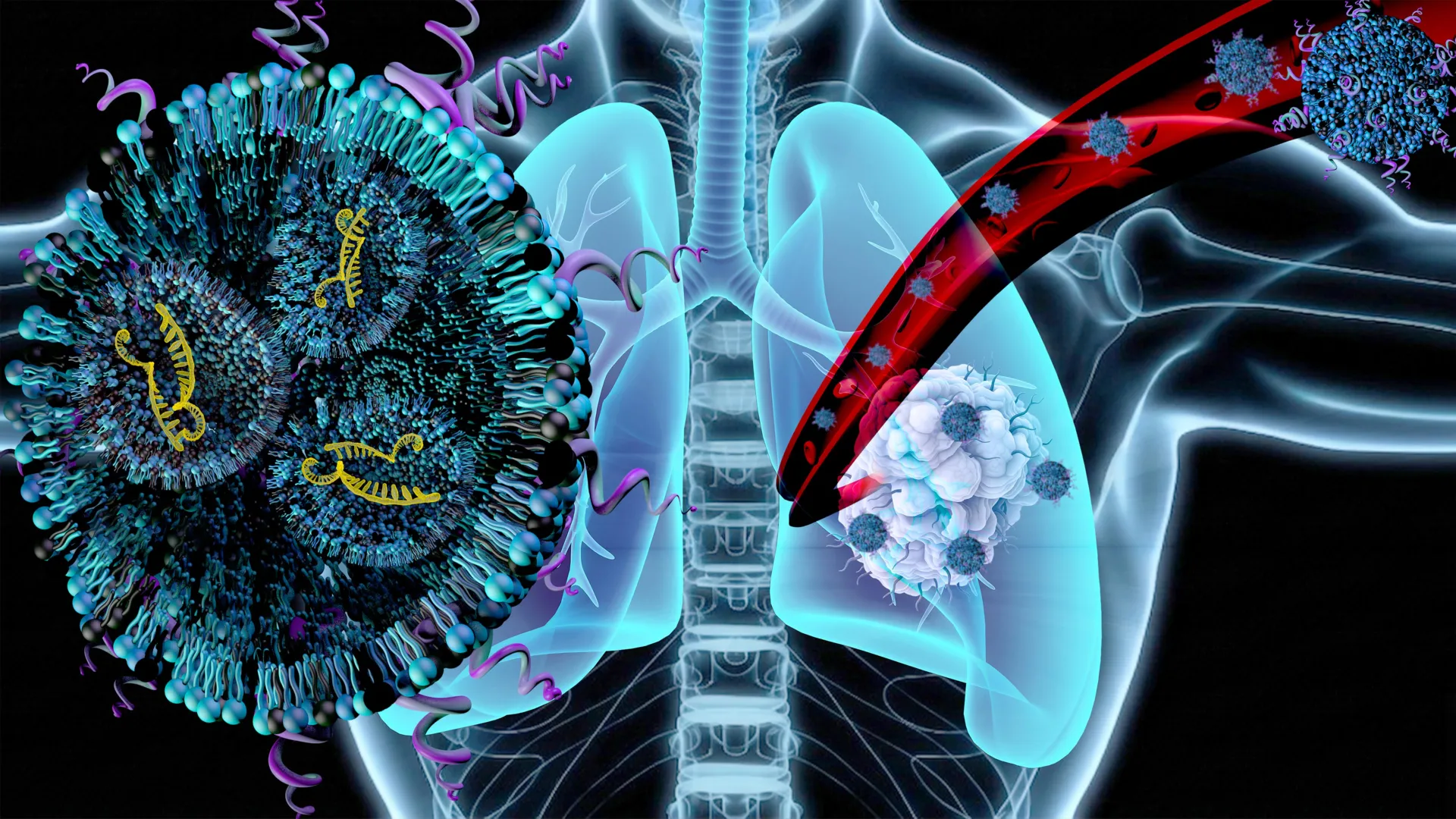
Researchers at the Oregon State University College of Pharmacy have announced a significant breakthrough in oncology and molecular therapeutics, developing an experimental treatment designed to address two of the most devastating aspects of lung cancer: the primary tumor growth and the debilitating muscle-wasting syndrome known as cachexia. This dual-action approach, recently detailed in the Journal of Controlled Release, utilizes advanced lipid nanoparticle (LNP) technology to deliver genetic instructions directly to cancer cells, potentially revolutionizing the standard of care for patients suffering from the nation’s leading cause of cancer-related mortality.
The study, led by professors Oleh Taratula and Yoon Tae Goo, introduces a sophisticated delivery mechanism that overcomes a long-standing hurdle in mRNA therapy: ensuring that therapeutic materials reach the lungs instead of being filtered out by the liver. By leveraging the body’s own biochemical pathways, the OSU team has demonstrated a way to turn lung tumors into "bio-factories" that produce follistatin, a protein capable of inhibiting tumor progression while simultaneously preserving muscle mass.
A Novel Mechanism for Targeted mRNA Delivery
The core of the innovation lies in the engineering of the lipid nanoparticles used to transport the mRNA. In the field of nanomedicine, systemic delivery—administering a drug through the bloodstream to reach a specific organ—has historically been plagued by "off-target" accumulation. Most conventional LNPs are quickly sequestered by the liver, which limits their effectiveness in treating respiratory or neurological conditions and increases the risk of hepatic toxicity.
The OSU researchers discovered that by optimizing the composition of their LNPs, they could exploit a specific interaction with vitronectin, a glycoprotein found naturally in human blood serum. When the nanoparticles enter the bloodstream, they attract and bind to vitronectin. This protein then acts as a biological GPS, guiding the nanoparticles to the surface of lung cancer cells.
"We found that these LNPs bind vitronectin in the bloodstream, which then directs them to lung cancer tumors by interacting with integrin receptors that are overexpressed on the tumor surface," explained Dr. Taratula. Integrin receptors are transmembrane linkers that facilitate cell-extracellular matrix adhesion. In many aggressive cancers, these receptors are present in abnormally high numbers, providing a "lock" for which the vitronectin-coated nanoparticles serve as the "key."
Once the nanoparticles are internalized by the tumor cells, they release their cargo: messenger RNA (mRNA) encoding for the protein follistatin. The cellular machinery then reads this mRNA and begins synthesizing follistatin, which is subsequently secreted into the tumor microenvironment and the systemic circulation.
Addressing the "Silent Killer": Cancer Cachexia
While the primary focus of cancer treatment is often the eradication of the tumor, the OSU team recognized that for many patients, the systemic effects of the disease are just as lethal as the malignancy itself. Lung cancer is frequently accompanied by cachexia, a complex metabolic syndrome characterized by the progressive loss of skeletal muscle mass and adipose tissue.
Cachexia is distinct from simple starvation or age-related muscle loss. It is an inflammatory condition that cannot be reversed by increased nutritional intake alone. Statistics indicate that cachexia affects up to 80% of patients with advanced cancer and is directly responsible for approximately 20% to 30% of all cancer deaths. It significantly reduces a patient’s quality of life, diminishes their tolerance for chemotherapy, and shortens survival time.
By utilizing follistatin mRNA, the researchers are targeting a biological pathway that governs muscle growth. Follistatin is a powerful inhibitor of myostatin, a member of the TGF-beta superfamily that limits muscle tissue growth. By increasing follistatin levels, the treatment encourages muscle preservation and growth even as the body battles the metabolic stress of cancer. Furthermore, follistatin has been shown to possess anti-tumor properties in certain contexts, providing a synergistic effect that attacks the disease on two fronts.
Preclinical Findings and Comparative Data
In rigorous laboratory experiments using murine models, the OSU researchers compared their targeted LNPs against conventional, non-targeted versions. The results were statistically significant and underscored the potential of the new delivery platform.
The data revealed that the vitronectin-targeting approach achieved an approximately 2.5-fold greater reduction in tumor burden compared to traditional LNP treatments. Imaging and tissue analysis confirmed that the mRNA expression was concentrated within the lung tumors, with significantly lower accumulation in the liver—a primary goal of the research team.
The mice treated with the follistatin-encoding LNPs also showed marked improvements in muscle health. While the control groups experienced the characteristic wasting associated with advanced lung cancer, the experimental group maintained higher levels of muscle mass and physical function. Importantly, the researchers reported no significant adverse effects or systemic toxicity, suggesting that the targeted nature of the therapy spares healthy tissues from unnecessary exposure.
The Broader Context of Lung Cancer in the United States
The urgency of this research is highlighted by the current epidemiological landscape of lung cancer. According to data from the American Cancer Society, lung cancer remains the third most common cancer diagnosis in the United States, trailing only skin cancer and the gender-specific categories of prostate and breast cancer. However, it far outpaces all others in terms of lethality.
For 2024, estimates suggest that approximately 230,000 Americans will receive a lung cancer diagnosis. The projected death toll stands at roughly 125,000, meaning the disease claims more lives annually than colon, breast, and prostate cancers combined. While smoking remains the primary risk factor, a significant percentage of cases occur in non-smokers, often linked to radon exposure, pollution, or genetic predispositions.
The high mortality rate is partially attributed to the fact that lung cancer is often asymptomatic in its early stages. By the time symptoms like chronic cough or chest pain appear, the cancer has frequently metastasized or induced systemic complications like cachexia. The OSU breakthrough offers hope for a therapeutic intervention that can manage late-stage complications while still fighting the primary malignancy.
Chronology of mRNA Research and Development
The success of the OSU study is built upon decades of progress in mRNA technology, which reached a tipping point during the COVID-19 pandemic.
- Early 2000s: Researchers began exploring LNPs as a way to protect fragile mRNA strands from degradation by enzymes in the blood.
- 2010s: Refinements in lipid chemistry allowed for the first generation of mRNA therapeutics to enter clinical trials, primarily for rare genetic disorders and vaccines.
- 2020-2021: The global success of mRNA vaccines for COVID-19 validated the safety and scalability of LNP-based delivery platforms.
- 2022-2023: Oncology researchers began shifting focus toward "targeted" delivery, seeking ways to move beyond the liver and toward specific organ systems like the lungs and brain.
- Present: The Oregon State University study represents one of the first successful attempts to use a blood-protein-mediated targeting strategy to treat both a primary tumor and a secondary metabolic syndrome (cachexia) simultaneously.
Institutional Support and Collaborative Effort
The research was a multidisciplinary effort involving a diverse team of scientists. Joining Taratula and Goo were Vladislav Grigoriev, Tetiana Korzun, Ammar Salem, Kongbrailatpam Shitaljit Sharma, Prem Singh, Chrissa Kioussi, and Olena Taratula, all from the OSU College of Pharmacy.
The project also benefited from a public-private synergy, with contributions from Daniel Marks of Endevica Bio, a company specializing in peptide therapies. This collaboration highlights the growing trend of academic institutions partnering with biotechnology firms to accelerate the transition from the laboratory bench to the patient’s bedside.
Funding for the study was provided by several prestigious institutions, reflecting the high priority placed on innovative cancer research. Supporters included:
- The National Cancer Institute (NCI)
- The Eunice Kennedy Shriver National Institute of Child Health and Human Development
- The National Research Foundation of Korea
Implications for the Future of Oncology
While the results are promising, the researchers emphasize that the treatment is currently in the preclinical stage. The transition from mouse models to human patients involves navigating a complex regulatory landscape overseen by the Food and Drug Administration (FDA).
"More preclinical work is necessary, but we’re very encouraged by what we’ve seen so far and hope that testing in humans is down the road," Dr. Taratula stated. The next steps will likely involve long-term toxicity studies, dosage optimization, and trials in larger animal models to ensure that the vitronectin-targeting mechanism functions effectively in the human circulatory system.
The implications of this work extend beyond lung cancer. If the vitronectin-integrin targeting strategy can be adapted for other proteins or different types of mRNA, it could pave the way for a new class of "smart" therapeutics. For instance, similar platforms could be used to deliver immune-system stimulants directly to tumors or to repair damaged lung tissue in patients with chronic obstructive pulmonary disease (COPD).
Furthermore, the focus on cachexia addresses a major gap in current oncology. By treating the patient’s whole-body health alongside the tumor, clinicians may be able to extend survival and improve the "performance status" of patients, potentially making them eligible for other life-saving treatments they might otherwise be too weak to receive.
As the medical community continues to move toward personalized and precision medicine, the OSU research stands as a testament to the power of nanomedicine to solve the most difficult challenges in drug delivery. By turning the body’s own proteins into a delivery service, these scientists have opened a new front in the war against cancer—one that promises to not only kill the disease but also to strengthen the patient.
