
 By Budi Oetomo Narendra
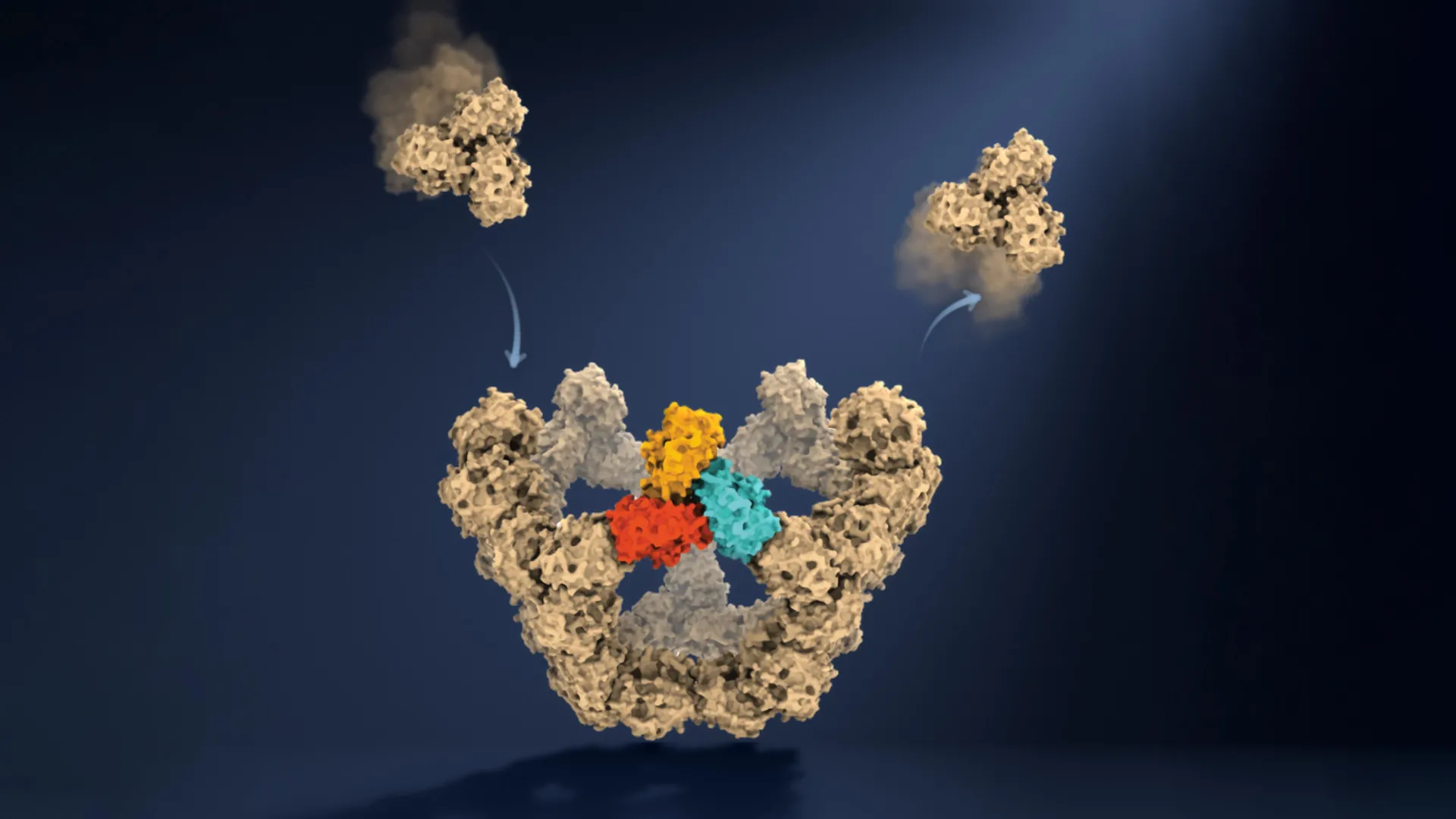
Researchers at the University of Oxford have achieved a groundbreaking feat, observing virus-like particles assembling themselves one molecule at a time. This unprecedented observation has unveiled the surprisingly simple yet profoundly effective rules that enable complex biological structures to form with remarkable reliability. The findings, meticulously detailed and published in the esteemed scientific journal Nature, provide the scientific community with an intimate, real-time view into a fundamental biological process that scientists have struggled to directly observe for decades, marking a significant leap forward in our understanding of molecular construction.
A Decades-Long Scientific Enigma: The Viral Construction Problem
For over half a century, the scientific community has grappled with one of biology’s most elegant yet perplexing mysteries: how viruses construct their intricate, protective protein shells, known as capsids. These nanoscale architectures, vital for encapsulating and shielding the viral genetic material, can be composed of anywhere from tens to thousands of individual protein components. What makes this process so astonishing is its apparent autonomy; in many viral systems, these myriad proteins spontaneously arrange themselves into the correct, highly ordered structure without any external machinery or pre-existing blueprint guiding their assembly. This "self-assembly" phenomenon is not unique to viruses, underpinning the formation of countless biological structures, from cellular skeletons to specialized molecular compartments, but its precise mechanics have remained elusive.
Traditional methods of studying viral assembly have predominantly relied on examining the starting components and the final, fully formed particles. This approach, while informative, left a critical void in understanding the intermediate stages. The transient nature and extremely low quantities of these intermediate structures meant they existed only fleetingly, making their direct observation akin to trying to photograph a ghost. Scientists were left to reconstruct theoretical models and infer mechanisms from static snapshots, piecing together a dynamic process from indirect evidence. This limitation has long hindered efforts to fully comprehend the robustness and efficiency of viral construction, thereby constraining the development of targeted interventions.
The Oxford Breakthrough: A New Window into Molecular Dynamics
To overcome these formidable observational challenges, the Oxford research team embarked on an innovative experimental journey. Their focus was an engineered virus-like particle, a simplified yet representative model system comprising 60 protein units designed to mimic natural viral assembly. The cornerstone of their methodology was mass photometry, a cutting-edge technique developed at Oxford itself. Mass photometry allows researchers to determine the precise mass of individual molecules by measuring the minute amounts of light they scatter when illuminated. This technique, already a powerful tool for analyzing molecular interactions, was then ingeniously combined with a novel approach for confining individual molecules and continuously observing them over extended periods.
This synergistic technological fusion proved to be the key to unlocking the viral assembly process in real-time. By repeatedly measuring the mass of a single, growing particle as additional proteins attached, the researchers could effectively track the incremental addition of individual molecular building blocks. This unprecedented capability transformed a static observation problem into a dynamic, "live-action" study. Co-first author PhD student Dan Loewenthal from the Department of Chemistry and Kavli Institute for Nanoscience Discovery at the University of Oxford, succinctly captured the essence of this breakthrough, stating, "This method lets us study the assembly process directly, we just take a video!" This analogy perfectly encapsulates the transformative nature of their work, moving from fragmented snapshots to a continuous, unfolding narrative of molecular construction. Professor Philipp Kukura, a co-lead author also from the Department of Chemistry and Kavli Institute for Nanoscience Discovery, further emphasized the paradigm shift: "Until now, much of our understanding of how these structures assemble has had to be reconstructed from snapshots or theoretical models. Being able to both quantify the underlying interactions and follow one particle as it grows changes that. We can see the important intermediate structures appear and deduce a detailed model of the construction process."
Unveiling the "Surprising Trick": Trial, Error, and Molecular Checkpoints
The real-time observations revealed a remarkably elegant and efficient mechanism underlying viral self-assembly, effectively a sophisticated form of molecular navigation. The process, the researchers found, resembles traversing an intricate maze where only specific pathways lead to lasting progress. At the initial stages, protein components form weak, transient connections. This inherent flexibility is paramount; if an arrangement is incorrect or energetically unfavorable, these weak bonds can easily break apart, allowing the molecules to dissociate and "try again." This "trial and error" dynamic is not a flaw but a crucial design principle, granting the system the necessary room to make mistakes without permanently derailing the entire construction.
This iterative process continues until the molecules stumble upon particular closed structures that allow for the formation of multiple, more robust connections. Once these stable configurations are achieved, they act as critical "molecular checkpoints," effectively locking in successful arrangements. This mechanism dramatically narrows the enormous, almost astronomical number of possible assembly routes into a much smaller, manageable set of successful pathways. Dr. Roi Asor, a co-lead author from the Department of Chemistry and Kavli Institute for Nanoscience Discovery, elaborated on this fundamental principle: "A virus has to solve an extraordinary construction problem. Its components somehow have to find the right arrangement among a huge number of possibilities, without a blueprint or machinery directing the process. We can now watch what happens molecule by molecule and see the physical rules that make it possible." He added, "The weak interactions give the system room to make mistakes. Most encounters don’t have to be successful: the components can separate and try again. But once enough of them come together in the right closed arrangement, the structure becomes stable, and assembly can move forward. That combination of trial and error followed by locking in successful structures is what makes the process so reliable."
One particularly vital milestone observed during this intricate dance of molecules is the formation of a closed pentagonal ring, composed of five larger protein building blocks. This pentagonal structure represents the first highly stable intermediate in the assembly pathway. Its formation is a critical "nucleation" event, overcoming the initial kinetic barrier. Once this stable pentagonal core is established, subsequent stages of growth become significantly faster and more efficient, requiring fewer additional building blocks to reach the next stable configuration. This clarification sheds light on why the earliest stages of construction (nucleation) are often the most difficult and rate-limiting, while growth accelerates substantially once the first stable structure appears.
Broader Implications: From Antivirals to Synthetic Biology
The profound insights gleaned from this Oxford research extend far beyond the realm of virology, carrying significant implications for medicine, biotechnology, and fundamental biological understanding. By meticulously identifying the precise molecular interactions and kinetic pathways that govern viral assembly, scientists are now equipped with an unprecedented level of detail to potentially develop novel therapeutic strategies.
New Possibilities for Antiviral Drugs and Vaccines:
The most immediate and tangible application lies in the development of next-generation antiviral drugs. Current antiviral strategies often target viral replication or entry into host cells. However, understanding how to interfere with the construction of the protective viral protein shell offers an entirely new therapeutic avenue. Drugs designed to disrupt these specific assembly checkpoints or to destabilize the weak initial connections could effectively prevent viruses from forming functional capsids, rendering them non-infectious. Similarly, these insights could revolutionize vaccine development. By precisely understanding how virus-like particles (VLPs) self-assemble, researchers can engineer these non-infectious protein shells with greater efficiency and specificity, creating more potent and stable vaccine platforms. Co-author Dr. Jack Tan from the MRC Weatherall Institute of Molecular Medicine and CAMS-Oxford Institute highlighted this potential, noting, "The ability to understand these processes at the molecular level could have important applications in vaccine development and antivirals that disrupt viral assembly."
Fundamental Biological Understanding:
The principles of self-assembly are ubiquitous throughout biology. This study provides a powerful new paradigm for investigating how complexity arises from relatively simple interactions across diverse biological systems. From the intricate scaffolding of cellular cytoskeletons to the formation of multi-protein enzyme complexes and specialized organelles, the rules of trial-and-error coupled with checkpoint-driven stabilization are likely conserved. The Oxford team’s novel observational approach, which allows for single-molecule, real-time tracking, offers researchers a potent tool to explore these intricate construction processes in various biological contexts.
Advancements in Nanotechnology and Synthetic Biology:
Beyond medicine, the findings hold promise for the fields of nanotechnology and synthetic biology. The ability to understand and, crucially, to observe the self-assembly of complex structures at the molecular level could inform the design and fabrication of novel self-assembling materials. Imagine engineering bespoke molecular machines or drug delivery vehicles that can autonomously construct themselves with high fidelity. The principles uncovered in this viral study could serve as a blueprint for designing artificial systems that exhibit similar levels of robustness and efficiency in their formation.
A New Era of Molecular Observation:
This research marks a pivotal moment in our capacity to observe the microscopic world. The combination of advanced instrumentation like mass photometry with innovative sample confinement techniques has effectively opened a new window into the dynamic processes that underpin life itself. As technology continues to evolve, similar approaches could be applied to unravel other long-standing mysteries in biochemistry and cell biology, from protein folding pathways to the assembly of ribosomes or molecular motors. The University of Oxford’s latest contribution has not only solved a decades-old puzzle in virology but has also provided a versatile toolkit for future discoveries, promising a deeper understanding of life’s fundamental building blocks and how they orchestrate the creation of biological complexity.
