
 By Gabriel Paijo
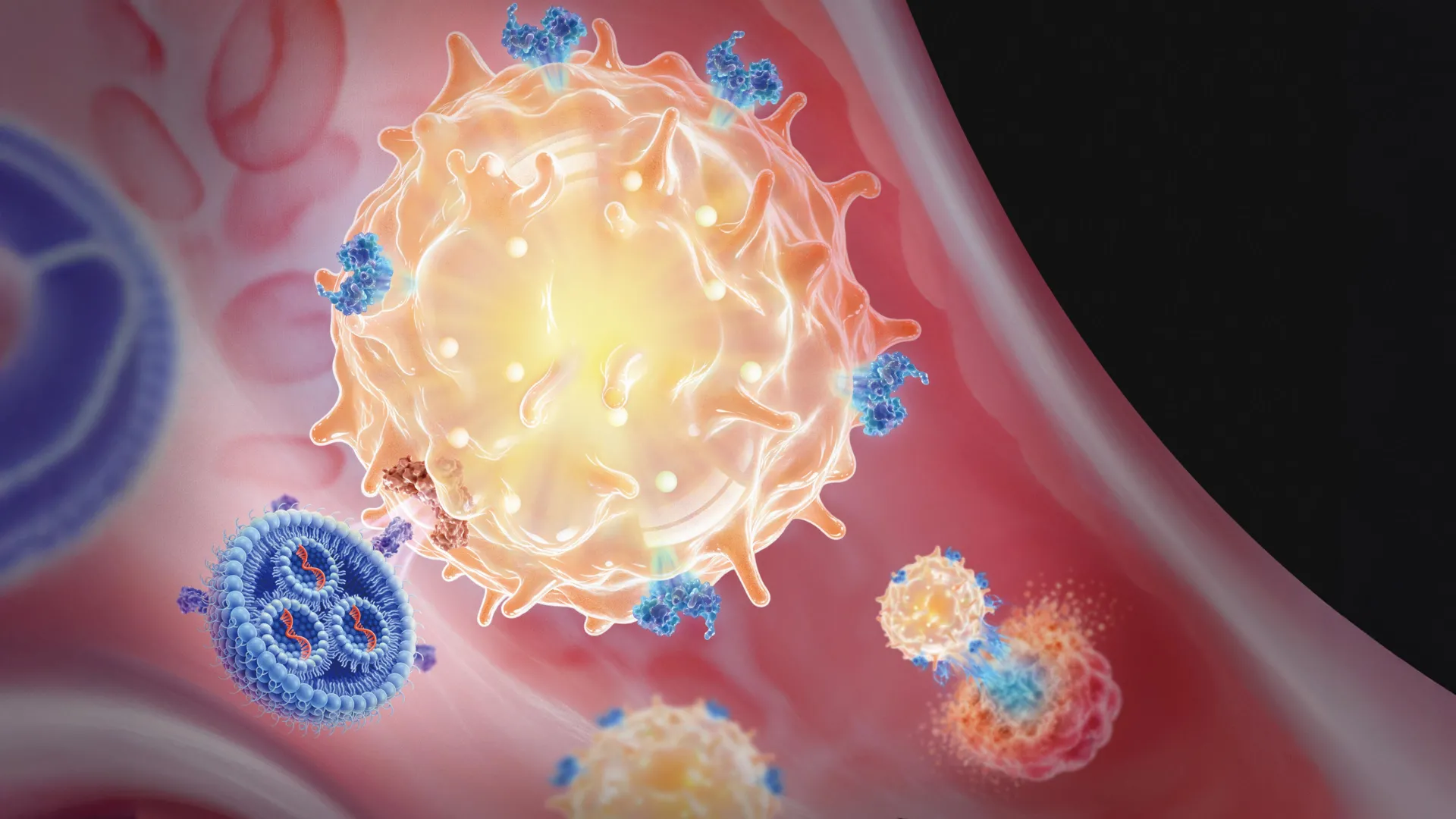
In a significant leap forward for precision medicine, researchers at the Massachusetts Institute of Technology (MIT) have unveiled a breakthrough technique that allows for the genetic reprogramming of immune cells directly within a patient’s body. This "in vivo" approach, detailed in a study published in Nature Biotechnology, utilizes specialized lipid nanoparticles to transform Natural Killer (NK) cells into potent warriors against cancer and autoimmune disorders. By bypassing the traditional, labor-intensive process of modifying cells in a laboratory, this technology promises to democratize access to advanced immunotherapies, potentially reducing costs and treatment timelines by several orders of magnitude.
The research, led by senior author Daniel Anderson, a professor in MIT’s Department of Chemical Engineering and a member of the Koch Institute for Integrative Cancer Research, marks a pivotal shift in how scientists approach Chimeric Antigen Receptor (CAR) therapies. While current CAR-based treatments have revolutionized oncology, they are hampered by logistical complexities that limit their availability to a small fraction of eligible patients. The MIT team’s innovation seeks to solve this "manufacturing bottleneck" by turning the human body itself into a production facility for engineered immune cells.
The Evolution of Immunotherapy: From Ex Vivo to In Vivo
To understand the magnitude of this breakthrough, one must look at the current landscape of cancer treatment. Over the last decade, the U.S. Food and Drug Administration (FDA) has approved seven CAR T-cell therapies, such as Kymriah and Yescarta, which have shown remarkable success in treating B-cell leukemias and lymphomas. However, these treatments are "autologous," meaning they are custom-made for each individual patient.
The current "vein-to-vein" process is arduous. It begins with leukapheresis, where a patient’s T cells are extracted from their blood. These cells are then shipped to a centralized manufacturing facility, often thousands of miles away, where they are genetically modified using viral vectors to express specific receptors. After being expanded into millions of copies, the cells are frozen, shipped back, and re-infused into the patient. This cycle typically takes several weeks and can cost upwards of $400,000 per dose, excluding hospital stays and management of side effects.
The MIT team sought to eliminate this cycle entirely. "The manufacturing challenges with CAR NK cells are significant," Professor Anderson noted. "The idea here is you can deliver a nanoparticle that will modify your own NK cells with a CAR construct and teach them to attack tumor cells."
The Mechanism: mRNA-Loaded Lipid Nanoparticles
The vehicle for this transformation is the lipid nanoparticle (LNP), the same technology that underpinned the success of mRNA-based COVID-19 vaccines. However, the MIT researchers refined these particles to be far more selective. These LNPs carry messenger RNA (mRNA) that encodes the instructions for a Chimeric Antigen Receptor.
A critical innovation in this study is the "targeting" mechanism of the nanoparticles. To ensure the mRNA is delivered specifically to Natural Killer cells rather than other cells in the bloodstream, the researchers coated the surface of the LNPs with antibody fragments. These fragments act as a key that fits only the receptors found on the surface of NK cells. Once the nanoparticle attaches to an NK cell, it is internalized, and the cell’s internal machinery begins reading the mRNA instructions to produce the CAR proteins.
Unlike traditional CAR T-cell therapy, which often uses viral vectors to permanently integrate DNA into the cell’s genome, the use of mRNA results in "transient" expression. This means the NK cells remain reprogrammed for a limited period, which can actually be a safety advantage, reducing the risk of long-term side effects or "off-target" toxicity.
Solving the "Fratricide" Problem in T-Cell Malignancies
One of the most compelling aspects of using NK cells over T cells is their ability to treat T-cell-based cancers and autoimmune diseases. When researchers try to use CAR T cells to kill cancerous T cells, they encounter a phenomenon known as "fratricide." Because the engineered cells and the target cells are both T cells, they often recognize and kill each other, neutralizing the therapy before it can be effective.
Natural Killer cells belong to a different lineage of the immune system. By engineering NK cells to target markers like CD3 (found on T cells), researchers can create a "search and destroy" mission where the NK cells eliminate the harmful T cells without attacking themselves. "NK cells can treat these T-cell malignancies—not only T-cell cancer but also T-cell autoimmune diseases," explained Yuang Chen, an MIT postdoctoral researcher and lead author of the study.
Experimental Data: High Efficiency and Complete Remission
The effectiveness of the in vivo reprogramming was tested in several mouse models, yielding data that suggest high clinical potential.
- Modification Efficiency: Upon injecting the targeted LNPs into mice, the researchers found that they could successfully reprogram approximately 80% of the circulating NK cells. This high rate of efficiency is crucial for ensuring a sufficient "army" of immune cells to tackle aggressive diseases.
- Melanoma Suppression: In mice suffering from aggressive melanoma, the treatment led to significant tumor reduction. Three out of five mice (60%) achieved complete remission, a result that underscores the potency of the reprogrammed NK cells even in "cold" tumors that are typically resistant to immunotherapy.
- Lymphoma Elimination: Using "humanized" mice—animals that have been given human immune cells to more closely mimic human biology—the team targeted T-cell lymphoma. After a series of five injections, the tumors were entirely eliminated. Crucially, the results were statistically comparable to the more expensive and complex ex vivo CAR NK cell treatments.
- Autoimmune Reversal: In a model of autoimmune hepatitis, where the immune system attacks the liver, a single injection of the nanoparticles was sufficient to eliminate the autoreactive T cells responsible for the damage. Following the treatment, the researchers observed that the mice’s liver tissue began to heal, demonstrating that the technology can reset the immune environment.
Broader Implications for Healthcare and Economics
The implications of moving from a centralized manufacturing model to a "pharmacy-on-a-shelf" model are profound. If this technology translates to humans, it could lead to several transformative changes in the healthcare landscape:
- Cost Reduction: By removing the need for clean-room manufacturing and specialized cell-processing facilities, the cost of CAR therapy could drop from hundreds of thousands of dollars to the price of a sophisticated biologic injection.
- Speed of Care: Patients with aggressive cancers often do not have weeks to wait for their cells to be processed. In vivo reprogramming would allow for immediate treatment upon diagnosis.
- Global Accessibility: Current CAR-T therapies are largely restricted to major academic medical centers in wealthy nations. mRNA nanoparticles are easier to transport and store, potentially bringing advanced cancer care to developing regions.
Robert Langer, MIT’s David H. Koch Institute Professor and a contributor to the study, emphasized the broader potential of the delivery system. "This study is an excellent example of the power of nano-delivery systems and their ability to potentially treat cancer and other diseases," he said.
Future Directions and Clinical Outlook
While the results in mice are groundbreaking, the transition to human clinical trials involves significant hurdles. Researchers must ensure that the targeted LNPs do not cause systemic inflammation or "cytokine storm," a common side effect of traditional CAR-T therapy. Furthermore, the transient nature of mRNA expression means that multiple doses may be required to achieve a permanent cure, whereas a single dose of traditional CAR-T cells can sometimes persist in the body for years.
The MIT team is already looking toward other applications. Beyond cancer and hepatitis, they believe this technology could be used to treat multiple sclerosis (MS) and rheumatoid arthritis (RA) by targeting the specific subsets of T cells that drive those diseases.
The research was supported by a diverse group of funders, including the pharmaceutical company Sanofi and the National Cancer Institute, signaling strong industry and government interest in the platform. As the medical community moves toward "off-the-shelf" solutions, the MIT study provides a robust blueprint for a future where genetic medicine is as simple as a routine infusion, turning the patient’s own biology into the ultimate tool for recovery.
