
 By Suherman Candra Maholtra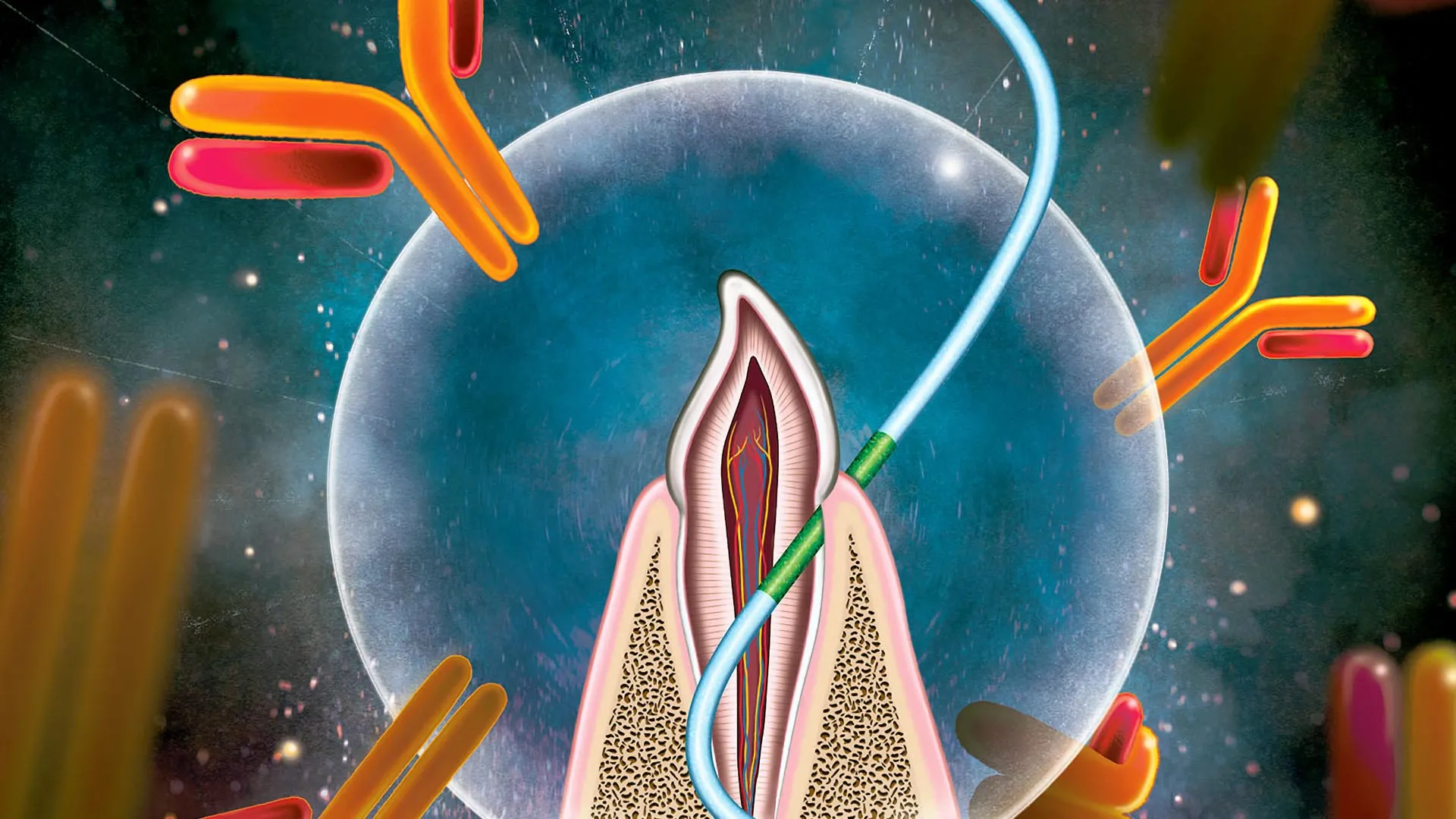
Researchers at North Carolina State University and Texas Tech University have unveiled a groundbreaking approach to immunization that utilizes common dental floss to deliver vaccines through the junctional epithelium, the specialized tissue located at the base of the gum pocket. This novel method, detailed in a study published in the journal Nature Biomedical Engineering, represents a significant shift in vaccine technology by targeting a specific biological "weak point" to stimulate a robust immune response both in the bloodstream and across mucosal surfaces, such as those found in the respiratory and gastrointestinal tracts.
The study, led by Harvinder Singh Gill, the Ronald B. and Cynthia J. McNeill Term Professor in Nanomedicine at North Carolina State University, demonstrates that the junctional epithelium offers a unique physiological gateway for vaccines. Unlike most epithelial tissues that act as formidable barriers against external pathogens, the junctional epithelium is naturally permeable, allowing for a more efficient uptake of vaccine formulations. This discovery could pave the way for needle-free vaccinations that are not only easier to administer but also more effective at preventing infections at their primary points of entry.
The Biological Rationale: Why the Gums?
To understand the significance of this delivery method, it is essential to distinguish between systemic and mucosal immunity. Most contemporary vaccines, such as those for influenza or COVID-19, are administered via intramuscular injection. While these injections are highly effective at generating antibodies within the bloodstream (systemic immunity), they are often less efficient at producing high concentrations of antibodies on mucosal surfaces.
"Mucosal surfaces are important because they are a source of entry for pathogens," explained Professor Gill. "However, if a vaccine is given by injection, antibodies are primarily produced in the bloodstream throughout the body, and relatively few antibodies are produced on mucosal surfaces. When a vaccine is given via the mucosal surface, antibodies are stimulated not only in the bloodstream but also on mucosal surfaces. This improves the body’s ability to prevent infection because there is an additional line of antibody defense before a pathogen enters the body."
The junctional epithelium is a thin layer of tissue situated at the deepest part of the pocket between the tooth and the gum. While most epithelial tissues—like those lining the skin or the lungs—possess robust barrier features designed to exclude foreign particles, the junctional epithelium is uniquely structured. It lacks these dense barriers because its biological role involves the release of immune cells to combat bacteria in the oral cavity. This inherent permeability makes it an ideal site for vaccine absorption.
Experimental Design and Comparative Efficacy
The research team conducted extensive testing using animal models to evaluate the efficacy of the flossing technique. In the primary experiment, lab mice were immunized using unwaxed dental floss coated with a peptide-based influenza vaccine. The researchers compared the resulting antibody production against two other mucosal delivery methods: intranasal delivery (via the nose) and sublingual delivery (placing the vaccine under the tongue).
The results indicated that the junctional epithelium delivery method was significantly more effective than the sublingual approach, which is currently considered the gold standard for oral mucosal vaccination. Furthermore, the flossing technique produced an immune response comparable to nasal delivery, which is known for its high efficacy but carries specific safety risks.
"We found that applying vaccine via the junctional epithelium produces far superior antibody response on mucosal surfaces than the current gold standard for vaccinating via the oral cavity," said Rohan Ingrole, the study’s first author and a former Ph.D. student under Gill. "The flossing technique also provides comparable protection against flu virus as compared to the vaccine being given via the nasal epithelium."
One of the most critical findings was the safety profile of the flossing method compared to intranasal delivery. Professor Gill noted that many vaccine formulations cannot be administered through the nose because the nasal mucosal barrier is too thick for efficient uptake. More importantly, intranasal delivery carries the risk of the vaccine components traveling through the olfactory nerves to the brain, posing potential neurological safety concerns. Vaccination via the junctional epithelium avoids this pathway entirely, offering a safer alternative for potent vaccine formulations.
Versatility Across Vaccine Platforms
Beyond the initial peptide flu vaccine, the researchers sought to determine if the flossing method could be applied to other modern vaccine technologies. They tested the delivery system with three additional classes of vaccines:
- Proteins: Standard protein-based antigens used in many common immunizations.
- Inactivated Viruses: Traditional vaccines that use a "killed" version of a pathogen.
- mRNA: The technology used in the most prominent COVID-19 vaccines.
In all three categories, the junctional epithelium delivery technique successfully produced robust antibody responses in both the bloodstream and the mucosal linings. This suggests that the method is platform-agnostic and could potentially be adapted for a wide range of infectious diseases beyond respiratory viruses.
Additionally, the researchers investigated environmental factors that might affect the vaccine’s performance. In the animal models, the immune response remained consistent even when the mice consumed food or water immediately after the "flossing" procedure. This suggests that the vaccine is absorbed rapidly and is not easily displaced by oral activity, a crucial factor for practical human use.
Transitioning to Human Application: The Floss Pick Study
While the animal trials utilized traditional dental floss, the researchers recognized that manual flossing with vaccine-coated string might be difficult for the general public to perform accurately. To address this, they explored the use of floss picks—disposable plastic tools with a pre-tensioned piece of floss.
To test the feasibility of self-administration, the team recruited 27 human participants. The participants were not given a live vaccine; instead, the floss picks were coated with a fluorescent food dye. After receiving a brief explanation of the concept, the volunteers were asked to use the floss picks to deposit the dye into their gum pockets.
The researchers found that approximately 60% of the dye was successfully deposited into the junctional epithelium. This high rate of successful deposition in a first-time trial suggests that with minimal instruction, individuals could effectively vaccinate themselves using this method. The use of a handle-based tool makes the process intuitive and ensures that the vaccine reaches the intended biological target consistently.
Implications for Public Health and Global Logistics
The development of a floss-based vaccine delivery system carries significant implications for global health, particularly in the context of "needle phobia" and medical accessibility. A substantial portion of the global population experiences varying degrees of trypanophobia (fear of needles), which can lead to vaccine hesitancy. A non-invasive, familiar tool like a floss pick could lower the psychological barrier to immunization.
From a logistical perspective, the flossing method offers several potential advantages:
- Ease of Administration: Unlike intramuscular injections, which require trained healthcare professionals, floss-based vaccines could potentially be self-administered or administered by minimally trained personnel in remote areas.
- Reduced Medical Waste: The elimination of needles would significantly reduce the amount of "sharps" waste produced during mass vaccination campaigns, lowering disposal costs and injury risks.
- Mucosal Protection: By providing superior mucosal immunity, this method could be more effective at stopping the transmission of respiratory viruses, as the virus is neutralized at the point of entry before it can replicate and be exhaled.
Challenges and Future Research
Despite the promising results, the researchers cautioned that several hurdles remain before the technique can move to clinical trials. One primary limitation is that the method is not suitable for infants or toddlers who have not yet developed teeth, as the junctional epithelium is dependent on the presence of the tooth-gum interface.
Furthermore, the impact of oral health on vaccine efficacy must be thoroughly investigated. "We would need to know more about how or whether this approach would work for people who have gum disease or other oral infections," Gill stated. Conditions like gingivitis or periodontitis alter the tissue structure of the gum pocket and could potentially interfere with vaccine absorption or trigger unintended inflammatory responses.
The research team is currently looking toward the next phase of development, which involves refining the vaccine coating on the floss to ensure stability at room temperature and conducting further safety studies.
Conclusion and Institutional Support
The study, titled "Floss-based vaccination targets the gingival sulcus for mucosal and systemic immunization," was a collaborative effort involving researchers from North Carolina State University, Texas Tech University, and Emory University. The work was supported by grants from the National Institutes of Health (NIH) and funds from the Whitacre Endowed Chair in Science and Engineering at Texas Tech.
Professor Gill, Rohan Ingrole, and Akhilesh Kumar Shakya have filed for a patent related to the technology. As the medical community continues to seek more effective ways to combat global pandemics and seasonal viruses, the integration of nanomedicine with everyday dental hygiene tools represents a creative and potentially transformative frontier in preventative medicine. If clinical trials prove successful, the next generation of vaccines might not be found in a syringe, but in the medicine cabinet alongside a toothbrush.
