
 By Gabriel Paijo
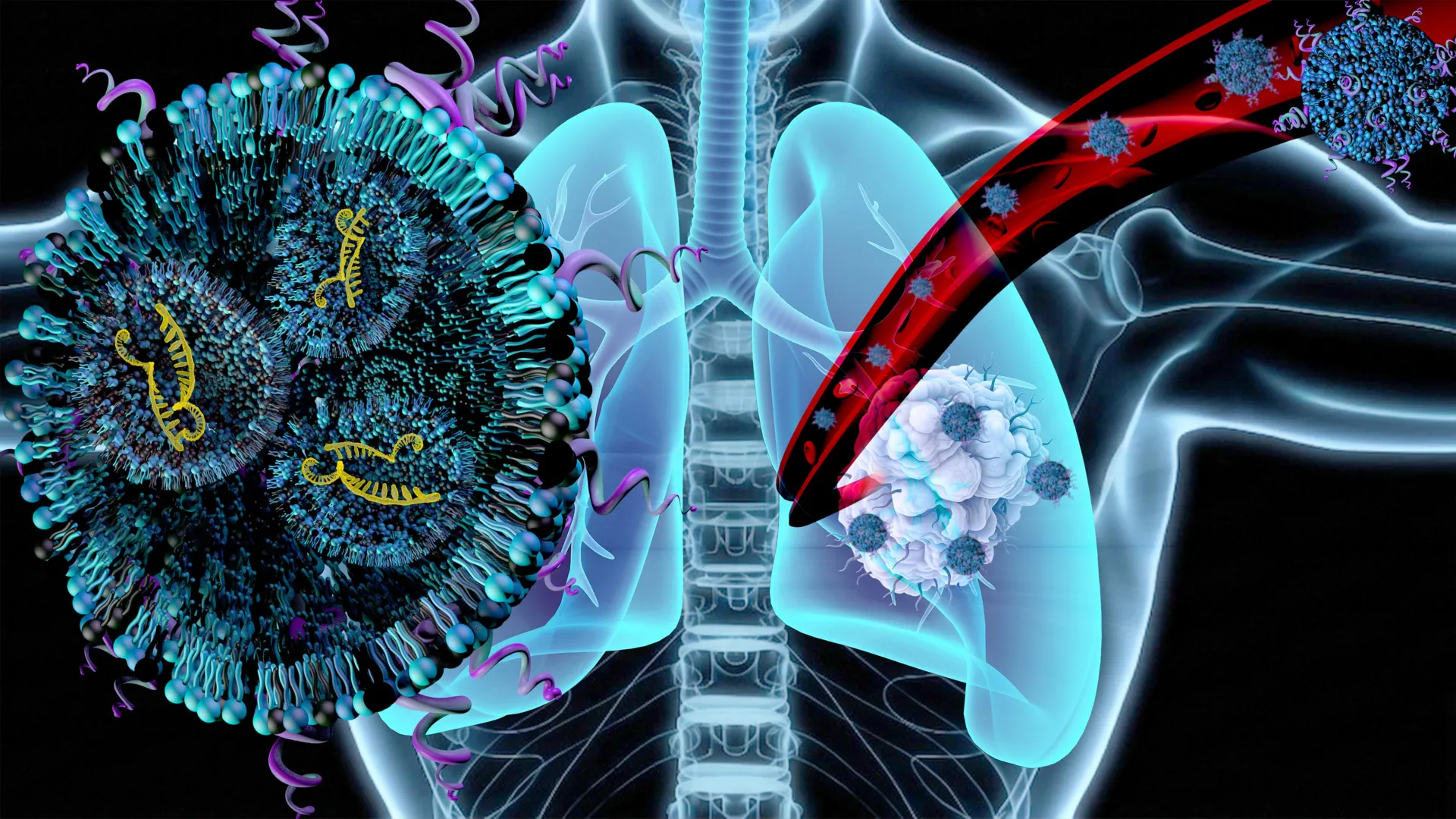
In a significant advancement for oncology and regenerative medicine, a multidisciplinary team of scientists at Oregon State University (OSU) has engineered a sophisticated experimental treatment aimed at addressing two of the most devastating components of thoracic oncology: the proliferation of lung cancer tumors and the debilitating muscle degradation known as cachexia. This dual-action approach, recently detailed in the Journal of Controlled Release, leverages the precision of nanotechnology to deliver genetic instructions directly to the site of malignancy, potentially offering a new lifeline to patients suffering from the world’s deadliest form of cancer.
The research, spearheaded by Oleh Taratula and Yoon Tae Goo of the OSU College of Pharmacy, utilizes lipid nanoparticles (LNPs) to transport messenger RNA (mRNA) specifically to lung tumors. Unlike traditional chemotherapy, which often impacts healthy cells alongside cancerous ones, this mRNA-based platform instructs the body’s own cellular machinery to produce a specific protein, follistatin, which serves a dual purpose: inhibiting the aggressive growth of cancer cells while simultaneously stimulating the preservation and growth of skeletal muscle tissue.
The Mechanism of Action: Navigating the Biological Landscape
The primary hurdle in mRNA therapeutics has historically been the "delivery problem." When genetic material is introduced into the bloodstream, the body’s natural filtration systems—primarily the liver—tend to intercept and sequester the particles before they can reach their intended destination. This "liver trap" has long limited the efficacy of systemic mRNA treatments for cancers located outside the hepatic system.
The OSU team’s breakthrough lies in the specific engineering of their lipid nanoparticles. These LNPs are fatty-acid-based carriers designed to protect the fragile mRNA sequence from degradation in the blood. However, their most innovative feature is their ability to "hitchhike" on naturally occurring proteins.
"We found that these LNPs bind vitronectin, a protein naturally found in the bloodstream," explained Oleh Taratula. "This binding is critical because vitronectin acts as a guide, directing the nanoparticles to lung cancer tumors by interacting with integrin receptors. These receptors are significantly overexpressed on the surface of lung cancer cells compared to healthy tissue."
Integrin receptors are vital proteins that facilitate cell-to-cell and cell-to-extracellular matrix adhesion. By exploiting the tumor’s over-reliance on these receptors, the researchers ensured that the therapeutic payload was delivered with high specificity. Once the LNPs enter the tumor cells, the mRNA is released, providing the blueprint for the production of follistatin.
Addressing the Silent Killer: Cancer Cachexia
While the reduction of tumor mass is the primary goal of most cancer interventions, the OSU study places a unique emphasis on cancer cachexia. Often referred to as a "wasting syndrome," cachexia is a complex metabolic condition characterized by the extreme loss of skeletal muscle and adipose tissue. It is estimated that cachexia affects up to 80% of patients with advanced lung cancer and is directly responsible for nearly 30% of all cancer-related deaths.
Cachexia is particularly insidious because it cannot be reversed by increased caloric intake alone. It involves a systemic inflammatory response that shifts the body into a catabolic state, where it begins to break down its own protein stores. This leads to profound weakness, fatigue, a diminished quality of life, and a decreased tolerance for life-saving treatments like chemotherapy or radiation.
By utilizing follistatin mRNA, the researchers have targeted a biological pathway that governs muscle mass. Follistatin is a known antagonist of myostatin, a protein that limits muscle growth. By increasing follistatin levels within the vicinity of the tumor and the systemic circulation, the treatment helps to block myostatin’s inhibitory signals, thereby encouraging muscle preservation even as the body battles the primary malignancy.
Quantitative Success in Preclinical Models
The efficacy of the treatment was demonstrated through rigorous testing in murine models. The researchers compared their vitronectin-targeting LNPs against conventional, non-targeted lipid nanoparticles. The results were stark.
"Systemic delivery of mRNA therapeutics to lung cancer tumors has been a significant challenge in our field, and this work offers a promising solution," Taratula said. "Compared to conventional LNPs, which tend to accumulate in the liver upon systemic administration, our approach achieved an approximately 2.5-fold greater reduction in tumor burden."
This 250% improvement in tumor reduction highlights the importance of the targeting mechanism. Furthermore, the mice treated with the follistatin-encoding LNPs showed significantly higher muscle mass and physical strength compared to the control groups, suggesting that the therapy successfully mitigated the effects of cachexia.
The Epidemiological Context of Lung Cancer
The urgency of this research is underscored by the current state of lung cancer statistics in the United States. According to the American Cancer Society (ACS), lung cancer remains the leading cause of cancer mortality, accounting for about one in five of all cancer deaths.
For the year 2024, the ACS estimates:
- Approximately 234,580 new cases of lung cancer will be diagnosed (116,310 in men and 118,270 in women).
- Roughly 125,070 deaths will occur due to the disease.
- While cigarette smoking remains the leading risk factor, contributing to about 80% of lung cancer deaths, there is a rising incidence of the disease among non-smokers, particularly women.
The five-year survival rate for lung cancer currently stands at approximately 25%, though this varies significantly depending on the stage at diagnosis. For patients whose cancer has metastasized (spread to distant parts of the body), the five-year survival rate drops to roughly 7%. The OSU treatment’s ability to target metastatic-prone areas like the lungs through systemic delivery could be a game-changer for late-stage prognosis.
Chronology of Development and Collaborative Efforts
The development of this experimental therapy follows several years of iterative research into nanomedicine at the OSU College of Pharmacy. The project required a synergy of expertise in pharmacology, molecular biology, and materials science.
The research timeline involved:
- Initial Synthesis: Developing a library of lipid compounds to identify those with the highest affinity for vitronectin.
- In Vitro Testing: Confirming that the selected LNPs could successfully enter lung cancer cell lines and trigger follistatin production.
- In Vivo Pilot Studies: Observing the biodistribution of the nanoparticles in mice to ensure they were not accumulating dangerously in the liver or spleen.
- Efficacy Trials: Measuring the impact on both tumor volume and muscle fiber diameter over a set period.
The study was a collaborative effort involving a wide array of researchers. Alongside Taratula and Goo, the team included Vladislav Grigoriev, Tetiana Korzun, Ammar Salem, Kongbrailatpam Shitaljit Sharma, Prem Singh, Chrissa Kioussi, and Olena Taratula. The project also benefited from the industry expertise of Daniel Marks of Endevica Bio, a firm specializing in peptide-based therapies for cachexia.
The research was supported by prestigious institutions, including the National Cancer Institute (NCI), the Eunice Kennedy Shriver National Institute of Child Health and Human Development, and the National Research Foundation of Korea.
Broader Implications and the Path to Human Trials
The success of this study contributes to the growing "mRNA revolution" ignited by the development of COVID-19 vaccines. It demonstrates that mRNA technology can be repurposed from infectious disease prevention to the treatment of complex chronic diseases and cancers.
However, the researchers emphasize that while the results are encouraging, the treatment is still in the preclinical phase. "More preclinical work is necessary, but we’re very encouraged by what we’ve seen so far and hope that testing in humans is down the road," Taratula noted.
The transition from mouse models to human patients involves several critical steps, including:
- Toxicity Profiling: Ensuring that the vitronectin-binding process does not interfere with the protein’s natural role in blood clotting and tissue repair.
- Scaling Production: Developing methods to manufacture the specific LNPs at a scale and purity suitable for clinical use.
- Regulatory Approval: Working with the FDA to design Phase I clinical trials that will first assess the safety of the treatment in a small group of volunteers.
If successful in human trials, this therapy could redefine the standard of care for lung cancer. Currently, many patients must choose between aggressive tumor-fighting treatments and palliative care focused on quality of life. A therapy that does both—shrinking tumors while keeping the patient strong enough to continue treatment—could significantly shift the survival curve.
Furthermore, the targeting platform developed at OSU could theoretically be adapted for other types of cancer that overexpress integrin receptors, such as certain types of breast and pancreatic cancers. By simply changing the mRNA sequence within the nanoparticle, scientists could target different proteins or mutations, making this a highly versatile tool in the burgeoning field of personalized oncology.
As the scientific community awaits the next phase of testing, the work at Oregon State University stands as a testament to the power of nanomedicine to tackle the most complex challenges in human health, providing a glimpse into a future where cancer is not just treated, but managed with a precision that preserves the wholeness of the patient.
