
 By Suherman Candra Maholtra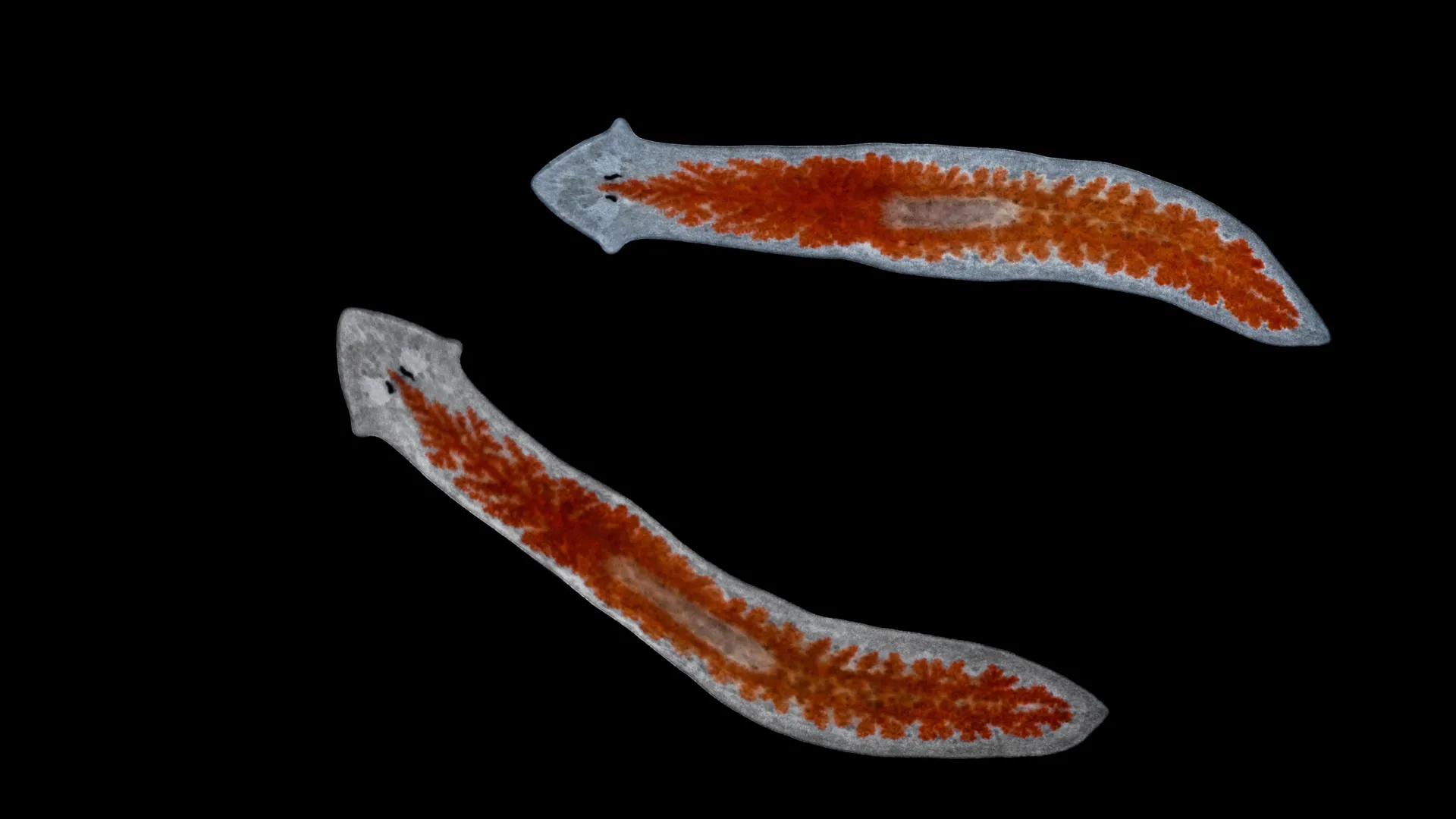
The Stowers Institute for Medical Research has announced a groundbreaking discovery in the field of regenerative biology, revealing that the stem cells of planarian flatworms operate under a set of biological rules previously thought impossible in complex organisms. While the prevailing scientific consensus has long held that stem cells require a highly localized, specialized environment known as a "niche" to function, new data published in the journal Cell Reports on October 15, 2025, demonstrates that planarian stem cells are remarkably independent. Rather than taking cues from their immediate neighbors, these cells receive instructions from distant organs, specifically the intestine, a finding that could redefine the approach to human regenerative medicine and oncology.
The study, led by Postdoctoral Research Associate Frederick "Biff" Mann, Ph.D., and overseen by Stowers President and Chief Scientific Officer Alejandro Sánchez Alvarado, Ph.D., utilizes advanced spatial transcriptomics to map the cellular landscape of the planarian, Schmidtea mediterranea. By identifying a new cell type and tracing the signaling pathways between disparate parts of the organism, the research team has provided a new framework for understanding how some animals can regrow entire bodies from mere fragments, a feat that remains the "holy grail" of tissue engineering.
Challenging the Traditional Stem Cell Niche
For decades, the "niche" hypothesis has been a cornerstone of stem cell biology. First proposed in the late 1970s, the concept suggests that stem cells are essentially passive agents that require a specific physical "cradle" provided by neighboring cells. These neighbors act as micromanagers, sending short-range chemical signals that tell the stem cell when to remain dormant, when to divide, and what specific type of tissue to become.
In humans, this process is best observed in the bone marrow. Hematopoietic stem cells, which are responsible for producing all blood cells, reside in specific niches within the marrow. If these cells are removed from their niche or if the niche is damaged, the stem cells often lose their ability to function correctly, leading to blood disorders or the cessation of cell production. Dr. Mann noted that in most animals, this tight control is a protective mechanism. By restricting stem cells to specific locations and roles, the body prevents the kind of "rogue" cellular behavior that characterizes malignant tumors and metastatic cancer.
However, the planarian flatworm appears to have bypassed this requirement. Unlike human adult stem cells, which are generally multipotent (able to become only a few types of cells), planarian stem cells are pluripotent, meaning they can transform into any cell type in the body—from neurons to muscle to skin. The Stowers research indicates that these cells do not live in a fixed physical location. They move through the body with a level of autonomy that contradicts the micromanagement model seen in mammalian biology.
The Discovery of the Hecatonoblast
A central component of the study involved the use of spatial transcriptomics—a high-resolution imaging and sequencing technology that allows scientists to see not only which genes are active in a cell but also where that cell is located in relation to its neighbors. During this mapping process, the team identified a previously unknown cell type that initially appeared to be a candidate for a traditional niche cell.
This new cell is exceptionally large and features numerous fingerlike projections that extend outward, weaving through the surrounding tissue. Due to its striking appearance, the researchers named it the "hecatonoblast," a reference to the Hecatoncheires, the hundred-armed giants of Greek mythology.
"Because they were located so close to stem cells, we were surprised to find that hecatonoblasts were not controlling their fate nor function," Dr. Mann explained. In a traditional biological model, a cell with such intimate physical contact with a stem cell would almost certainly be its regulator. Instead, the data showed that the hecatonoblast and the stem cell were merely neighbors, coexisting without the master-servant dynamic typically found in the niches of other animals. This discovery was the first major clue that planarian stem cells were operating on a "global" rather than "local" communication network.
Long-Distance Signaling and the Role of the Intestine
If the immediate neighbors like the hecatonoblast are not directing the stem cells, the question remains: what is? By analyzing the broader dataset provided by spatial transcriptomics, the researchers found that the most influential signals were originating from the flatworm’s intestinal cells.
This suggests a "global" system of regulation where the state of the entire organism is communicated to the stem cells, rather than just the state of the immediate surrounding tissue. Co-corresponding author Blair Benham-Pyle, Ph.D., an Assistant Professor at the Baylor College of Medicine and a former Stowers researcher, likened this to a modern communications network. While local interactions might handle the "day-to-day" maintenance of a cell, it is the distant, global interactions that dictate how the stem cell responds to major trauma, such as the loss of a limb or a head.
This decentralized control system may be the secret to the planarian’s legendary regenerative powers. Because their stem cells are not tethered to a specific "home" or niche, they can migrate to any site of injury and begin the process of rebuilding whatever tissue is missing. They are "independent agents" that possess the blueprint for the entire body, rather than just a localized instruction manual.
Chronology of the Research and Scientific Context
The quest to understand planarian regeneration is not new. In the late 19th century, the pioneering geneticist Thomas Hunt Morgan famously observed that a planarian could be cut into 279 pieces, and each piece would grow into a complete, perfectly formed miniature worm within weeks. However, the molecular "why" behind this remained elusive for over a century.
The timeline of the current breakthrough began several years ago at the Stowers Institute, as the Sánchez Alvarado Lab began integrating spatial transcriptomics into their workflow.
- 2021-2023: The team refined the protocols for mapping the gene expression of Schmidtea mediterranea at the single-cell level, focusing on identifying the various types of stem cells (neoblasts) and their progeny.
- 2024: The discovery of the hecatonoblast occurred during a routine mapping of the stem cell environment. Subsequent experiments involving gene knockdown and lineage tracing confirmed that the hecatonoblast did not function as a niche.
- Early 2025: Data analysis revealed the unexpected correlation between intestinal cell signaling and stem cell behavior, leading to the "global signaling" hypothesis.
- October 15, 2025: The findings were formally published in Cell Reports, challenging the 50-year-old "niche" dogma.
Analysis of Implications for Human Medicine and Cancer Research
The implications of this research extend far beyond the biology of flatworms. One of the primary hurdles in human regenerative medicine is the difficulty of maintaining stem cells outside of their natural niche. When scientists attempt to grow human tissues in a lab or transplant stem cells into a damaged organ, the cells often die or lose their potency because they lack the specific "micromanagement" signals of their home niche.
If researchers can figure out how planarian stem cells maintain their "independence," it may be possible to engineer human stem cells that are more resilient. This could lead to therapies where stem cells are injected into the body and, like the planarian’s cells, find their way to damaged areas—such as a scarred heart or a severed spinal cord—and begin repairs without needing a pre-existing niche.
Furthermore, the study provides a new lens through which to view cancer. Most human tumors are thought to begin when a stem cell "goes rogue" and stops listening to the instructions of its niche. In the planarian, however, the stem cells are naturally "rogue" in terms of their independence, yet they never form uncontrolled tumors.
"Our hope is to uncover the basic rules that guide stem cells to become specific tissues as opposed to going rogue," said Sánchez Alvarado. By understanding the "global rules" that keep planarian stem cells in check, scientists may discover new ways to re-establish control over human cancer cells that have escaped their local niches.
Future Directions and Official Reactions
The scientific community has reacted to the Stowers study with a mix of surprise and cautious optimism. While the "niche" model remains the standard for mammalian biology, the realization that an alternative system exists in nature is a significant paradigm shift.
Dr. Sánchez Alvarado emphasizes that the environment in which stem cells reside is "dynamic" rather than "fixed." He suggests that the "friends" a stem cell makes along its journey toward becoming a specialized cell are just as important as the location where it started. This "dynamic niche" concept suggests that the future of medicine may lie not in building static environments for cells, but in managing the moving, changing signals that flow through the entire body.
The research was supported by the National Institute of General Medical Sciences of the National Institutes of Health (NIH) and institutional funding from the Stowers Institute. Moving forward, the team plans to investigate the specific chemical signals sent by the planarian intestine to determine if similar pathways exist in a latent state within the human genome.
As the field of synthetic biology continues to grow, the ability to replicate "niche-independent" growth could revolutionize 3D bioprinting and the lab-growth of complex organs. By shifting the focus from local micromanagement to global signaling, the Stowers Institute has opened a new chapter in the quest to unlock the full potential of the body’s natural healing abilities.
