
 By admin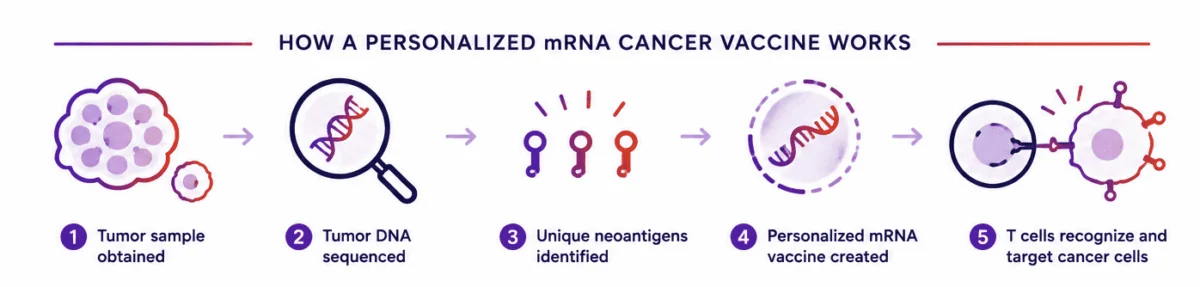
For decades, researchers have pursued an ambitious idea: What if a vaccine could teach a patient’s immune system to recognize their unique cancer? A positive Phase 3 topline readout suggests that vision may be moving closer to reality, heralding a significant advancement in the fight against cancer.
Pharmaceutical giants Merck and Moderna recently announced groundbreaking positive results from a Phase 3 clinical trial evaluating intismeran autogene, an individualized mRNA-based cancer vaccine, in combination with the immune checkpoint inhibitor pembrolizumab (Keytruda®). The trial focused on patients with high-risk melanoma whose tumors had been completely removed by surgery, a population vulnerable to recurrence. The combination therapy demonstrated statistically significant and clinically meaningful improvements, notably extending the time patients lived without their cancer returning, a metric known as recurrence-free survival (RFS). Furthermore, it significantly improved distant metastasis-free survival (DMFS), meaning patients experienced a longer period without the cancer spreading to other parts of the body.
These pivotal results mark the first positive Phase 3 trial of an individualized neoantigen therapy and an mRNA-based cancer therapy. This achievement represents an important milestone for a field that scientists have been diligently advancing for decades, transforming a long-held scientific aspiration into a tangible clinical success. The implications extend beyond melanoma, potentially paving the way for similar personalized approaches across a spectrum of malignancies.
The Science Behind Personalized mRNA Cancer Vaccines
Unlike traditional vaccines designed to prevent infectious diseases, intismeran is a therapeutic cancer vaccine. Its purpose is not to prevent cancer from developing but to treat existing cancer by harnessing the body’s own immune system. Moreover, it departs from the "one-size-fits-all" model, as each patient’s therapy is meticulously designed specifically for their unique biological profile.

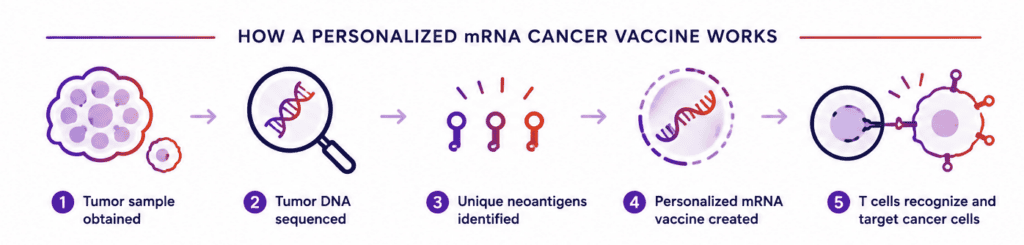
The process begins with a biopsy of the patient’s tumor. Researchers meticulously analyze the tumor’s genetic mutations. Among these mutations, some create distinctive markers known as neoantigens. These neoantigens are crucial because they are found exclusively on cancer cells and not on healthy cells, making them ideal targets for the immune system. Scientists then carefully select these patient-specific neoantigens and encode them into messenger RNA (mRNA). This mRNA acts as a temporary set of instructions, delivered to the patient’s cells, which then produce these neoantigens. In essence, the vaccine provides the immune system with a highly personalized "most wanted" poster, guiding it to identify and target the patient’s specific cancer cells.
However, merely recognizing cancer is only part of the intricate challenge. Tumors are adept at evading immune detection and destruction. They can exploit natural immune checkpoints – molecular "brakes" that normally prevent immune responses from becoming overly aggressive and harming healthy tissues. By activating these checkpoints, tumors effectively suppress the activity of T cells, the powerful immune cells responsible for recognizing and destroying abnormal cells. This is where pembrolizumab (Keytruda) plays its critical role. Keytruda is an immune checkpoint inhibitor that blocks one of these key checkpoints, specifically the PD-1 receptor. By releasing this brake, Keytruda empowers T cells to sustain their robust response against cancer.
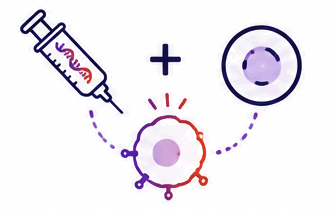
In essence, the individualized mRNA vaccine acts as the "intelligence," showing the immune system precisely what to target, while Keytruda serves as the "empowerment," enabling the immune system to maintain a strong, persistent attack against the cancer cells. This synergistic approach, combining precision targeting with immune system potentiation, underpins the observed clinical benefits.
Melanoma: A High-Risk Cancer Requiring Advanced Solutions
Melanoma, a severe form of skin cancer, originates in melanocytes, the cells that produce melanin. While less common than other skin cancers, it is significantly more dangerous due to its high propensity for metastasis if not detected and treated early. According to the American Cancer Society, an estimated 100,640 new cases of melanoma will be diagnosed in the United States in 2024, leading to approximately 8,290 deaths. For patients with high-risk melanoma that has been surgically removed, the threat of recurrence remains substantial. Even after complete resection, microscopic cancer cells can persist, leading to local recurrence or distant metastasis, underscoring the critical need for effective adjuvant therapies.
Current adjuvant treatments for high-risk melanoma often include immune checkpoint inhibitors or targeted therapies, which have significantly improved outcomes compared to observation alone. However, a substantial proportion of patients still experience recurrence. The positive results from INTerpath-001 suggest that combining a personalized vaccine with an existing checkpoint inhibitor could offer a new, more potent strategy to further reduce this risk, particularly for those with Stage IIB-IV cutaneous melanoma.
The INTerpath-001 Trial: Details and Promising Insights
The global Phase 3 INTerpath-001 trial was a robust study, enrolling 1,137 patients. These participants had Stage IIB-IV cutaneous melanoma, a classification indicating a higher risk of recurrence, and had undergone complete surgical removal of their tumors. Following surgery, patients were randomized to receive either the investigational personalized mRNA vaccine, intismeran autogene, in combination with Keytruda, or Keytruda alone. The primary objective was to assess the reduction in the risk of cancer recurrence.
At a planned interim analysis, the companies confirmed that the combination therapy achieved statistically significant and clinically meaningful improvements in both recurrence-free survival (RFS) and distant metastasis-free survival (DMFS) compared to Keytruda monotherapy. While the exact magnitude of benefit from this Phase 3 trial has not yet been publicly disclosed, previous data from the smaller Phase 2b trial provides an encouraging glimpse. In that earlier study, five-year follow-up data revealed that the combination reduced the risk of recurrence or death by an impressive 49% and the risk of distant metastasis or death by 59% when compared to Keytruda alone. Should the Phase 3 data demonstrate a similar or even greater benefit, it would represent a transformative shift in the standard of care for this patient population.
A Legacy of Immunotherapy: The Convergence of Decades of Research
For the Cancer Research Institute (CRI), this milestone holds particular resonance, representing the culmination of decades of foundational investment in cancer immunology. Long before cancer immunotherapy became a cornerstone of modern oncology, CRI championed the fundamental science necessary to understand how the immune system recognizes and responds to cancer.
Cancer vaccines have been an integral part of CRI’s narrative from its inception. In the 1950s, CRI’s founding scientific and medical director, Dr. Lloyd J. Old, played a pivotal role in demonstrating that the tuberculosis vaccine Bacillus Calmette-Guérin (BCG) could stimulate an immune response against tumors in mice. Decades later, BCG became the first active immunotherapy approved by the U.S. Food and Drug Administration (FDA) for cancer, specifically for bladder cancer. Dr. Old dedicated much of his distinguished career to the profound idea that scientists could identify unique features of cancer cells – what we now call neoantigens – and leverage them to direct a targeted immune response against tumors.
In 2001, CRI, in collaboration with the Ludwig Institute for Cancer Research, established the Cancer Vaccine Collaborative (CVC). This global academic network was specifically designed to accelerate the development and rigorous testing of therapeutic cancer vaccines. Over its first decade, the CVC conducted nearly 60 early-phase trials, diligently exploring not only which cancer targets could elicit an immune response but also what additional signals might be required to make those responses stronger and more durable.
Concurrently, another revolution in cancer immunology was taking shape. CRI began funding research in the laboratory of Dr. James P. Allison in 1992. His seminal discoveries unveiled how blocking immune checkpoints could effectively release the natural "brakes" on T cells, enabling them to respond more effectively to cancer. His pioneering work ultimately led to the launch of checkpoint blockade as an entirely new therapeutic approach to cancer treatment, earning him the 2018 Nobel Prize in Physiology or Medicine.
More recently, CRI also recognized the foundational work behind mRNA-based therapies. In 2021, CRI awarded the prestigious William B. Coley Award to Katalin Karikó, Drew Weissman, Uğur Şahin, and Özlem Türeci for their pivotal contributions to mRNA-based approaches in both cancer and infectious disease. Karikó and Weissman later received the 2023 Nobel Prize in Physiology or Medicine for their discoveries that enabled the rapid and effective development of mRNA vaccines against COVID-19, dramatically validating the platform’s potential.
Today, all these distinct scientific paths are converging. The individualized cancer vaccine provides the immune system with precise information about what to recognize, while checkpoint blockade creates the optimal conditions for immune cells to respond effectively and persist in their fight. This powerful combination brings together two critical areas of cancer immunology that CRI has helped advance for more than 70 years, culminating in the robust evidence presented by the INTerpath-001 results.
Expert Reactions and Industry Outlook
The announcement has been met with widespread optimism from the scientific and medical communities. Executives from both Merck and Moderna have hailed the results as a "watershed moment" and a "potential paradigm shift" in cancer treatment. Dr. Dean Y. Li, President of Merck Research Laboratories, likely emphasized the company’s commitment to advancing innovative treatments and the potential for this combination to significantly improve patient outcomes. Similarly, Stéphane Bancel, CEO of Moderna, would likely highlight the validation of their mRNA platform beyond infectious diseases and the immense promise of personalized cancer therapies.

Leading oncologists and researchers have also expressed cautious excitement. Dr. Jedd Wolchok, a prominent melanoma expert, might remark on the transformative potential for patients facing high recurrence rates, while also stressing the importance of seeing the full data, including overall survival and detailed safety profiles. Patient advocacy groups are expected to welcome the news as a beacon of hope for individuals battling melanoma, underscoring the continuous need for accessible and effective treatment options. This breakthrough validates the long-term vision of personalized medicine, moving beyond generalized treatments towards therapies tailored to an individual’s unique disease.
Challenges on the Horizon: From Lab to Clinic at Scale
While the findings are undeniably exciting, significant work remains. Intismeran is still an investigational therapy and has not yet received regulatory approval for routine clinical use. Merck and Moderna have so far released only topline Phase 3 results, and the detailed data, including comprehensive safety profiles and secondary endpoints, await public presentation at upcoming scientific conferences and publication in peer-reviewed journals. Critically, the trial is also continuing to evaluate other key outcomes, most notably overall survival, which will provide crucial long-term insights into whether the combination ultimately helps patients live longer.
Beyond the scientific data, practical challenges loom. Because intismeran is an individualized therapy, every patient’s tumor must undergo genomic analysis, followed by the bespoke manufacturing of a vaccine specifically for them. If personalized cancer vaccines become part of routine clinical care, researchers, healthcare systems, and policymakers will need to address complex logistical considerations, including the time required for tumor analysis and vaccine production, the necessary infrastructure for scaling manufacturing, ensuring equitable access across diverse patient populations, and managing the inherent costs associated with highly individualized treatments. These challenges will necessitate innovative solutions in supply chain management, healthcare economics, and regulatory frameworks.
The Road Ahead: Expanding Beyond Melanoma
The success in melanoma is a powerful proof-of-concept, but it is only one piece of a much larger story. Intismeran is currently being investigated in several other cancer types, indicating the broader applicability of the personalized neoantigen approach. Researchers worldwide are simultaneously exploring diverse vaccine technologies, identifying novel tumor targets, and evaluating various combination treatments. Future studies will be essential to determine how broadly individualized cancer vaccines can benefit patients across different tumor types and stages, including solid tumors like lung, colorectal, and bladder cancers, where neoantigen loads can be significant.

This breakthrough ignites new hope for precision oncology, moving beyond broad-spectrum treatments to highly tailored interventions. The modularity and speed of mRNA technology, demonstrated so effectively during the COVID-19 pandemic, position it as a powerful platform for rapid development and adaptation in the cancer space.
Decades of Discovery, a New Chapter
Scientific breakthroughs rarely emerge from a single experiment. They are the product of years, often decades, of incremental advancements, where one discovery lays the groundwork for the next. The idea that the immune system could recognize cancer was once met with skepticism. Similarly, the concept of releasing immune checkpoints to empower T cells to respond to tumors was revolutionary. And the possibility of identifying mutations unique to an individual’s cancer to create a personalized vaccine seemed like science fiction.
Today, these bold ideas have converged, culminating in the success of a Phase 3 clinical trial. This journey underscores why organizations like the Cancer Research Institute have invested in cancer immunology for over 70 years: to identify and support exceptional early-stage science, to provide researchers with the resources to pursue ambitious ideas, and to build the foundational knowledge that ultimately translates into better, more effective treatments for patients.
The positive results from INTerpath-001 do not mark the end of the cancer vaccine story. Instead, they signify the beginning of an important new chapter, one filled with immense promise for transforming cancer care and offering renewed hope to millions of patients worldwide. This milestone is a testament to the power of scientific persistence, collaborative innovation, and the unwavering belief in the body’s innate ability to fight disease when given the right tools.
Sources
- Moderna cancer vaccine stops melanoma returning: what’s next for personalized treatments? Nature, August 2026
- Merck and Moderna Announce Phase 3 INTerpath-001 Trial of Intismeran Autogene Plus KEYTRUDA® Met Endpoints of Recurrence-Free Survival (RFS) and Distant Metastasis-Free Survival (DMFS) in Patients With Completely Resected Stage IIB-IV Melanoma Merck, August 2026
- The Cancer Vaccine Collaborative: a new model of coordinated discovery Cancer Immunology, May 2012
- American Cancer Society. Cancer Facts & Figures 2024. Atlanta: American Cancer Society; 2024.
