
 By Suherman Candra Maholtra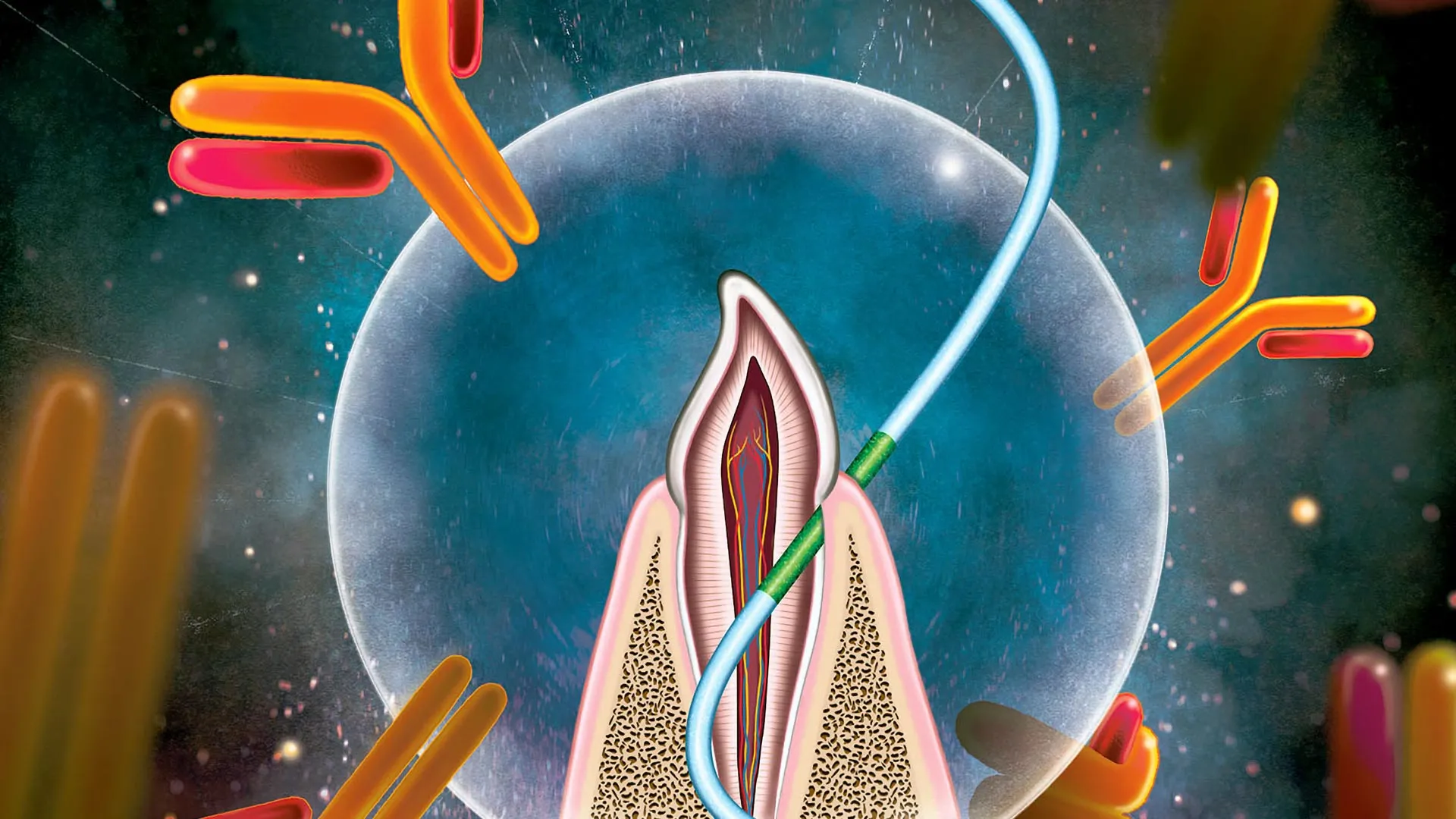
In a significant advancement for the field of nanomedicine and immunology, a multidisciplinary team of researchers has successfully demonstrated a revolutionary vaccine delivery system that utilizes common dental floss to target the unique tissue located between the teeth and gums. This novel approach, tested in animal models and evaluated for human practicality, targets the junctional epithelium to stimulate a robust immune response not only in the bloodstream but also across the body’s mucosal surfaces, including the lining of the lungs and nasal passages. The findings, published in the journal Nature Biomedical Engineering, suggest a future where needle-free vaccinations could provide superior protection against respiratory pathogens like influenza and COVID-19 by fortifying the body’s first line of defense.
The Critical Role of Mucosal Immunity in Disease Prevention
To understand the significance of this discovery, one must first look at how the human immune system interacts with pathogens. Most conventional vaccines are administered via intramuscular injection. While highly effective at generating systemic immunity—antibodies that circulate in the bloodstream—injections often fall short in producing high concentrations of antibodies on mucosal surfaces. These surfaces, which include the respiratory, gastrointestinal, and urogenital tracts, are the primary entry points for the vast majority of human pathogens.
"Mucosal surfaces are important because they are a source of entry for pathogens, such as influenza and COVID," explained Harvinder Singh Gill, the Ronald B. and Cynthia J. McNeill Term Professor in Nanomedicine at North Carolina State University and the study’s corresponding author. Gill noted that while systemic antibodies are vital for preventing severe disease once a virus has taken hold, they are less effective at preventing the initial infection at the site of entry.
When a vaccine is delivered directly to a mucosal surface, the body responds by producing secretory IgA antibodies in those specific areas. This creates a localized "shield" that can neutralize viruses before they ever penetrate the deeper tissues of the body. By utilizing the oral cavity’s unique anatomy, the research team sought to bridge the gap between ease of delivery and the necessity of a mucosal immune response.
Anatomy of the Gateway: The Junctional Epithelium
The cornerstone of this new delivery method is a specific and often overlooked part of oral anatomy: the junctional epithelium. In the human mouth, the epithelium serves as a protective barrier, much like the skin. Most epithelial tissues, such as those in the gut or the lungs, are tightly packed and designed to prevent the transit of foreign substances into the bloodstream.
However, the junctional epithelium, located at the very base of the pocket between the tooth and the gum (the gingival sulcus), is uniquely permeable. Unlike the "tough" epithelium found on the surface of the gums or the roof of the mouth, the junctional epithelium lacks the dense barrier features of other tissues. This natural "leakiness" allows the body to release immune cells into the mouth to combat oral bacteria.
The researchers hypothesized that this biological "two-way street" could be exploited. If immune cells can exit through this tissue, vaccine molecules should, theoretically, be able to enter. "Because the junctional epithelium is more permeable than other epithelial tissues—and is a mucosal layer—it presents a unique opportunity for introducing vaccines to the body in a way that will stimulate enhanced antibody production across the body’s mucosal layers," Gill said.
Experimental Methodology: From Mice to Floss Picks
To test their hypothesis, the research team, which included experts from North Carolina State University, Texas Tech University, and Emory University, conducted a series of experiments using lab mice. The researchers applied a peptide-based influenza vaccine to unwaxed dental floss and performed a flossing procedure on the mice’s teeth to ensure the vaccine reached the junctional epithelium.
The study compared the "floss-based" delivery against two other common mucosal delivery routes:
- Intranasal Delivery: Vaccines administered through the nose.
- Sublingual Delivery: Vaccines placed under the tongue, currently considered the gold standard for oral mucosal vaccination.
The results were definitive. The flossing technique produced an antibody response on mucosal surfaces that was far superior to the sublingual method. Furthermore, the floss-based delivery provided protection against the flu virus that was comparable to intranasal delivery, which is widely regarded as the most effective way to stimulate respiratory immunity.
The scope of the study was then expanded to see if the method worked for various types of vaccine technologies. The researchers tested four distinct classes:
- Peptides: Short chains of amino acids.
- Proteins: Larger, more complex molecules.
- Inactivated Viruses: Killed versions of a pathogen.
- mRNA: The technology used in prominent COVID-19 vaccines.
In every instance, the junctional epithelium delivery method successfully triggered robust antibody responses both in the blood and on mucosal surfaces. A notable finding was that the immune response remained consistent even if the subjects consumed food or water immediately after the "flossing" procedure, suggesting the vaccine is absorbed rapidly and effectively.
Safety Advantages Over Nasal Delivery
While intranasal vaccines (like FluMist) exist, they face significant hurdles. The nasal cavity has its own barrier features that can prevent the efficient uptake of many vaccine formulations. More importantly, there are persistent safety concerns regarding intranasal delivery because of the proximity of the nasal cavity to the brain. There is a theoretical risk that vaccine components could travel along the olfactory nerve and reach the central nervous system.
The flossing method bypasses these concerns entirely. "Vaccination via the junctional epithelium offers no such risk," Gill stated. By targeting the gums, the researchers can achieve the benefits of nasal-like mucosal immunity without the anatomical risks associated with the upper respiratory tract.
Practical Application and Human Feasibility
Recognizing that manual flossing with vaccine-coated string might be difficult for the general public to perform accurately, the team pivoted toward a more user-friendly tool: the floss pick. These plastic devices, which hold a small segment of floss taut between two prongs, allow for better reach and control.
To evaluate whether humans could effectively target their own junctional epithelium, the researchers recruited 27 study participants. The participants were given floss picks coated with a harmless, fluorescent food dye. After a brief explanation of the goal—to deposit the "vaccine" (dye) into the gum pocket—the participants used the picks.
Subsequent imaging revealed that approximately 60% of the dye was successfully deposited into the gingival sulcus. This high rate of success among non-professionals suggests that the method is not only scientifically sound but also practically viable for self-administration or administration by minimally trained personnel.
Broader Implications and Future Challenges
The potential implications of a floss-based vaccine are vast. For global health, this could mean a reduction in the "cold chain" requirements often associated with needles and syringes. It also offers a solution for "needle phobia," a documented phenomenon that contributes to vaccine hesitancy in a significant portion of the global population.
"It would be easy to administer, and it addresses concerns many people have about being vaccinated with needles," Gill noted. "And we think this technique should be comparable in price to other vaccine delivery techniques."
However, the researchers are careful to note that several hurdles remain before this reaches clinical reality. The primary limitation is age; the technique is not applicable to infants or toddlers who have not yet developed teeth, as the junctional epithelium is created by the eruption of teeth through the gums.
Additionally, the researchers need to investigate how oral health impacts the vaccine’s efficacy. "We would need to know more about how or whether this approach would work for people who have gum disease or other oral infections," Gill said. Conditions like gingivitis or periodontitis alter the tissue of the gum pocket and could potentially interfere with vaccine absorption or trigger unintended inflammatory responses.
Chronology of Development and Next Steps
The journey of this research began at Texas Tech University, where Rohan Ingrole, the paper’s first author, conducted much of the initial work as a Ph.D. student under Gill. The project eventually moved to North Carolina State University as Gill transitioned his lab. The collaboration also involved researchers from Emory University, highlighting the interdisciplinary nature of the project.
The study received financial backing from the National Institutes of Health (NIH) and the Whitacre Endowed Chair in Science and Engineering at Texas Tech. Gill, Ingrole, and co-author Akhilesh Kumar Shakya have already filed for a patent related to the technology.
The next phase of research will likely involve larger animal trials to refine the dosage and stability of various vaccine types on the floss material. If these trials continue to show positive results, the team plans to move toward human clinical trials. This would involve testing actual vaccines—rather than dyes—in human volunteers to measure real-world antibody production.
As the world continues to grapple with the evolution of respiratory viruses, the development of a delivery system that is safe, effective, and easy to distribute could be a game-changer. By turning a daily hygiene habit into a clinical tool, these researchers may have found a way to make the next generation of vaccines more accessible and more effective than ever before.
