
 By admin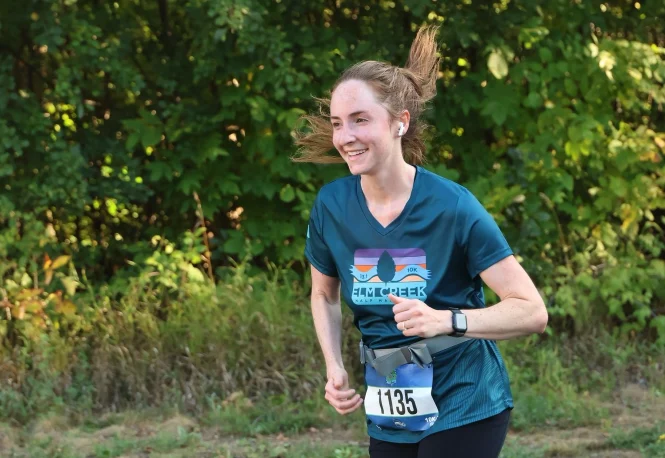
The Medtronic Twin Cities Marathon weekend has long served as a cornerstone of the professional and amateur athletic calendar in the Upper Midwest, drawing tens of thousands of participants to the scenic corridors connecting Minneapolis and St. Paul. While the event is renowned for its competitive field and its designation as "The Most Beautiful Urban Marathon in America," it also functions as a massive platform for philanthropic mobilization. Among the various charity groups represented, Team CCRF—the athletic fundraising arm of the Children’s Cancer Research Fund—stands out as a primary beneficiary of the weekend’s collective energy. This year, three specific runners—Rachael Blair, Greg Kaiser, and Ryan Fahey—embody the diverse motivations that drive the intersection of endurance sports and medical advocacy, highlighting the critical need for continued investment in pediatric oncology research.
The Evolution of the Medtronic Twin Cities Marathon
To understand the significance of Team CCRF’s participation, one must look at the historical and cultural weight of the Medtronic Twin Cities Marathon (TCM). Established in 1982 through the merger of the St. Paul and Land of Lakes Marathons, the event has grown from a local race into a world-class weekend featuring a 5K, 10K, 10-mile, and the flagship 26.2-mile marathon. The course, which winds past the Chain of Lakes in Minneapolis and culminates on the steps of the State Capitol in St. Paul, attracts approximately 30,000 runners annually.
Beyond the physical challenge, the marathon is an economic and social engine for the Twin Cities. It generates millions of dollars in local revenue and, perhaps more importantly, serves as a high-visibility venue for non-profit organizations. For groups like the Children’s Cancer Research Fund (CCRF), the event is an opportunity to bridge the gap between public awareness and the rigorous financial demands of scientific discovery. Since its inception, CCRF has raised over $500 million for research, much of it through community-driven initiatives like Team CCRF.
Rachael Blair: Bridging Clinical Care and Community Advocacy
Among the athletes representing Team CCRF is Rachael Blair, a medical physicist specializing in radiation oncology. Blair’s involvement underscores the professional connection many participants have to the cause. In her daily work, she operates at the intersection of technology and patient care, ensuring that radiation treatments are delivered with the precision required to target malignant cells while sparing healthy tissue—a delicate balance that is particularly vital in pediatric cases where long-term side effects can impact a child’s development for decades.
Blair’s decision to run the half marathon is rooted in her firsthand observations of the hardships faced by families navigating the oncology ward. "Being able to participate in the race while representing Children’s Cancer Research Fund makes the experience even more meaningful," Blair noted. For her, the act of running serves as both a personal reprieve from the high-stress environment of radiation oncology and a public extension of her professional mission.
Blair has set a competitive goal for the half marathon, aiming to finish the 13.1-mile course in under two hours. Her training regimen involves navigating the very Minnesota trails that the marathon celebrates, turning her preparation into a tribute to the local landscape and the community she serves. By leveraging her professional network for fundraising, Blair highlights a key trend in modern philanthropy: the use of "peer-to-peer" fundraising to democratize support for medical research.
Greg Kaiser: A Legacy of Survival and Mascot Advocacy
While Blair represents the clinical side of the fight against cancer, Greg Kaiser represents the deeply personal, multi-generational impact of the disease. Kaiser’s connection to the Children’s Cancer Research Fund began years ago when his daughter, Liz, was diagnosed with osteosarcoma, a type of bone cancer that primarily affects children and young adults. Today, Liz is a 20-year survivor, a milestone that serves as a testament to the advancements in pediatric treatments funded by organizations like CCRF.
Kaiser’s history with CCRF is extensive and varied. He has transitioned from a parent of a patient to a volunteer, a fundraiser, and even the man behind the mask of C.C. Bear, the organization’s official mascot. This year, Kaiser is participating in the TC 10 Mile, a race often referred to as the "Short-Cut to the Capitol."
"Fundraising gives my running a purpose beyond completing the race," Kaiser stated, reflecting on his second year as a member of Team CCRF. For Kaiser, the race is less about personal bests and more about visibility. His participation serves as a living reminder of the long-term success stories that research makes possible. By participating in the 10-mile event, he aims to engage the public and encourage donations that will fund the next generation of treatments, ensuring that other families can reach the same 20-year survival milestones that his daughter has achieved.
Ryan Fahey: From the Laboratory to the Podium
The third runner, Ryan Fahey, provides a direct link between the funds raised and the scientific work being performed. A student research assistant at the University of Minnesota, Fahey works in a division where several projects are funded directly by CCRF. His work involves investigating the underlying causes of leukemia—the most common form of childhood cancer—and projecting future incidence rates of pediatric hepatoblastoma, a rare liver cancer.
Fahey’s participation in the half marathon is characterized by high-performance goals. He is aiming for a finish time of under 1 hour and 26 minutes, a pace that would likely place him near the top of his age group and potentially on the podium. For Fahey, the race is an opportunity to "leverage his community" to support both his career aspirations in research and his passion for distance running.
His presence on Team CCRF highlights a critical aspect of the organization’s impact: the support of early-career scientists. By funding research assistants and junior faculty, CCRF ensures a pipeline of talent remains focused on pediatric oncology, a field that often receives less federal funding compared to adult cancers.
The Funding Gap in Pediatric Cancer Research
The efforts of Blair, Kaiser, and Fahey are set against a backdrop of significant financial challenges in the medical community. According to data from the National Cancer Institute (NCI), pediatric cancer research receives only about 4% of the total federal budget for cancer research. This disparity leaves a substantial "funding gap" that must be filled by private organizations and individual donors.
Childhood cancer is not a single disease but a collection of more than a dozen different types and hundreds of subtypes. Because these diseases are relatively rare compared to adult cancers like breast or lung cancer, pharmaceutical companies often find less financial incentive to develop pediatric-specific drugs. Consequently, many treatments used for children today were originally developed for adults and can be unnecessarily harsh on developing bodies.
Research funded by CCRF focuses on three primary pillars:
- Next-Generation Treatments: Developing therapies that are more effective and less toxic.
- Survivorship: Addressing the long-term health challenges faced by survivors, such as heart disease or secondary cancers.
- Health Disparities: Ensuring that children from all backgrounds have equal access to life-saving treatments.
Analysis of Implications: The Power of Charity Teams
The participation of Team CCRF in the Medtronic Twin Cities Marathon is indicative of a broader shift in how non-profits operate. Traditional gala-style fundraising is increasingly being supplemented or replaced by "active philanthropy." Events like the TCM provide a turnkey infrastructure for charities to engage supporters in a way that promotes health, community, and a sense of shared accomplishment.
For the runners, the "charity bib" model provides an added layer of accountability. Training for a marathon or a half marathon requires months of discipline; knowing that donors have contributed money based on your commitment provides a psychological edge during the difficult middle miles of a race. For the organization, these runners act as brand ambassadors, wearing the CCRF logo through the streets of Minneapolis and St. Paul, reaching thousands of spectators who might otherwise be unaware of the organization’s mission.
Conclusion: Every Step Toward a Cure
As the Medtronic Twin Cities Marathon weekend approaches, the stories of Rachael Blair, Greg Kaiser, and Ryan Fahey serve as a microcosm of the larger battle against childhood cancer. Their journeys—one clinical, one personal, and one scientific—converge on the pavement of the Twin Cities, united by a common goal that transcends the finish line.
The data suggests that while survival rates for some childhood cancers have improved significantly—rising from less than 20% in the 1950s to over 80% today—the work is far from finished. Rare subtypes still carry grim prognoses, and the quest for "zero toxicity" treatments remains the gold standard for researchers.
When the starting gun fires and Team CCRF begins its trek toward the State Capitol, the participants will be running for more than just medals. They will be running to ensure that the University of Minnesota labs remain funded, that medical physicists have the tools they need to treat patients safely, and that more fathers like Greg Kaiser can celebrate decades of survivorship for their children. In the high-stakes world of pediatric oncology, every mile logged and every dollar raised represents a tangible step toward a future where childhood cancer is a relic of the past.
