
 By Suherman Candra Maholtra
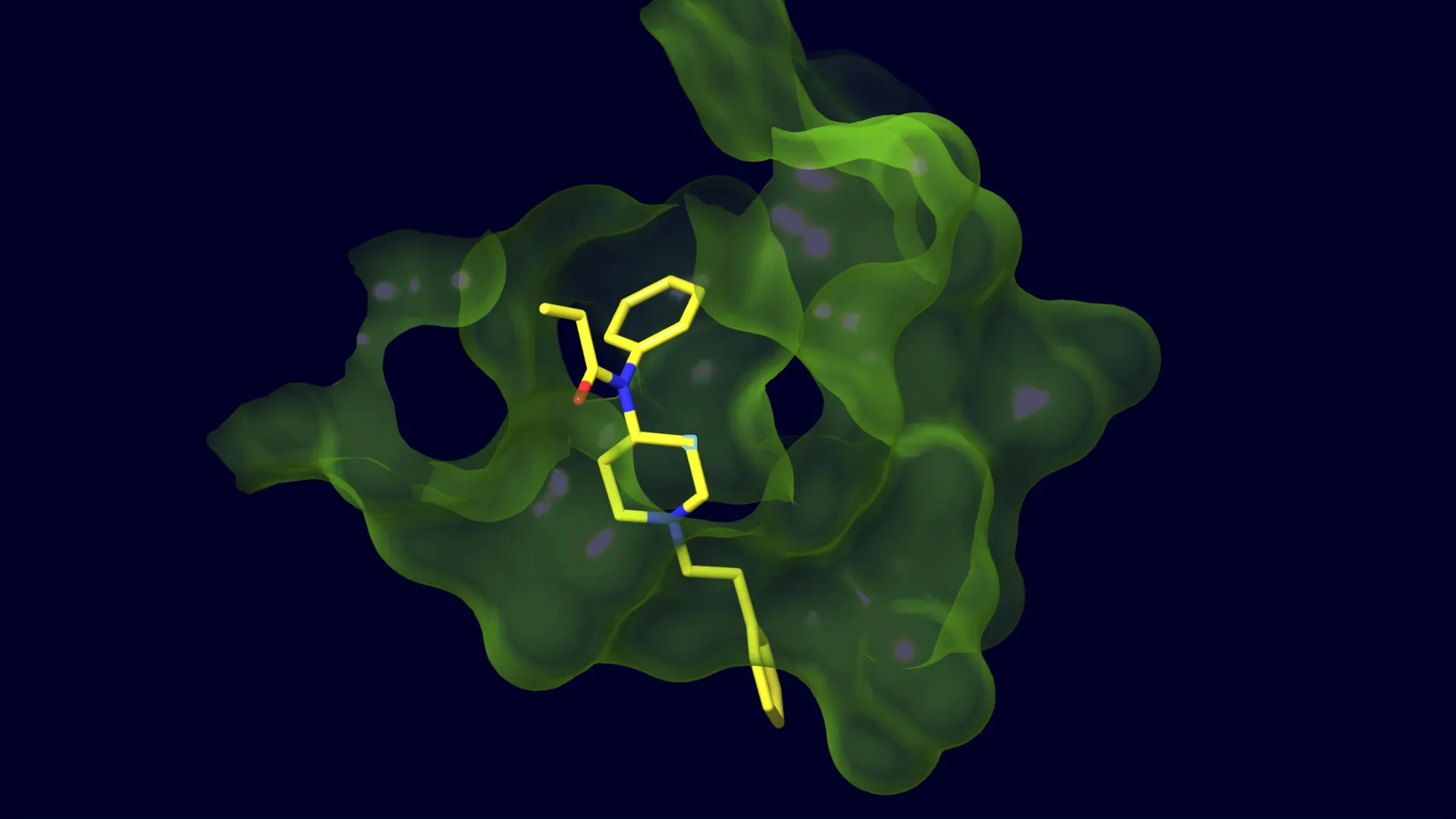
The United States is currently grappling with a public health catastrophe of unprecedented proportions, driven largely by the proliferation of synthetic opioids. Fentanyl, a potent synthetic opioid, has emerged as the primary catalyst for this crisis, claiming more lives annually than motor vehicle accidents and firearm-related incidents combined. While the medical community has long relied on reactive measures such as naloxone to reverse overdoses, these interventions require immediate administration and do not prevent the drug from reaching the central nervous system in the first place. In a significant shift in strategy, researchers at Scripps Research have announced the development of an experimental vaccine designed to intercept fentanyl and its numerous "designer" analogues in the bloodstream, preventing them from crossing the blood-brain barrier and triggering fatal respiratory depression.
The breakthrough, recently detailed in the Journal of Medicinal Chemistry, represents a paradigm shift in immunopharmacotherapy. By training the human immune system to recognize the broader molecular architecture of the fentanyl class, rather than just one specific iteration of the drug, the Scripps team has created a tool that could theoretically neutralize future variants before they even enter the illicit market. This proactive approach aims to provide a long-lasting shield for high-risk populations, offering a new layer of defense in the ongoing battle against opioid-related mortality.
The Evolution of the Synthetic Opioid Crisis
To understand the significance of the Scripps Research vaccine, one must first examine the sheer scale of the fentanyl epidemic. According to data from the Centers for Disease Control and Prevention (CDC), synthetic opioids—primarily illicitly manufactured fentanyl—are involved in nearly 70% of all overdose deaths in the United States. In 2023 alone, the death toll from synthetic opioids exceeded 74,000, contributing to a decline in overall life expectancy.
Fentanyl is exceptionally dangerous due to its high potency; it is approximately 50 times stronger than heroin and 100 times stronger than morphine. A dose as small as two milligrams—roughly equivalent to a few grains of salt—can be lethal for an average adult. When fentanyl enters the brain, it binds to mu-opioid receptors in the brainstem, which controls autonomic functions such as heart rate and breathing. In high doses, the drug overwhelms these receptors, suppressing the signal to breathe and leading to hypoxia, permanent brain damage, or death within minutes.
Furthermore, the illicit drug market has evolved. Manufacturers often produce "designer drugs"—slight chemical variations of fentanyl—to bypass legal regulations and avoid detection in standard toxicology screenings. Variants such as carfentanil, which is used as a tranquilizer for large animals like elephants, are even more potent than fentanyl, making the task of emergency responders and law enforcement increasingly difficult.
A Novel Mechanism of Action: Immunizing Against a Class
The Scripps Research team, led by Kim Janda, the Ely R. Callaway, Jr. Professor of Chemistry, has spent decades researching vaccines for substance use disorders. While previous efforts focused on vaccines for heroin or specific fentanyl structures, the new study addresses the inherent volatility of the synthetic opioid market.
Traditional vaccine design often utilizes a "hapten"—a small molecule that mimics the drug—attached to a larger carrier protein to stimulate an immune response. However, this method typically produces antibodies that are highly specific. If a drug trafficker alters the chemical structure of fentanyl slightly, a specific vaccine might no longer recognize the new variant.
"The way the fentanyl landscape is evolving, the black-market drug makers are constantly coming up with new versions to skirt regulations and avoid detection in standard screenings," says Professor Janda. "We need countermeasures that are going to work against all these future variants at once, not just one at a time."
To overcome this, the researchers utilized an unconventional molecular design. Instead of using a direct mimic of fentanyl, they employed a molecule with a fundamentally different core structure that nonetheless shared key spatial characteristics with the entire fentanyl class. This "radically reconfigured molecular architecture" was designed to elicit antibodies that recognize the general "shape" or signature of fentanyl-related compounds.
Methodology and Preclinical Findings
The study’s first author, Arran Stewart, a research associate in the Janda lab, noted that the team was initially uncertain if this departure from conventional wisdom would yield results. The experimental vaccine was tested on mouse models, with the subjects receiving four doses over an eight-week period.
The results were statistically significant and visually striking. The vaccinated mice produced a robust antibody response. When these antibodies were tested against various fentanyl analogues, they demonstrated high affinity for:
- Fentanyl: The primary synthetic opioid.
- Carfentanil: A variant up to 100 times more potent than fentanyl.
- China White (alpha-methylfentanyl): A common and deadly illicit variant.
- Acetylfentanyl and Furanylfentanyl: Frequently appearing designer drugs in the illicit supply.
Crucially, the vaccine showed no reactivity with other medically necessary opioids. Morphine, oxycodone, remifentanil, and alfentanil remained unaffected by the vaccine-induced antibodies. This ensures that if a vaccinated individual requires pain management in a hospital setting (using non-fentanyl opioids) or emergency surgery, the vaccine would not interfere with standard medical care.
In behavioral and physiological testing, vaccinated mice were protected from the lethal effects of high-dose fentanyl. While unvaccinated mice suffered from severe respiratory depression and immobility, the vaccinated group maintained nearly normal breathing patterns. Most importantly, post-exposure analysis revealed that fentanyl levels in the brains of vaccinated mice were 70% lower than those in the control group. The antibodies effectively "mopped up" the drug in the bloodstream, preventing it from crossing the blood-brain barrier.
Chronology of Development and Future Clinical Pathway
The development of this vaccine is the culmination of years of iterative research at Scripps Research.
- Early 2010s: The Janda lab successfully develops vaccine candidates for heroin and nicotine, proving the feasibility of immunopharmacotherapy.
- 2016-2020: As fentanyl deaths surge, the focus shifts toward synthetic opioids. The team develops a fentanyl-specific vaccine that enters early testing phases.
- 2021-2023: Recognizing the rise of designer analogues, the team begins experimenting with "broad-spectrum" molecular architectures.
- 2024: Publication of the findings in the Journal of Medicinal Chemistry, demonstrating successful protection against multiple variants.
The next phase for the Scripps vaccine involves transitioning from animal models to human clinical trials. This process requires rigorous safety testing to ensure the vaccine does not produce adverse autoimmune reactions. If the vaccine receives FDA approval, it would be administered as a series of injections, providing several months of protection per cycle.
Public Health Implications and Expert Analysis
The potential applications for a broad-spectrum fentanyl vaccine are diverse. Public health experts suggest that such a vaccine could be a vital tool for:
- Individuals in Recovery: For those transitioning out of treatment programs, the risk of relapse is high. A vaccine could provide a "safety net," ensuring that a single slip-up does not result in a fatal overdose.
- First Responders: Police officers, paramedics, and healthcare workers are at risk of accidental exposure to high-potency synthetic opioids during raids or medical emergencies.
- High-Risk Communities: In areas where the drug supply is heavily contaminated with fentanyl, the vaccine could act as a preventative measure similar to a flu shot.
However, researchers emphasize that the vaccine is not a "silver bullet." It does not address the underlying psychological or social drivers of addiction. Instead, it is a biological tool intended to reduce the mortality rate, giving individuals the time needed to pursue long-term recovery.
The broader scientific implication of this study is the realization that the immune system can be "trained" to recognize entire classes of synthetic chemicals. This could lead to similar vaccines for other emerging drug classes, such as synthetic nitazenes, which have recently begun appearing in the illicit market.
Financial and Institutional Support
The research conducted by Janda and his team was supported by the Shadek Family Foundation, highlighting the importance of private philanthropy in funding high-risk, high-reward scientific endeavors. The study, titled "Redefining Drug Immune Recognition: A Radically Reconfigured Molecular Architecture Enables Broad Fentanyl-Class Protection," was a collaborative effort involving Lisa Eubanks, Bin Zhou, and Rachel Steinhardt.
As the fentanyl crisis continues to evolve, the work at Scripps Research offers a rare glimmer of hope. By shifting the focus from reaction to prevention, and from specific drugs to entire chemical classes, scientists are finally gaining the upper hand against the clandestine chemists who have fueled the deadliest drug epidemic in American history. "The public health potential here is significant," Janda concludes. "But so is the lesson that we can design vaccines that recognize an entire drug class, not just a singular drug."
