
 By Gabriel Paijo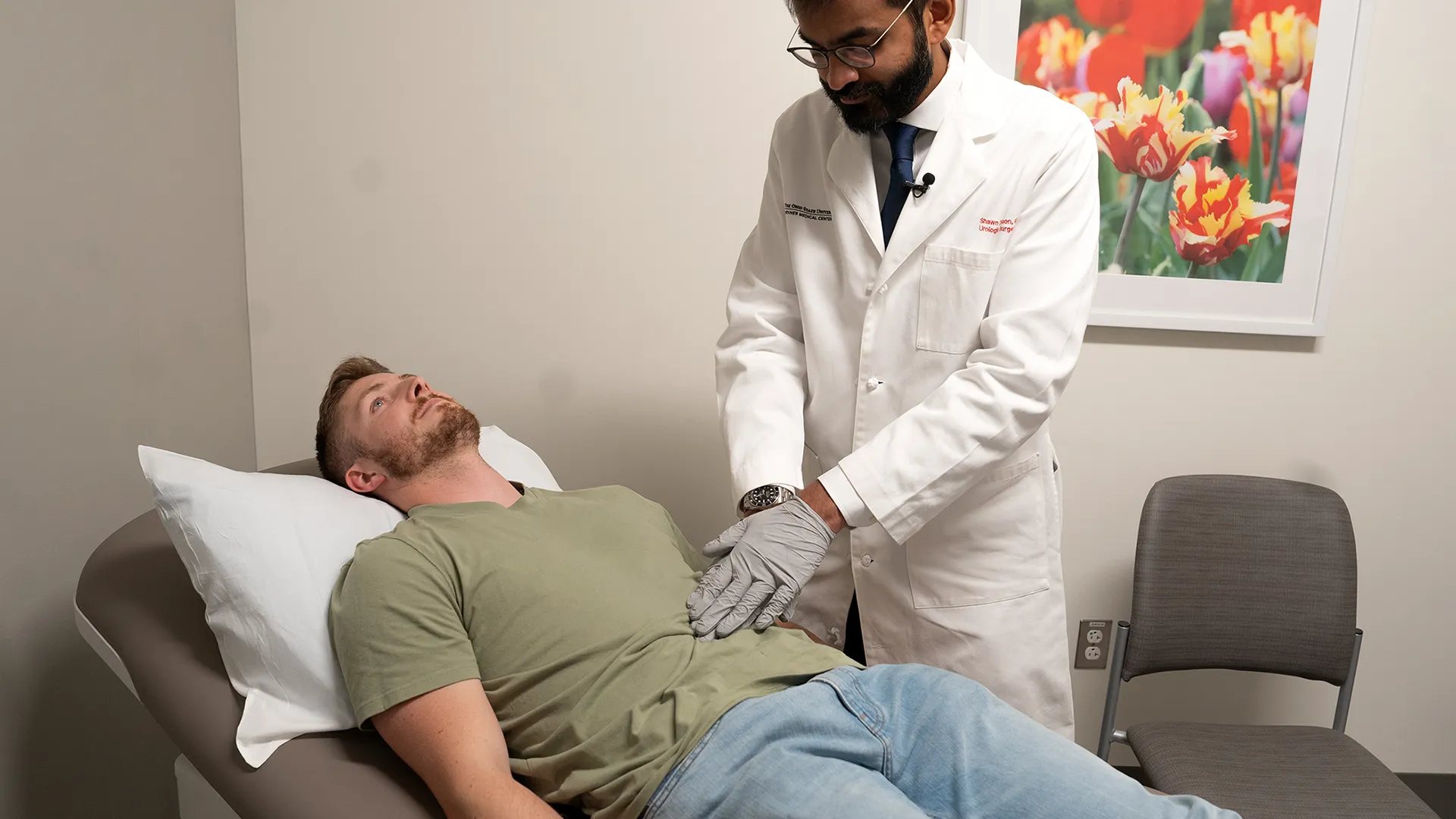
A comprehensive national survey commissioned by The Ohio State University Comprehensive Cancer Center – Arthur G. James Cancer Hospital and Richard J. Solove Research Institute (OSUCCC – James) has highlighted a critical gap in public health literacy concerning testicular cancer. Despite being the most common form of cancer among young men, the survey results indicate that a vast majority of Americans are misinformed about the age groups most at risk, the symptoms of the disease, and the appropriate timeline for preventative screenings. With approximately 10,000 new cases diagnosed annually in the United States according to American Cancer Society estimates, oncologists are calling for a renewed focus on education for men in their twenties and thirties.
The Knowledge Gap: A Demographic Misalignment
The most striking finding of the OSUCCC – James survey is the profound lack of awareness regarding the peak age for testicular cancer incidence. Only 13% of U.S. adults—roughly one in ten—correctly identified that testicular cancer most commonly affects men under the age of 40. In reality, the disease is most prevalent among men between the ages of 20 and 40, a period when many individuals are least likely to be engaged with the healthcare system for routine screenings.
This lack of awareness is compounded by a widespread misunderstanding of when screening should occur. The survey found that 65% of respondents believe that an evaluation for testicular cancer should be part of an annual physical examination only after the age of 40. This misconception aligns testicular cancer with more age-related malignancies, such as prostate or colon cancer, which typically see a sharp increase in incidence later in life. However, for testicular cancer, waiting until age 40 to begin regular checks could mean missing the window for the most effective early detection.
Dr. Shawn Dason, a urologic oncologist at the OSUCCC – James and associate clinical professor at the Ohio State College of Medicine, noted that the results reflect a broader trend in men’s health. "In my experience, a lot of men are surprised that testicular cancer is most common among young men," Dason said. "It’s something you’re just not expecting in your twenties or thirties. A lot of young men’s focus might be on developing their career, their day-to-day life. That’s a very different track of mind than perhaps your health."
Understanding the Disease: Symptoms and Detection
One of the most dangerous myths identified by the survey is the belief that testicular cancer is always accompanied by pain. Among respondents aged 18 to 49, nearly 18% incorrectly agreed that symptoms are always painful. This misconception can lead to a dangerous delay in seeking medical attention, as many patients may ignore a painless lump or a change in testicular size, assuming that the absence of pain equates to an absence of danger.
Dr. Dason emphasized that the primary indicator of testicular cancer is often a subtle physical change rather than acute discomfort. "Testicular cancer does not typically come with painful symptoms," he explained. "That’s why routine self-exams are so important to detect any lumps or changes to the testicle. If you feel something out of the ordinary, like a lump or bump, or if the testicle changes in size, call your doctor."
The survey did offer some encouraging data: 63% of participants correctly recognized that testicular cancer is highly curable if detected in its early stages. Furthermore, 54% of respondents were aware that monthly self-checks are the recommended frequency for detection. However, the disconnect remains between knowing that early detection is important and understanding who exactly needs to be performing these checks.
The Biological Context and Survival Rates
Testicular cancer primarily originates in the germ cells—the cells that produce sperm. There are two main types: seminomas and non-seminomas. Seminomas tend to grow more slowly and are highly sensitive to radiation therapy, while non-seminomas tend to grow and spread more quickly but are often highly responsive to chemotherapy.
The prognosis for testicular cancer is among the best of all cancers, provided it is caught early. When the cancer is localized to the testicle, the five-year survival rate is approximately 99%. If the cancer has spread to regional lymph nodes, the rate remains high at about 96%. However, if the cancer has metastasized to distant organs like the lungs or brain, the survival rate drops to approximately 73%.
"We are really fortunate in testicular cancer that the vast majority of patients are diagnosed at an early stage," said Dr. Dason. "That means the vast majority of patients are actually diagnosed before the cancer has had an opportunity to spread to other parts of the body."
Fertility Concerns and the Younger Demographic
The survey highlighted that younger Americans (ages 18-29) and adults (ages 30-49) are more attuned to the potential impact of the disease on reproductive health. Specifically, 68% of those in the 18-29 bracket and 61% of those in the 30-49 bracket correctly identified that testicular cancer can affect fertility.
Treatment for testicular cancer often involves the surgical removal of the affected testicle (an orchiectomy). While one healthy testicle is usually sufficient for hormone production and fertility, treatments such as chemotherapy, radiation, or more extensive surgeries to remove lymph nodes can significantly impact sperm count and quality. Medical experts recommend that young men diagnosed with the disease discuss sperm banking and fertility preservation with their oncologists prior to beginning treatment.
A Chronology of Awareness and Medical Progress
The history of testicular cancer treatment is a major success story in modern oncology. In the 1970s, advanced testicular cancer was often fatal. The introduction of cisplatin-based chemotherapy regimens revolutionized the field, turning a once-deadly disease into one of the most curable forms of solid-tumor malignancies.
Despite these medical advancements, public awareness has not kept pace. Over the last several decades, public health campaigns have successfully raised the profile of breast cancer and prostate cancer, but testicular cancer remains a "silent" issue for many. The OSUCCC – James survey suggests that the "invincibility complex" often associated with young adulthood, combined with a lack of targeted education in high schools and colleges, has contributed to the current state of misinformation.
Analysis of Implications: The Need for Targeted Education
The implications of the survey data suggest a need for a shift in public health messaging. If 65% of the population believes screening should wait until age 40, there is a systemic failure in communicating the specific risks associated with the 20-40 age demographic.
Healthcare providers suggest that education should begin in late adolescence. High school physical education and health curricula often cover various aspects of reproductive health but may skip over the mechanics of testicular self-exams due to social taboos or time constraints. By the time men reach their twenties—the peak risk period—many have transitioned away from pediatric care and may not have established a relationship with a primary care physician who can provide this guidance.
Furthermore, the "painless" nature of the disease requires a specific type of vigilance. Unlike an injury or an infection, testicular cancer does not demand attention through discomfort. This necessitates a proactive rather than a reactive approach to health, a mindset that is often difficult to cultivate in younger populations who do not yet feel the effects of aging.
Survey Methodology and Data Integrity
The survey was conducted by SSRS on its Opinion Panel Omnibus platform, a national, probability-based survey designed to be representative of the U.S. adult population. Data collection took place between May 2 and May 5, 2025. The sample included 1,008 respondents aged 18 and older.
The methodology utilized a dual-mode approach, with 978 respondents completing the survey via the web and 30 via telephone, all administered in English. To ensure accuracy, the data were weighted to match the target population’s demographics, including age, gender, race, education, and geographic region. The margin of error for the total sample is +/- 3.6 percentage points at the 95% confidence level, providing a robust statistical foundation for the findings.
Moving Forward: Recommendations for Men’s Health
In light of the survey findings, the OSUCCC – James and other leading oncological institutions recommend several actionable steps for men and their families:
- Establish a Baseline: Men in their late teens and early twenties should perform a self-exam to understand what is "normal" for their bodies. This makes it easier to identify changes later.
- Monthly Self-Exams: Experts recommend a simple, three-minute self-check once a month, preferably after a warm shower when the scrotal skin is relaxed.
- Identify Key Signs: Look for lumps, firm areas, changes in size (either enlargement or shrinking), or a feeling of heaviness in the scrotum.
- Consult Professionals: Any abnormality should be evaluated by a healthcare professional immediately. While many lumps are benign (such as cysts or varicoceles), only a medical professional can rule out malignancy through ultrasound and blood tests.
- Normalize the Conversation: Reducing the stigma around discussing testicular health is essential for ensuring that young men feel comfortable seeking help before the disease progresses.
As the American Cancer Society continues to monitor the approximately 10,000 cases diagnosed each year, the message from the OSUCCC – James survey is clear: knowledge is the first line of defense. By correcting the misconception that testicular cancer is a disease of older age or one characterized by pain, public health advocates hope to increase early detection rates and continue the trend of high survival outcomes for young men across the nation.
For those seeking more information on cancer treatment, preventative measures, or clinical trials, the OSUCCC – James provides resources through their website at cancer.osu.edu or via their dedicated information line at 1-800-293-5066.
