
 By admin
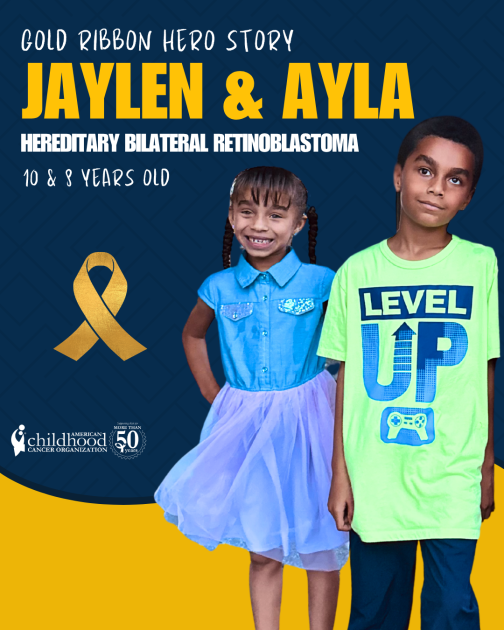
The narrative of childhood cancer is often defined by medical milestones and clinical outcomes, yet the story of Jaylen and Ayla, two siblings from a family navigating the complexities of hereditary bilateral retinoblastoma, highlights a broader spectrum of challenges involving systemic healthcare barriers and the power of parental advocacy. Jaylen, now 10, and Ayla, 8, have both emerged as survivors of a rare form of eye cancer that affects the retina, but their path to recovery was complicated by a medical system that initially failed to accommodate their mother’s disability. Their journey serves as a case study in the importance of early detection, the necessity of equitable healthcare access, and the psychological resilience required to manage chronic pediatric conditions.
Early Indicators and the Challenge of Detection
The clinical history of the family began a decade ago when Jaylen was just two months old. His mother, Denice, observed a subtle but concerning physical symptom: his left eye appeared to veer outward, a condition known in ophthalmology as strabismus. While strabismus can be a benign developmental issue, in infants, it is often one of the primary presenting symptoms of retinoblastoma. Furthermore, early photographs of Jaylen revealed a phenomenon known as leukocoria, or the "white glow." This occurs when light reflects off the white surface of a tumor through the pupil, rather than the red reflection typically seen in "red-eye" photography.
At the time, the family misinterpreted the glow as a mere artifact of camera lighting—a common occurrence for many parents before public awareness campaigns regarding leukocoria became more prevalent. It was not until Jaylen’s four-month wellness check-up that the severity of the situation began to unfold. However, the path to a formal diagnosis was obstructed by an immediate and preventable systemic barrier.
Systemic Barriers in the Healthcare Environment
Denice, who is Deaf, sought medical attention for Jaylen at his scheduled appointment, only to be met with a refusal of service. The medical facility at the time declined to treat the infant because they did not have an American Sign Language (ASL) interpreter available. Under the Americans with Disabilities Act (ADA) of 1990, healthcare providers are legally required to provide "effective communication" to patients and their companions with disabilities, which frequently necessitates the provision of qualified interpreters. The refusal of care not only delayed Jaylen’s diagnosis but also placed an undue burden on a mother already navigating the anxieties of a potential medical crisis.
Forced to act as her own advocate and navigator, Denice independently sought a provider who would comply with accessibility standards. This delay in care is a critical point of analysis for healthcare policy experts, as time is of the essence in treating retinoblastoma. If left untreated, the cancer can spread along the optic nerve to the brain or metastasize to other parts of the body, significantly decreasing the survival rate. Denice’s persistence eventually led to a diagnosis of bilateral retinoblastoma—cancer in both eyes—when Jaylen was four months old.
The Hereditary Nature of Retinoblastoma
Retinoblastoma is the most common primary intraocular malignancy of childhood, yet it remains rare, occurring in approximately 1 in 15,000 to 20,000 live births. There are two primary forms: sporadic and hereditary. In Jaylen’s case, the diagnosis was hereditary and bilateral. Hereditary retinoblastoma is typically caused by a germline mutation in the RB1 gene. Children born with this mutation have a nearly 90% chance of developing the disease and are significantly more likely to develop tumors in both eyes (bilateral) rather than just one (unilateral).
Because of Jaylen’s diagnosis, the family was alerted to the high probability that future children would also be affected. When Ayla was born two years later, she was placed under immediate and rigorous medical surveillance. This proactive monitoring allowed doctors to detect tumors in Ayla’s eyes when she was just four weeks old. While the news was devastating for the family, the early detection—facilitated by the knowledge gained from Jaylen’s experience—was a critical factor in her treatment plan.
A Chronology of Treatment and Intervention
The treatment of retinoblastoma is highly individualized, depending on the size, number, and location of the tumors. For Jaylen and Ayla, the medical intervention was extensive and spanned several years. Their treatment protocols included:
- Chemotherapy: Used to shrink the tumors (chemoreduction), making them easier to treat with focal therapies.
- Cryotherapy: A localized treatment that uses extreme cold to freeze and destroy cancer cells.
- Laser Therapy (Photocoagulation): The use of focused light to cut off the blood supply to the tumors.
- Strabismus Surgery: Jaylen underwent surgical correction to align his eyes, addressing the initial symptom that led to his diagnosis.
- Enucleation: For Ayla, the progression of the disease necessitated the surgical removal of an eye to prevent the cancer from spreading. This is often a last-resort measure when the tumor is too large to be treated by other means or when there is no hope for preserving vision in that eye.
Both children eventually transitioned to the use of ocular prosthetics. Ayla, in particular, has gained attention for her approach to her prosthetic eye. Rather than viewing it as a limitation, she treats it as a form of self-expression, maintaining a collection of custom-colored irises that allow her to "rock her style" and exercise autonomy over her appearance.

The Role of Advocacy and Parental Mental Health
The psychological toll on families dealing with pediatric cancer is profound. For Denice, the trauma of the diagnosis was compounded by the initial discrimination she faced. Medical professionals note that "parental advocacy" is often a double-edged sword; while it is necessary to ensure a child receives the best care, the emotional labor involved can lead to significant burnout.
Denice has spoken openly about the "anger and frustration" she felt toward a medical system that tried to turn away a Deaf mother. Her response was to "lock in" and become the ultimate manager for her children’s health. This shift into a high-functioning advocacy role is a recognized coping mechanism among parents of children with chronic illnesses. Furthermore, the family has had to navigate the complexities of social media, where sharing their journey has occasionally invited unsolicited criticism of their parenting. Denice’s philosophy of "choosing joy" and "beautifully spoiling" her children reflects a conscious decision to prioritize the present moment and the emotional well-being of her family over external societal expectations.
Broader Implications and Public Health Awareness
The case of Jaylen and Ayla underscores several critical points for the medical community and the public at large:
- The "Know the Glow" Campaign: Public health initiatives that educate parents on leukocoria are vital. A simple flash photograph can be a life-saving diagnostic tool. Increased awareness among pediatricians and parents can lead to earlier interventions and better vision-preservation outcomes.
- Equitable Healthcare Access: The refusal of care to a Deaf parent highlights a persistent gap in healthcare equity. Hospitals and clinics must ensure that communication barriers do not impede the delivery of life-saving care. The legal and ethical obligation to provide interpreters is not optional; it is a fundamental component of patient safety.
- The Importance of Genetic Counseling: For families with a history of retinoblastoma, genetic testing and counseling are essential. Early screening for siblings, as seen in Ayla’s case, can lead to much earlier diagnoses—often before the child shows any outward symptoms.
- Advancements in Ocular Prosthetics: The field of ocularistry has advanced significantly, allowing for prosthetics that are not only functional but also aesthetically customized. This contributes to the psychological well-being of pediatric patients, helping them maintain confidence and a sense of identity.
Conclusion: A Legacy of Joy and Resilience
Today, Jaylen and Ayla are thriving. Their story is not just one of medical survival, but of a family’s refusal to be defined by a diagnosis or limited by systemic obstacles. Ayla has begun learning ASL, bridging the communication gap within her own family and asserting her independence. By sharing their triumphs and the reality of their journey, the family contributes to a global dialogue on childhood cancer awareness.
Their experience serves as a reminder that while the word "cancer" is terrifying, the combination of early detection, persistent advocacy, and medical advancement provides a pathway to a joyful and fulfilling life. Jaylen and Ayla stand as a testament to the fact that children can, and do, overcome the most daunting of challenges when supported by a system—and a family—dedicated to their success. The "glow" that once signaled a life-threatening illness has been replaced by the literal and figurative smiles of two children who have beaten the odds, proving that there is indeed a triumphant life on the other side of a childhood cancer diagnosis.
