
 By admin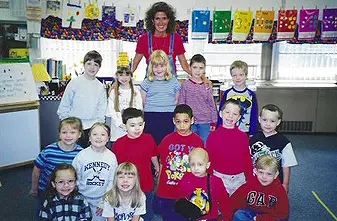
In August, two women will navigate 25.5 miles of the rugged Superior Hiking Trail in Minnesota, motivated by a bond that began in a kindergarten classroom nearly three decades ago. Michele Benyo, a mother who lost her son to cancer in 2000, and Alicia, a childhood friend and classmate of the late David Benyo, are participating in the CureSearch Ultimate Hike. This endurance event serves as both a memorial and a fundraising mechanism for pediatric cancer research, highlighting the long-term impact of childhood illness on families and communities. The journey of David Benyo, characterized by a fierce battle against rhabdomyosarcoma, continues to influence the lives of those he left behind, driving a mission to change the prognosis for future pediatric patients.
The Medical Odyssey of David Benyo
The narrative began in December 1997 when David Benyo’s parents discovered a physical abnormality that led to a diagnosis of rhabdomyosarcoma. At the time, David was only four years old. Rhabdomyosarcoma is a rare type of cancer that forms in soft tissue—specifically skeletal muscle tissue or sometimes hollow organs such as the bladder or uterus. For David, the malignancy manifested as a tumor the size of a grapefruit.
The ensuing treatment regimen was aggressive, reflecting the standard of care for high-risk pediatric oncology in the late 1990s. Over the course of a year, David underwent a grueling combination of chemotherapy, surgical intervention, and multiple blood transfusions. Medical staff at the time noted David’s resilience; his self-identification as a "cheetah" became a symbol of his combative spirit against the disease. Initially, the interventions appeared successful. The tumor retreated, and David was granted a period of stability, during which his family participated in a Make-A-Wish trip to Disney World—a milestone often used to provide psychological relief to terminally or chronically ill children.
However, the remission was brief. Shortly after returning from the trip, clinicians discovered that the cancer had recurred, migrating into his bone marrow. This escalation necessitated even more intensive measures, including high-dose chemotherapy and radiation. David became one of the early recipients of a pediatric stem cell transplant at Minneapolis Children’s Hospital (now known as Children’s Minnesota). While the transplant successfully induced a second remission, the cancer returned for a third time. In early 2000, at the age of six, David expressed a desire to cease further medical intervention. He passed away in May 2000, leaving a profound void in his family and his local community.
Understanding Rhabdomyosarcoma and the Pediatric Funding Gap
David Benyo’s struggle underscores the complexities of rhabdomyosarcoma (RMS). According to the American Cancer Society, RMS accounts for about 3% of all childhood cancers. While the five-year survival rate for localized RMS is approximately 70% to 90%, that figure drops significantly to about 20% to 30% if the cancer has metastasized at the time of diagnosis or upon recurrence.
The challenges faced by the Benyo family in 1997 remain relevant today. Pediatric cancer research is frequently underfunded compared to adult oncology. Data from the National Cancer Institute (NCI) indicates that while cancer is the leading cause of death by disease for children in the United States, only a small fraction of the federal budget for cancer research is dedicated specifically to pediatric forms of the disease. Organizations like CureSearch for Children’s Cancer aim to bridge this gap by funding targeted research and clinical trials designed to move treatments from the laboratory to the bedside more efficiently.
A Friendship Preserved Through Decades of Grief
Among those impacted by David’s life and death was his kindergarten classmate, Alicia. Their friendship was rooted in their shared experiences at school and church, where Alicia’s mother served as David’s Sunday school teacher. The loss of a peer at such a young age often has lasting psychological effects on children, and for Alicia, David’s death marked her first encounter with profound grief. For many years, the trauma of the loss made the subject of cancer difficult for her to approach.
Despite the pain, Alicia maintained a consistent connection with David’s mother, Michele. This relationship evolved as Alicia transitioned into adulthood. Upon her high school graduation, Alicia invited Michele to the ceremony, presenting her with a locket containing David’s photograph. The gesture was a testament to the fact that David remained a presence in her life, symbolically "walking across the stage" with her.
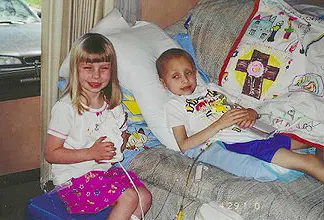
Alicia’s professional life further reflects this continuity. She currently serves as a special needs teacher at the same elementary school she and David attended as children. This career choice places her in the same hallways where their friendship began, reinforcing the cyclical nature of her connection to his memory. The recent death of Alicia’s mother—who had taught David in Sunday school—to cancer has added a new layer of urgency to her involvement in cancer advocacy.
The CureSearch Ultimate Hike: Technical and Philanthropic Scope
The CureSearch Ultimate Hike is a flagship fundraising event designed to challenge participants physically while raising substantial capital for medical research. The hike Alicia and Michele are undertaking involves 25.5 miles of the Superior Hiking Trail (SHT). The SHT is a 310-mile footpath that follows the rocky ridgeline above Lake Superior in northeastern Minnesota. It is characterized by steep climbs, descents, and rugged terrain, making a 25-mile single-day trek a significant athletic feat.
Participants in the Ultimate Hike generally undergo months of training and fundraising. The funds raised are directed toward:
- Accelerated Drug Development: Funding researchers who are working on less toxic, more effective treatments for pediatric cancers.
- Clinical Trials: Supporting the infrastructure necessary to test new therapies in a pediatric setting.
- Basic Research: Understanding the genetic drivers of rare cancers like rhabdomyosarcoma.
For Michele Benyo, the hike represents a continuation of her role as an advocate for her son. For Alicia, it is an opportunity to honor both her childhood friend and her late mother. The event serves as a communal space where the "heavy grief" of loss is converted into a tangible, productive effort to prevent other families from enduring similar outcomes.
Broader Implications for Pediatric Oncology
The participation of individuals like Michele and Alicia is critical for the survival of niche research sectors. Because pediatric cancers are considered "rare" by pharmaceutical standards, there is often less commercial incentive to develop new drugs specifically for children. Consequently, many pediatric treatments are actually "off-label" uses of drugs originally designed for adults, which can lead to severe long-term side effects in developing bodies.
Grassroots fundraising efforts have historically been the backbone of breakthroughs in pediatric oncology. The evolution of stem cell transplants, such as the one David received in the late 90s, has been fueled by a combination of institutional research and private philanthropy. By participating in the Ultimate Hike, donors and hikers contribute to a financial ecosystem that allows scientists to pursue high-risk, high-reward research that might otherwise go unfunded.
The story of David Benyo, Alicia, and Michele illustrates the enduring nature of loss and the capacity for that loss to drive social change. While David’s life was short, the ripple effects of his "cheetah-like" spirit are evident in the 25.5 miles of trail his mother and friend will cover this August. Their efforts highlight a fundamental truth in the fight against pediatric cancer: while medical science provides the tools for survival, it is the persistent memory and dedication of the community that provides the resources to advance that science.
As they prepare for the trek along the North Shore, the goal remains clear: to ensure that the stories of future children diagnosed with rhabdomyosarcoma have different, longer endings. The CureSearch Ultimate Hike stands as a bridge between the sorrow of the past and the hope for a future where childhood cancer is a manageable, and ultimately curable, condition.
