
 By Gabriel Paijo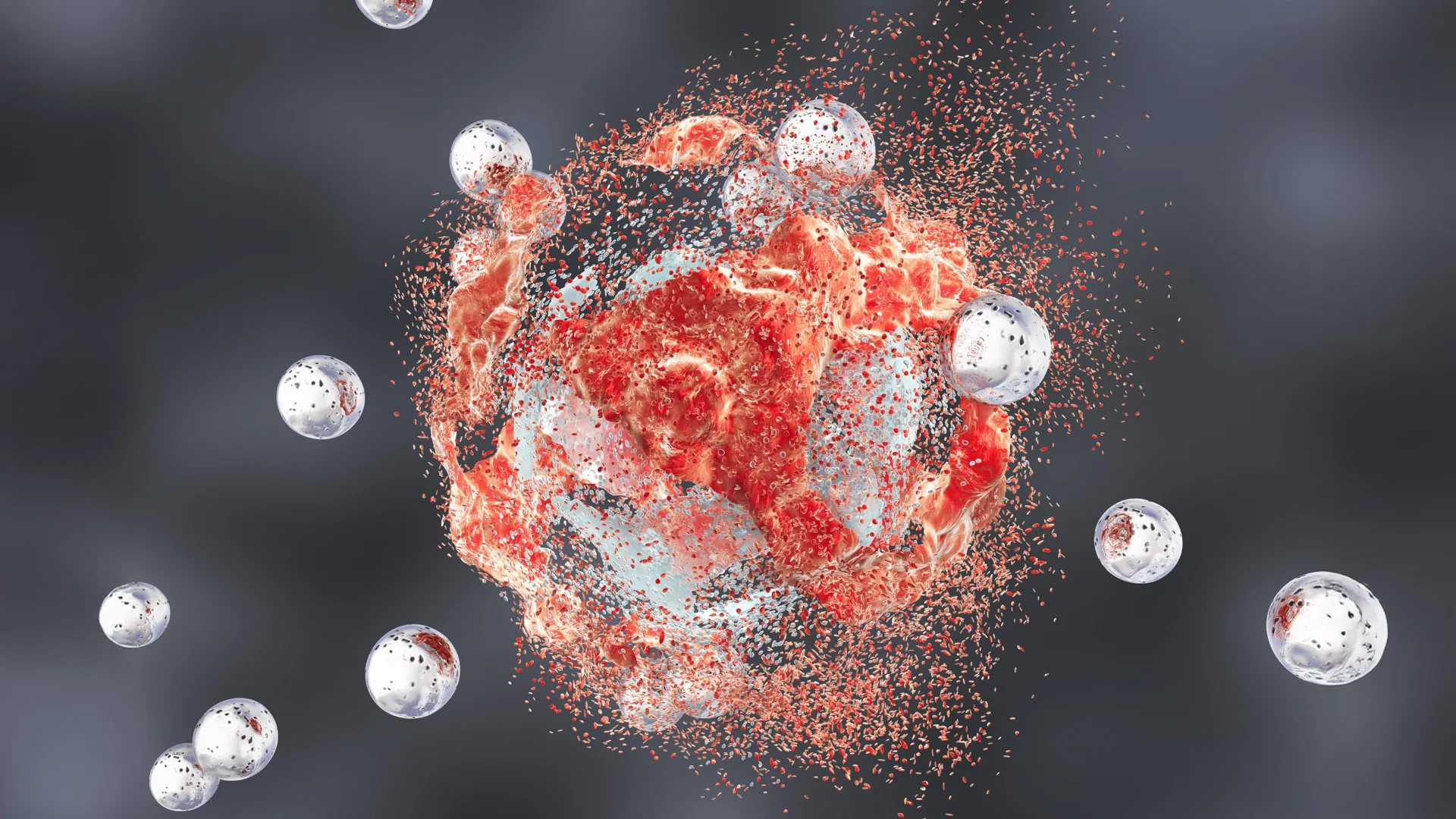
In a significant advancement for the field of nanomedicine, researchers from Weill Cornell Medicine and the Cornell Duffield College of Engineering have demonstrated that engineered silica nanoparticles can serve as a potent dual-action weapon against aggressive prostate cancer. According to a preclinical study published on June 15 in the journal Cancer Research, these "ultrasmall" particles do more than just deliver a payload; they actively induce a specialized form of cell death within tumors while simultaneously recalibrating the surrounding immune environment to recognize and attack malignant cells.
The study, which utilized mouse models of metastatic and treatment-resistant prostate cancer, revealed that these particles—known as Cornell Prime dots or C’ dots—could produce complete tumor remissions when combined with existing immunotherapies. This breakthrough offers a potential solution to one of the most persistent challenges in oncology: the "cold" tumor microenvironment of prostate cancer, which typically resists the body’s natural immune defenses and standard clinical treatments.
The Genesis of Cornell Prime Dots: From Imaging to Therapy
The development of C’ dots represents a decade-long cross-disciplinary collaboration between Dr. Michelle Bradbury, the Endowed Professor of Imaging Research in Radiology at Weill Cornell Medicine, and Dr. Ulrich Wiesner, the Spencer T. Olin Professor in the Department of Materials Science and Engineering at Cornell University. Originally, these particles were not intended as a primary treatment. Instead, they were engineered as highly precise tools for medical imaging.
Made from amorphous silica—a biocompatible material found naturally in various foods and the fossilized remains of microscopic organisms—C’ dots are designed to be "ultrasmall," typically measuring less than 10 nanometers in diameter. This specific size is critical; it is small enough to circulate through the bloodstream and penetrate deep into tumor tissues, yet large enough to avoid immediate clearance by the kidneys, though they are eventually excreted safely.
While C’ dots have already moved into late-stage clinical trials for image-guided surgery, providing surgeons with a "glow-in-the-dark" map of tumor margins, researchers recently observed an unexpected phenomenon. The particles appeared to possess intrinsic therapeutic properties. This discovery shifted the research focus from using the dots as passive observers to utilizing them as active biological agents capable of dismantling cancer cells from the inside out.
Mechanisms of Action: The Power of Ferroptosis
The most striking finding of the new study is the ability of silica nanoparticles to trigger ferroptosis. Unlike apoptosis, the most common form of programmed cell death which cancer cells often learn to evade, ferroptosis is a relatively recently discovered process driven by iron-dependent lipid peroxidation.
Inside the highly metabolic environment of a tumor, C’ dots appear to act as a catalyst for oxidative stress. The research team found that these particles collect positively charged iron ions from the bloodstream and transport them directly into the heart of the cancer cell. Once inside, the iron fuels a chemical reaction that creates an abundance of reactive oxygen species. These "free radicals" attack the lipid bilayers of the cell membrane, causing the structural integrity of the cancer cell to collapse.
Dr. Ulrich Wiesner noted the uniqueness of this interaction, suggesting that the ubiquitous presence of silica in the natural environment might play a role in its biological compatibility and its specific reactivity within malignant tissues. By forcing cells into ferroptosis, the C’ dots bypass the traditional resistance mechanisms that often render chemotherapy ineffective.
Transforming the Tumor Microenvironment
Beyond the direct destruction of individual cells, the nanoparticles address a broader structural hurdle in prostate cancer treatment: the "cold" tumor microenvironment. In many prostate cancers, the area surrounding the tumor is devoid of active immune cells, or worse, it is populated by "suppressor" cells that shield the cancer from the immune system.
The study found that the administration of C’ dots effectively turned these "cold" tumors "hot." Analysis of the tumor sites showed a significant influx of activated T cells and cancer-fighting macrophages. This shift is critical because it prepares the ground for immunotherapy. Drugs known as immune checkpoint blockades (ICBs) often fail in prostate cancer because there are no T cells for the drugs to "unleash." By recruiting these cells to the site, the silica particles create the necessary conditions for immunotherapies to succeed.
Furthermore, the researchers observed that the nanoparticles disrupted the metabolic pathways of the tumor. By altering how cancer cells process nutrients and energy, the treatment creates a hostile environment that further slows growth and prevents the tumor from recovering between doses.
Experimental Data: Survival and Remission Rates
To test the efficacy of the C’ dots, the research team conducted a series of survival studies using mice with a particularly aggressive and "immune-desert" form of prostate cancer. The researchers compared the results of single-agent treatments against various combination therapies.
The data revealed a clear hierarchy of effectiveness:
- Control Groups: Mice receiving no treatment or only standard immunotherapy showed rapid tumor progression and low survival rates.
- C’ Dot Monotherapy: Mice treated only with the silica nanoparticles showed a modest delay in tumor growth, confirming the particles’ intrinsic anti-cancer properties.
- Dual Combination: When C’ dots were combined with an immune checkpoint blockade (anti-PD-1/CTLA-4), the results improved dramatically. Four out of ten mice (40%) achieved complete or nearly complete remission, surviving indefinitely.
- Triple Combination: The strongest results were observed when a third component was added—a CSF-1R blockade. This drug specifically targets tumor-associated macrophages that often protect cancer cells. In this group, five out of ten mice (50%) reached total remission.
Dr. Michelle Bradbury emphasized that the durability of these responses was particularly noteworthy. Unlike many treatments that only temporarily shrink tumors, the combination of C’ dots and immunotherapy appeared to train the immune system to maintain long-term surveillance over the cancer.
Precision Targeting and Safety Profiles
A primary concern with any systemic cancer treatment is "off-target" toxicity—the damage caused to healthy organs. To mitigate this, the researchers functionalized the surface of the C’ dots with a targeting molecule that binds to Prostate-Specific Membrane Antigen (PSMA).
PSMA is a protein that is overexpressed on the surface of nearly all prostate cancer cells but is found in very low levels in healthy tissue. By coating the nanoparticles with ligands that seek out PSMA, the researchers ensured that the particles would concentrate specifically within the tumor.
The safety data from the study was encouraging. While some particles were detected in the spleen—a common occurrence for nanomaterials as the body filters them—the researchers found no evidence of organ damage or systemic toxicity. The mice maintained healthy weights and displayed no behavioral signs of distress, suggesting that the treatment is far better tolerated than traditional cytotoxic chemotherapy.
Broader Implications for Oncological Research
The success of this study has implications that reach far beyond prostate cancer. The ability to induce ferroptosis and remodel the immune system through a single, biocompatible platform represents a potential "new clinical paradigm," according to the authors.
The versatility of the C’ dot platform allows it to be adapted for other "cold" tumors, such as pancreatic cancer or certain types of breast cancer. By changing the targeting molecule on the surface, researchers could theoretically redirect these ferroptosis-inducing particles to any number of different malignancies.
Furthermore, this research bridges the gap between diagnostics and therapeutics—a field known as "theranostics." Since C’ dots are already proven imaging agents, a single injection could allow a physician to visualize the extent of a patient’s cancer while simultaneously initiating a multi-pronged therapeutic attack.
Path to Clinical Trials and Future Outlook
The research team, which includes co-first authors Drs. Nabil Siddiqui, Li Zhang, and Gabriel DeLeon, is now preparing the groundwork for human clinical trials. Because C’ dots have already undergone extensive safety testing in humans for imaging purposes, the path to regulatory approval for therapeutic use may be more streamlined than it would be for an entirely new drug class.
Dr. Jedd Wolchok, a world-renowned oncologist and director of the Meyer Cancer Center at Weill Cornell Medicine, noted that the convergence of direct cell killing and immune activation is the "holy grail" of modern oncology. "By creating conditions that support a more effective antitumor immune response, these particles may help unlock the full potential of immunotherapy in prostate cancer, where durable responses have historically been difficult to achieve," he stated.
The study received support from several high-profile institutions, including the National Cancer Institute (NCI), the Department of Defense, and the Parker Institute for Cancer Immunotherapy. As the researchers move toward the clinic, the focus will remain on optimizing the dosage and combination strategies to maximize the remission rate in humans.
In conclusion, the development of these silica nanoparticles represents a sophisticated evolution in cancer therapy. By leveraging the natural properties of silicon dioxide and the biological vulnerability of cancer cells to oxidation, the team at Cornell has created a treatment that is as precise as it is powerful. For patients with aggressive prostate cancer, this technology offers a glimmer of hope for a future where even the most resistant tumors can be successfully dismantled and defeated.
