
 By Gabriel Paijo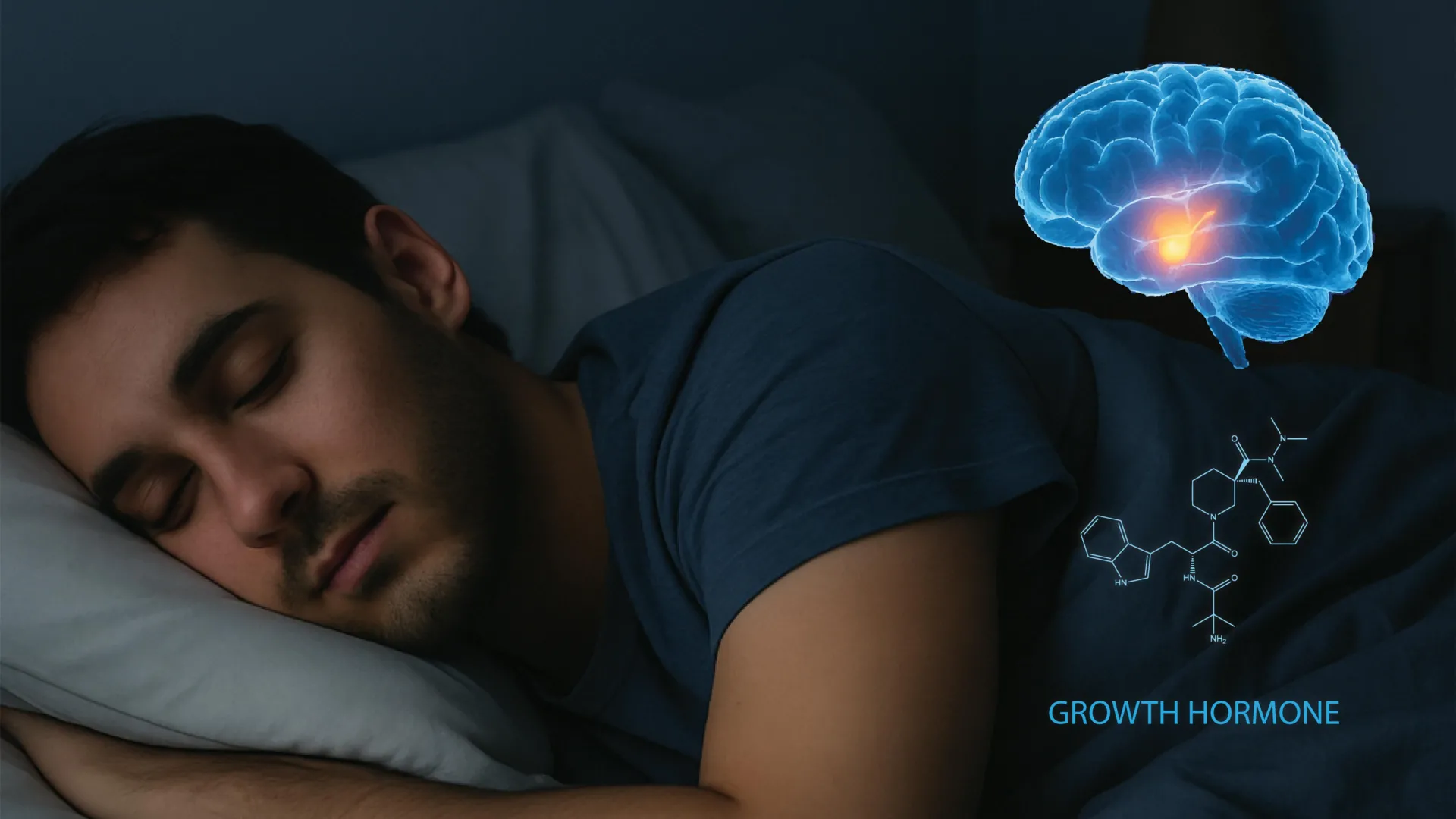
The intricate relationship between a restorative night of sleep and the body’s physical development has long been observed by the scientific community, yet the underlying neurological mechanisms have remained largely shrouded in mystery. In a groundbreaking study published in the journal Cell, a team of researchers at the University of California, Berkeley, has successfully mapped the brain circuitry responsible for regulating growth hormone (GH) during various stages of sleep. This discovery not only clarifies how the brain coordinates the release of this vital hormone but also reveals a sophisticated feedback loop that balances sleep, wakefulness, and metabolic health.
Growth hormone is far more than a biological catalyst for height in adolescents; it is a fundamental pillar of human physiology. Secreted by the pituitary gland under the direction of the hypothalamus, GH is essential for protein synthesis, muscle repair, bone density maintenance, and the regulation of glucose and fat metabolism. For decades, clinicians have noted that GH levels spike during sleep—particularly during deep, slow-wave sleep—but the precise "wiring" that allows the brain to trigger these releases was unknown until now.
The Discovery of the Somatotropic Circuitry
The research, conducted in the laboratory of Yang Dan, a professor of neuroscience and molecular and cell biology at UC Berkeley, utilized advanced neuroimaging and optogenetic techniques to observe the brain in real-time. The team focused on the hypothalamus, an evolutionary ancient region of the brain that serves as the command center for the endocrine system. Within this region, two primary types of neurons compete to regulate GH: growth hormone-releasing hormone (GHRH) neurons and somatostatin neurons.
While it was previously understood that GHRH stimulates GH release and somatostatin inhibits it, the UC Berkeley team discovered that these neurons do not operate in a simple "on-off" fashion. Instead, they engage in a complex coordination that changes depending on whether a subject is in REM (Rapid Eye Movement) or non-REM sleep.
"People know that growth hormone release is tightly related to sleep, but only through drawing blood and checking growth hormone levels during sleep," explained the study’s first author, Xinlu Ding, a postdoctoral fellow in UC Berkeley’s Department of Neuroscience. "We’re actually directly recording neural activity in mice to see what’s going on. We are providing a basic circuit to work on in the future to develop different treatments."
Methodology: Optogenetics and the Murine Model
To achieve these insights, the researchers employed mice as their primary model. Mice are ideal subjects for sleep research because, unlike humans who typically sleep in one long block, mice sleep in short, frequent bursts throughout a 24-hour cycle. This polyphasic sleep pattern allowed the researchers to observe hundreds of transitions between wakefulness, non-REM sleep, and REM sleep in a relatively short period.
By placing electrodes in the hypothalamus and using optogenetics—a biological technique that involves the use of light to control neurons that have been genetically sensitized to light—the team could stimulate specific GHRH or somatostatin neurons and observe the immediate hormonal and behavioral effects. This level of precision allowed them to trace the path from the hypothalamus to the pituitary gland and beyond, eventually leading to the discovery of a feedback loop involving the locus coeruleus.
The Role of the Locus Coeruleus and the Feedback Loop
One of the most significant findings of the study is the involvement of the locus coeruleus (LC), a small nucleus located in the brainstem. The LC is the brain’s primary source of norepinephrine and is central to the regulation of alertness, attention, and the "fight or flight" response.
The researchers found that once growth hormone is released into the system, it travels back to the brain and activates neurons in the locus coeruleus. This creates a feedback system: as GH levels rise during sleep, the hormone stimulates the LC, which in turn encourages the brain to transition toward a state of wakefulness. However, the system contains an unexpected internal check. As co-author Daniel Silverman reported in earlier research this year, if activity in the locus coeruleus becomes excessively high, it begins to trigger a "rebound" effect that promotes sleepiness, preventing the brain from becoming over-aroused.
"This suggests that sleep and growth hormone form a tightly balanced system," Silverman said. "Too little sleep reduces growth hormone release, and too much growth hormone can in turn push the brain toward wakefulness. Sleep drives growth hormone release, and growth hormone feeds back to regulate wakefulness, and this balance is essential for growth, repair, and metabolic health."
Chronology of the Research and Key Data Points
The investigation began with the hypothesis that the hypothalamus must receive feedback from the body to prevent GH overproduction. Over several years, the team moved through three distinct phases of discovery:
- Mapping the Hypothalamic Nodes: The team first identified the specific clusters of GHRH and somatostatin neurons that were active during sleep cycles.
- Observing Sleep-Stage Specificity: They recorded data showing that during REM sleep, both GHRH and somatostatin activity increases, leading to a surge in GH. In contrast, during non-REM sleep, somatostatin levels drop while GHRH rises only moderately, creating a steadier, lower-level release.
- Identifying the LC Feedback: The final phase involved tracing the hormonal signals back to the locus coeruleus, confirming that the brainstem acts as a "thermostat" for GH-induced arousal.
Supporting data from the study indicates that disruptions in this circuit lead to immediate physiological consequences. In mice where the GHRH neurons were inhibited, researchers observed not only lower GH levels but also significant disruptions in sleep architecture, suggesting that the hormone itself is a necessary component for maintaining healthy sleep patterns.
Clinical Implications: From Metabolism to Neurodegeneration
The implications of mapping this circuit extend far beyond basic biology. Because growth hormone is a master regulator of metabolism, the findings offer a potential roadmap for addressing the global epidemic of metabolic disorders.
Metabolic Health and Obesity:
Consistently poor sleep is a known risk factor for obesity and Type 2 diabetes. By identifying the specific neurons that link sleep to GH, researchers may be able to develop pharmacological interventions that mimic the hormonal benefits of sleep for those with chronic insomnia or shift-work sleep disorder. This could help regulate blood glucose levels and fat oxidation in populations that cannot achieve natural restorative sleep.
Neurodegenerative Diseases:
The locus coeruleus is one of the first brain regions to show signs of degeneration in diseases like Alzheimer’s and Parkinson’s. Since the UC Berkeley study links GH regulation directly to LC health, it raises the possibility that growth hormone therapy—or treatments targeting the GH-LC circuit—could help preserve cognitive function or slow the progression of neurodegenerative conditions.
Cognitive Function and Arousal:
Beyond physical repair, the study suggests that GH plays a role in cognitive readiness. "Growth hormone not only helps you build your muscle and bones and reduce your fat tissue, but may also have cognitive benefits, promoting your overall arousal level when you wake up," Ding noted. This provides a biological explanation for the "brain fog" often experienced after a night of interrupted sleep; without the GH surge and the subsequent activation of the LC, the brain lacks the chemical "kickstart" required for peak alertness.
Analysis of Broader Impacts
The discovery of this neural circuit marks a shift in how neuroendocrinology is studied. Traditionally, the endocrine system and the central nervous system were viewed as separate entities that communicated via slow-moving hormones in the bloodstream. The UC Berkeley study demonstrates a much more rapid and integrated "crosstalk" where neural activity and hormonal release are synchronized second-by-second.
Furthermore, the study highlights the dangers of the modern "sleep-deprived" lifestyle. If the feedback loop between GH and the locus coeruleus is disrupted, it creates a vicious cycle: poor sleep leads to low GH, which leads to a sluggish locus coeruleus, which in turn makes it harder for the brain to regulate the transitions between sleep and wakefulness.
Daniel Silverman pointed toward the future of personalized medicine in light of these findings. "There are some experimental gene therapies where you target a specific cell type," he said. "This circuit could be a novel handle to try to dial back the excitability of the locus coeruleus, which hasn’t been talked about before."
Conclusion and Future Research
The research was a collaborative effort supported by the Howard Hughes Medical Institute (HHMI) and the Pivotal Life Sciences Chancellor’s Chair fund. Alongside Ding, Silverman, and Dan, the study involved contributors from both UC Berkeley and Stanford University, reflecting the interdisciplinary nature of modern neuroscience.
As the scientific community digests these findings, the next step will involve determining how these circuits can be manipulated safely in humans. While the murine model provides a robust foundation, human sleep architecture is more complex. Future clinical trials may investigate whether "tuning" the GHRH and somatostatin neurons can treat growth disorders in children or metabolic decline in the elderly.
For now, the study serves as a potent reminder of the necessity of sleep. By uncovering the mechanical link between the resting brain and the repairing body, the UC Berkeley team has provided a definitive scientific basis for the age-old wisdom that a good night’s sleep is the foundation of health. The discovery of the somatotropic circuit ensures that sleep is no longer seen merely as a period of inactivity, but as a highly coordinated biological performance essential for the survival and optimization of the human organism.
