
 By Gabriel Paijo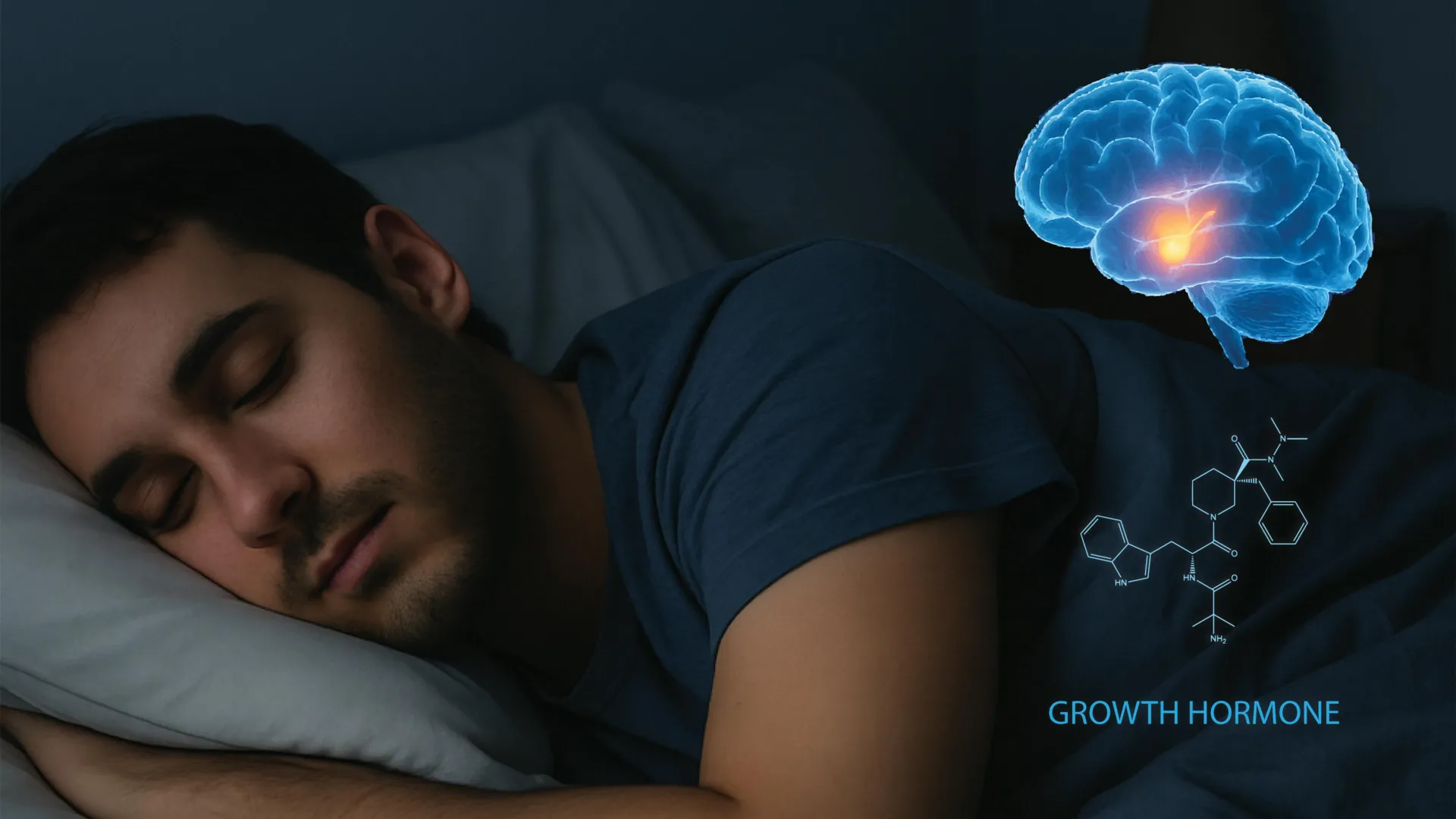
The biological necessity of sleep has long been understood through the lens of restorative rest, yet the precise mechanisms by which the brain orchestrates systemic physiological changes during slumber have remained one of neuroscience’s most enduring mysteries. A groundbreaking study led by researchers at the University of California, Berkeley, has finally mapped the specific neural circuitry responsible for the release of growth hormone (GH) during sleep. This discovery, published in the prestigious journal Cell, identifies a complex feedback loop between the hypothalamus and the brainstem that not only regulates physical growth and repair but also maintains metabolic balance and cognitive alertness. By providing the first direct recording of neural activity related to growth hormone release in a living model, the research team has opened new avenues for treating a spectrum of conditions ranging from childhood growth disorders to neurodegenerative diseases like Alzheimer’s and Parkinson’s.
The Endocrine Architecture of Sleep
For decades, endocrinologists have recognized a definitive correlation between deep sleep and the secretion of growth hormone. Growth hormone, produced by the pituitary gland, is a fundamental protein that stimulates cellular reproduction, regeneration, and growth. In children and adolescents, it is the primary driver of height; in adults, it plays a critical role in maintaining muscle mass, bone density, and the efficient metabolism of lipids and glucose. Traditionally, clinicians have tracked this relationship through serial blood sampling, observing that GH levels spike during the early stages of the night, particularly during slow-wave (non-REM) sleep.
However, the "how" and "why" behind this synchronization remained speculative. The UC Berkeley study, led by first author Xinlu Ding, a postdoctoral fellow in the Department of Neuroscience, moved beyond observational blood tests to investigate the underlying neural "wiring." Using mouse models, which share highly conserved brain structures with humans, the team utilized advanced optogenetics and electrode recordings to monitor the hypothalamus—the brain’s command center for the endocrine system.
The hypothalamus contains a specialized cluster of nerve cells that act as a thermostat for growth. These include growth hormone-releasing hormone (GHRH) neurons, which signal the pituitary gland to produce GH, and somatostatin neurons, which act as a biological brake to inhibit its release. The Berkeley team discovered that these two sets of neurons do not operate in a simple on-off fashion; instead, they engage in a sophisticated "dance" that shifts dramatically based on the stage of sleep.
Mapping the Circuitry: REM vs. Non-REM Dynamics
The research team, working under the direction of Yang Dan, a professor of neuroscience and molecular and cell biology, utilized high-resolution circuit tracing to observe how these hormones behave during different sleep cycles. Mice, unlike humans, sleep in polyphasic bursts, which provided the researchers with hundreds of sleep-wake transitions to analyze over a short period.
The findings revealed a surprising divergence in hormonal behavior across sleep stages. During non-REM (NREM) sleep—the stage often associated with physical restoration—somatostatin levels typically fall, while GHRH levels rise moderately. This creates a permissive environment for a steady release of growth hormone. However, the most intense activity was observed during Rapid Eye Movement (REM) sleep. In this stage, both GHRH and somatostatin levels increase simultaneously. This paradox leads to a more concentrated and rhythmic release of growth hormone, suggesting that REM sleep, often associated with dreaming and memory consolidation, is equally vital for physical metabolic regulation.
This discovery challenges the traditional view that growth hormone is primarily a "deep sleep" phenomenon. It suggests that the entire architecture of sleep—the cycling between NREM and REM—is necessary to maximize the body’s anabolic (building) processes. For athletes seeking recovery or children needing growth, the fragmentation of these cycles due to sleep apnea or environmental disturbances could significantly impair the body’s ability to heal and develop.
The Locus Coeruleus and the Wakefulness Feedback Loop
Perhaps the most significant revelation of the study is the identification of a previously unknown feedback system involving the locus coeruleus (LC). Located in the brainstem, the LC is the brain’s primary source of norepinephrine, a chemical that controls alertness, attention, and the "fight or flight" response.
The Berkeley researchers found that once growth hormone enters the system, it travels back to the brain and activates neurons in the locus coeruleus. This creates a regulatory loop: as GH levels rise during sleep, the hormone begins to stimulate the LC, which gradually prepares the brain for wakefulness. "Sleep drives growth hormone release, and growth hormone feeds back to regulate wakefulness," explained Daniel Silverman, a UC Berkeley postdoctoral fellow and study co-author.
This feedback loop serves as a biological "balance scale." If growth hormone levels are too low, the signal to the LC is weakened, potentially leading to daytime grogginess or metabolic sluggishness. Conversely, the study found a secondary, unexpected mechanism: if activity in the locus coeruleus becomes excessively high, it can actually trigger a compensatory "sleepiness" signal to prevent over-arousal. This intricate balancing act ensures that the body does not remain in a state of permanent hyper-alertness, which would be detrimental to cardiovascular and mental health.
Implications for Metabolic and Cardiovascular Health
The link between sleep and metabolism is well-documented but poorly understood at the circuit level. Public health data consistently shows that individuals with chronic sleep deprivation are at a significantly higher risk for obesity, Type 2 diabetes, and hypertension. According to the Centers for Disease Control and Prevention (CDC), approximately one-third of American adults do not get enough sleep, a trend that correlates with the rising national rates of metabolic syndrome.
By identifying the GHRH and somatostatin circuit, the UC Berkeley study provides a physiological explanation for these trends. Growth hormone is a potent regulator of insulin sensitivity and fat oxidation. When sleep is cut short, the hypothalamic circuit is interrupted, leading to suppressed GH levels. This suppression results in decreased fat burning and impaired glucose regulation, effectively "priming" the body for weight gain and insulin resistance.
"We are providing a basic circuit to work on in the future to develop different treatments," said Xinlu Ding. The research suggests that future therapies for metabolic diseases might not just focus on diet and exercise, but on the pharmacological "tuning" of these hypothalamic neurons to restore a healthy growth hormone rhythm.
Neurodegeneration and Cognitive Function
Beyond physical growth and metabolism, the study’s findings regarding the locus coeruleus have profound implications for neurology. The LC is one of the first brain regions to show signs of degeneration in patients with Alzheimer’s and Parkinson’s disease. Chronic dysfunction in this area is linked to the cognitive decline and sleep disturbances that characterize these conditions.
The discovery that growth hormone can modulate the excitability of the LC suggests a potential new therapeutic target. If researchers can develop "handles"—such as specific gene therapies or targeted molecular interventions—to dial back the excitability of the locus coeruleus through the GH pathway, they might be able to improve sleep quality and cognitive stability in aging populations.
"Growth hormone… may also have cognitive benefits, promoting your overall arousal level when you wake up," Ding noted. This suggests that the "brain fog" often associated with poor sleep is not just a result of tiredness, but a direct consequence of a disrupted hormonal feedback loop that fails to properly prime the locus coeruleus for daytime focus.
A New Era of Hormonal and Sleep Therapy
The study was a collaborative effort involving researchers from UC Berkeley and Stanford University, supported by the Howard Hughes Medical Institute (HHMI) and the Pivotal Life Sciences Chancellor’s Chair fund. The breadth of the team—including experts in neuroscience, molecular biology, and bioengineering—underscores the interdisciplinary nature of modern brain research.
The timeline of this research marks a transition from "observational" endocrinology to "manipulative" neuroscience. While 20th-century medicine focused on replacing hormones (such as synthetic GH injections), 21st-century medicine is moving toward regulating the brain’s own production of those hormones.
The UC Berkeley team’s findings suggest that future treatments for sleep disorders will move beyond simple sedatives. Instead, new classes of drugs could target the GHRH-somatostatin balance or the LC feedback loop to induce "high-quality" sleep that specifically maximizes hormonal output. This would be a game-changer for shift workers, elderly patients, and those with chronic insomnia who currently suffer from the long-term metabolic and cognitive consequences of poor sleep architecture.
As the scientific community continues to digest these findings, the message for the general public is clear: sleep is not a passive state of inactivity. It is a highly coordinated period of biological "engineering" where the brain and body communicate to rebuild the physical self. The discovery of the sleep-GH circuit provides the blueprint for this process, offering hope that we may soon be able to repair the broken links between our restless nights and our failing health.
