
 By Suherman Candra Maholtra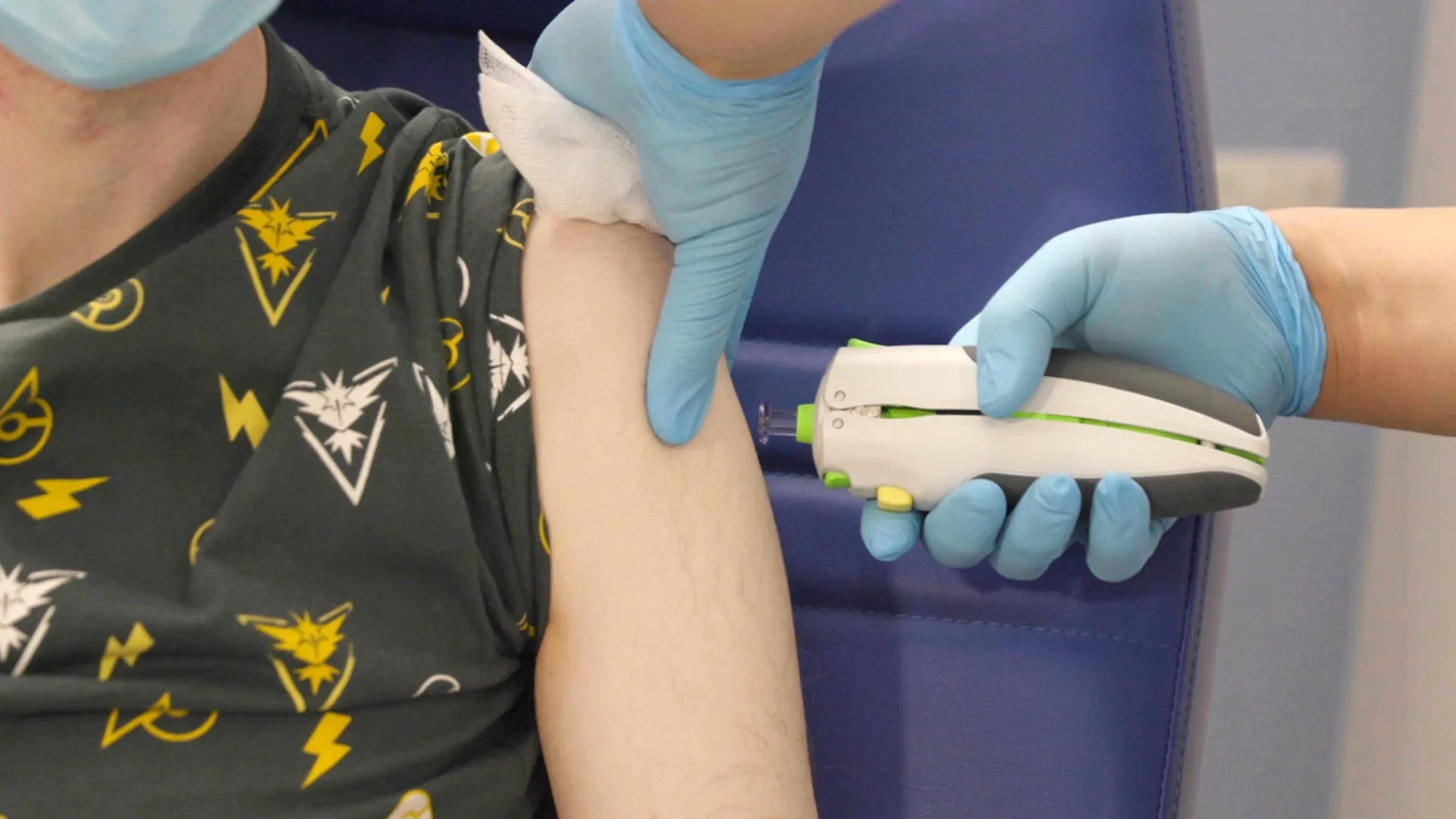
The landscape of global immunology has reached a significant milestone as a novel universal coronavirus vaccine, developed through advanced artificial intelligence and machine learning, successfully navigated its first human clinical trial. This breakthrough, spearheaded by researchers at the University of Cambridge and the university’s spinout entity, DIOSynVax (DVX) Ltd, represents a departure from traditional "reactive" vaccine development toward a "proactive" model designed to provide broad-spectrum protection against both current and future viral threats.
The Phase 1 clinical trial, which involved 39 healthy adult volunteers, concluded that the experimental vaccine is safe and well-tolerated, with no significant adverse side effects reported. Beyond safety, the study confirmed that the vaccine effectively stimulates immune responses against a wide array of Sarbeco coronaviruses. This specific family of viruses includes SARS-CoV-2—the pathogen responsible for the COVID-19 pandemic—as well as the original SARS-CoV virus and several related bat-borne coronaviruses that have yet to cross into the human population but are identified as high-risk candidates for future zoonotic spillover.
The findings, recently published in the Journal of Infection, validate a fundamental shift in how scientists approach viral evolution. By targeting the shared genetic architecture of an entire virus family rather than the surface proteins of a single circulating strain, this new class of "future-proof" vaccines aims to end the perpetual cycle of updating boosters to match emerging variants.
The Architecture of the Super-Antigen: AI in Vaccine Design
At the core of this scientific advancement is the use of computational biology to create what researchers describe as a "super-antigen." In traditional vaccine manufacturing, scientists identify the "spike" protein or another surface marker of a specific virus strain to train the human immune system. However, as viruses like SARS-CoV-2 mutate, these surface markers change, often rendering previous vaccines less effective and requiring the development of new formulations.
To overcome this, the Cambridge team utilized artificial intelligence and machine learning to analyze the genetic sequences of thousands of known coronaviruses within the Sarbeco subgenus. The AI identified highly conserved regions—parts of the virus that remain consistent across different strains and species because they are essential to the virus’s survival and replication.
By synthesizing these shared features into a single, digitally optimized antigen, the researchers created a "blueprint" for the immune system that is not fooled by minor mutations on the virus’s surface. This marked the first time in medical history that a vaccine whose active component was designed entirely through computer simulations has been successfully tested in a human cohort.
Chronology of Development and the DIOSynVax Initiative
The journey toward a universal vaccine began long before the COVID-19 pandemic. DIOSynVax, which stands for Digitally Immune Optimised Synthetic Vaccines, was founded in 2017 as a University of Cambridge spinout. Supported by Cambridge Enterprise, the university’s commercialization arm, the company was established with the specific goal of using synthetic biology to address the limitations of conventional vaccine platforms.
When the COVID-19 pandemic emerged in late 2019, the team pivoted their existing research to address the immediate threat while maintaining their focus on long-term, broad-spectrum protection. Throughout 2020 and 2021, the researchers conducted extensive pre-clinical trials. Animal studies conducted prior to human testing demonstrated that the AI-designed vaccine could generate robust neutralizing antibodies against multiple coronaviruses, providing the necessary evidence to move into human trials.
In late 2021 and throughout 2022, the Phase 1 trial was launched, utilizing the National Institute for Health and Care Research (NIHR) infrastructure in the United Kingdom. The trial was strategically hosted at Clinical Research Facilities in Southampton and Cambridge, ensuring a controlled environment for monitoring the safety and early immunogenicity of the DNA-based platform.
Clinical Methodology: A Needle-Free Future
The trial also highlighted an innovative delivery mechanism that could transform global vaccination logistics. Rather than using a traditional needle and syringe, the vaccine was delivered via a micro-fluid jet system. This needle-free technology uses a high-pressure stream of fluid to deliver the vaccine’s DNA payload directly through the skin into the underlying tissue.
This method offers several strategic advantages:
- Patient Compliance: It provides a viable alternative for individuals with needle phobias.
- Ease of Administration: The system is designed for rapid deployment, which is critical during large-scale public health emergencies.
- Stability and Storage: DNA vaccines are generally more thermally stable than mRNA vaccines, potentially reducing the reliance on "ultra-cold chain" storage—a major hurdle for vaccine distribution in developing nations and rural areas.
In the trial, volunteers aged 18 to 50 received the dose via this jet-injection system. The successful delivery and subsequent immune response confirm that this platform is a viable contender for the next generation of global health interventions.
Moving Beyond the "Dog Chasing Its Tail"
Professor Jonathan Heeney, lead researcher from the Lab of Viral Zoonotics at the University of Cambridge, characterized the current state of vaccine development as a reactive struggle. "We’ve converted vaccine development from being reactive to being future-proof," Heeney stated. He compared the current strategy of constantly updating vaccines for new variants to a "dog chasing its tail."
The traditional model of vaccine production is largely retrospective. For instance, seasonal influenza shots are formulated based on predictions of which strains will be dominant months in advance. If the virus mutates significantly in the interim, the vaccine’s efficacy drops. The same phenomenon has been observed with COVID-19, where the emergence of the Omicron variant and its sub-lineages necessitated multiple rounds of updated boosters.
By contrast, the Cambridge-designed vaccine targets the "Achilles’ heel" of the virus family—structures that cannot easily mutate without the virus losing its ability to function. This approach suggests that a single vaccine could potentially provide protection against variants that have not even evolved yet.
Expert Reactions and Institutional Support
The success of the trial has drawn praise from across the UK’s medical and scientific infrastructure. Professor Saul Faust, the trial’s chief investigator from the University of Southampton, emphasized the economic and humanitarian stakes involved in this research.
"If we can develop and clinically advance this new class of vaccines before a virus outbreak begins, millions of lives could be saved, lockdowns avoided, and the economy preserved," Faust noted. He highlighted that the current system struggles to keep pace with the continuous evolution of viruses like Influenza and Ebola, as well as the Coronaviruses.
Professor Marian Knight, Scientific Director for NIHR Infrastructure, described the results as a "pivotal leap forward." She credited the success to the partnership between the life sciences sector and world-class clinical research facilities, which allowed the innovation to be "fast-tracked" safely.
The project received primary funding from Innovate UK, reflecting a national commitment to maintaining a lead in biotechnology and pandemic preparedness.
Broader Implications for Global Health Security
The implications of this technology extend far beyond the Sarbeco coronavirus group. The researchers at DIOSynVax and the University of Cambridge believe the AI-driven "super-antigen" strategy is a platform technology that can be adapted for other high-risk viral families.
The company’s development pipeline already includes candidates targeting:
- Seasonal and Pandemic Influenza: Aiming for a "one-and-done" flu shot that protects against all strains.
- Hemorrhagic Fever Viruses: Including the Ebola and Marburg virus groups, which frequently cause devastating outbreaks in sub-Saharan Africa.
- Future Zoonotic Threats: Proactively designing vaccines for viruses currently circulating in animal reservoirs before they gain the ability to infect humans.
From a public health perspective, the ability to create "universal" vaccines could drastically reduce the cost of healthcare. Instead of annual or semi-annual booster campaigns, a single course of a universal vaccine could provide multi-year protection, significantly lowering the burden on healthcare systems and reducing the global "vaccine fatigue" that has hindered recent public health efforts.
Future Outlook: The Path to Phase 2
While the Phase 1 results are a landmark achievement, the vaccine must undergo further rigorous testing before it is cleared for general public use. The next stage involves a larger Phase 2 study. This upcoming trial will involve a more diverse and larger group of participants to further evaluate the vaccine’s immunogenicity across different demographics and to confirm the longevity of the immune response.
Researchers will also be looking for evidence of "cross-neutralization"—the ability of the antibodies generated by the vaccine to neutralize not just the AI-modeled antigen, but actual live samples of various coronavirus strains in a laboratory setting.
The success of the DIOSynVax platform serves as a proof of concept for the role of artificial intelligence in 21st-century medicine. By merging the speed of machine learning with the precision of synthetic biology, the scientific community is moving closer to a world where the next pandemic can be stopped before it starts. As the global population continues to expand and human-animal interfaces become more frequent, the urgency of such "future-proofed" medical interventions cannot be overstated. For now, the results from Cambridge and Southampton provide a promising signal that the era of chasing viral variants may finally be coming to an end.
