
 By Nana O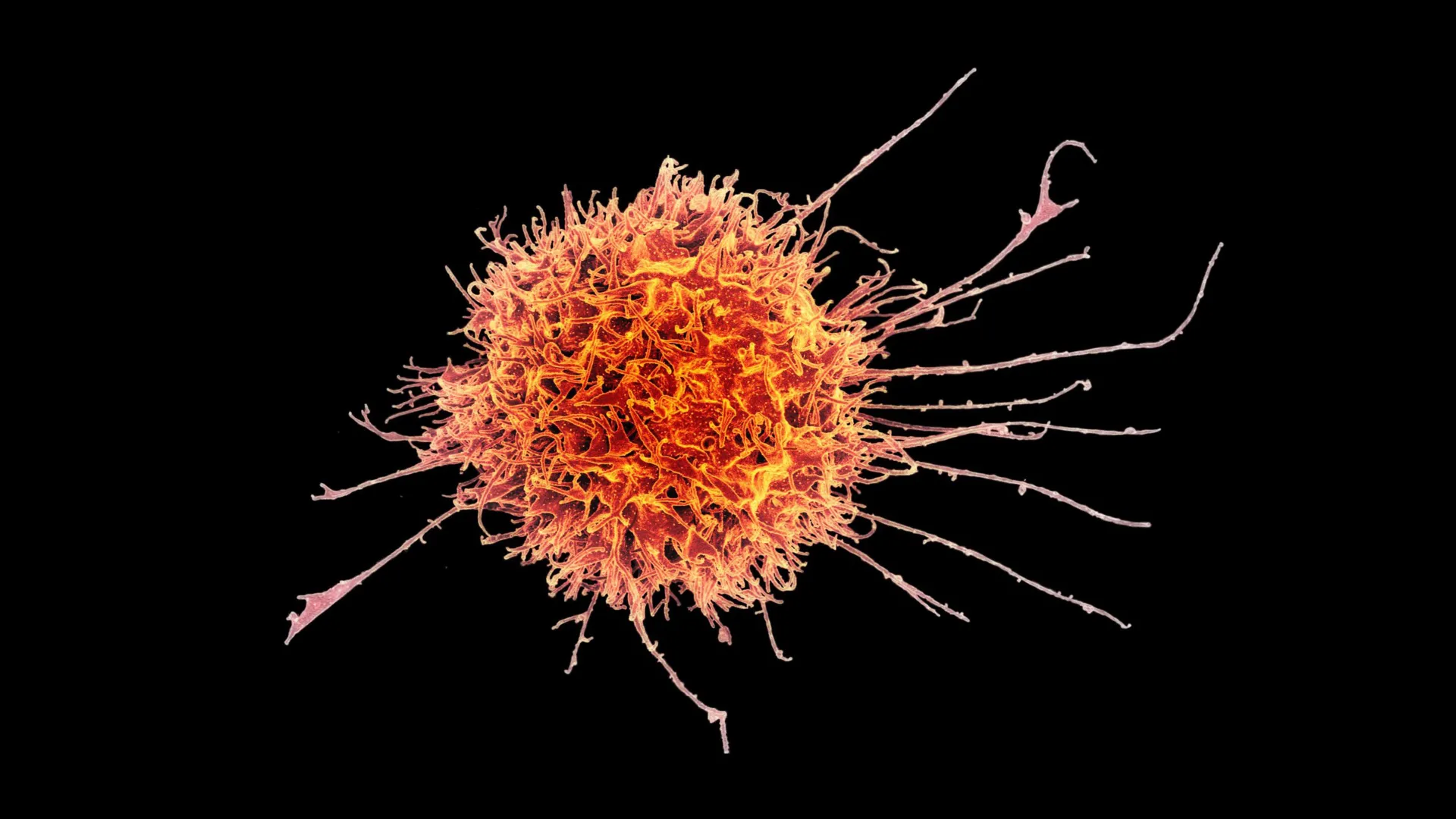
Cellular immunotherapies have revolutionized the treatment landscape for certain hematologic malignancies, offering new hope and unprecedented remission rates for patients with blood and lymphatic cancers. These therapies, which engineer a patient’s own immune cells to target and destroy cancer, have achieved remarkable success. However, their application against solid tumors has remained a significant challenge. Solid tumors present a formidable barrier, not only due to their physical density that impedes immune cell infiltration but also because they actively secrete immunosuppressive signals that create a hostile microenvironment for immune defenders. Addressing this critical unmet need, researchers at Stanford Medicine, in collaboration with other institutions, have unveiled a groundbreaking strategy that reprograms natural killer (NK) cells, transforming them into potent, tissue-resident hunters capable of penetrating solid tumors and eradicating cancer cells.
The Genesis of a Novel Immunotherapy
The journey towards this breakthrough began with a deeper understanding of the immune system’s natural defenses. Natural killer cells, a crucial component of the innate immune system, are characterized by their rapid and direct cytotoxic activity against abnormal cells, including cancer cells and virus-infected cells. Unlike T cells, NK cells do not require prior sensitization or recognition of specific antigens, allowing for an immediate response. Historically, immunological research largely focused on immune cells circulating within the bloodstream, a perspective that has shifted with advancements in technology and bioinformatics. The realization that immune cells often reside within tissues, performing specialized functions tailored to their local environments, opened new avenues of investigation.
“For a long time, the study of immunology and disease in humans was concentrated on the blood immune cells,” explained Dr. John Sunwoo, the Edward C. and Amy H. Sewall Professor in the School of Medicine and senior author of the study. “With the advancement of tools and bioinformatics, we are now starting to look more at what’s going on in tissue. For most immune cells, the tissue is where the action is.”
This shift in focus highlighted the importance of tissue-resident immune cells, including a specific subset of NK cells found in tissues like the skin, mucous membranes, lungs, and liver. While these cells were known to exist, their precise functions and differentiation pathways remained enigmatic, with some studies suggesting they were suppressive, while others indicated potent anti-tumor capabilities. The Stanford-led team sought to harness the aggressive potential of these tissue-resident NK cells for therapeutic benefit.
Engineering Tissue-Resident NK Cells: A "Goldilocks" Approach
The core of the research involved identifying the precise conditions necessary to transform circulating NK cells into their highly effective, tissue-resident counterparts. The researchers hypothesized that specific signaling molecules within the tissue microenvironment were responsible for this differentiation. Their investigation centered on transforming growth factor beta (TGF-β), a signaling protein produced by various cell types, including tumor cells.
The team’s experiments, conducted with circulating NK cells isolated from human blood donors, revealed a critical balance in TGF-β signaling. “It’s a Goldilocks kind of thing where if you give just enough of a TGF-b signal, then the natural killer cells become tissue resident with strong toxic activity against malignant cells,” Dr. Sunwoo stated. “If you give too much TGF-b, they’re still tissue resident, but they’re inhibited and dysfunctional, and they don’t kill. You need it to be presented to the natural killer cells in just the right amount and in just the right manner.”
This crucial insight led to the development of a refined protocol. Prolonged exposure to TGF-β, they discovered, resulted in NK cells that were tissue-resident but lacked potent killing ability. The breakthrough came when they simulated a more transient and direct interaction. By briefly exposing NK cells to short-lived human epithelial tumor cells, which provided a temporary burst of active TGF-β, they successfully generated tissue-resident NK cells exhibiting robust tumor-killing activity. Crucially, direct physical contact with these tumor cells was essential, suggesting that additional activating signals were transmitted through cell-to-cell interaction.
This meticulous process of fine-tuning cellular signals, described by the researchers as finding the "right cellular recipe," differentiated the two populations of tissue-resident NK cells. While both exhibited similar surface protein markers, the highly effective cancer-killing cells uniquely expressed CD39 and possessed a greater abundance of cytotoxic molecules like perforin and granzyme A, the molecular machinery responsible for inducing cell death in target cancer cells.
Preclinical Success in Solid Tumor Models
With a reliable method for producing potent, tissue-resident NK cells established, the researchers moved to validate their therapeutic potential in preclinical models. In laboratory settings, these modified NK cells demonstrated an impressive ability to infiltrate tumor organoids grown in vitro, a key step in overcoming the physical barriers of solid tumors.
The true test came when the engineered cells were injected into mice bearing various types of solid tumors. The results were highly encouraging. The modified NK cells significantly slowed the growth of human melanoma and head and neck squamous cell carcinoma tumors over weeks. This effect was further amplified when the engineered NK cells were administered in combination with cetuximab, a monoclonal antibody already approved for treating certain cancers, including metastatic colorectal cancer and advanced head and neck squamous cell carcinoma.
Cetuximab functions by marking cancer cells, making them more visible and accessible to immune cells. While cetuximab alone has limited efficacy against many solid tumors, its synergy with the engineered NK cells proved remarkable. A single dose of the combination therapy suppressed tumor growth in mice far more effectively than either treatment administered individually. Over a 30-day period, mice receiving the combination therapy remained notably healthy, exhibiting no apparent adverse effects, a stark contrast to the declining health observed in control groups.
“Even at day 30, when the other mice were sick, the mice that received the combination seemed very healthy,” Dr. Sunwoo commented, while also emphasizing that these findings represent a "proof of concept" and that direct extrapolation to human outcomes requires further investigation.
The Promise of an "Off-the-Shelf" Therapy
Beyond their direct anti-tumor efficacy, the engineered NK cells offer a significant practical advantage that could dramatically expand access to cell-based immunotherapies. Unlike most current cell therapies, which require personalized manufacturing from a patient’s own cells—a process that is time-consuming, expensive, and not feasible for all patients—these modified NK cells have the potential to be produced in large batches, cryopreserved, and readily available.
“It would be almost an off-the-shelf drug,” Dr. Sunwoo stated, envisioning a future where these therapies are as accessible as conventional pharmaceuticals. “It could make cell therapy much more accessible to a wider variety of patients.”
The research team has developed and patented a method for producing and expanding these cytotoxic tissue-resident NK cells. Their projections indicate that NK cells collected from a single donor could yield approximately 20 treatment doses within about two weeks. This streamlined production and storage process would eliminate the delays associated with personalized cell manufacturing, ensuring that patients could receive treatment without waiting for their own cells to be engineered.
Next Steps: Clinical Trials and Broader Impact
The promising preclinical data has paved the way for human clinical trials. The Stanford team, along with their collaborators from institutions including Ohio State University and Washington University School of Medicine, are preparing to initiate a Phase I clinical trial. This trial will evaluate the safety and preliminary efficacy of the combination therapy in patients with advanced squamous cell carcinoma. Pending approval from the Food and Drug Administration (FDA), the trial could commence by the end of the current year.
The implications of this research are far-reaching. The ability to effectively target solid tumors with an "off-the-shelf" cellular immunotherapy could fundamentally alter cancer treatment paradigms. It addresses a critical limitation of current immunotherapies and offers a scalable solution to a widespread medical challenge. The development of tissue-resident NK cells with enhanced tumor-homing and cytotoxic capabilities, coupled with their potential for broad accessibility, represents a significant leap forward in the fight against cancer.
The study was supported by grants from the National Institutes of Health (NIH), including R35DE020054, K22CA282364, and R25DC020174, as well as funding from the Tai Tsun Wu Research Fund for Natural Killer Cell Immunotherapy and the Stanford Bio-X Fellowship. This collaborative effort underscores the multifaceted nature of scientific advancement and the collective pursuit of innovative solutions to complex diseases. As this novel therapy moves closer to human trials, the prospect of a more accessible and effective treatment for solid tumors grows increasingly tangible.
