
 By Nana O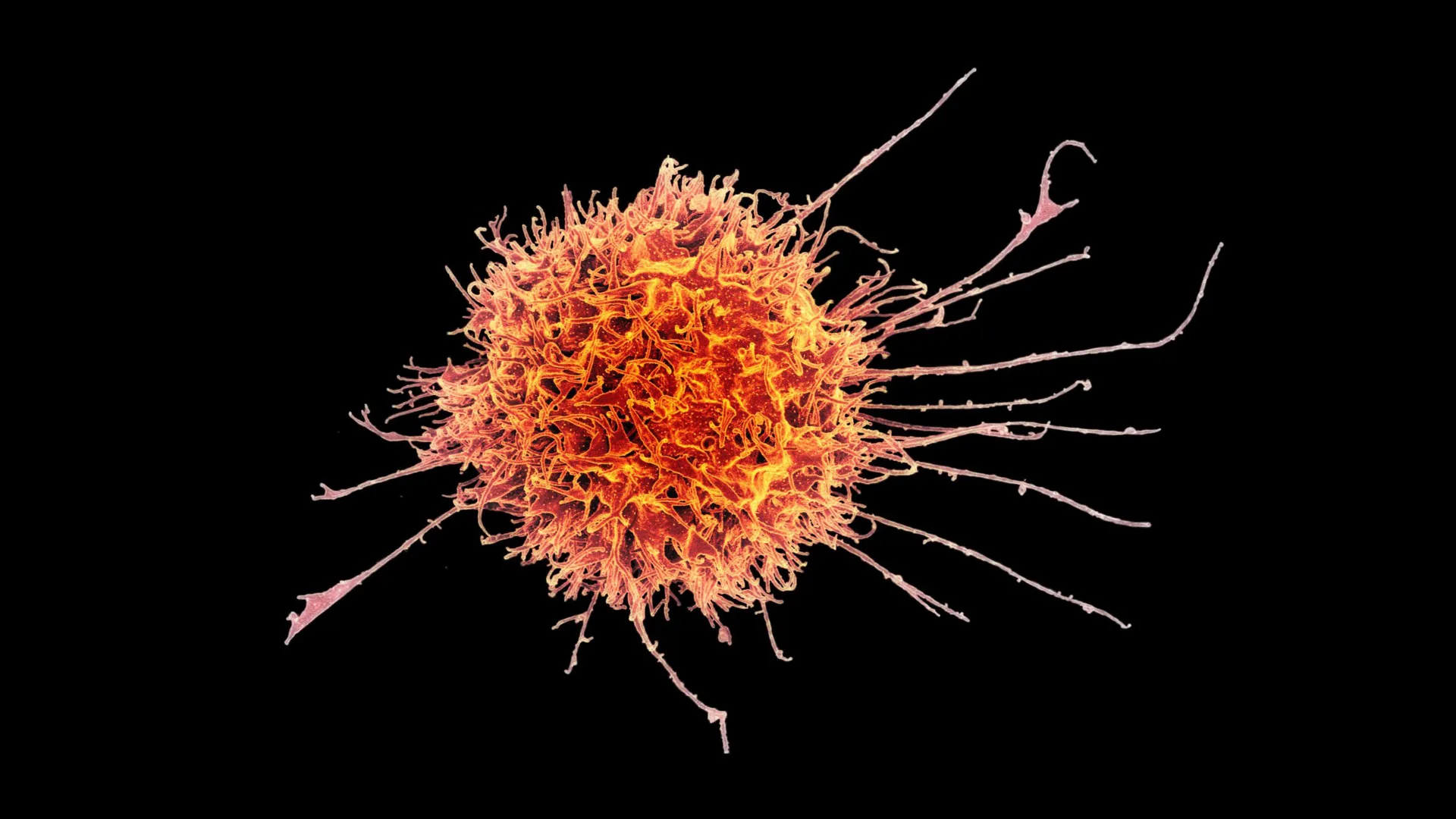
Cellular immunotherapies have revolutionized the treatment landscape for certain blood and lymphatic cancers, offering a powerful new weapon by re-engineering a patient’s own immune system to target malignant cells. However, the efficacy of these groundbreaking treatments has largely been limited to hematological malignancies. Solid tumors, which constitute the vast majority of cancer diagnoses, have presented a formidable challenge. Their dense, often immunosuppressive microenvironments create physical barriers that impede immune cell infiltration and actively secrete factors that dampen anti-tumor immune responses, rendering many conventional cell-based therapies less effective.
In a significant stride towards overcoming these persistent hurdles, researchers at Stanford Medicine, in collaboration with other institutions, have developed an innovative strategy that reprograms natural killer (NK) cells into a specialized, tissue-resident form capable of robustly penetrating solid tumors and eradicating cancer cells. This advancement holds the potential to broaden the reach of cellular immunotherapy to a wider array of cancer types.
Reprogramming NK Cells for Solid Tumor Efficacy
The core of this breakthrough lies in the modification of natural killer cells, a critical component of the innate immune system known for its rapid and direct cytotoxic activity against abnormal cells, including nascent tumors and virally infected cells. Unlike T cells, NK cells do not require prior sensitization or specific antigen recognition to initiate an attack, making them a naturally potent first line of defense.
The Stanford-led team successfully engineered these NK cells to adopt a tissue-resident phenotype. This transformation equips them with enhanced migratory capabilities, allowing them to navigate the complex architecture of solid tumors. "We demonstrate that these tissue-resident natural killer cells infiltrate solid tumors far more effectively than conventional natural killer cells," stated Dr. John Sunwoo, the Edward C. and Amy H. Sewall Professor in the School of Medicine and senior author of the study. "The results were highly reproducible, striking, and unequivocally clear."
The research, published last month in Science Translational Medicine, detailed the experimental therapy’s efficacy in preclinical models. In studies involving mice, the modified NK cells demonstrated a marked ability to slow the growth of several types of solid tumors. This anti-tumor effect was further amplified when the engineered NK cells were administered in conjunction with an antibody treatment. This adjunctive therapy acts as a navigational aid, helping to guide the NK cells more precisely towards cancer cells.
The Promise of an ‘Off-the-Shelf’ Immunotherapy
Beyond their enhanced tumor-infiltrating capacity, these reprogrammed NK cells offer a crucial practical advantage: the potential for an "off-the-shelf" therapeutic product. Current cell therapies typically require the laborious and time-consuming process of harvesting a patient’s own immune cells, genetically modifying them ex vivo, and then reinfusing them. This autologous approach is not only expensive but also subject to significant delays, which can be detrimental for patients with aggressive cancers.
Natural killer cells, due to their inherent ability to act as allogeneic effectors – meaning they can be safely transferred between individuals without triggering a severe immune rejection – present a pathway towards a universal therapy. "It would be akin to an off-the-shelf drug," Dr. Sunwoo explained. "This could make cell therapy significantly more accessible to a broader spectrum of patients." This shift from personalized medicine to a readily available treatment could democratize access to advanced cancer therapies.
Understanding Tissue-Resident Immune Cells
The identification of natural killer cells dates back to the 1970s. Their moniker stems from their innate capacity to swiftly identify and eliminate cancerous or infected cells. A key distinction from other immune cells, such as B cells and T cells, is their lack of requirement for prior antigen exposure, enabling immediate responses to threats.
Historically, immunological research primarily focused on immune cells circulating in the bloodstream. However, a growing body of evidence highlights the critical role of immune cells that reside within tissues. These tissue-resident immune cells, including NK cells, adapt to their local microenvironments and perform specialized functions tailored to the specific tissue they inhabit.
"For a considerable period, the study of immunology and disease in humans was concentrated on blood-borne immune cells," Dr. Sunwoo elaborated. "With advancements in technology and bioinformatics, we are now increasingly examining what occurs within tissues. For the majority of immune cells, the tissue is where the primary action unfolds."
Tissue-resident NK cells are found in various anatomical sites, including the skin, mucous membranes, lungs, and liver. Their precise functions have been a subject of ongoing scientific inquiry, with previous studies yielding seemingly contradictory findings. Some research suggested these cells possessed relatively weak cytotoxic capabilities and could even suppress immune responses, while others indicated they were highly effective in destroying target cells.
Dr. Sunwoo’s team posits that these differing observations might be attributed to the plasticity of NK cells. "They may adopt distinct functions based on specific cues within the microenvironment and the tissue, differentiating into particular subpopulations," he suggested. This adaptability means that NK cells can adopt different roles depending on the local context.
In certain physiological scenarios, immune-suppressive tissue-resident NK cells serve a beneficial purpose. For instance, during early pregnancy, NK cells in the uterine lining play a role in preventing the maternal immune system from rejecting fetal cells, thereby supporting placental development. However, for cancer treatment, the more aggressive, cytotoxic subtype is paramount.
The Molecular Blueprint for Potent NK Cells
The existence of seemingly distinct forms of tissue-resident NK cells, one potent and the other suppressive, had been hinted at in previous research, but the underlying mechanisms of their differentiation and functional divergence remained elusive.
To unravel this complexity, Dr. Sunwoo’s group isolated circulating NK cells from healthy human blood donors. These cells were then exposed to various combinations of signaling molecules, mimicking conditions found within different tissue microenvironments.
A pivotal factor identified in this process was TGF-β (transforming growth factor beta), a signaling protein secreted by numerous cell types, including tumor cells. TGF-β plays a crucial role in cell differentiation and development. The Stanford team’s experiments revealed that the precise concentration and duration of TGF-β signaling were critical determinants of NK cell function.
"It’s a ‘Goldilocks’ scenario where if you provide just enough of a TGF-β signal, the natural killer cells become tissue-resident with strong toxic activity against malignant cells," Dr. Sunwoo explained. "If you provide too much TGF-β, they remain tissue-resident but become inhibited and dysfunctional, failing to kill. You need it to be presented to the natural killer cells in precisely the right amount and in precisely the right manner."
While TGF-β was essential for inducing a tissue-resident state, prolonged exposure resulted in NK cells with diminished killing capacity. A more effective approach emerged when researchers utilized a transient exposure to brief bursts of active TGF-β. This was achieved by co-culturing NK cells with short-lived human epithelial tumor cells. This method yielded tissue-resident NK cells exhibiting potent anti-tumor activity.
Crucially, direct physical contact between the NK cells and the epithelial tumor cells was found to be indispensable. Simply placing the cells in proximity was insufficient, indicating that additional activating signals, likely transmitted through cell-to-cell contact, were also involved in achieving the desired functional phenotype. "These two tissue-resident natural killer cell populations appear very similar, and they share some common requirements, but their functions are on opposite ends of the spectrum," Dr. Sunwoo noted.
Differentiating the Elite Cancer Killers
To further characterize the differences between the potent and suppressive tissue-resident NK cell subsets, the researchers conducted detailed comparative analyses. Both populations expressed the surface proteins CD49a and CD103. However, only the highly effective cancer-killing cells displayed the expression of CD39.
Moreover, the more potent NK cells harbored a greater abundance of the molecular machinery required for target cell destruction. This included higher levels of perforin, a protein that forms pores in the membranes of target cells, and granzyme A, a toxic enzyme delivered through these pores to induce apoptosis. These molecular differences underscore the distinct functional capacities of the two tissue-resident NK cell subtypes.
Preclinical Validation: Slowing Solid Tumor Growth
With a reliable method established for generating the more aggressive, tumor-icidal NK cells, the research team proceeded to evaluate their ability to infiltrate solid tumors in vivo. Laboratory experiments demonstrated that the modified NK cells successfully infiltrated tumor organoids cultured in vitro. Subsequently, when injected into mice bearing established solid tumors, these engineered cells significantly slowed tumor growth over periods of days and weeks. The observed effects were notable across various tumor types, including those derived from human melanoma and head and neck squamous cell carcinoma.
The most compelling results were observed when the modified NK cells were administered in combination with cetuximab, a monoclonal antibody that targets the epidermal growth factor receptor (EGFR). Cetuximab functions by marking cancer cells expressing EGFR for immune attack and by blocking growth signals. While cetuximab is approved for treating metastatic colorectal cancer and advanced head and neck squamous cell carcinoma, its efficacy as a monotherapy is often limited.
In the mouse models, a single dose of the combination therapy—engineered NK cells plus cetuximab—suppressed tumor growth far more effectively over a 30-day period than either treatment administered alone. Importantly, no apparent adverse effects were observed in the mice treated with the combination therapy. "Even at day 30, when the other mice were unwell, the mice that received the combination appeared very healthy," Dr. Sunwoo reported. He cautioned, however, that these findings represent a proof of concept and direct extrapolation to human outcomes requires further investigation.
Charting a Course for Clinical Application
Building on these promising preclinical findings, Dr. Sunwoo and his colleagues are actively preparing for a Phase I clinical trial to assess the safety and preliminary efficacy of this combination therapy in human patients with advanced squamous cell carcinoma. This trial is anticipated to commence by the end of the year, contingent upon regulatory approval from the Food and Drug Administration.
Dr. Sunwoo has also pursued patent protection for a novel method he developed for the large-scale production and expansion of these specialized cytotoxic tissue-resident NK cells. This manufacturing process is critical for realizing the "off-the-shelf" potential of the therapy.
According to the researchers, NK cells obtained from a single donor could yield approximately 20 treatment doses within a two-week timeframe. These doses would be cryopreserved, enabling rapid deployment to patients without the delays inherent in autologous cell therapy manufacturing. "They will be cryopreserved, so we can produce a substantial number of doses and administer them to different patients," Dr. Sunwoo stated. "There would be no delay." This streamlined approach promises to accelerate access to potentially life-saving immunotherapies for a wider patient population.
The research was supported by grants from the National Institutes of Health, the Tai Tsun Wu Research Fund for Natural Killer Cell Immunotherapy, and the Stanford Bio-X Fellowship. Collaborators on this groundbreaking work included researchers from Ohio State University and Washington University School of Medicine, underscoring the collaborative nature of modern scientific advancement in tackling complex diseases like cancer.
